Riverside Is Changing Your Demolition Crew Should Know That
From Flanders Road brownfields to flood-damaged homes near the Peconic River, demolition in Riverside comes with layers most contractors aren’t ready for. We are.
I needed a professional consultation explanation of procedure for safe removal of Asbestos in my apartment complex. Without having an account yet, I was very impressed with the caring, knowledgeable and generous advice offered by Jessica, and will look forward to doing business in the future. Thank you so much! I feel much more informed about a sometimes scary endeavor. Peace. Nancy Silva Mineola, NY.
Mia Munoz
Used this company to clean up some water flood in my house. They were fast and easy to work with.very professional, Would recommend to anyone!
Nini Valle
Great company, had a flood and they responded quickly and efficiently. Billed my insurance company directly. I highly recommend this company!
joe colapietro, jr
I had pipe freeze in my basement right before a snow storm and they made to within an hour to help start the clean up process. They we by our side throughout the entire process and even helped with the insurance company. They did such a great job with the cleanup, repair, remidiation, I contracted them to perform the repairs and finishes in the basement. They came with enough manpower and material to get the job done. Leo and Jessica were nothing but a pleasure to deal with!!
Cristian Arredondo c
I had some water damage in my home and Green Island was able to take care of my issue quickly and effectively. I am very pleased with the work they did. They responded quickly and were very professional.
Michael M
Outstanding service! From the office to the field crew everyone was friendly, helpful and responsive. I highly recommend Green Island Group.
Riverside isn’t a typical Long Island hamlet. It’s a Brownfield Opportunity Area with documented contamination on commercial parcels along Flanders Road, a redevelopment initiative backed by a $19 million federal infrastructure grant, and a building stock where pre-1980 construction is the norm not the exception. That combination means almost any demolition project here carries environmental risk that most contractors aren’t equipped to handle on their own.
When you hire a demolition contractor who also handles asbestos abatement, lead paint removal, and environmental remediation in-house, you’re not just getting a cleaner process. You’re avoiding the scenario where work stops mid-project because something was found in the walls and your contractor has to call someone else. That delay costs money. In a redevelopment corridor like Riverside, where timelines are tied to municipal approvals and development agreements, it can cost a lot more than that.
For homeowners in Riverside near the Peconic River dealing with storm or flood damage, the same logic applies. You need someone who can assess the structure, handle hazardous materials if they’re present, pull the right permits through the Town of Southampton Building Department, and get the work done without handing pieces of your project off to three different subcontractors. That’s what a fully integrated demolition and environmental services contractor actually looks like in practice.
We’re a full-service demolition and environmental contractor based in Bohemia, NY about 35 miles west of Riverside via I-495 and Route 24. That’s not a long drive, and it’s a route we know well. We’ve been serving Riverside and the broader East End corridor, including Hampton Bays and Southampton Town, for over 12 years.
What makes us different isn’t a tagline. It’s the fact that asbestos abatement, lead paint removal, mold remediation, and environmental cleanup are all handled in-house not farmed out. We hold active NYS Department of Labor asbestos certifications, carry $2 million or more in general liability insurance, and are certified as a Minority and Woman-Owned Business Enterprise, which qualifies us for the public and municipal contracts that are increasingly active in Riverside’s redevelopment pipeline.
Over 5,000 completed projects across Long Island and New York City. A 4.7-star rating with detailed, named reviews. Those aren’t marketing numbers they’re the kind of track record that shows up when something goes sideways on a job and we handle it instead of disappearing.
No Surprises Here's Exactly How We Handle Your Project
It starts with a site assessment. Before anything is touched, we evaluate the structure, identify potential hazardous materials, and determine what permits are required through the Town of Southampton Building Department. This step matters more in Riverside than almost anywhere else on the East End if your property is on or near one of the documented brownfield parcels along Flanders Road, or if the structure was built before 1980, that assessment shapes everything that follows.
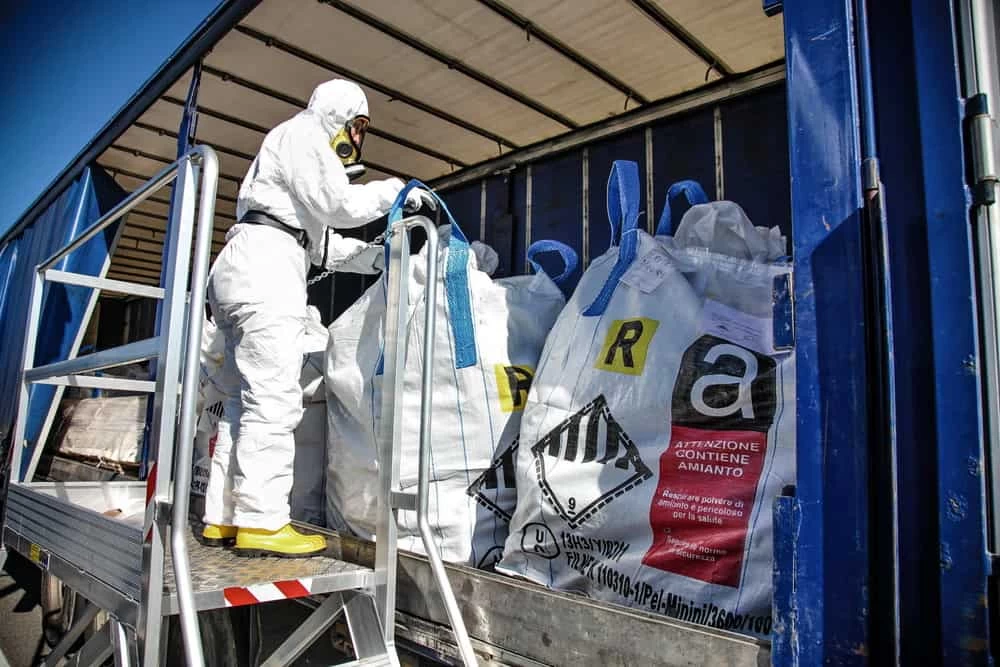
If asbestos, lead paint, or other regulated materials are present, abatement happens before demolition begins. This isn’t a workaround or an add-on it’s the legally required sequence under NYS DOL regulations and USEPA NESHAP standards, and we handle it entirely in-house. Permits are pulled, notifications are filed, and the work proceeds in the right order. You don’t coordinate any of that. We manage it for you.
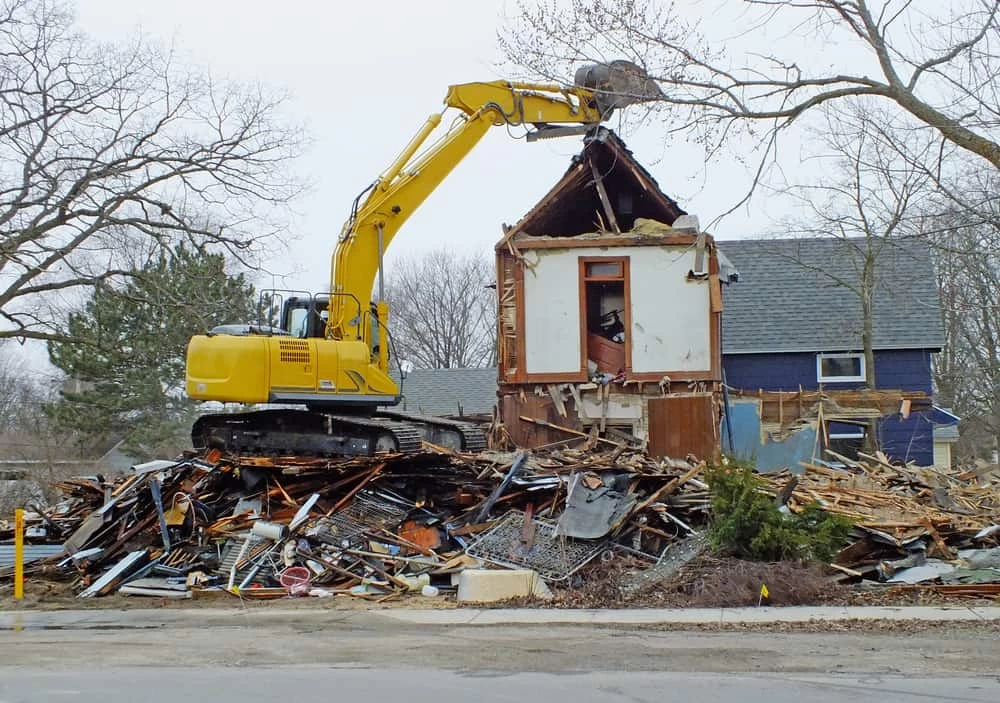
Once abatement is cleared and permits are in hand, demolition proceeds whether that’s a full structural teardown, selective interior demo, or site clearing for new construction. Debris is removed, the site is left clean, and documentation is provided. For properties involved in the Riverside redevelopment initiative or insurance-triggered work, that paper trail matters. We provide it as a standard part of the job, not as an afterthought.
Commercial and Residential Demolition in Riverside
The Full Scope, Built for What Riverside Properties Actually Need
Residential demolition in Riverside typically involves aging single-family homes, garages, outbuildings, or interior gut work a lot of which was built before 1980 and hasn’t been touched since. That means asbestos floor tiles, pipe insulation, ceiling materials, and roofing compounds are common finds. Every residential demolition job we handle includes a pre-demolition hazardous material assessment, permit management through Southampton Town, in-house abatement if needed, full structural or selective demolition, and site cleanup. Nothing is subcontracted out.
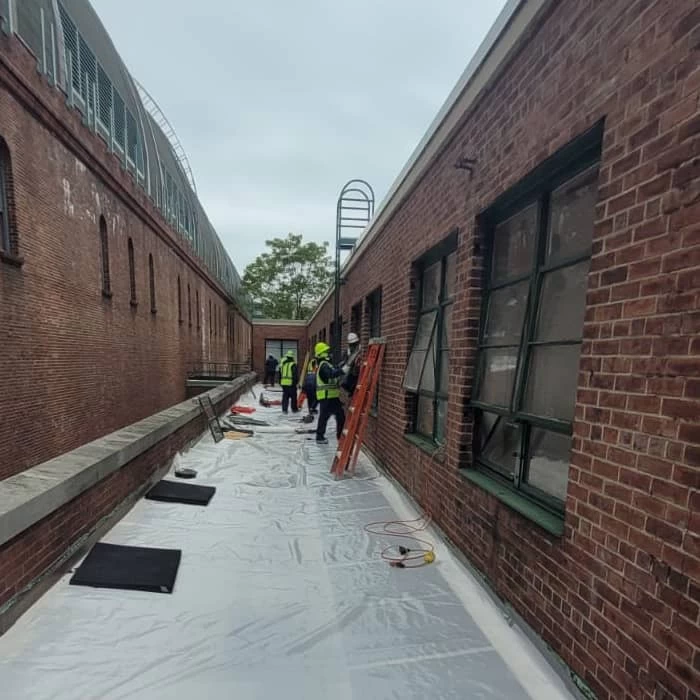
On the commercial side, Flanders Road is the center of the action. Auto repair shops, light industrial buildings, and vacant commercial structures are being evaluated for clearance as part of the Riverside Revitalization plan. Commercial demolition here requires a higher level of licensing, insurance, and environmental compliance than residential work and for properties with DEC spill records or brownfield designations, the regulatory requirements go further. We handle commercial site demolition, brownfield-adjacent teardowns, and large-scale site preparation for new construction, all with the environmental credentials the work requires.
Emergency response is also available around the clock. For Riverside homeowners and property owners dealing with storm damage, flooding from the Peconic River, or fire-related structural failure, we operate 24 hours a day, seven days a week. We also have a documented track record of working directly with insurance companies to support claims documentation which matters when you’re already dealing with enough.
Do I need a permit to demolish a structure in Riverside, NY?
Yes and it’s worth understanding exactly what that means before you start. Riverside falls under the jurisdiction of the Town of Southampton Building Department, which requires a permit for the removal or demolition of any building or structure, or any portion thereof. This is true whether you’re tearing down a full residential structure, removing a garage, or doing significant interior demolition work.
What catches people off guard is the boundary situation in Riverside. The hamlet shares ZIP code 11901 with Riverhead, which sits just across the Peconic River but Riverside is governed by Southampton Town, not Riverhead Town. Those are two completely different municipal systems with different permitting processes, different fee schedules, and different inspection requirements. If you’ve done work in Riverhead before and assume the process is the same, it isn’t. We handle Southampton Town permitting on your behalf, including any additional environmental review that may be triggered by brownfield proximity or location near the Central Pine Barrens boundary to the south.
Is asbestos testing required before demolition work begins in Suffolk County?
Under New York State Department of Labor regulations and USEPA NESHAP standards, any demolition or renovation project that involves a certain threshold of regulated asbestos-containing material requires an inspection before work begins and if regulated material is found above those thresholds, proper abatement must be completed before demolition can proceed. This isn’t optional, and it applies to both residential and commercial work.
In Riverside specifically, this matters more than in newer communities. A significant portion of the hamlet’s residential and commercial building stock was constructed before 1980 the year commonly used as the threshold for likely asbestos-containing materials in construction. Floor tiles, ceiling tiles, pipe insulation, roofing materials, and joint compounds in these structures frequently contain asbestos. The aging commercial properties along Flanders Road are especially likely to have multiple hazardous material concerns. We hold active NYS DOL asbestos certifications and handle the full process in-house: inspection, testing, abatement, and clearance documentation. You don’t need to find a separate abatement contractor before demolition can start.
What happens if asbestos or lead paint is found during demolition in Riverside?
If regulated asbestos-containing material or lead paint is discovered during a demolition project, work on the affected area must stop until proper abatement is completed by a licensed contractor. This is where a lot of projects go sideways the demolition crew finds something, they don’t have the certifications to handle it, and the job stalls while the property owner scrambles to find a separate abatement company. That delay can stretch for weeks and push costs well beyond the original estimate.
Because we handle both demolition and hazardous material abatement in-house, that scenario doesn’t apply to our projects. If something is found, the same team that’s already on-site manages the abatement, files the required notifications, and keeps the project moving in the correct legal sequence. For properties in Riverside’s brownfield corridor particularly along Flanders Road, where at least one active DEC spill site is documented in state records this integrated capability isn’t a nice-to-have. It’s the only practical way to get the work done without repeated project stops and budget overruns.
How much does demolition typically cost for a property in Riverside, NY?
Demolition costs in Riverside vary based on the size and type of structure, the presence of hazardous materials, permit requirements, and site conditions. For a standard residential teardown on Long Island, costs generally range from $8,000 to $25,000 or more depending on square footage, accessibility, and what the pre-demolition assessment uncovers. Interior selective demolition gut renovations, room-level teardowns, structural removal typically runs lower, though hazmat findings can adjust that range significantly.
What makes Riverside properties different from a cost standpoint is the frequency of hazardous material findings in pre-1980 structures and the environmental complexity of brownfield-adjacent parcels. Asbestos abatement, lead paint removal, and environmental remediation add to the base demolition cost but discovering those issues mid-project without a plan costs far more in delays and emergency coordination. The most reliable way to get an accurate number for your specific property is a site assessment before any work begins. We provide that assessment as part of the project scoping process, so the quote you receive reflects what the job actually involves not just the easy version of it.
Can a demolition contractor handle flood or storm damage work near the Peconic River?
Yes and given Riverside’s location at the confluence of the Peconic River and Peconic Bay, it’s a scenario that comes up more here than in most East End communities. Long Island’s August 2024 flooding event a storm that triggered a federal disaster declaration for Suffolk County caused widespread structural damage across the region, and low-lying areas near the Peconic River were among the most affected. Storm surges, extreme rainfall, and high water table conditions in Riverside mean that flood-related structural damage is a recurring reality, not a once-in-a-generation event.
Emergency demolition after flood or storm damage involves more than just tearing out damaged materials. It requires proper assessment of structural integrity, identification of any hazardous materials that may have been disturbed or exposed by water damage, documentation for insurance purposes, and permits through the Town of Southampton Building Department. We operate 24 hours a day, seven days a week, and have direct experience helping property owners navigate insurance claims alongside the physical work. If you’re dealing with storm damage near the Peconic River, the response time and the documentation we provide are both part of what you’re hiring.
Does Riverside's brownfield designation affect how demolition projects are handled here?
It can, and property owners should understand what that means before hiring a contractor. Riverside has been formally designated a Brownfield Opportunity Area by New York State, with a revitalization plan developed in partnership between Southampton Town and Renaissance Downtowns. Several commercial properties along Flanders Road carry documented or suspected contamination in the state’s brownfield inventory including at least one active DEC spill site recorded at 104 Flanders Road. For those properties, demolition isn’t just a permitting and structural question. It’s an environmental compliance question.
Depending on the specific parcel and the nature of the contamination, demolition on or near a brownfield site may require additional environmental review, soil assessment, or coordination with the NYS Department of Environmental Conservation before and during the work. Contractors who don’t have environmental services in-house are not equipped to handle these projects without stopping work and bringing in outside help. Our integrated model demolition and environmental remediation under one roof is specifically built for the kind of complexity that Riverside’s brownfield corridor presents. If your property is in or near the Flanders Road redevelopment area, that credential is worth verifying before you sign anything with anyone.