Rochdale's Pre-1960 Buildings Need Abatement Before Demo
Most homes and co-op towers in Rochdale were built before 1960 and that means asbestos, lead paint, and permits before a single wall comes down. We handle all of it under one roof.
I needed a professional consultation explanation of procedure for safe removal of Asbestos in my apartment complex. Without having an account yet, I was very impressed with the caring, knowledgeable and generous advice offered by Jessica, and will look forward to doing business in the future. Thank you so much! I feel much more informed about a sometimes scary endeavor. Peace. Nancy Silva Mineola, NY.
Mia Munoz
Used this company to clean up some water flood in my house. They were fast and easy to work with.very professional, Would recommend to anyone!
Nini Valle
Great company, had a flood and they responded quickly and efficiently. Billed my insurance company directly. I highly recommend this company!
joe colapietro, jr
I had pipe freeze in my basement right before a snow storm and they made to within an hour to help start the clean up process. They we by our side throughout the entire process and even helped with the insurance company. They did such a great job with the cleanup, repair, remidiation, I contracted them to perform the repairs and finishes in the basement. They came with enough manpower and material to get the job done. Leo and Jessica were nothing but a pleasure to deal with!!
Cristian Arredondo c
I had some water damage in my home and Green Island was able to take care of my issue quickly and effectively. I am very pleased with the work they did. They responded quickly and were very professional.
Michael M
Outstanding service! From the office to the field crew everyone was friendly, helpful and responsive. I highly recommend Green Island Group.
Here’s what most Rochdale property owners don’t fully see until they’re mid-project: demolition in this neighborhood is almost never just demolition. The median home in Rochdale was built in 1956. Rochdale Village’s towers went up in 1963. That puts virtually every structure in this area inside the window for asbestos-containing materials and lead paint which means before any licensed demolition contractor can legally pull a permit, there has to be a hazardous materials assessment first. NYC Local Law 76 requires it, no exceptions.
When you hire a contractor who only does demo, you end up managing two separate companies, two separate schedules, and two separate scopes and when the abatement crew finds something unexpected behind a wall, the demo timeline stalls and the price changes. That’s the situation we were built to prevent. Abatement and demolition happen under one roof, one contract, one timeline. The project moves, the price holds, and you’re not stuck in the middle coordinating between crews.
For Rochdale Village shareholders navigating co-op board approvals on top of everything else, that simplicity matters even more. The board needs documentation. Building management has rules about freight elevator access and work hours. These aren’t obstacles they’re just the reality of working in an occupied cooperative complex. We’ve done this work in Queens buildings before. The process is familiar, and the paperwork is handled.
12 Years, 340+ Projects Across Rochdale and Southeast Queens
We’ve been doing demolition and environmental remediation work across New York for over 12 years, with more than 340 completed projects and active service throughout Queens County, including extensive work in Rochdale and the surrounding neighborhoods. That’s not a number pulled from a brochure it reflects real work done in real buildings, including the kind of pre-war and mid-century construction that makes up most of southeast Queens and Rochdale specifically.
The work in Rochdale requires a contractor who understands three regulatory bodies at once: the NYC Department of Buildings for demolition permits, the NYC Department of Environmental Protection for asbestos certification, and the NYS Department of Labor for Industrial Code Rule 56 compliance. Most contractors are licensed by one or two of these. We carry credentials across all three, which is what allows the job to move from assessment to abatement to demolition without stopping to find a second or third company.
Whether it’s a gut renovation in a single-family Victorian off Baisley Boulevard or selective demolition work tied to the mandated façade repairs facing Rochdale Village’s 20 towers, our approach is the same: assess first, abate what needs to be abated, then demo clean. No shortcuts, no handoffs, no mid-project surprises.
What Actually Happens Before and After the Walls Come Down
The first step is always assessment. Before anything is touched, a certified inspector evaluates the space for asbestos-containing materials, lead paint, and mold. In Rochdale, where the building stock is almost uniformly pre-1980, this step is not optional it’s legally required under NYC Local Law 76, and the NYC DOB will not issue a full demolition permit without a completed ACP-5 form confirming the findings. We coordinate this assessment as part of the project, so you’re not tracking down a separate inspector before work can begin.
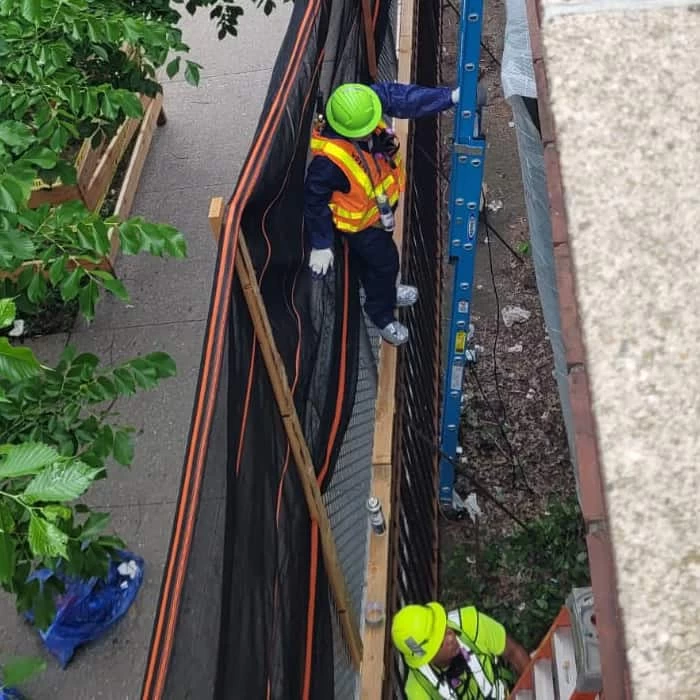
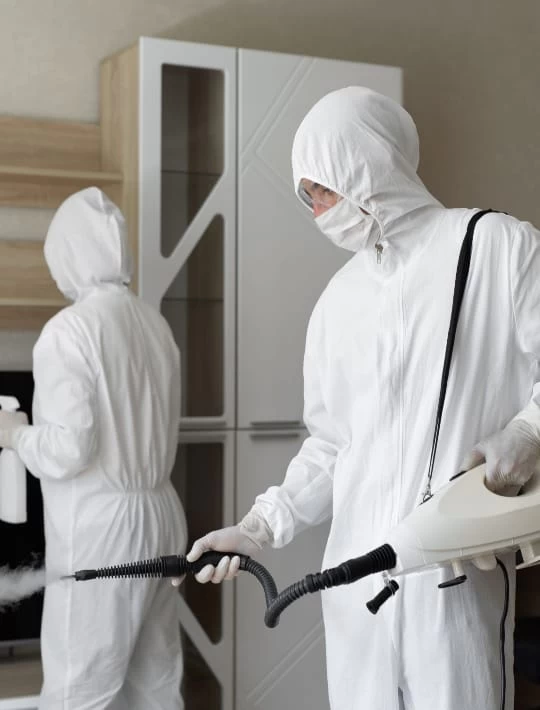
If hazardous materials are found and in a neighborhood built in the 1950s and 1960s, they usually are abatement happens next. That means certified removal of asbestos, lead, or mold before the demolition crew moves in. For Rochdale Village cooperative apartments, this phase also involves coordinating with building management on access, containment, and work hours so the work doesn’t disrupt neighboring units. Air monitoring runs throughout to meet NYS clearance requirements.
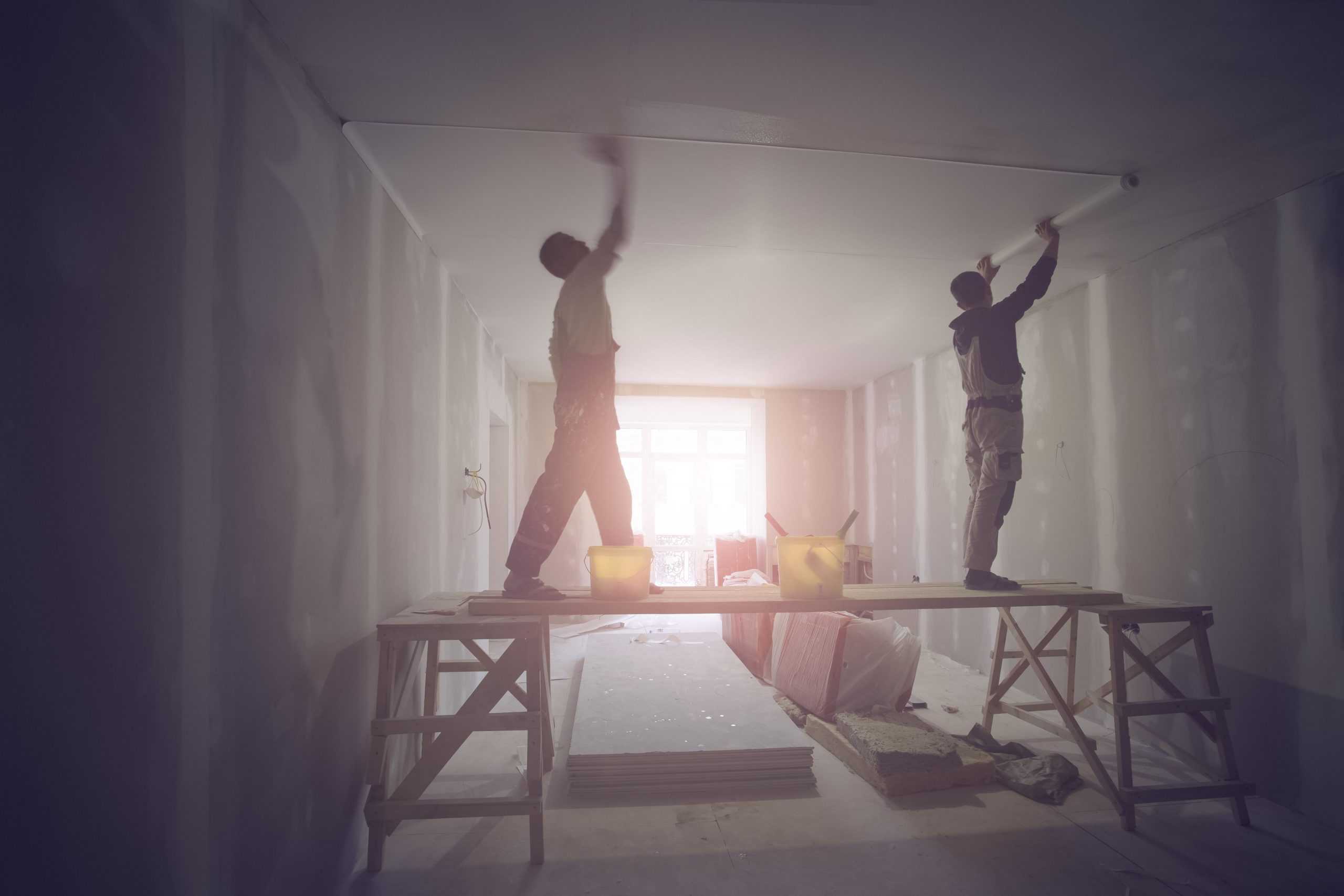
Once the space is clear, demolition proceeds. Debris is sorted on-site concrete, metal, and wood go to separate disposal streams and the site is cleaned and prepped for whatever comes next, whether that’s a renovation crew or a structural rebuild. If the project is insurance-related storm damage, a burst pipe, fire we bill the carrier directly. You deal with the work, not the paperwork.
Commercial and Residential Demolition Specialists Rochdale
Built for Rochdale's Buildings, Not a Generic Job List
Our demolition service covers interior demolition, selective structural demolition, full residential teardowns, and commercial demolition all with integrated asbestos abatement, lead abatement, and mold remediation built into the scope when needed. In Queens County and Rochdale specifically, that integration isn’t a bonus feature. It’s the only way to legally and safely complete a demolition project in buildings of this age.
For Rochdale Village shareholders, the service includes the full documentation package that co-op boards require before approving any contractor: proof of NYC DOB licensing, DEP asbestos certification, and adequate insurance. We carry all of it and can provide certificates before work begins. There’s no scrambling for paperwork after you’ve already committed to a start date.
The service also extends to emergency demolition for properties affected by flooding, fire, or storm damage a real consideration in Rochdale, which sits approximately one mile north of JFK Airport in a zone with documented flood exposure. When a pipe bursts in a Rochdale Village tower or a nor’easter pushes water into a basement on Guy R. Brewer Boulevard, mold begins growing within 24 to 48 hours. We respond around the clock, and for insurance-covered losses, billing goes directly to the carrier. The debris gets cleared, the site gets prepped, and the remediation moves without delay.
Do I need an asbestos inspection before demolishing anything in Rochdale, NY?
Yes and it’s not optional. NYC Local Law 76 requires an asbestos investigation before any renovation or demolition project in New York City, regardless of the scope of work. The NYC Department of Buildings will not issue a full demolition permit without a completed ACP-5 form from a DEP-certified asbestos investigator confirming the building is either free of asbestos-containing materials or has an approved abatement plan in place.
In Rochdale specifically, this requirement is almost always triggered. The neighborhood’s median construction year is 1956, and Rochdale Village’s towers were built in 1963 both well within the pre-1980 threshold for asbestos-containing materials. Floor tiles, pipe insulation, ceiling compounds, and masonry sealants from that era commonly contain asbestos. The inspection isn’t a formality in Rochdale; it’s a step that consistently turns up findings that have to be addressed before demo can legally proceed. We coordinate the inspection as part of the project so you’re not managing that separately before work can begin.
How much does interior demolition typically cost in Queens, NY?
Interior demolition in Queens generally runs between $5 and $15 per square foot for the demo work itself, but that number doesn’t tell the full story for most Rochdale projects. Because virtually every home and building in Rochdale predates 1978, the real cost includes the asbestos assessment, any required abatement, air monitoring, NYC DOB permit fees, and certified disposal of hazardous materials. When those are factored in, a kitchen gut-out in a pre-1960 Rochdale home or a bathroom renovation in a Rochdale Village cooperative apartment will cost more than a comparable project in a newer building but the regulatory requirements are what they are, and cutting around them creates liability that falls on the property owner.
The most important thing you can do before agreeing to any price is make sure the quote covers the full scope: assessment, abatement if needed, permits, demolition, debris removal, and air clearance testing. A low number that doesn’t include abatement isn’t a deal it’s an incomplete quote that will change mid-project. We provide upfront pricing that covers the full scope so the number you agree to at the start is the number you work with.
Can a demolition contractor work inside an occupied Rochdale Village co-op building?
Yes, but it requires a contractor who understands how cooperative buildings operate and most don’t. Rochdale Village is a 120-acre, 20-building complex housing approximately 25,000 residents. Work inside those buildings has to comply with co-op board rules, building management protocols, and the practical reality of doing construction work in an occupied high-rise where your neighbors are on the other side of a shared wall.
That means proper dust containment, scheduled freight elevator access, restricted work hours, and documentation that satisfies the board before a single tool is unpacked. The co-op board will require proof of the contractor’s NYC DOB license, DEP asbestos certification, and insurance certificates and they’ll want those before approving the work, not after. We have the credentials and the documentation ready, and the experience working in occupied multi-unit buildings means the process doesn’t stall at the approval stage. If you’re a Rochdale Village shareholder planning an interior renovation, starting with a contractor who already knows what the board needs is the fastest way to get the project moving.
What permits are required for demolition work in Rochdale, Queens?
For any structural demolition in New York City including Rochdale you need a demolition permit from the NYC Department of Buildings. That permit application has to be filed by a licensed contractor and accompanied by the results of a required asbestos investigation. If asbestos is found, an approved abatement plan must be in place before the permit is issued. For projects that involve asbestos removal above certain thresholds, USEPA NESHAP regulations also require advance notification to the appropriate federal and state agencies.
Beyond the DOB permit, asbestos abatement work in NYC requires the contractor to hold separate certification from the NYC Department of Environmental Protection, on top of NYS Department of Labor licensing under Industrial Code Rule 56. These are three distinct regulatory frameworks, and a contractor who is licensed in one doesn’t automatically qualify under the others. We hold credentials across all three, which is what allows a Rochdale demolition project to move through the permit process without stopping to find additional licensed parties. All permit filings are handled as part of the service you don’t need to manage the DOB process yourself.
Does homeowners insurance cover demolition costs after flood damage in Rochdale?
It depends on the policy and the cause of the damage, but in many cases, yes demolition of water-damaged materials is a covered cost when it’s part of a larger covered loss like a burst pipe, storm damage, or fire. The key is documentation: your insurer will want evidence of the damage, a scope of work, and licensed contractor credentials before approving the claim.
Rochdale’s flood exposure makes this a more common situation than most people expect. The neighborhood sits approximately one mile north of JFK Airport in a zone that has seen significant flooding from major storm events, and Rochdale Village’s own 2025 budget documents explicitly cited flood risk from climate change as a factor driving surging insurance costs for the cooperative. When water gets into a basement or a unit, mold starts growing within 24 to 48 hours which means the demolition of wet materials has to happen quickly, before the damage compounds. We respond to emergency calls around the clock and bill insurance carriers directly for covered losses. You focus on the property; the carrier communication is handled on the back end.
How do I know if a demolition contractor is actually licensed to work in New York City?
The fastest way to verify is through the NYC Department of Buildings’ online license lookup tool, which lets you search any contractor’s license status by name or license number. For demolition work in NYC, the contractor needs an active DOB license not just a general contractor’s license from another state or county. Long Island licensing does not automatically authorize work within the five boroughs, and hiring an unlicensed contractor in NYC creates direct liability for the property owner, not just the contractor.
For asbestos-related work which applies to virtually every demolition project in Rochdale given the age of the building stock there’s an additional layer: the contractor needs NYC DEP asbestos contractor certification and NYS DOL licensing under Industrial Code Rule 56. These are separate from the DOB license and issued by different agencies. When you call us, you can ask for license numbers and certificate documentation before you commit to anything. A legitimate licensed contractor will have no hesitation providing that information upfront and for Rochdale Village co-op shareholders, that documentation is something the board will require anyway before approving any work.