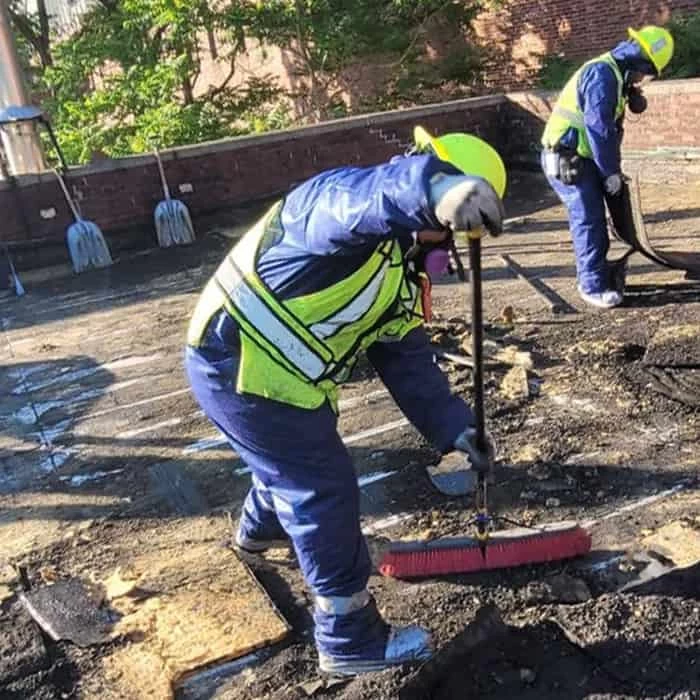
Demolition Contractor near Saddle Rock Estates, NY
When Your 1920s Home Needs Demo Done Right
Most homes in Saddle Rock Estates were built before 1960 — and almost every one of them has something behind the walls that needs to be handled before demolition starts. We’re a licensed demolition contractor that also handles asbestos abatement, so your project doesn’t stall when something gets discovered mid-demo.
I needed a professional consultation explanation of procedure for safe removal of Asbestos in my apartment complex. Without having an account yet, I was very impressed with the caring, knowledgeable and generous advice offered by Jessica, and will look forward to doing business in the future. Thank you so much! I feel much more informed about a sometimes scary endeavor. Peace. Nancy Silva Mineola, NY.
Mia Munoz
Used this company to clean up some water flood in my house. They were fast and easy to work with.very professional, Would recommend to anyone!
Nini Valle
Great company, had a flood and they responded quickly and efficiently. Billed my insurance company directly. I highly recommend this company!
joe colapietro, jr
I had pipe freeze in my basement right before a snow storm and they made to within an hour to help start the clean up process. They we by our side throughout the entire process and even helped with the insurance company. They did such a great job with the cleanup, repair, remidiation, I contracted them to perform the repairs and finishes in the basement. They came with enough manpower and material to get the job done. Leo and Jessica were nothing but a pleasure to deal with!!
Cristian Arredondo c
I had some water damage in my home and Green Island was able to take care of my issue quickly and effectively. I am very pleased with the work they did. They responded quickly and were very professional.
Michael M
Outstanding service! From the office to the field crew everyone was friendly, helpful and responsive. I highly recommend Green Island Group.
Here’s what most homeowners in Saddle Rock Estates don’t find out until it’s too late: their demolition contractor isn’t licensed to touch asbestos. So when floor tiles, pipe insulation, or ceiling texture tests positive — and in a pre-1960 home, that happens more often than not — the project stops cold while a separate abatement contractor gets located, contracted, and scheduled. That delay costs you time, money, and a lot of unnecessary stress.
When you work with a contractor who holds both a demolition license and the NYS Department of Labor Asbestos Handling Contractor License, that scenario doesn’t happen. Everything gets handled under one contract, with one team, on one timeline. The asbestos gets assessed, removed properly, and documented — and then the demo continues without a gap.
For a home worth $1.5 million or more, that continuity matters. It also matters at resale. Buyers and their attorneys will ask about prior demolition work. Having disposal manifests and clearance documentation on file protects your property’s value and your legal standing — not just today, but years from now when you’re ready to sell.
Licensed Demolition Specialists Serving Saddle Rock Estates, NY
One License Isn't Enough for Homes Like These
We’re a full-service environmental contracting and demolition firm based on Long Island, serving residential and commercial clients throughout Nassau County and the greater New York City metro area. We have documented service history in Saddle Rock Estates and the adjacent Village of Saddle Rock, and we operate regularly throughout the Town of North Hempstead.
What makes us different isn’t just the demolition capability. We hold the NYS DOL Asbestos Handling Contractor License alongside our demolition credentials — something most contractors advertising in Saddle Rock Estates simply do not have. That combination means one point of contact, one contract, and no regulatory handoff that can derail your timeline.
Our customers consistently point to responsive communication and a team that actually follows through. In a service category where going silent after the estimate is practically the norm, that track record means something.
How the Demolition Process Works in Saddle Rock Estates
What to Expect Before the First Wall Comes Down
The first step is always an assessment. Before any demolition begins on a Saddle Rock Estates property, we evaluate the scope of work and identify any materials that need to be tested or abated first. In a community where homes routinely date to the 1920s through 1950s, that assessment almost always turns up something — floor tiles, pipe wrap, ceiling coatings, or joint compound that contains asbestos. Getting ahead of that finding is what keeps your project on schedule.
From there, permitting gets handled. Demolition work in Saddle Rock Estates runs through the Town of North Hempstead’s Building Department, and Nassau County has its own layer too — including a rodent-free certification from a licensed exterminator that’s required before demolition of any residential structure can begin. That’s a Nassau County-specific requirement that catches a lot of homeowners off guard. We know it, anticipate it, and manage it as part of the project — not as a last-minute obstacle.
Once permits are in place and any hazardous materials have been properly abated, the demolition work begins. Whether it’s a selective interior gut, a full structural teardown, or targeted removal for a kitchen or basement renovation, our crew works to scope and cleans up after. At the close of the project, you receive disposal documentation for any hazardous materials removed — a paper trail that protects you long after the job is done.
Demolition and Abatement Services in Saddle Rock Estates
The Full Scope, Handled Without the Handoffs
We handle residential demolition, interior selective demolition, full structural teardowns, and commercial demolition — all with the licensing to manage hazardous materials in-house. For Saddle Rock Estates homeowners, that last part is what changes everything. You’re not dealing with a general contractor who has to subcontract the asbestos work to someone else and hope the schedules align. The abatement and the demo are managed by our team, under one contract.
The services most commonly needed in Saddle Rock Estates include interior gut renovations — kitchens, bathrooms, and basements in homes built between the 1920s and 1960s — as well as full teardown-and-rebuild projects on older lots where the existing structure has reached the end of its useful life. Given the hamlet’s documented history of basement flooding from the Old Mill Pond Brook area and its coastal exposure to Little Neck Bay, post-water-damage demolition and remediation work is also a recurring need here.
Every project includes a pre-demolition hazardous materials assessment, proper abatement where required, permitted demolition work through the Town of North Hempstead, and chain-of-custody disposal documentation for any asbestos or regulated materials removed. If EPA NESHAP notification is required — which applies when asbestos is present above threshold quantities — that’s handled as part of the process, not an afterthought.
Do I need a permit for demolition work in Saddle Rock Estates, NY?
Yes — and in Saddle Rock Estates specifically, there are actually two permit layers to be aware of. Because the hamlet is an unincorporated area within the Town of North Hempstead, your demolition permit is issued through the Town of North Hempstead’s Building Department. That application requires Workers’ Compensation documentation, contractor licensing verification, and site-specific information about the structure being demolished.
On top of that, Nassau County has its own requirement: a rodent-free certification from a licensed exterminator must be obtained before demolition of any residential building can begin. This is a Nassau County-specific rule that surprises a lot of homeowners — and some contractors — who aren’t familiar with local requirements. When you work with us, both of these permit processes get managed on your behalf. We pull the permits in our name, which also protects you from the liability that comes with unpermitted work surfacing during a future property sale.
How do I know if my home in Saddle Rock Estates has asbestos before demo?
The honest answer is: if your home was built before 1980, you should assume it has asbestos somewhere until testing says otherwise. In Saddle Rock Estates, where the housing stock dates primarily from the 1920s through the 1960s, that applies to nearly every property in the hamlet. Asbestos was used in floor tiles, pipe and duct insulation, ceiling texture, joint compound, roofing shingles, and window glazing — often in multiple locations within the same home.
Before any demolition work begins, a licensed inspector should collect samples from the materials that will be disturbed and send them to an accredited lab. If asbestos-containing materials are found above regulatory thresholds, abatement is required before demolition can proceed. We hold the NYS Department of Labor Asbestos Handling Contractor License, which means the assessment, abatement, and demolition can all happen under one contract. You don’t have to find a separate abatement company, negotiate a separate timeline, or hope the two contractors coordinate well.
What does interior demolition actually include for a gut renovation?
Interior or selective demolition means removing specific elements of a home — walls, ceilings, floors, cabinetry, fixtures — without disturbing the structural integrity of the building. For a gut renovation in a Saddle Rock Estates home, that typically means stripping a kitchen or bathroom down to the studs, opening up walls for a layout change, or gutting a basement that’s been water-damaged over the years.
In older homes on the Great Neck Peninsula, interior demolition almost always involves some level of hazardous materials management. Lead paint is present in an estimated 87% of homes built before 1940 and 69% of homes built between 1940 and 1959 — both construction eras well-represented in this community. Asbestos in floor tiles and wall systems is equally common. A contractor who can handle the demo and the hazmat under one roof keeps your renovation timeline intact. It also keeps the project contained properly, which matters when you have a family living in the home during a phased renovation.
How long does a typical residential demolition project take in Nassau County?
Timeline depends heavily on the scope of the project and what’s found during the pre-demolition assessment. A straightforward interior gut — one room, no hazardous materials — can often be completed in a day or two. A full structural teardown of a single-family home typically takes several days for the demolition itself, but the overall project timeline includes permitting, any required abatement, and final cleanup.
In Nassau County, the rodent-free certification requirement adds a step that needs to be built into the schedule before demolition day. If asbestos abatement is required, that process has its own timeline — including a mandatory 10-working-day advance notification to the EPA under NESHAP regulations when asbestos is present above threshold quantities. The practical takeaway is that demolition projects in Saddle Rock Estates benefit from early planning. Starting the permit and assessment process before you’re ready to break ground gives you a realistic timeline and avoids the delays that come from discovering regulatory requirements at the last minute.
Is asbestos removal required before demolishing an older home in Saddle Rock Estates?
If asbestos-containing materials are present above certain quantity thresholds, yes — abatement is legally required before demolition can proceed. This isn’t a technicality that contractors and homeowners can quietly work around. Under New York State law and federal EPA NESHAP regulations, regulated asbestos-containing materials must be removed by a licensed abatement contractor before a structure is demolished. Proceeding without it creates serious legal and financial exposure for both the contractor and the property owner.
For homes in Saddle Rock Estates, this requirement is practically universal for full teardowns given the age of the housing stock. Even for partial interior demolition, any materials that will be disturbed need to be assessed first. The good news is that when your demolition contractor also holds the NYS DOL Asbestos Handling Contractor License — as we do — the abatement and demolition are managed together. There’s no gap between contractors, no scheduling conflict, and no situation where the demo crew shows up and can’t start because the abatement isn’t finished.
What should I look for when hiring a demolition contractor in Saddle Rock Estates?
Start with licensing. In New York State, a general contractor license alone does not authorize asbestos abatement work — that requires a separate NYS Department of Labor Asbestos Handling Contractor License. In a community like Saddle Rock Estates, where almost every home predates 1980, hiring a demolition contractor who doesn’t hold that license is a real risk. The moment asbestos is discovered, your project stops until someone who is licensed can handle it.
Beyond licensing, look for a contractor who is familiar with the Town of North Hempstead’s permit process and Nassau County’s specific requirements — including the rodent-free certification that’s easy to overlook if you haven’t done this before in Nassau County. Ask whether the contractor pulls permits in their own name, provides disposal manifests for hazardous materials, and offers post-abatement clearance documentation. For a home in Saddle Rock Estates worth $1.5 million or more, that paper trail isn’t a formality — it’s protection that follows the property and matters when you sell.