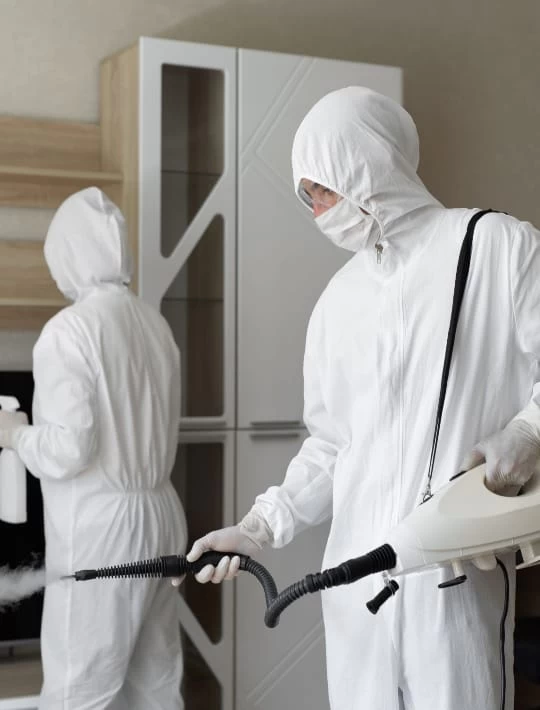
Sea Cliff's Historic Homes Demand More Than a Wrecking Crew
When your Sea Cliff home was built in the 1890s, demolition isn’t just swinging a hammer. We handle the full scope — hazardous materials, asbestos, lead, and licensed demolition — so nothing gets missed and nothing stops your project cold.
I needed a professional consultation explanation of procedure for safe removal of Asbestos in my apartment complex. Without having an account yet, I was very impressed with the caring, knowledgeable and generous advice offered by Jessica, and will look forward to doing business in the future. Thank you so much! I feel much more informed about a sometimes scary endeavor. Peace. Nancy Silva Mineola, NY.
Mia Munoz
Used this company to clean up some water flood in my house. They were fast and easy to work with.very professional, Would recommend to anyone!
Nini Valle
Great company, had a flood and they responded quickly and efficiently. Billed my insurance company directly. I highly recommend this company!
joe colapietro, jr
I had pipe freeze in my basement right before a snow storm and they made to within an hour to help start the clean up process. They we by our side throughout the entire process and even helped with the insurance company. They did such a great job with the cleanup, repair, remidiation, I contracted them to perform the repairs and finishes in the basement. They came with enough manpower and material to get the job done. Leo and Jessica were nothing but a pleasure to deal with!!
Cristian Arredondo c
I had some water damage in my home and Green Island was able to take care of my issue quickly and effectively. I am very pleased with the work they did. They responded quickly and were very professional.
Michael M
Outstanding service! From the office to the field crew everyone was friendly, helpful and responsive. I highly recommend Green Island Group.
Most homeowners in Sea Cliff don’t realize how much is inside those walls until someone opens them up. Homes built in the 1880s and 1890s — the Victorian-era structures that define this village — routinely contain asbestos in the plaster, pipe insulation, and floor underlayment. Lead paint is almost guaranteed. If the contractor you hire isn’t licensed to handle both, your project stops the moment something turns up. And in Sea Cliff, something almost always turns up.
When you work with us and we hold NYS DOL asbestos abatement licensing and EPA Lead-Safe Certification under the same roof, the project doesn’t stop. Assessment, abatement, and demolition happen in sequence, on schedule, with one team accountable for all of it. No waiting on a second contractor. No gap in your timeline while you scramble to find someone who can legally finish what the first crew started.
There’s also the permit side of things. Sea Cliff has requirements that catch a lot of contractors off guard — including the Nassau County Health Department rodent inspection certification that has to be filed before a demolition permit is issued, and the village’s Landmarks Preservation Commission, which can review demolition applications for properties with historic significance. Working with someone who already knows this process means your permit doesn’t stall at the village building department while your renovation sits idle.
Green Island Group — Nassau County Demolition Specialists
The Licensing Depth That Sea Cliff Projects Actually Require
We are a full-service environmental contracting and demolition firm serving Long Island and the greater New York metro area. What sets us apart in a market like Sea Cliff isn’t just experience — it’s the combination of credentials that let us legally handle everything a North Shore renovation project can throw at us. NYS DOL Asbestos Handling Contractor License. EPA RRP Certification. Demolition, mold remediation, water damage restoration — all under one company.
Sea Cliff sits in one of Nassau County’s most architecturally layered communities. The homes along Central Avenue and Carpenter Avenue weren’t built in the postwar boom like most of Long Island — they were built as Victorian-era summer retreats, many before the turn of the 20th century. That means the materials inside them, and the regulations that govern touching them, are in a different category entirely. We have worked across the North Shore long enough to understand that difference and plan for it from day one.
No Surprises — Here's Exactly How the Work Unfolds
It starts with an assessment. Before any demolition work begins in a Sea Cliff home, we conduct a thorough hazardous materials evaluation — testing for asbestos-containing materials, lead paint, and any other regulated substances that need to be addressed before demolition tools come out. In structures dating to the 1880s and 1890s, this step isn’t a formality. It’s what determines the legal path forward and prevents a project from getting shut down mid-demo.
Once the assessment is complete, the permitting process begins. In Sea Cliff, that includes coordinating with the village building department, accounting for the Nassau County Health Department rodent inspection certification requirement, and — depending on the property — potentially engaging the village’s Landmarks Preservation Commission if the structure has historic designation. We handle this process directly. You don’t have to figure out which forms go where or which office to call.
After permits are in place and any hazardous materials have been legally abated, demolition proceeds according to the agreed scope. Whether that’s a full structural teardown, a selective interior gut, or careful removal of specific elements while preserving original Victorian details, our crew works methodically and cleans up completely. When the job is done, you receive full disposal documentation — including asbestos waste manifests — so your property record is clean and your permit file is complete.
Residential Demolition Contractor Near Sea Cliff, NY
Built for the Homes Sea Cliff Actually Has
The demolition work we do in Sea Cliff isn’t the same as what gets done in Levittown or Hicksville. The housing stock here is older, the regulatory environment is more layered, and the homeowners investing in these properties expect a higher standard of care. That shapes how every project is approached.
For interior and selective demolition — the most common scope in Sea Cliff — that means removing what needs to go while actively protecting what doesn’t. Original millwork, period plaster ceilings, hardwood floors that predate the First World War: these are features that add real value to a Sea Cliff home, and a demolition crew that doesn’t understand that will cost you more than their quote saves you. Our work in Victorian-era interiors is precise and deliberate, not indiscriminate.
For full structural demolitions, the process accounts for Sea Cliff’s specific permit requirements from the start — including the LPC review process for properties that may carry landmark significance under Chapter 80 of the village code. And for properties on the bluff above Hempstead Harbor that have sustained storm or weather damage, our combined demolition and remediation capability means one call covers the structural removal and the water or mold damage underneath it. Every project gets a written scope upfront, documented disposal, and a team that doesn’t disappear after the estimate.
Does Sea Cliff require special permits before demolition work can begin?
Yes, and Sea Cliff’s permit process has a few requirements that aren’t common in other Nassau County towns. Before a demolition permit is issued, the village requires the applicant to file a written certification from the Nassau County Health Department confirming that the structure was inspected and found free of rodent infestation. If you or your contractor aren’t aware of that step going in, it can create an unexpected delay in your timeline.
Beyond the rodent inspection, Sea Cliff’s village code also establishes a Landmarks Preservation Commission with authority to review demolition permit applications for properties that may have historic significance. The village has over 50 designated landmark buildings, and even properties that aren’t formally designated can trigger a review if they’re within areas of historic character. We know this process before the application is submitted, which saves you weeks compared to a contractor learning about it after the fact.
Do I need asbestos testing before starting a demolition project in my Sea Cliff home?
In Sea Cliff, the practical answer is almost always yes. The village’s core residential stock was built in the 1880s through the 1920s — decades before asbestos was regulated or even widely understood as a health risk. Pipe insulation, plaster, floor tile adhesives, roofing materials, and window glazing compounds in homes of that era routinely contain asbestos-containing materials. None of it is identifiable by sight. Testing is the only way to know what you’re dealing with before demolition begins.
Under New York State law, asbestos removal requires a licensed NYS DOL Asbestos Handling Contractor — a standard general contractor or demolition license does not cover it. If testing reveals ACMs and your contractor isn’t licensed to remove them, the project stops until a licensed abatement contractor can be brought in. We hold both credentials from the start, which means the project keeps moving regardless of what the assessment finds.
What happens if my Sea Cliff home has lead paint — does that affect the demolition process?
It does, and it’s worth understanding before your project starts. The Village of Sea Cliff’s own building department requires that any contractor disturbing more than six square feet of painted surface in a pre-1978 home must be EPA Lead-Safe Certified. Given that virtually every structure in Sea Cliff predates 1978 — and many predate 1920 — this applies to nearly every renovation and demolition project in the village. It’s not just a federal standard; it’s a condition of local permit compliance in Sea Cliff specifically.
EPA Lead-Safe Certification means the contractor has been trained in containment, work practices, and cleanup procedures that prevent lead dust from spreading through the home during demolition. For a family living in a Sea Cliff Victorian with children or elderly residents, this isn’t a bureaucratic checkbox — it’s the difference between a safe project and a health hazard. We are EPA RRP certified, which satisfies Sea Cliff’s local building department requirement and protects your household throughout the work.
Can a demolition contractor in Sea Cliff work on a home that might be a landmark?
Yes, but the process requires more upfront coordination than a standard demolition permit. Sea Cliff’s Landmarks Preservation Commission, established under Chapter 80 of the village code, has authority to review demolition applications for properties with potential historic significance. That review can include a public hearing and a formal criteria-based decision. It doesn’t automatically mean demolition is denied, but it does mean the application needs to be prepared carefully and the timeline needs to account for the review process.
For homeowners planning selective demolition — removing a deteriorated addition, a non-original structure on the property, or specific interior elements — the LPC review is often less involved than for full structural teardowns. The key is working with a contractor who understands the distinction and can help frame the scope of work in a way that addresses the commission’s concerns. We have experience with local regulatory environments across Long Island municipalities, including this kind of permit navigation, not just the physical demolition work itself.
How much does residential demolition typically cost in Sea Cliff, NY?
Demolition costs in Sea Cliff vary significantly depending on scope, and the age of the housing stock here is a real cost factor. A selective interior demolition — gutting a kitchen or bathroom in a Victorian-era home — typically runs in the range of $3,000 to $8,000 depending on square footage and what’s found inside the walls. Full structural demolition of a residential structure in Nassau County generally ranges from $15,000 to $35,000 or more, depending on size, access, and disposal requirements.
What drives cost up in Sea Cliff specifically is the hazardous materials component. Asbestos abatement and lead paint removal are separate licensed services with their own labor, containment, and disposal costs — and in homes built in the 1880s and 1890s, these are rarely optional. A quote that doesn’t account for hazardous materials assessment and potential abatement is not a complete quote. Getting a full-scope estimate upfront, from a contractor who can handle both the environmental and the demolition side, gives you a realistic number before the project starts rather than a surprise after the walls are open.
My Sea Cliff property had storm damage — can Green Island Group handle both the demolition and the cleanup?
Yes, and for North Shore properties this matters more than it does in most of Nassau County. Sea Cliff sits on a 120-foot bluff above Hempstead Harbor, and properties along the bluff edge and waterfront face direct exposure to nor’easters and coastal storms that can cause structural damage, water infiltration, and foundation issues that require immediate attention. When that happens, you’re typically dealing with structural damage, water intrusion, and mold risk all at once — and those aren’t separate problems that can wait on separate contractors.
We handle demolition, water damage remediation, and mold remediation under the same company. That means when a storm compromises a garage, sends water through a basement, or takes out a section of structure on a bluff-edge property, one call covers the assessment, the structural removal, and the remediation work underneath it. There’s no gap between the demolition crew finishing and the remediation crew starting, and no situation where the water damage sits untreated while you wait for a second contractor’s availability. For Sea Cliff homeowners dealing with post-storm damage, that continuity is what keeps a bad situation from becoming a much worse one.