I needed a professional consultation explanation of procedure for safe removal of Asbestos in my apartment complex. Without having an account yet, I was very impressed with the caring, knowledgeable and generous advice offered by Jessica, and will look forward to doing business in the future. Thank you so much! I feel much more informed about a sometimes scary endeavor. Peace. Nancy Silva Mineola, NY.
Mia Munoz
Used this company to clean up some water flood in my house. They were fast and easy to work with.very professional, Would recommend to anyone!
Nini Valle
Great company, had a flood and they responded quickly and efficiently. Billed my insurance company directly. I highly recommend this company!
joe colapietro, jr
I had pipe freeze in my basement right before a snow storm and they made to within an hour to help start the clean up process. They we by our side throughout the entire process and even helped with the insurance company. They did such a great job with the cleanup, repair, remidiation, I contracted them to perform the repairs and finishes in the basement. They came with enough manpower and material to get the job done. Leo and Jessica were nothing but a pleasure to deal with!!
Cristian Arredondo c
I had some water damage in my home and Green Island was able to take care of my issue quickly and effectively. I am very pleased with the work they did. They responded quickly and were very professional.
Michael M
Outstanding service! From the office to the field crew everyone was friendly, helpful and responsive. I highly recommend Green Island Group.
Shelter Island isn’t like working anywhere else on Long Island. Every crew member, every piece of equipment, every debris container has to cross by ferry either through Greenport on the North Ferry or through North Haven on the South Ferry. A contractor who hasn’t done this before will figure it out on your dime, on your timeline. When you hire someone who already knows the logistics, the job starts on schedule and stays there.
The housing stock on Shelter Island also creates a specific set of concerns that don’t apply in most mainland towns. The median construction year here is 1974, and Shelter Island Heights has Victorian-era homes dating back to the late 1800s. That means asbestos-containing materials in insulation, floor tiles, pipe wrap, roofing are common finds during demolition and gut renovations. If your contractor can’t handle abatement in-house, work stops the moment it’s discovered. That gap between “demo crew” and “abatement crew” can cost you weeks.
When we finish a job on Shelter Island, you’re not left managing loose ends. Permits are closed out, debris is gone, hazardous materials are handled and documented, and the site is ready for whatever comes next whether that’s a new build, a renovation, or a sale. For a property worth over a million dollars on an island with no bridges, that kind of clean finish matters.
12 Years In, and We Still Handle the Details Ourselves
We’re based in Bohemia, NY in the heart of Suffolk County and have been doing demolition, asbestos abatement, and environmental work across Long Island for over 12 years. That’s not a number we throw around lightly. It means we’ve worked through the East End’s permit processes, navigated the Suffolk County Health Department’s requirements, and dealt with the specific conditions that come with older coastal housing stock. We’re not learning the territory on your project.
On Shelter Island specifically, that experience shows up in ways that matter. We know the Town of Shelter Island’s Building Department requires contractors to hold a local Home Improvement Contractor License separate from state and county credentials. We know the tight turn at Grand Avenue near the North Ferry landing. We know how to coordinate oversized equipment with the ferry operators in advance so nothing stalls mid-project. These aren’t things you learn from a website. They come from actually doing the work here.
With over 5,000 completed projects and a 4.7-star rating from real customers, the track record speaks for itself.
Residential Demolition Contractor Shelter Island NY
From First Call to Clean Site Here's the Honest Walkthrough
It starts with a site assessment. Before anything gets touched, we look at the structure, the materials, and the scope and we flag anything that needs to be addressed before demolition begins. On Shelter Island, that almost always means a pre-demolition asbestos survey for any home built before 1980. Given the median construction year here and the concentration of older homes in Shelter Island Heights, this step isn’t optional it’s required under New York State law. We handle it in-house, which means you’re not waiting on a third party before work can start.
Once the assessment is complete, we manage the permit application with the Town of Shelter Island Building Department at 38 North Ferry Road. Demolition permits, asbestos abatement notifications, and any required SCDHS coordination are all handled on our end. You don’t need to be on the island for this part and for a lot of Shelter Island’s second-home owners managing projects from the city, that matters.
When the permits are issued, we coordinate equipment and crew transport via ferry, schedule the work, and execute. Debris is removed, hazardous materials are properly documented and disposed of, and the site is left clean and ready. If asbestos, lead paint, or mold turns up during the job which it does more often than people expect in pre-1980 structures we handle it without stopping the clock on your project.
Commercial Demolition Contractors Shelter Island NY
One Crew, Every Scope No Handoffs, No Gaps
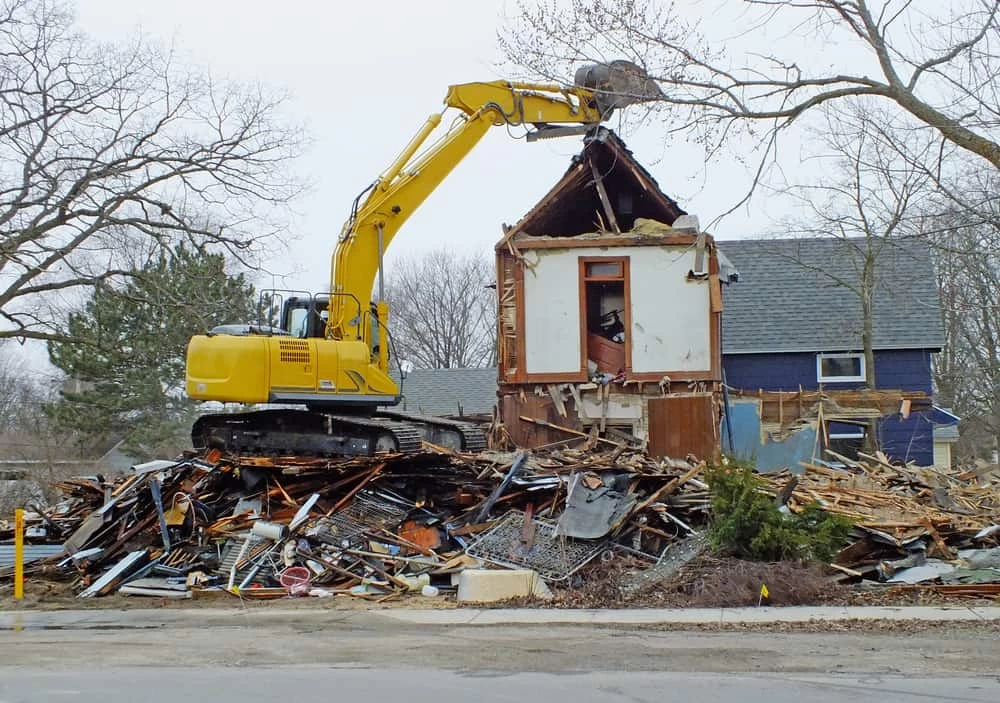
We handle the full range of demolition work on Shelter Island full residential teardowns, selective interior demolition, commercial demolition for inns, restaurants, and marina structures, and emergency demolition for storm-damaged or flood-compromised properties. The island’s 11 miles of coastline and full exposure to Shelter Island Sound and Gardiners Bay make storm-triggered work a real and recurring need, especially during nor’easter and hurricane season. We operate 24/7 and have the documented response capability to mobilize quickly when a coastal property can’t wait until Monday.
What sets the scope of our service apart is the integration. Most demolition contractors stop at the physical structure. We also carry active NYS Department of Labor asbestos contractor certifications, handle mold remediation, lead paint removal, and environmental cleanup all under the same roof. For a property on Shelter Island where coordinating four separate specialty contractors across two ferry routes is a logistical nightmare, that integration isn’t just a convenience. It’s the only way to keep a complex project on track.
We also work directly with insurance companies for storm-damage and water-damage claims, which is particularly relevant for Shelter Island’s waterfront and coastal properties. If you’re dealing with a damaged structure and a difficult adjuster at the same time, having one contractor who can manage both sides of that process is worth a lot.
Does my demolition contractor need a special license to work on Shelter Island?
Yes and this is one of the most important things to verify before you hire anyone. The Town of Shelter Island requires contractors to hold a local Home Improvement Contractor License under Town Code Chapter 79. This is separate from a New York State contractor license or a Suffolk County registration. The application requires a $250 fee plus proof of liability insurance and workers’ compensation certificates, with the Town of Shelter Island named as Certificate Holder.
The town’s own FAQ page explicitly warns property owners that not all off-island contractors hold this license and recommends calling the Building Department directly to verify before work begins. You can reach them at 631-749-0772. If a contractor can’t confirm they hold or will obtain this license before starting your project, that’s a problem worth taking seriously. Unpermitted or unlicensed work on a property worth seven figures creates real complications when it’s time to sell.
Do I need a permit to demolish a house or structure on Shelter Island?
Yes. The Town of Shelter Island requires a building permit for demolition work, and a Certificate of Completion must be obtained once the work is done. Permit applications are submitted to the Building Department at 38 North Ferry Road. Generally, any project with a total cost labor and materials combined of $10,000 or more requires a permit, and demolition almost always clears that threshold.
One thing that surprises a lot of property owners on Shelter Island: even if you’re rebuilding in-place and in-kind, the new structure still has to comply with current zoning setback requirements. There’s no grandfathered exemption for rebuilding where something already stood. If the existing structure was non-conforming, that’s a conversation to have with the Building Department before demolition begins not after. The 2025 NYS Energy Code, which took effect December 31, 2025, may also affect the permitting process for your project. We manage all of this on your behalf so nothing gets missed.
Is asbestos testing required before demolition on Shelter Island, NY?
Under New York State law, a pre-demolition asbestos survey is required for any structure that may contain asbestos-containing materials before demolition or significant renovation work begins. On Shelter Island, this applies to the vast majority of homes the island’s median construction year is 1974, and the Victorian-era housing stock in Shelter Island Heights dates back to the late 1800s. Asbestos was commonly used in insulation, floor and ceiling tiles, pipe wrap, roofing shingles, and joint compound in homes built before 1980.
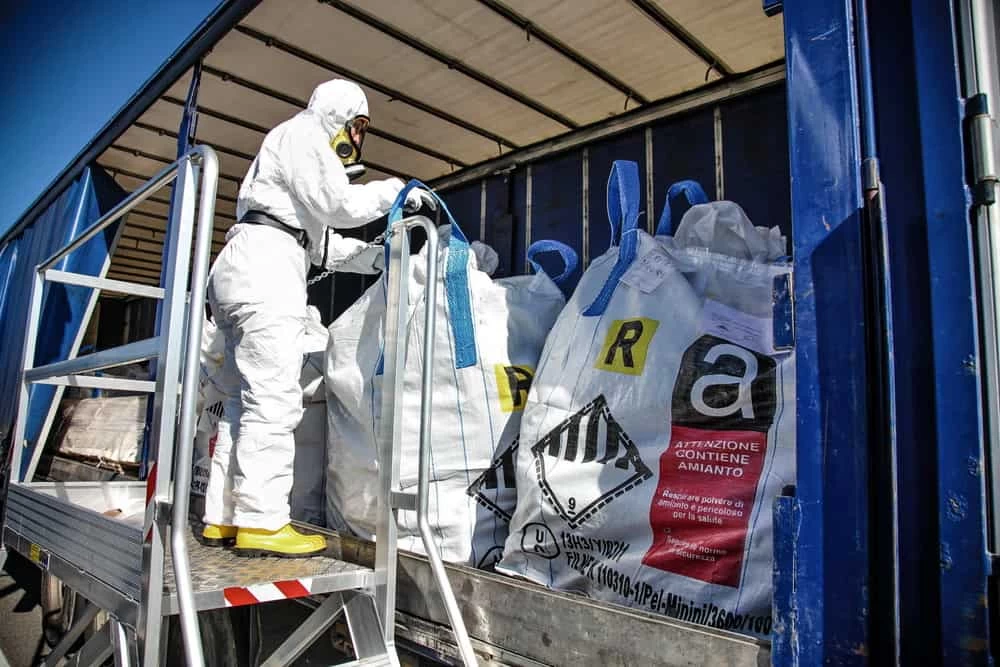
If asbestos is found, abatement must be completed by a contractor holding an active NYS Department of Labor asbestos contractor certification before demolition can proceed. We hold that certification and handle abatement in-house. That matters because when abatement is subcontracted to a separate company, your project goes on hold while that company gets scheduled and mobilized often for weeks. Keeping it in-house means the survey, the abatement if needed, and the demolition itself all move as one continuous project without unnecessary gaps.
How does a demolition contractor actually get equipment to Shelter Island?
Everything comes by ferry there are no bridges or tunnels connecting Shelter Island to the rest of Long Island. Crew, equipment, debris containers, and materials all travel via either the North Ferry from Greenport or the South Ferry from North Haven near Sag Harbor. The North Ferry handles over 1.4 million passengers and nearly 800,000 cars annually, and both ferries can accommodate large trucks and equipment but oversized loads require advance coordination with the ferry operators.
There are also physical constraints on Shelter Island itself worth knowing about. The turn at Grand Avenue and Chase Avenue near the North Ferry landing is tight and documented as problematic for large vehicles. Residential streets throughout the island are narrow. A contractor who hasn’t worked here before will encounter these constraints for the first time on your job, which translates directly into delays and added cost. We’ve already worked through them. Ferry timing, equipment sizing, and route planning are factored into every project schedule before the first crew member boards.
What happens if mold or lead paint is found during a Shelter Island demolition project?
It’s more common than most people expect especially on Shelter Island, where a large portion of the housing stock is pre-1980 and many homes sit vacant for months at a time between seasons. A house that’s empty from September through May in a coastal, humid environment is a house where undetected water intrusion and mold can quietly compromise structural elements before anyone notices. Lead paint is similarly prevalent in older homes, particularly in Shelter Island Heights where Victorian-era structures are common.
When mold or lead paint is discovered during a demolition or gut renovation, work in the affected area has to stop until it’s properly addressed. If your contractor can’t handle remediation in-house, that means finding a separate company, getting them scheduled, and waiting all while your project sits. We handle mold remediation and lead paint removal directly, under the same project scope as the demolition itself. Discovery doesn’t derail the timeline. It just becomes the next step in the process.
Can Green Island Group help with insurance claims for storm-damaged properties on Shelter Island?
Yes, and for Shelter Island property owners, this comes up regularly. The island has 11 miles of coastline with full exposure to Shelter Island Sound and Gardiners Bay, which means nor’easters, tropical storms, and flooding events are not rare scenarios they’re part of owning property here. When a storm damages a structure badly enough to require demolition or emergency remediation, the insurance claim process runs parallel to the physical work, and having a contractor who understands both sides of that process makes a real difference.
We have direct experience navigating insurance claims alongside demolition and remediation projects. We document the damage, communicate with adjusters, and provide the documentation insurers need to move claims forward. Customers have specifically called this out in reviews as something that reduced their stress during an already difficult situation. If you’re dealing with a waterfront or coastal property on Shelter Island that took storm damage, you shouldn’t have to manage the insurance paperwork on top of everything else. We handle it as part of the job.