Smithtown Homes Built in the '50s, '60s, and '70s Need a Different Kind of Contractor
Most demolition contractors in Suffolk County will start the job and stop the moment they find asbestos. In Smithtown, where the majority of homes were built between 1950 and 1980, that’s not a rare scenario. We handle demolition and hazardous materials under one roof, so your project keeps moving without the delays that come from calling in a second contractor.
I needed a professional consultation explanation of procedure for safe removal of Asbestos in my apartment complex. Without having an account yet, I was very impressed with the caring, knowledgeable and generous advice offered by Jessica, and will look forward to doing business in the future. Thank you so much! I feel much more informed about a sometimes scary endeavor. Peace. Nancy Silva Mineola, NY.
Mia Munoz
Used this company to clean up some water flood in my house. They were fast and easy to work with.very professional, Would recommend to anyone!
Nini Valle
Great company, had a flood and they responded quickly and efficiently. Billed my insurance company directly. I highly recommend this company!
joe colapietro, jr
I had pipe freeze in my basement right before a snow storm and they made to within an hour to help start the clean up process. They we by our side throughout the entire process and even helped with the insurance company. They did such a great job with the cleanup, repair, remidiation, I contracted them to perform the repairs and finishes in the basement. They came with enough manpower and material to get the job done. Leo and Jessica were nothing but a pleasure to deal with!!
Cristian Arredondo c
I had some water damage in my home and Green Island was able to take care of my issue quickly and effectively. I am very pleased with the work they did. They responded quickly and were very professional.
Michael M
Outstanding service! From the office to the field crew everyone was friendly, helpful and responsive. I highly recommend Green Island Group.
No Surprise Stops. No Second Contractor. No Wasted Weeks.
When you hire a demolition contractor in Smithtown, the last thing you want is a phone call three days in telling you work has stopped because something was found behind the walls. That call happens more often than most contractors will admit and it almost always means a new vendor, a new timeline, and a bill you didn’t plan for.
Smithtown’s housing stock is the reason this matters more here than in newer communities. A large portion of the homes in Kings Park, St. James, Nesconset, and Smithtown proper were built before 1980 which means asbestos in floor tiles, pipe insulation, popcorn ceilings, and joint compound is a realistic expectation, not a worst-case scenario. When we find it, we handle it. No stoppage, no scramble, no separate abatement company to coordinate.
The same applies when flooding is involved. Smithtown’s proximity to the Nissequogue River and the Long Island Sound means storm and water damage events are part of life here the August 2024 flooding across Suffolk County hit this town hard. When water-damaged structures need to come down quickly, you need a contractor who responds fast and works with your insurance company directly. That’s what we do.
12 Years In, 5,000 Projects Deep Based Right Here in Bohemia
We’re based in Bohemia, NY about 15 minutes from Smithtown by car. That’s not a footnote. It means we know the Town of Smithtown Building Department’s permit process, understand Suffolk County’s environmental requirements, and aren’t learning your town’s rules on your dime. We’ve worked throughout Smithtown’s neighborhoods and understand the specific challenges that come with the area’s older housing stock.
We’ve been in business for over 12 years, completing more than 5,000 projects across Long Island and New York City. That includes residential demolition, commercial teardowns, interior gut work, asbestos abatement, mold remediation, water damage restoration, and fire damage recovery all handled in-house by our licensed team. We don’t subcontract the hard parts out.
We carry $2 million-plus in general liability insurance, hold active NYS Department of Labor asbestos contractor certification, and are a certified MWBE which means we’re qualified to work on state-funded projects, including the kind of commercial and infrastructure work Smithtown’s Downtown Revitalization Initiative is driving right now.
What Actually Happens From Your First Call to Final Inspection
It starts with a site assessment. Before any permits are pulled or equipment is scheduled, we walk your property and evaluate what’s there structure, materials, access, and any potential hazardous materials that need to be addressed before demolition begins. In Smithtown, that assessment almost always includes a close look at the age of the building. Pre-1980 construction triggers mandatory hazardous material evaluation under New York State and federal USEPA regulations, and that step can’t be skipped.
Once the scope is clear, we handle the permit application with the Town of Smithtown Building Department. That means the correct forms, the right documentation, and a process that accounts for the town’s specific inspection requirements at each phase of the project. You’re not chasing paperwork or calling the Building Department yourself to figure out what’s needed we handle that.
When the permits are in place, the physical work begins. Utilities are disconnected and properly capped a step that matters especially for properties in the Smithtown Business District that are currently transitioning from septic to sewer as part of the town’s ongoing infrastructure expansion. Demolition proceeds in the approved sequence, with inspections scheduled at the right intervals. When the job is done, you get a clean site, a closed permit, and documentation that protects you at sale, during insurance review, or at your next building phase.
Residential and Commercial Demolition in Smithtown
One Crew Covers What Most Contractors Have to Outsource
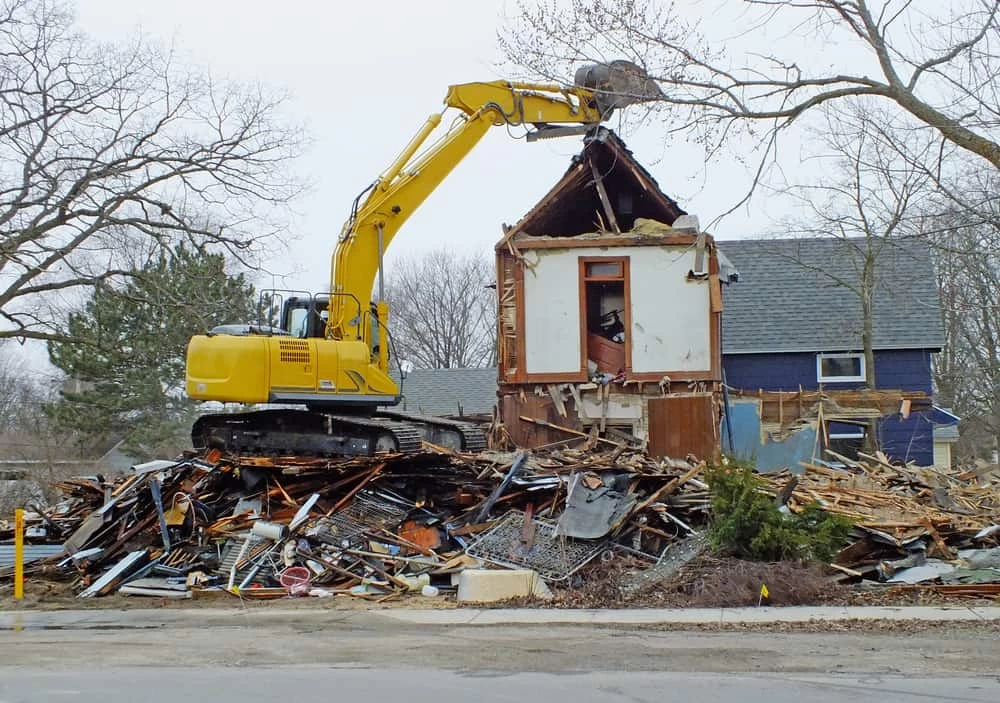
Whether you’re gutting a 1960s ranch in Nesconset, clearing a commercial space on Route 25A, or tearing down a flood-damaged structure near the Nissequogue River corridor, the scope of what we handle in-house is what separates us from most demolition contractors in this area.
On the residential side, that includes full structural demolition, selective interior demolition, kitchen and bathroom gut work, basement clearing, garage removal, and deck or addition teardowns. If asbestos or lead paint is discovered and in Smithtown’s older housing stock, it often is abatement is handled by our licensed team without stopping the project clock. Mold remediation and water damage restoration are also in-house services, which matters significantly for homeowners dealing with the aftermath of the flooding events that have affected this area in recent years.
On the commercial side, we bring the credentials that commercial work in Suffolk County requires. We’re licensed, fully insured at the levels the state mandates for demolition contractors, and MWBE-certified making us eligible for public and municipal projects connected to Smithtown’s active revitalization investment. If you’re a commercial property owner in the Smithtown Business District looking at what the sewer expansion and DRI funding mean for your building’s future, this is the conversation to start now.
Do I need a permit for demolition work in Smithtown, NY?
Yes all demolition work in Smithtown requires a permit issued by the Town of Smithtown Building Department. That applies to full structural demolition, major interior gut work, and even certain component-level removals. The Building Commissioner has authority over the issuance of demolition permits and conducts inspections throughout the project to verify compliance with the New York State Building Code as enforced by the town.
The permit process involves submitting the correct application, providing documentation of the scope of work, and scheduling inspections at specific project phases. If your property was built before 1980 which covers a large portion of Smithtown’s housing stock in hamlets like Kings Park, St. James, and Smithtown proper a pre-demolition hazardous materials assessment is also required before permits can move forward. We manage the entire permit process on your behalf, from initial application through final inspection sign-off.
How do I know if my Smithtown home has asbestos before demolition?
The honest answer is: if your home was built before 1980, you should assume there’s a real possibility. Asbestos was used extensively in residential construction throughout the 1950s, ’60s, and ’70s in floor tiles, pipe insulation, popcorn ceilings, roofing shingles, duct tape, joint compound, and cement siding. Smithtown’s housing stock falls heavily within that window, particularly in older neighborhoods throughout Kings Park, St. James, and Nesconset.
The only way to confirm it is through a professional inspection and material sampling by a licensed assessor. Under New York State Department of Labor regulations, buildings constructed before 1980 must be assessed for asbestos-containing materials above threshold quantities before any demolition proceeds. If ACMs are found, they must be abated by a licensed contractor before the demolition work begins. We hold active NYS DOL asbestos contractor certification and handle the assessment and abatement in-house so if something is found, your project doesn’t stop while you search for a second contractor.
What happens if asbestos is discovered during my demolition project?
If a contractor discovers asbestos mid-project and isn’t licensed to handle it, work stops completely. They’re legally required to establish containment, and you’re left waiting while they refer you to a separate abatement company one that has its own schedule, its own pricing, and no particular urgency to get your project back on track. That gap can cost you weeks and thousands of dollars you didn’t budget for.
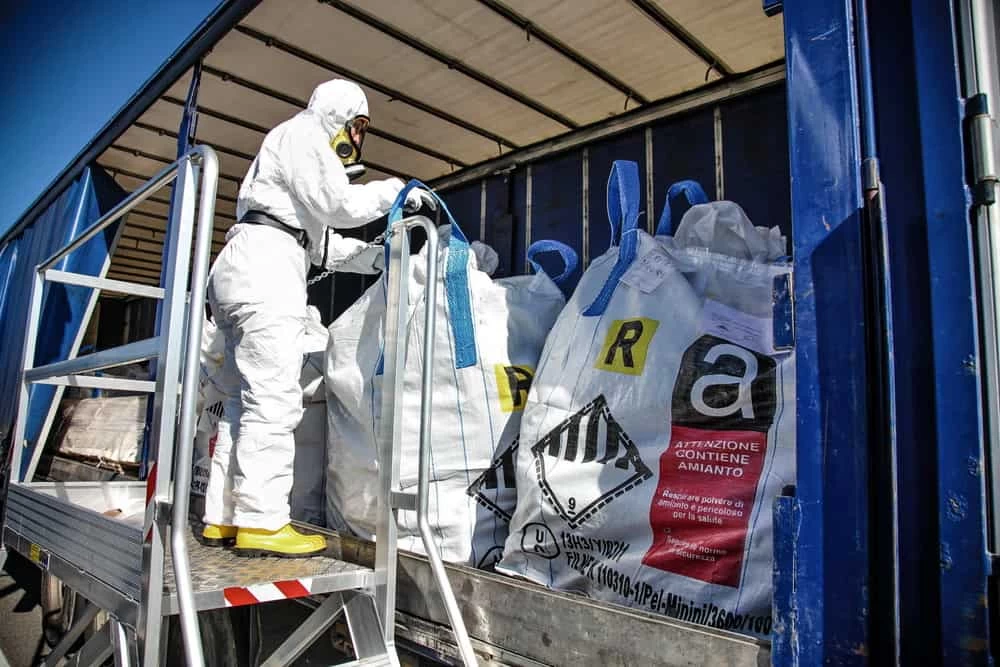
When we discover asbestos during a demolition project, the response is different because abatement is handled in-house. We establish proper containment, remove and dispose of the asbestos-containing materials in full compliance with NYS DOL and USEPA NESHAP regulations, and then pick up where demolition left off without the contractor shuffle. For homeowners in Smithtown dealing with pre-1980 construction, this isn’t a hypothetical edge case. It’s a realistic part of many projects, and having a single contractor who handles both sides of it is the difference between a smooth job and a prolonged headache.
How much does a demolition contractor cost in Smithtown, NY?
Demolition pricing varies based on the size and type of structure, the scope of work, whether hazardous materials are present, and how complex the permit process is for your specific property. A straightforward interior gut on a single-room renovation will cost significantly less than a full structural teardown or a project that involves asbestos abatement. For residential interior demolition in Smithtown, costs generally range from a few thousand dollars for selective work up to $15,000 or more for a full gut renovation with hazmat handling. Full structural demolition on a residential property typically starts in the $10,000–$20,000 range depending on size and conditions.
What’s worth factoring in is total project cost, not just the demolition line item. Hiring a contractor who can’t handle asbestos in-house may look cheaper upfront but when work stops and a separate abatement company enters the picture, the combined cost often exceeds what a fully integrated contractor would have charged from the start. In a market like Smithtown, where property values and renovation investments are significant, getting the full scope handled by one qualified team is usually the more cost-effective path.
Can Green Island Group help with demolition after flood damage in Smithtown?
Yes and this is one of the more common calls we receive from Smithtown homeowners. The town’s geography creates real flood exposure. The Nissequogue River watershed, the four Long Island Sound beaches, and the recharge basin system throughout the town mean that severe rainfall events can cause significant property damage quickly. The August 2024 storms that swept through Suffolk County hit Smithtown hard, and properties throughout the area from St. James to Kings Park were left dealing with water-damaged structures, compromised flooring, flooded basements, and mold.
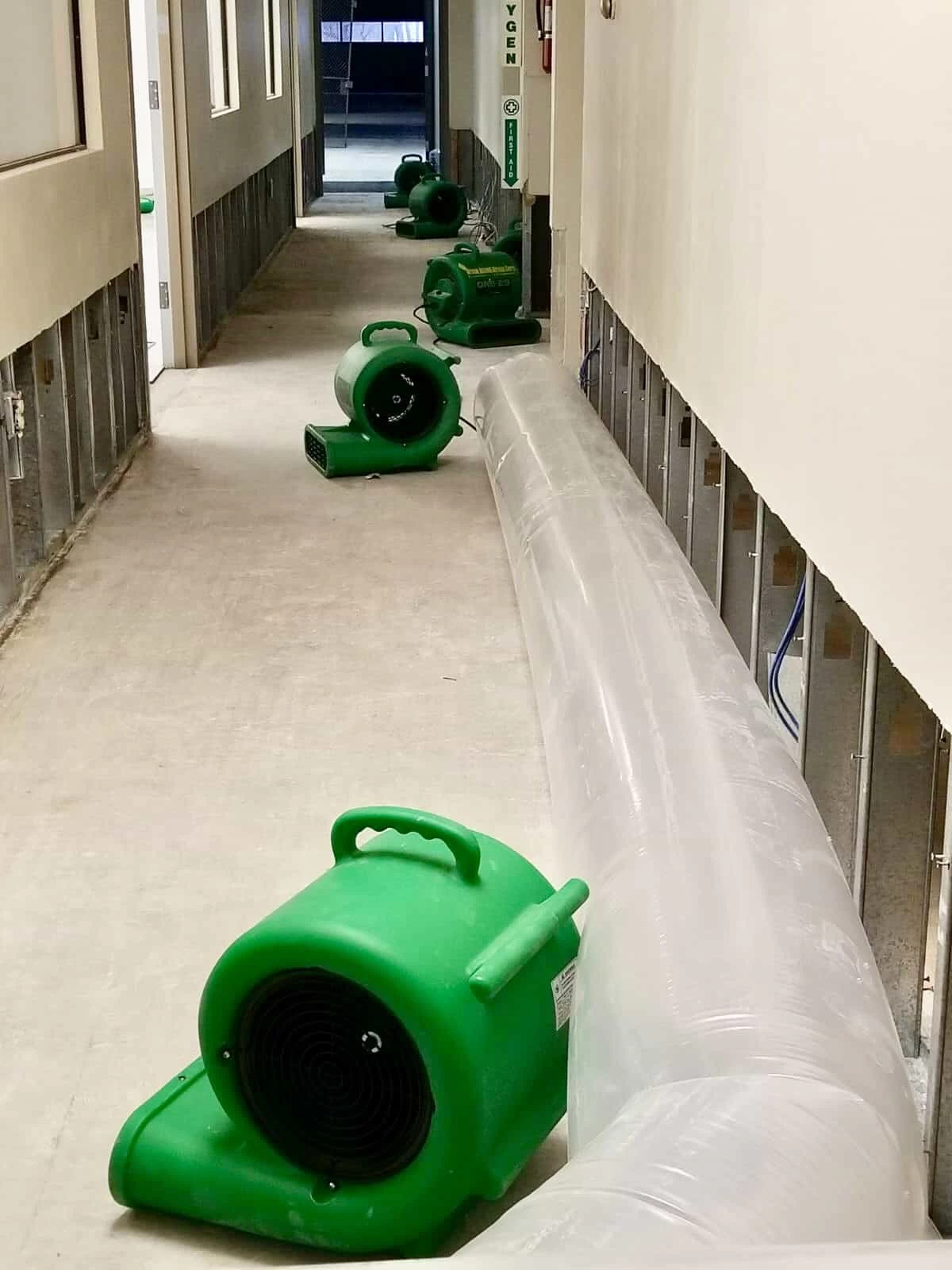
When that kind of damage requires demolition, the timeline matters. We operate 24/7 and have documented response times under one hour for emergency situations. More importantly, we work directly with insurance companies helping with documentation, claim submissions, and the kind of direct communication with carriers that takes pressure off homeowners who are already managing a stressful recovery. Water damage, mold remediation, and demolition are all handled in-house, so you’re not coordinating three separate vendors while your home sits damaged.
What should I look for when hiring a demolition contractor in Smithtown?
License and insurance verification should be the first two things you check not the last. In New York, demolition contractors are required to carry a minimum of $2 million in general liability insurance, which is higher than most other specialty contractor categories. You can verify a contractor’s NYS DOL asbestos license, their general liability coverage, and their workers’ compensation policy before signing anything. If a contractor can’t provide documentation for all three, that’s a clear signal to keep looking.
Beyond credentials, the practical question for Smithtown homeowners is whether the contractor can handle what’s likely to come up on your specific property. Given the age of the housing stock throughout the town Kings Park, Nesconset, St. James, and Smithtown proper all have heavy concentrations of pre-1980 homes asbestos capability isn’t optional. A contractor who has to stop work and refer you elsewhere the moment something is found is not a complete solution. Ask directly: are you licensed to handle asbestos abatement in-house? Do you manage the permit process with the Town of Smithtown Building Department? Do you work with insurance companies on damage-related claims? The answers to those three questions will tell you most of what you need to know.