Your 1950s Home Deserves More Than a Sledgehammer and a Guess
Most demolition jobs in South Hempstead uncover asbestos, lead paint, or both — we handle it all under one contract so your project doesn’t stall halfway through.
I needed a professional consultation explanation of procedure for safe removal of Asbestos in my apartment complex. Without having an account yet, I was very impressed with the caring, knowledgeable and generous advice offered by Jessica, and will look forward to doing business in the future. Thank you so much! I feel much more informed about a sometimes scary endeavor. Peace. Nancy Silva Mineola, NY.
Mia Munoz
Used this company to clean up some water flood in my house. They were fast and easy to work with.very professional, Would recommend to anyone!
Nini Valle
Great company, had a flood and they responded quickly and efficiently. Billed my insurance company directly. I highly recommend this company!
joe colapietro, jr
I had pipe freeze in my basement right before a snow storm and they made to within an hour to help start the clean up process. They we by our side throughout the entire process and even helped with the insurance company. They did such a great job with the cleanup, repair, remidiation, I contracted them to perform the repairs and finishes in the basement. They came with enough manpower and material to get the job done. Leo and Jessica were nothing but a pleasure to deal with!!
Cristian Arredondo c
I had some water damage in my home and Green Island was able to take care of my issue quickly and effectively. I am very pleased with the work they did. They responded quickly and were very professional.
Michael M
Outstanding service! From the office to the field crew everyone was friendly, helpful and responsive. I highly recommend Green Island Group.
What Actually Changes When the Job Is Done Right in South Hempstead
When you’re tearing out a kitchen, gutting a bathroom, or opening up a basement in a South Hempstead home, you’re not just dealing with drywall and tile. You’re dealing with a house that was almost certainly built in the 1940s or 1950s — and homes from that era almost always contain asbestos floor tiles, lead-painted plaster, and pipe insulation that can’t legally be touched without a licensed abatement contractor on site. When the work is done correctly, you’re not just left with a clean space. You’re left with documentation, permits, and the confidence that nothing was cut short.
That matters more in South Hempstead than people realize. Homes here are sitting at a median value around $629,000. The last thing you want is unpermitted demolition work showing up in a title search when you go to sell, refinance, or pull your next permit. A properly executed project — surveyed, permitted through the Town of Hempstead Building Department, abated where necessary, and documented from start to finish — protects that investment instead of quietly threatening it.
And practically speaking, when the project is done right, it’s done. No mid-project stops because something unexpected was found behind the wall. No scrambling to find a separate abatement contractor while your renovation sits frozen. The space is ready for whatever comes next, and you have the paperwork to prove everything was handled the way it was supposed to be.
Licensed Demolition Contractors South Hempstead NY
One Company Handles What Most Contractors Have to Hand Off
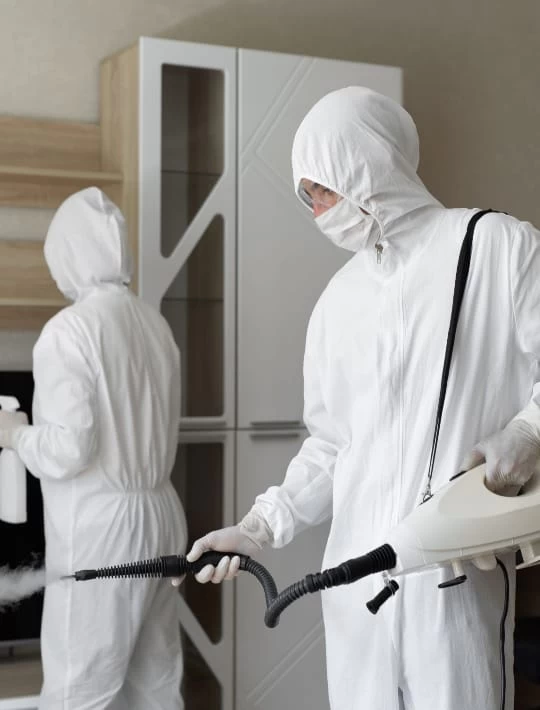
We’re a full-service environmental contracting and demolition firm based on Long Island, serving South Hempstead, Nassau County, and the surrounding area. The reason clients in South Hempstead keep calling — and referring their neighbors — is straightforward: there’s no handoff. Asbestos abatement, lead paint removal, mold remediation, demolition, and cleanup all happen under one contract, with one team, and one point of contact from the first call to the final clearance test.
In a community this compact — South Hempstead is roughly ten blocks by five blocks — word travels fast. When a contractor does right by one homeowner on a block, the neighbors notice. Our 4.7-star rating reflects what happens when a team actually communicates, shows up when we say we will, and doesn’t leave people guessing about what’s happening with their project.
We hold a valid NYS Department of Labor Asbestos Handling Contractor License — which is a separate, specific license that most general contractors and demolition companies in Nassau County simply don’t have. For a community where nearly every home predates 1960, that license isn’t a bonus. It’s a requirement.
No Surprises — Here's Exactly What the Process Looks Like
It starts with an assessment. Before any walls come down or floors come up in a South Hempstead home, the space gets evaluated for asbestos-containing materials, lead paint, and mold. This isn’t optional — New York State Industrial Code Rule 56 requires a mandatory asbestos survey before any renovation or demolition in a pre-1980 structure. If hazardous materials are present, abatement happens first, handled entirely by our team under our NYS DOL license.
Once abatement is cleared, the demolition permit gets pulled through the Town of Hempstead Building Department. We handle this directly — we know what Chapter 86 of the Town Code requires, what documentation the Building Department needs, and how to keep the process moving without unnecessary delays. You don’t have to figure out the Online Permit Center or track down an inspector. That’s handled.
Then the actual demolition work begins — whether that’s a full gut, selective interior demo, or structural removal. In South Hempstead’s tightly spaced residential blocks, that means careful containment, managed debris removal, and attention to the surrounding structure and neighboring properties. When the work is complete, post-project clearance testing confirms the space is safe to reoccupy. You get the clearance documentation, the disposal manifests for any hazardous materials removed, and a space that’s ready for whatever comes next.
What's Included When South Hempstead Calls Green Island Group
We handle the full scope of residential and commercial demolition in South Hempstead and across Nassau County — interior selective demolition, full structural demolition, basement gut-outs, kitchen and bathroom removal, wall takedowns, and everything in between. Because the housing stock here is almost entirely mid-century construction, every project starts with a proper hazardous materials assessment. That assessment determines whether asbestos abatement, lead paint removal, or mold remediation is needed before demolition can legally proceed — and if it is, we perform that work in-house rather than bringing in a third party.
For South Hempstead homeowners specifically, the permit piece matters. The Town of Hempstead requires a demolition permit for any structural or removal work, and we pull that permit as the licensed contractor of record. That means the permit is in the right name, the inspections are scheduled correctly, and the documentation is clean when the job is done.
Commercial property owners in the broader Hempstead corridor — including the active redevelopment area near downtown Hempstead — can also work with us on larger-scale commercial demolition projects. We carry the bonding, insurance, and project management infrastructure for commercial scope work, not just residential. Whether it’s a single-family Cape Cod near Hempstead Lake State Park or a commercial space being prepared for redevelopment, the process is thorough, permitted, and fully documented from day one.
Do I need a permit for demolition work in South Hempstead, NY?
Yes — and this is one of the most important things to get right before any work starts. South Hempstead is an unincorporated hamlet within the Town of Hempstead, which means all permits and code enforcement go through the Town of Hempstead Building Department, not a village office. Chapter 86 of the Town Code requires a building permit for any demolition, removal, or structural alteration work. That includes interior gut projects — it’s not just full teardowns that require a permit.
The permit process involves submitting documentation, scheduling inspections, and in some cases providing engineer certifications — particularly for projects that involve excavation or backfill. We pull the permit in our name as the licensed contractor of record, which means the paperwork is handled correctly from the start. For homeowners in South Hempstead with properties valued around $629,000, having a clean permit history isn’t a formality — it directly affects your ability to sell, refinance, or pull future permits without complications.
How do I know if my South Hempstead home has asbestos before starting demolition?
The honest answer is: you don’t know until it’s tested. If your home was built in the 1940s or 1950s — which describes the majority of South Hempstead’s housing stock — the probability of asbestos-containing materials is high. The most common locations are 9×9 vinyl floor tiles, popcorn ceilings, pipe insulation, joint compound, and roofing materials. These materials were standard construction practice during the post-WWII suburban boom that built most of Nassau County’s residential neighborhoods.
New York State Industrial Code Rule 56 requires a mandatory asbestos survey before any renovation or demolition work in a pre-1980 structure. We conduct that survey as the first step of every project. If asbestos is found, we handle the abatement under our NYS Department of Labor Asbestos Handling Contractor License — which is a separate license from a general contractor’s license and one that most demolition companies in the area don’t hold. The survey results also determine whether EPA NESHAP notification is required before demolition can begin, which we manage on your behalf.
What happens if asbestos or mold is discovered mid-project during demolition?
This is where hiring an integrated contractor versus a demolition-only company makes a real difference. In a mid-century home, finding something unexpected behind a wall — asbestos floor tiles under a newer floor, mold behind a bathroom wall, lead paint under layers of newer paint — is common enough that it shouldn’t be treated as a surprise. It should be treated as a possibility that your contractor is already equipped to handle.
When a demolition-only contractor encounters asbestos or mold mid-project, the job stops. They’re not licensed to touch it, so they have to bring in a third-party abatement company, which takes time to schedule and adds cost and delay to your project. Because we hold active licenses for asbestos abatement, mold remediation, and lead paint removal alongside our demolition work, the same team handles whatever is found. The project keeps moving. Your timeline stays intact, and you’re not managing two separate contractors trying to coordinate around each other’s schedules.
How long does an interior demolition project typically take in a South Hempstead home?
It depends on the scope, but for a typical interior gut project — a kitchen, bathroom, or basement in a South Hempstead Cape Cod or ranch home — the demolition work itself usually takes one to three days once abatement is cleared and permits are in hand. The timeline that catches homeowners off guard is usually the pre-demolition phase, not the demolition itself.
If asbestos is present and needs to be abated, that process takes additional time — typically several days for containment, removal, and post-abatement clearance testing. The permit process through the Town of Hempstead Building Department also adds lead time, which is why it’s worth starting the process early rather than waiting until you’re ready to swing a sledgehammer. We walk you through a realistic timeline during the initial assessment so you’re not caught off guard by any part of the process. For families living in the home during a renovation, that clarity about timing makes a significant difference in planning.
What is selective demolition, and is it the right approach for my renovation project?
Selective demolition means removing specific elements of a structure — a wall, a floor, a ceiling, a kitchen or bathroom — without disturbing the rest of the building. It’s the most common type of demolition work done in South Hempstead’s owner-occupied homes, where families are typically living in the house during the renovation and only a portion of the space is being changed.
The key to selective demolition done well is precision and containment. In South Hempstead’s tightly spaced residential blocks, where homes sit close together on compact lots, debris containment and dust management aren’t just about keeping the job site clean — they’re about protecting the rest of the home, the neighboring properties, and the people living there. We set up proper containment before any work begins, manage debris removal throughout the project, and leave the unaffected areas of your home in the same condition we found them. For the 43% of South Hempstead households that include children under 18, that level of care during an occupied renovation isn’t optional — it’s the standard.
Does Green Island Group handle both demolition and asbestos removal, or do I need separate contractors?
We handle both under one contract — and in South Hempstead specifically, that matters more than it might in a newer community. Because virtually every home in the area was built before 1960, the asbestos question isn’t a hypothetical. It’s a near-certainty that needs to be addressed before demolition begins, and having one company licensed and equipped to handle both means you’re not coordinating between two separate contractors, two separate schedules, and two separate scopes of work.
The NYS Department of Labor Asbestos Handling Contractor License is a specific license that requires documented training, compliance history, and insurance — it’s not included in a general contractor license or a standard demolition license. Many contractors who will quote demolition work in Nassau County don’t hold it. We do. That means from the initial survey through abatement, demolition, cleanup, and final clearance testing, the entire project stays with one team. You get one point of contact, one contract, and one set of disposal manifests documenting that everything was handled legally and correctly.