When Your 1950s South Huntington Home Needs to Come Down Right
Most homes in South Huntington were built before 1960 and tearing one down without the right contractor can turn a straightforward project into a regulatory and financial mess. We handle demolition and everything that comes with it, including asbestos, permits, and cleanup.
I needed a professional consultation explanation of procedure for safe removal of Asbestos in my apartment complex. Without having an account yet, I was very impressed with the caring, knowledgeable and generous advice offered by Jessica, and will look forward to doing business in the future. Thank you so much! I feel much more informed about a sometimes scary endeavor. Peace. Nancy Silva Mineola, NY.
Mia Munoz
Used this company to clean up some water flood in my house. They were fast and easy to work with.very professional, Would recommend to anyone!
Nini Valle
Great company, had a flood and they responded quickly and efficiently. Billed my insurance company directly. I highly recommend this company!
joe colapietro, jr
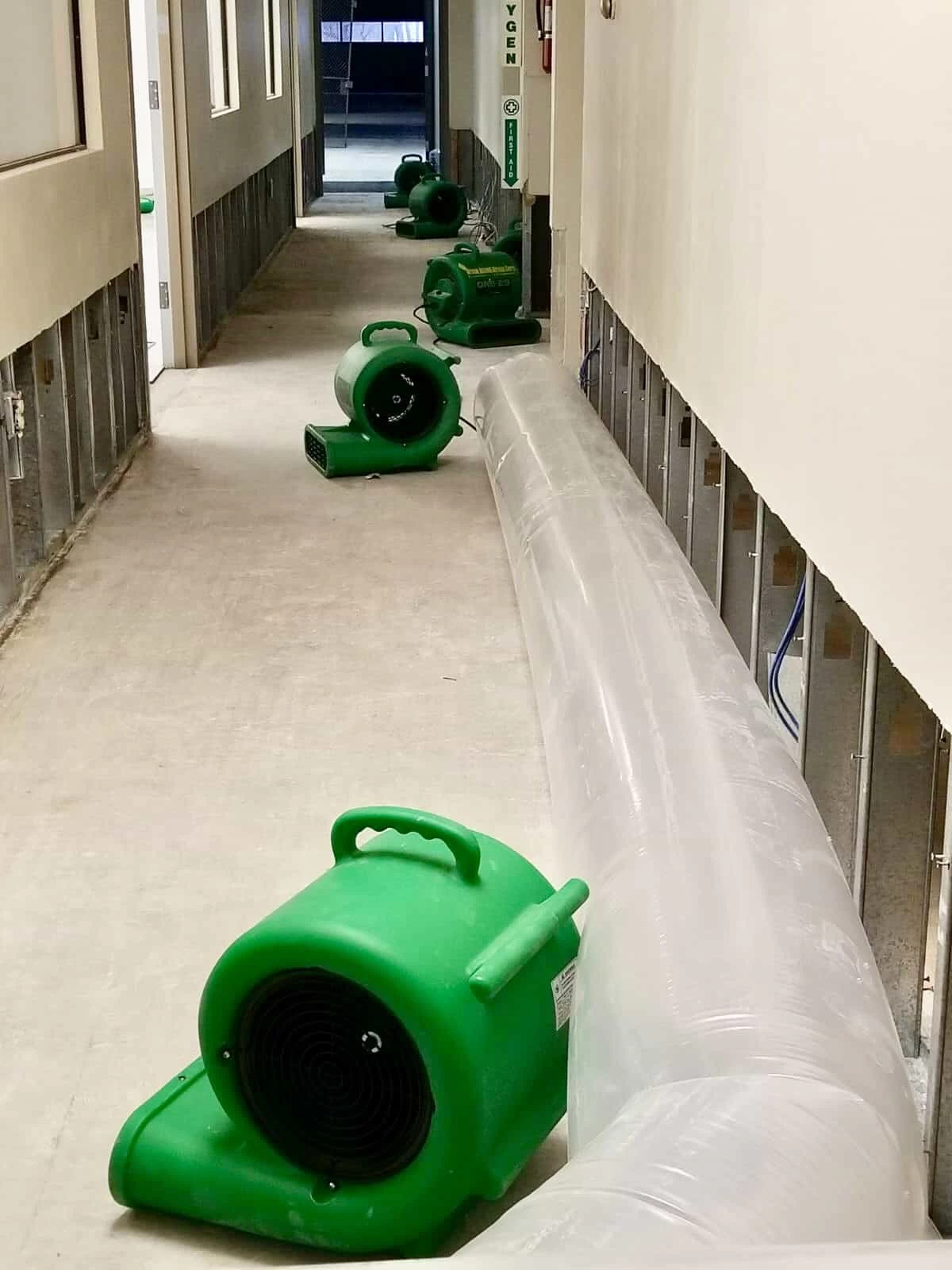
I had pipe freeze in my basement right before a snow storm and they made to within an hour to help start the clean up process. They we by our side throughout the entire process and even helped with the insurance company. They did such a great job with the cleanup, repair, remidiation, I contracted them to perform the repairs and finishes in the basement. They came with enough manpower and material to get the job done. Leo and Jessica were nothing but a pleasure to deal with!!
Cristian Arredondo c
I had some water damage in my home and Green Island was able to take care of my issue quickly and effectively. I am very pleased with the work they did. They responded quickly and were very professional.
Michael M
Outstanding service! From the office to the field crew everyone was friendly, helpful and responsive. I highly recommend Green Island Group.
Here’s what usually happens when homeowners in South Huntington hire a standard demolition crew: the work starts, someone finds asbestos in the floor tiles or pipe insulation which is almost guaranteed in a home built in 1958 and everything stops. Now you’re scrambling to find a separate abatement company, your timeline is blown, and costs are climbing. That scenario doesn’t happen when you work with us, because we handle abatement and demolition under one roof.
South Huntington’s housing stock is almost entirely detached single-family homes, most of them built during the postwar boom. That era of construction is known for asbestos in ceiling tiles, floor tiles, roofing materials, and pipe wrap. The Town of Huntington actually requires a licensed asbestos contractor to survey any building constructed before 1974 before demolition can begin and the median build year here is 1958. That means the asbestos survey isn’t optional on most projects in South Huntington. It’s a legal requirement.
What you get on the other side of a well-managed demolition is a clean, compliant, permitted site ready for whatever comes next, whether that’s a renovation, a rebuild, or a sale. No lingering liability, no permit violations, no surprise discoveries mid-project. Just a job done correctly from the first day to the last.
Licensed Demolition Contractors South Huntington NY
12 Years In, 5,000 Projects Deep Right Here in South Huntington
We’ve been operating across Long Island and New York City for over 12 years, with more than 5,000 completed projects and a home base in Bohemia right in Suffolk County, less than 25 miles from South Huntington via Route 110. That proximity isn’t just geography. It means we know the Town of Huntington Building Department, we know what Form 87-04 requires, and we know what a 1950s Cape Cod in the 11746 ZIP code looks like before the first wall comes down.
We’re fully licensed, carry $2 million or more in general liability insurance, hold active NYS Department of Labor asbestos contractor certifications, and maintain a Suffolk County Home Improvement License all credentials required to legally complete demolition work in South Huntington. We’re also MWBE-certified, which opens doors for public and commercial contracts along the Route 110 corridor that most local competitors simply can’t access. When you hire us, every layer of compliance is already handled.
What the Process Looks Like Before a Wall Comes Down in South Huntington
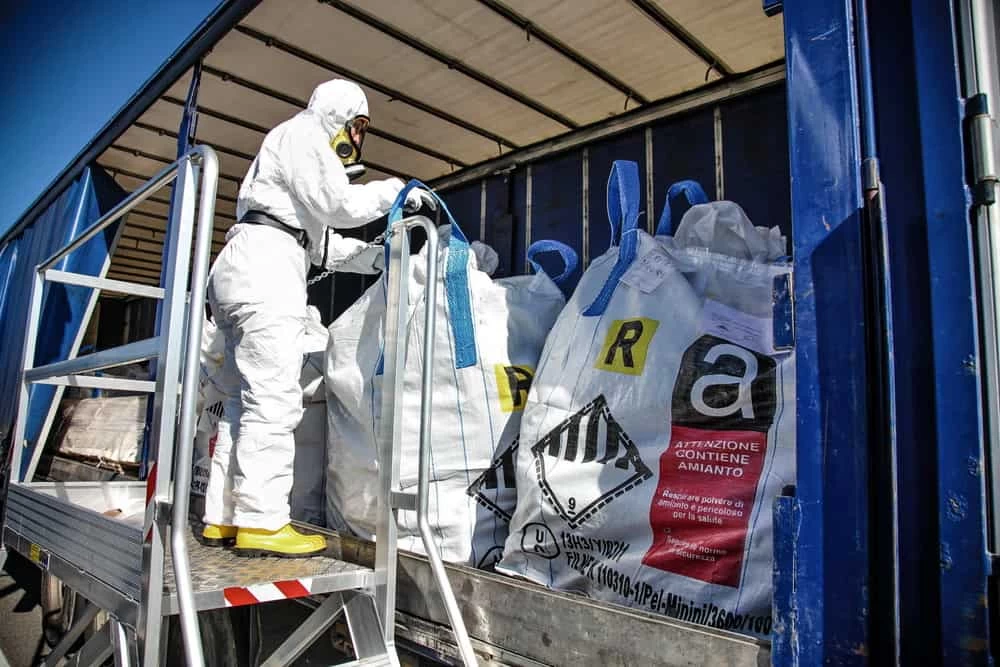
The first step is a site assessment. We come out, walk the property, and evaluate what we’re working with the structure, the materials, the scope. For any home built before 1974, which covers the vast majority of South Huntington’s housing stock, we conduct a licensed asbestos survey as part of this phase. If hazardous materials are present, we handle abatement before demolition begins. This isn’t a delay it’s the legal and correct sequence, and it protects you from liability down the road.
Once the assessment is complete, we handle permitting. In South Huntington, that means filing Form 87-04 with the Town of Huntington Building and Housing Department, coordinating utility disconnection with PSEG Long Island, and ensuring every document is notarized and complete before submission. The Town can turn around a demolition permit in a single business day when the paperwork is right. We make sure it is.
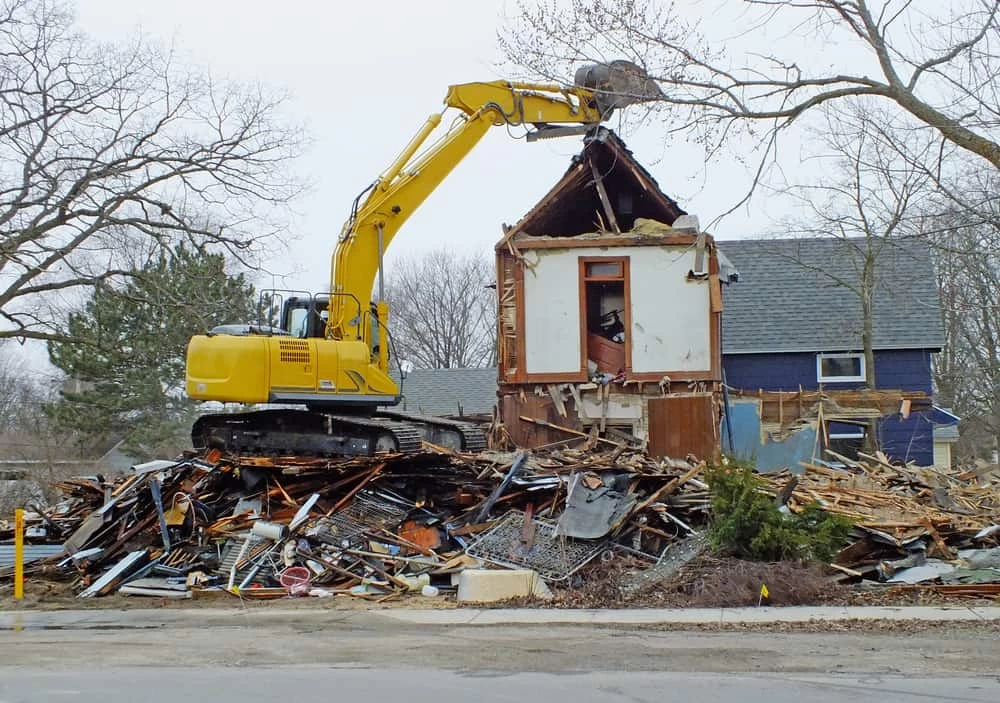
Then the work begins. Demolition is staged and managed to protect surrounding structures, neighboring properties, and any portions of your home that are staying. Debris is hauled and disposed of properly, including any hazardous materials that require special handling. When we leave, the site is clean, documented, and ready for the next phase whatever that looks like for you.
Commercial Demolition Contractor South Huntington NY
Every Project Covered, From Interior Teardowns to Full Structures
We handle the full range of demolition work in South Huntington residential interior demolition, selective demolition, full house demolition, garage and outbuilding removal, and commercial demolition for properties along the Route 110 corridor and surrounding areas. Whether you’re gutting a kitchen in a 1962 ranch or clearing a commercial site near the Walt Whitman Shops, the scope of what we cover is the same: everything, start to finish.
For South Huntington homeowners specifically, interior demolition and gut renovations are the most common project types. With median home values approaching $750,000 and a near-zero vacancy rate in this community, most residents are renovating and staying not selling and moving. That means basement buildouts, full bathroom teardowns, kitchen gut jobs, and structural wall removals are steady work here. Every one of those projects in a pre-1980 home triggers the same asbestos survey requirement under New York State law, and we handle that in-house so your renovation doesn’t stall waiting on a second contractor.
On the commercial side, the active redevelopment happening along Route 110 including the Federal Realty rebuild of the Huntington Shopping Center signals a construction environment where commercial demolition and site prep services are in real demand. Our MWBE certification makes us an eligible contractor for public and municipal projects that require it. If you’re managing a commercial project in the area, that distinction matters.
Do I need a permit for demolition work in South Huntington, NY?
Yes and there are no exceptions for smaller interior projects. The Town of Huntington requires a building permit for any demolition work, whether you’re taking down a single wall or a full structure. The specific application is Form 87-04, and it requires two notarized copies, a pre-demolition survey, a Certificate of Workers’ Compensation, a Suffolk County Home Improvement License, and utility disconnection letters from applicable providers including PSEG Long Island.
The good news is that the Town of Huntington can process demolition permits in a single business day when all paperwork is submitted correctly. The problem most homeowners in South Huntington run into is missing documentation a missing utility letter, an unsigned form, or a contractor without the right credentials. We’ve been through this process dozens of times in the Town of Huntington and know exactly what needs to be in the packet before it’s submitted. That means no back-and-forth delays, and no waiting weeks for a permit that should take one day.
Does my South Huntington home likely contain asbestos before demolition?
If your home was built before 1974 and in South Huntington, the median construction year is 1958 the honest answer is probably yes, at least in some form. Asbestos was used extensively during the postwar construction era in floor tiles, ceiling tiles, pipe insulation, roofing shingles, drywall joint compound, and exterior siding. Homes built in the late 1950s and 1960s almost universally contain at least one of these materials.
New York State Labor Law requires a licensed asbestos contractor to survey the building and identify any asbestos-containing materials before demolition can begin. This isn’t optional it’s a legal requirement that the Town of Huntington enforces as part of the permit process. If asbestos is found, it must be abated by a licensed contractor before demolition proceeds. We hold active NYS Department of Labor asbestos contractor certifications and handle both the survey and abatement in-house, so your project doesn’t stop when asbestos is discovered. It just moves to the next step.
How much does residential demolition typically cost in South Huntington?
For a standard residential demolition in South Huntington, you’re generally looking at somewhere between $5 and $15 per square foot for a full structure, and $2 to $7 per square foot for interior demolition work. For a typical postwar ranch or Cape Cod in South Huntington commonly in the 1,200 to 1,800 square foot range that puts a full demolition somewhere in the $8,000 to $25,000 range before permit fees and disposal costs are factored in.
The variable that changes the number most significantly in this community is asbestos. If asbestos-containing materials are present and require abatement which is the case in most pre-1974 homes you can expect abatement to add anywhere from $2 to $3 per square foot and 10% to 45% to the total project cost depending on the extent of the materials. That’s not a reason to avoid the project it’s a reason to hire a contractor who handles it in-house rather than stopping work and billing you for a second mobilization. We scope the full project before we quote, so the number you see reflects the actual job.
What utilities need to be disconnected before demolition in the Town of Huntington?
Before demolition can begin in South Huntington, you need written confirmation from each applicable utility provider that service has been disconnected. That includes electricity through PSEG Long Island, natural gas, water, and sewer. The Town of Huntington requires original disconnection letters as part of the Form 87-04 permit application not just verbal confirmation, and not a bill showing the account is closed.
This step trips up a lot of homeowners because utility companies don’t always move quickly, and the Town won’t issue the permit without the letters in hand. We coordinate this process on your behalf contacting PSEG Long Island and the other providers, tracking the disconnection status, and making sure the letters are in the permit packet before submission. It sounds like a minor administrative detail, but it’s one of the most common reasons demolition permits get delayed in the Town of Huntington. We’ve learned to get ahead of it.
Can we handle emergency demolition after storm damage in South Huntington?
Yes and it’s something we do regularly across Long Island. South Huntington’s housing stock, with a median build year of 1958, includes a lot of roofing, structural framing, and drainage systems that are decades past their original design life. A nor’easter, a heavy snow load, or a severe wind event can push an already-stressed structure past the point of safe occupancy quickly. When that happens, you need someone who can respond fast and assess the damage without waiting for a scheduled appointment.
We operate 24/7 with genuine emergency response not an answering service. We’ve had customers document response times under an hour during active storm conditions. For insurance-triggered demolition specifically, we also work directly with insurance adjusters, which matters when you’re managing property damage and a claim at the same time. We can document the damage, assess what needs to come down, and get the process moving while the insurance side is still being sorted out. That coordination is something a lot of homeowners don’t realize they can ask for from a contractor.
What's the difference between a demolition contractor and a general contractor for this type of work?
A general contractor manages construction projects building things, coordinating subcontractors, overseeing renovation scopes. A licensed demolition contractor is specifically credentialed to handle the removal and disposal of structures and materials, including hazardous ones. In New York, demolition contractors are required to carry specific licensing, insurance minimums, and in the case of pre-1974 buildings asbestos abatement certifications that general contractors typically don’t hold.
In South Huntington, this distinction matters practically. If you hire a general contractor to manage a gut renovation and they encounter asbestos which is likely in any home built before the mid-1970s they’re legally required to stop work and bring in a licensed abatement contractor. That means two mobilizations, two sets of overhead costs, and a project timeline that just doubled. We are both a licensed demolition contractor and a licensed asbestos abatement contractor, which means we don’t have to stop when the situation gets complicated. For a community where nearly every home predates 1980, that integrated capability isn’t a minor detail it’s the thing that keeps your project on track.