Most of the homes south of Syosset Station were built in the 1950s through 1970s — and almost every one of them has something behind the walls that a standard demolition contractor isn’t licensed to touch. We handle the full scope, from hazardous materials assessment through clean-site completion, without handing your project off to anyone.
I needed a professional consultation explanation of procedure for safe removal of Asbestos in my apartment complex. Without having an account yet, I was very impressed with the caring, knowledgeable and generous advice offered by Jessica, and will look forward to doing business in the future. Thank you so much! I feel much more informed about a sometimes scary endeavor. Peace. Nancy Silva Mineola, NY.
Mia Munoz
Used this company to clean up some water flood in my house. They were fast and easy to work with.very professional, Would recommend to anyone!
Nini Valle
Great company, had a flood and they responded quickly and efficiently. Billed my insurance company directly. I highly recommend this company!
joe colapietro, jr
I had pipe freeze in my basement right before a snow storm and they made to within an hour to help start the clean up process. They we by our side throughout the entire process and even helped with the insurance company. They did such a great job with the cleanup, repair, remidiation, I contracted them to perform the repairs and finishes in the basement. They came with enough manpower and material to get the job done. Leo and Jessica were nothing but a pleasure to deal with!!
Cristian Arredondo c
I had some water damage in my home and Green Island was able to take care of my issue quickly and effectively. I am very pleased with the work they did. They responded quickly and were very professional.
Michael M
Outstanding service! From the office to the field crew everyone was friendly, helpful and responsive. I highly recommend Green Island Group.
When you’re gutting a kitchen or opening up a basement in a Syosset home built in 1964, the demo work doesn’t happen in a vacuum. There’s a real chance the floor tiles are vinyl asbestos, the ceiling texture contains ACMs, or the pipe wrap in the utility room needs to come out before a single wall comes down. If your contractor isn’t licensed to handle that, your project stops the day it’s discovered — and you’re back to square one finding someone who is.
That’s the situation we were built to eliminate. Because asbestos abatement and demolition are handled under the same license, the same team, and the same contract, there’s no gap between trades and no week-long pause while a separate abatement firm gets scheduled. The project keeps moving.
This matters especially in Syosset’s real estate market, where buyers are often working against a deadline — whether that’s a school-year start in September, a closing timeline, or a general contractor waiting on a cleared site. A demolition crew that can assess, abate if needed, demo, and hand off a documented clean site isn’t just more convenient. In this market, it’s the difference between a renovation that finishes on time and one that doesn’t finish at all.
We’re a Long Island-based environmental contracting and demolition firm serving Nassau and Suffolk counties, including Syosset and the broader Town of Oyster Bay area. We hold a NYS Department of Labor Asbestos Handling Contractor License — a credential that’s separate from a general contractor license and not held by most firms advertising demolition services on Long Island. That distinction matters when you’re working in a 1968 colonial off Woodbury Road in Syosset and the pre-demo inspection turns up something that needs to be abated before the walls come down.
We bring the same documented, permit-compliant approach to every project — residential gut renovations, commercial buildouts along Jackson Avenue, estate turnovers, and everything in between. Reviews consistently highlight the same things: responsive communication, named staff who are reachable, and projects that don’t produce surprises mid-way through. That’s not an accident. It’s how we operate.
No Surprises — Here's What the Process Actually Looks Like
It starts with a site assessment. Before any demolition work begins, we evaluate the scope of the project and identify any suspected hazardous materials — asbestos, lead paint, mold — that need to be addressed first. In Syosset’s post-war housing stock, this step isn’t optional. It’s what keeps the project legal, keeps the workers safe, and keeps your renovation from hitting a wall two days in.
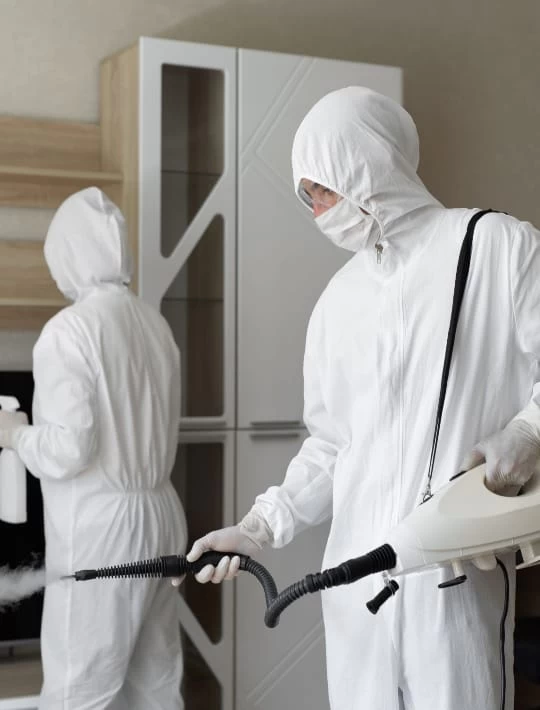
If hazardous materials are present, we handle abatement before demolition proceeds. This is done in-house, under our NYS DOL license, with proper containment, air monitoring, and disposal documentation. Once clearance testing confirms the space is clean, demolition begins. The Town of Oyster Bay requires a permit for demolition work, and we pull that permit in our own name — you don’t need to navigate the Building Division at 74 Audrey Avenue yourself.
After demo, the site is cleared, debris is removed, and you receive the documentation that matters: disposal manifests for any hazardous materials, post-abatement clearance certificates, and a clean handoff to your general contractor or next trade. That paperwork becomes part of your property’s record — which matters when a Syosset home sells for over a million dollars and the buyer’s attorney starts asking questions.
Full-Scope Demolition Built for Syosset's Real Conditions
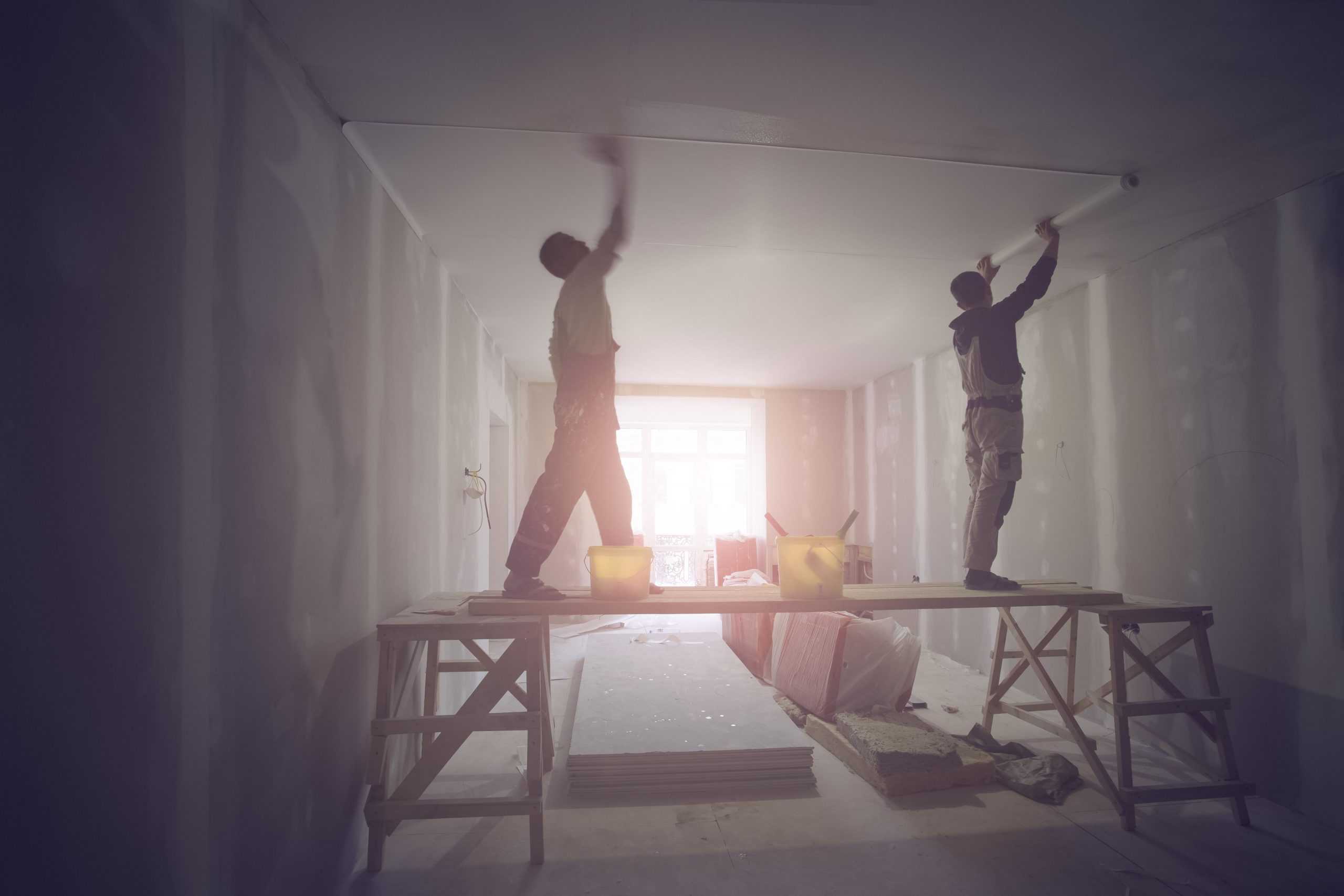
We handle residential interior demolition, full structural demolition, and commercial demolition — and the scope of each project is shaped by what’s actually in front of us, not a standardized checklist. For a homeowner gutting a 1970s split-level south of the LIRR station in Syosset, that means a pre-demo hazardous materials assessment, licensed abatement if ACMs or lead paint are confirmed, selective or full interior demolition, debris removal, and post-project clearance documentation. For a commercial tenant improvement along Jericho Turnpike or Woodbury Road, it means the same licensed, permitted, documented process at a commercial scale — with the bonding and project management infrastructure to match.
The services that often get discovered mid-project — mold behind bathroom tile, lead paint under layers of renovation, structural issues revealed once walls come down — are also within scope. Our licensing spans demolition, asbestos abatement, mold remediation, and restoration, which means the project doesn’t stall because something unexpected turned up. We address it and keep moving.
Every project in Syosset comes with permit management through the Town of Oyster Bay, hazardous waste disposal documentation, and post-project clearance testing where applicable. You get a clean site and a paper trail — both of which are worth having when your home is one of the most valuable assets you own.
Do I need a permit for interior demolition work in Syosset, NY?
Yes. Syosset is an unincorporated hamlet within the Town of Oyster Bay, which means all building and demolition permits are issued by the Town of Oyster Bay Building Division — not a village government. Under Chapter 93 of the Town’s code, it’s unlawful to remove or demolish any building or structure, or commence that work, without a permit in place first. This applies to significant interior demolition work, not just full structural teardowns.
The permit application process runs through the Town of Oyster Bay Building Division at 74 Audrey Avenue in Oyster Bay, and the Town also offers an online portal for applications, fee payment, and inspection scheduling. A licensed contractor who is registered with the Town can pull the permit in their own name — which is how it should work. If a contractor asks you to pull the permit yourself, that’s often a sign they aren’t registered to do it. We handle permit management as part of every project scope.
How do I know if my Syosset home has asbestos before starting a renovation?
You don’t — not without testing. Asbestos-containing materials don’t look different from non-asbestos materials. The vinyl floor tiles under the carpet in a 1962 Syosset ranch, the textured ceiling in a 1970s basement, the pipe insulation in the utility room — none of these are visually identifiable as containing asbestos. Laboratory analysis of collected samples is the only way to confirm it.
The majority of Syosset’s residential housing stock south of the LIRR station was built between the 1950s and 1980s — the era when asbestos was used extensively in floor tiles, ceiling texture, joint compound, pipe insulation, roofing materials, and HVAC duct wrap. If your home was built before 1980, the statistically honest answer is that there’s a meaningful probability of asbestos-containing materials somewhere in the structure. A pre-demolition assessment that includes sampling and lab testing is the professional standard, and it’s the step that protects you, your contractor, and your neighbors before any demolition work begins.
What happens if asbestos is found during a demolition project in Nassau County?
If asbestos-containing materials are discovered during a demolition project, work in the affected area stops until a licensed abatement contractor addresses it. Under New York State Department of Labor regulations, only a contractor holding an NYS DOL Asbestos Handling Contractor License is legally authorized to disturb, remove, and dispose of ACMs. This is a separate license from a general contractor license, and most contractors advertising demolition services in Nassau County do not hold it.
When you hire a demolition contractor who doesn’t have abatement licensing, you’re one positive sample away from a project pause that could last weeks — while a separate abatement firm gets sourced, scheduled, and contracted. We hold the NYS DOL Asbestos Handling Contractor License, which means if ACMs are found during a Syosset project, we handle the abatement, the clearance testing, and the disposal documentation without stopping the project clock. The abatement happens, the clearance is confirmed, and demolition continues — no handoff, no gap, no scramble.
Who is responsible for pulling the demolition permit — me or the contractor?
The contractor should pull it. A licensed demolition contractor who is registered with the Town of Oyster Bay can and should pull the permit in their own name. When a contractor asks the homeowner to pull the permit instead, it usually means one of two things: they aren’t registered with the municipality to pull permits themselves, or they want to reduce their own liability exposure on the project. Neither is a situation you want to be in.
Pulling a permit in your own name as a homeowner means you’re taking on responsibility for the work meeting code — and if something goes wrong, the liability follows you, not the contractor. In Syosset, where homes are selling for $900,000 to over a million dollars, that’s not a risk worth taking to save a few hundred dollars on a contractor who cuts corners. We pull permits in our own name on every applicable project, manage the inspection process, and deliver a fully permitted, code-compliant scope of work.
How long does interior demolition typically take for a gut renovation in Syosset?
For a standard interior gut renovation — a full kitchen, a bathroom, or a basement — the demolition phase itself typically runs one to three days once the site is prepped and the permit is in place. The total timeline from first contact to a cleared, documented site depends on whether hazardous materials are present and need to be abated first.
In Syosset’s older housing stock, it’s realistic to build in time for a pre-demo assessment and, if ACMs are confirmed, an abatement phase before demolition begins. That abatement process — containment setup, removal, air monitoring, clearance testing — typically adds several days to the schedule, not weeks, when it’s managed in-house by the same contractor. Many Syosset families plan major renovations around the school calendar, targeting a June start with a goal of finishing before September. Building in a realistic timeline that accounts for what’s likely in a 1960s or 1970s home is how you protect that schedule — not by hoping the house is clean and finding out it isn’t after work has already started.
Does Green Island Group handle both demolition and asbestos removal in Syosset, or are those separate contracts?
Both are handled under one contract. We hold the NYS Department of Labor Asbestos Handling Contractor License, which means asbestos assessment, abatement, and demolition are all performed by our team, under the same project scope, without subcontracting the abatement work to a separate firm. For a Syosset homeowner, that means one point of contact, one contract, and one team accountable for the full scope from start to finish.
This matters practically because the alternative — hiring a demolition contractor who then refers out the asbestos work — creates gaps. Separate scheduling, separate contracts, separate liability, and a project timeline that depends on two companies coordinating with each other. In a market where Syosset homes are worth over a million dollars and renovation timelines are tied to school calendars and closing dates, that coordination risk is real. Having one licensed contractor who handles the assessment, the abatement if needed, the demolition, the debris removal, and the final documentation package isn’t a luxury — it’s the straightforward way to get the project done correctly without the gaps that cost time and money.