When the Building's Pre-War, the Demo Has to Be Right
In the Financial District near Trinity, almost every structure on and around Trinity Place was built before 1987 which means asbestos is almost always part of the conversation. We’re a licensed demolition contractor that handles the abatement, the permits, and the demolition itself, so you’re not managing three different contractors on one job.
I needed a professional consultation explanation of procedure for safe removal of Asbestos in my apartment complex. Without having an account yet, I was very impressed with the caring, knowledgeable and generous advice offered by Jessica, and will look forward to doing business in the future. Thank you so much! I feel much more informed about a sometimes scary endeavor. Peace. Nancy Silva Mineola, NY.
Mia Munoz
Used this company to clean up some water flood in my house. They were fast and easy to work with.very professional, Would recommend to anyone!
Nini Valle
Great company, had a flood and they responded quickly and efficiently. Billed my insurance company directly. I highly recommend this company!
joe colapietro, jr
I had pipe freeze in my basement right before a snow storm and they made to within an hour to help start the clean up process. They we by our side throughout the entire process and even helped with the insurance company. They did such a great job with the cleanup, repair, remidiation, I contracted them to perform the repairs and finishes in the basement. They came with enough manpower and material to get the job done. Leo and Jessica were nothing but a pleasure to deal with!!
Cristian Arredondo c
I had some water damage in my home and Green Island was able to take care of my issue quickly and effectively. I am very pleased with the work they did. They responded quickly and were very professional.
Michael M
Outstanding service! From the office to the field crew everyone was friendly, helpful and responsive. I highly recommend Green Island Group.
One Contractor. No Gaps Between Demo and Abatement.
Here’s what most property managers in the Financial District figure out the hard way: hiring a demolition contractor who can’t handle asbestos abatement in-house means two separate permit streams, two crews, and a gap in accountability that almost always turns into a delay. In a neighborhood where virtually every building pre-dates 1987, that’s not a rare edge case it’s the standard reality on nearly every job.
We handle asbestos abatement, mold remediation, lead paint removal, and demolition under one license, with one crew, and one point of contact. That matters when you’re gutting a floor at 222 Broadway or clearing a unit in a converted office tower near Rector Street, and you can’t afford a stop-work order while waiting on a separate abatement contractor to finish their scope.
For condo owners, property managers, and developers working in Lower Manhattan’s pre-war building stock near Trinity, that integrated capability isn’t a bonus it’s the difference between a project that moves and one that stalls.
340+ NYC Demolition Projects. We Know This Regulatory Environment.
We’ve been operating in New York City for over 12 years, with more than 340 completed demolition projects across the five boroughs. That includes complex interior demolitions, commercial gut-outs, and pre-construction site clearance in some of the most tightly regulated corridors in the city including Lower Manhattan near Trinity.
The Financial District isn’t a market you learn on the fly. Between NYC DOB permitting, DEP asbestos regulations, Landmarks Preservation Commission review for work near sites like the Trinity Building at 111 Broadway, and NYC Local Law 196 safety requirements, there are layers here that trip up contractors who don’t work in the city regularly. We do.
We’re EPA and OSHA certified, NYC DOB licensed, and hold Certified MWBE status a government-verified credential that qualifies us for public and institutional contracts throughout the city.
From ACP-5 Filing to Final Clearance Here's the Process
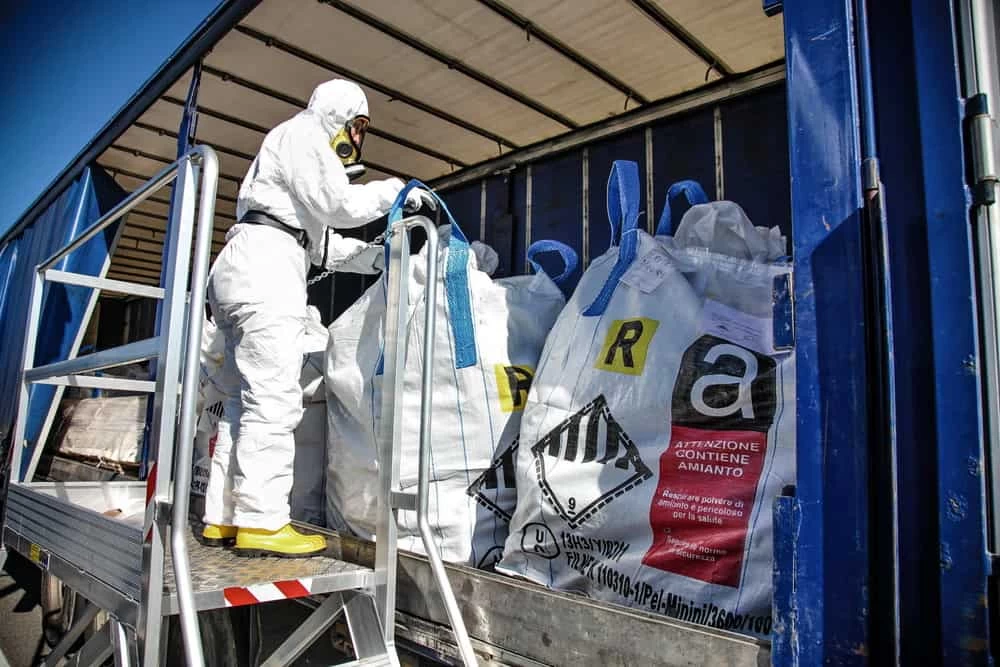
Every demolition project in the Financial District starts with an asbestos assessment. Under NYC DOB and DEP rules, any building constructed before April 1, 1987 requires an ACP-5 investigation report before a demolition permit can even be filed. If asbestos-containing materials are confirmed which is nearly certain in pre-war Lower Manhattan buildings near Trinity an ACP-7 must be filed and all ACM fully abated before any demolition work begins. We manage both filings, coordinate the abatement, and move directly into demo without the handoff delays that come with using separate contractors.
Once abatement is complete, the demolition permit package goes to DOB including the site safety plan, dust control plan, utility disconnection letters, and pre-demolition inspection reports. In Manhattan, that process typically takes four to eight weeks for approval. During that window, we coordinate freight elevator access, noise ordinance compliance (work hours run 7:00 AM to 6:00 PM on weekdays in the city), and any LPC review requirements if the project is adjacent to a landmarked structure.
When work begins, you get a licensed crew operating within a clearly defined scope, milestone-based progress, and no surprises buried in a change order. The goal is a clean, compliant project that doesn’t generate a stop-work order because in this neighborhood, that’s the outcome that matters most.
Commercial and Residential Demolition Contractors NYC
Full-Scope Demo Built for Financial District Realities
The office-to-residential conversion wave sweeping Lower Manhattan has created demolition demand at every scale from a single condo gut-out in a converted tower near Wall Street to full commercial floor clearance on a multi-story project. We handle both ends of that spectrum with the same licensed team and the same compliance standards, whether the job is a studio renovation off Trinity Place or a large-scale interior demolition as part of a conversion project like those underway at 55 Broad Street or 61 Broadway.
Every project includes asbestos abatement (ACP-5 and ACP-7 filing handled in-house), mold remediation if present, lead paint removal, full permit management, site safety coordination, and dust containment protocols appropriate for occupied buildings. For projects in or adjacent to landmarked structures and there are several on and around Trinity Place, including the Trinity Building and the U.S. Realty Building at 115 Broadway LPC documentation support is part of our scope.
Emergency response is also available around the clock. Lower Manhattan sits in a FEMA flood zone, and pre-war buildings in the area have aging plumbing and mechanical infrastructure that fails. When water damage or fire damage requires immediate structural demolition, we respond not in three days, but the same day.
Do I need an asbestos test before starting demolition near Trinity Place in NYC?
Yes and this isn’t optional. Under NYC Department of Buildings and Department of Environmental Protection rules, any building constructed before April 1, 1987 requires a completed asbestos investigation report (ACP-5 form) before a demolition or renovation permit can be issued. Given that nearly every building on and around Trinity Place predates 1987 many by several decades this step applies to almost every project in the area.
If the investigation confirms asbestos-containing materials are present, which is the common outcome in pre-war Financial District buildings, a second filing (ACP-7) is required, and all asbestos must be fully abated by a licensed contractor before demolition work can begin. We handle both the investigation coordination and the abatement in-house, which means you’re not waiting on a separate contractor to finish before demo can start. It keeps the timeline moving and removes the accountability gap that comes with splitting those scopes between different companies.
How long does it take to get a demolition permit approved in Manhattan?
In New York City, a demolition permit application filed through DOB NOW typically takes four to eight weeks to receive approval, depending on the complexity of the project and whether all required documentation is submitted correctly the first time. The permit package includes an asbestos investigation report, a site safety plan, a dust control plan, utility disconnection letters, signed pre-demolition inspection reports, and neighbor notification for full demolitions.
Incomplete submissions are one of the most common causes of delays, and they’re avoidable. We manage the entire permit package every document, every filing, every agency interaction so the application goes in complete and the timeline stays on track. For projects near landmarked structures, like those along Trinity Place or Broadway in the Financial District, there may also be a Landmarks Preservation Commission review layer that needs to be factored into the overall schedule before DOB approval can move forward.
What's the difference between selective demolition and a full gut-out for a Financial District condo near Trinity?
Selective demolition means removing specific elements a wall, a ceiling, a bathroom, a kitchen while preserving the surrounding structure. A gut-out, or interior gut demolition, means clearing the entire interior of a unit or space down to the structural shell. Both are common in the Financial District, where condo and co-op owners are frequently renovating units in buildings that were converted from commercial office use.
The right approach depends on your renovation scope and what your building’s management requires. In occupied co-op and condo buildings near Trinity, selective demolition requires careful dust containment, noise management within the city’s 7:00 AM to 6:00 PM weekday work window, and protection of adjacent units and common areas. Full gut-outs in pre-war buildings almost always involve asbestos-containing materials in flooring, ceiling tiles, pipe insulation, or joint compound which means abatement needs to happen before or alongside the demolition work. We handle both scopes and both phases, so the process doesn’t stall when hazardous materials turn up mid-project.
Does demolition work near Trinity Church or other landmarked buildings require special approval?
Yes. If your project involves a NYC Designated Landmark or a building within a historic district, any demolition work that affects the structure’s exterior or in some cases its interior requires review and approval from the NYC Landmarks Preservation Commission before DOB permits can be issued. Trinity Place and the surrounding blocks include several designated landmarks: Trinity Church at Broadway and Wall Street, the Trinity Building at 111 Broadway (built in 1905), and the United States Realty Building at 115 Broadway (built in 1907), among others.
LPC review adds a layer to the permitting process that contractors unfamiliar with the city’s landmark system often underestimate. The application needs to include specific documentation about the scope of work and how it will affect the protected structure. We’ve navigated this process across more than 340 NYC demolition projects and can handle the LPC documentation as part of the overall permit management scope so it doesn’t become a surprise delay after you’ve already started planning your project timeline.
Can a demolition contractor handle water damage demo in a Lower Manhattan building after a flood or pipe failure?
Yes, and in Lower Manhattan specifically, this is more common than most building owners expect. The Financial District sits in a FEMA-designated flood zone Hurricane Sandy demonstrated exactly what coastal storm surge can do to the basements, ground floors, and mechanical spaces of pre-war buildings throughout the area, including along Trinity Place and surrounding streets. Beyond storm events, the aging plumbing and mechanical infrastructure in pre-war buildings means pipe failures and water infiltration are ongoing risks year-round.
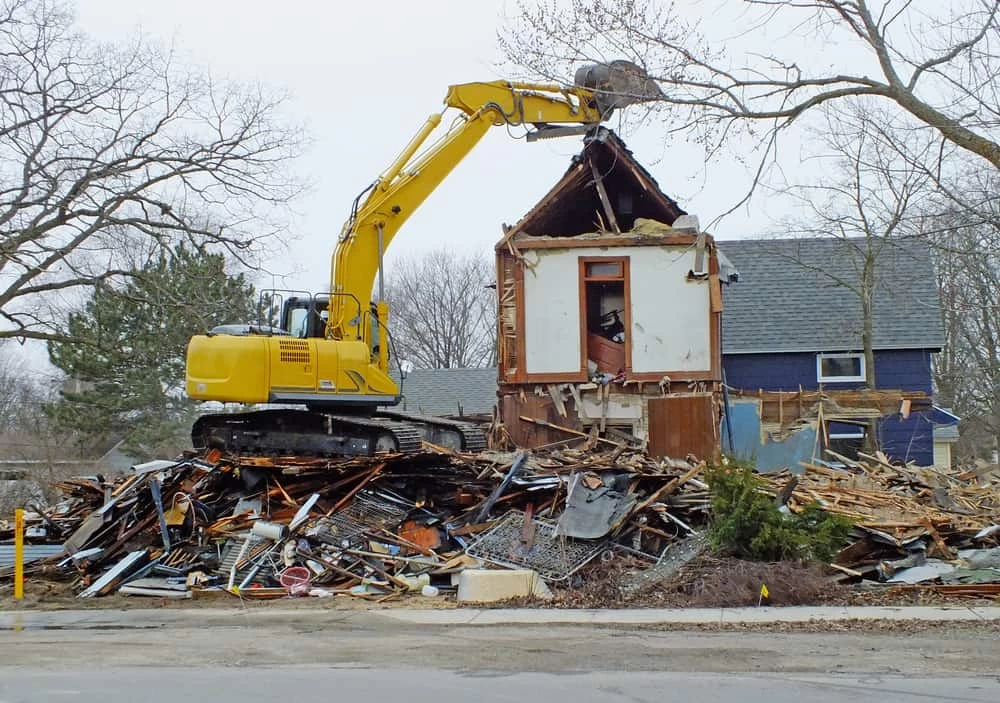
When water damage requires structural demolition removing saturated drywall, damaged flooring, compromised framing, or flooded mechanical spaces we respond on an emergency basis, 24 hours a day. We handle the demolition, mold assessment, and remediation in sequence, which matters because water-damaged pre-war materials frequently contain asbestos or lead paint that must be handled by a licensed abatement contractor before or during the demo work. Having all of that under one crew means the response is faster and the scope doesn’t fall through the cracks between multiple contractors.
How do I verify that a demolition contractor is properly licensed to work in New York City?
The NYC Department of Buildings maintains a public license lookup tool on its website where you can search any contractor by name or license number and confirm their active registration status. For demolition work in the city, contractors are required to hold a NYC DOB Special Contractor registration. Projects involving buildings of 10 stories or more require a licensed Site Safety Manager on site; projects of 15 stories or more, or those exceeding 100,000 square feet, require a Site Safety Coordinator credentials that are also verifiable through DOB.
In the Financial District, where many demolition projects involve multi-story, pre-war structures and where a single stop-work order can cost a developer tens of thousands of dollars per day in carrying costs and contractor standby fees, verifying licensure before signing a contract isn’t optional it’s basic due diligence. Our NYC DOB license, EPA certification, and OSHA credentials are active and verifiable. We also hold Certified MWBE status through New York State, which is a separately government-verified credential that signals a vetted, compliant operation not just a self-reported claim on a website.