When the Building Has History, the Demo Has to Be Right
Wall Street’s building stock is old, landmarked, and full of surprises. We handle demolition work in Wall Street, NY with the permits, hazmat credentials, and NYC DOB experience to do it without shutting your project down.
I needed a professional consultation explanation of procedure for safe removal of Asbestos in my apartment complex. Without having an account yet, I was very impressed with the caring, knowledgeable and generous advice offered by Jessica, and will look forward to doing business in the future. Thank you so much! I feel much more informed about a sometimes scary endeavor. Peace. Nancy Silva Mineola, NY.
Mia Munoz
Used this company to clean up some water flood in my house. They were fast and easy to work with.very professional, Would recommend to anyone!
Nini Valle
Great company, had a flood and they responded quickly and efficiently. Billed my insurance company directly. I highly recommend this company!
joe colapietro, jr
I had pipe freeze in my basement right before a snow storm and they made to within an hour to help start the clean up process. They we by our side throughout the entire process and even helped with the insurance company. They did such a great job with the cleanup, repair, remidiation, I contracted them to perform the repairs and finishes in the basement. They came with enough manpower and material to get the job done. Leo and Jessica were nothing but a pleasure to deal with!!
Cristian Arredondo c
I had some water damage in my home and Green Island was able to take care of my issue quickly and effectively. I am very pleased with the work they did. They responded quickly and were very professional.
Michael M
Outstanding service! From the office to the field crew everyone was friendly, helpful and responsive. I highly recommend Green Island Group.
What Changes When Your Contractor Actually Knows This Street
Most of the buildings on and around Wall Street were built before 1980. That means asbestos insulation, lead paint, and legacy materials are not a possibility they’re a near-certainty. When a contractor shows up without EPA certification or skips the pre-demolition hazmat survey, you’re not just looking at a fine. You’re looking at a stop-work order, a DEP violation, and a project timeline that just blew up. Getting that right from day one is the difference between a project that moves and one that stalls.
The Financial District is also in the middle of one of the largest office-to-residential conversion waves in American history. Projects like 111 Wall Street, 25 Water Street, and 40 Exchange Place aren’t just big they’re complicated. Structural demolition inside a 1960s commercial tower, in a narrow-street neighborhood with occupied buildings on both sides, requires a contractor who has actually done this in Manhattan before. Not one who’s learning the DOT restrictions and LPC requirements on your dime.
When the demo is done right, everything downstream gets easier. Your permits close cleanly, your timeline holds, and the next contractor walking in isn’t dealing with leftover liability. That’s the outcome that matters here.
Experienced Demolition Contractors, Wall Street NY
340+ Wall Street Projects. Zero Guesswork on Your Job.
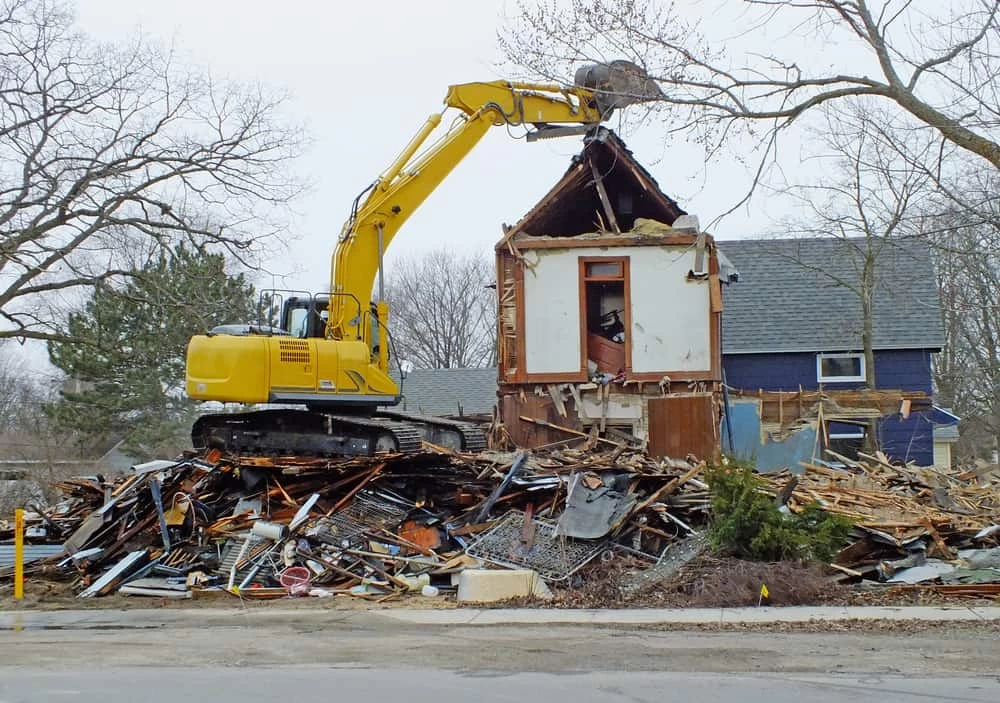
We’ve been completing demolition work across New York City’s five boroughs for over 12 years. That includes commercial gut-outs, interior selective demolition, full structural teardowns, and adaptive reuse prep in some of the most logistically demanding environments in the city. The Financial District with its colonial-era street grid, landmarked buildings, and layered regulatory oversight is exactly the kind of environment we were built for.
We hold an active NYC Department of Buildings license, EPA and OSHA certifications, and MWBE certification through New York State. Those aren’t just credentials on a website they’re what allow work to legally proceed on properties near Federal Hall, within the Wall Street Historic District, or on a conversion project where the Landmarks Preservation Commission has a say before the DOB will even issue a permit.
With 5,000+ completed projects and a 4.7-star verified rating, the track record is there. When you’re working a block from the New York Stock Exchange, you want a contractor who’s done this before.
No Surprises Here's Exactly How This Gets Done on Wall Street
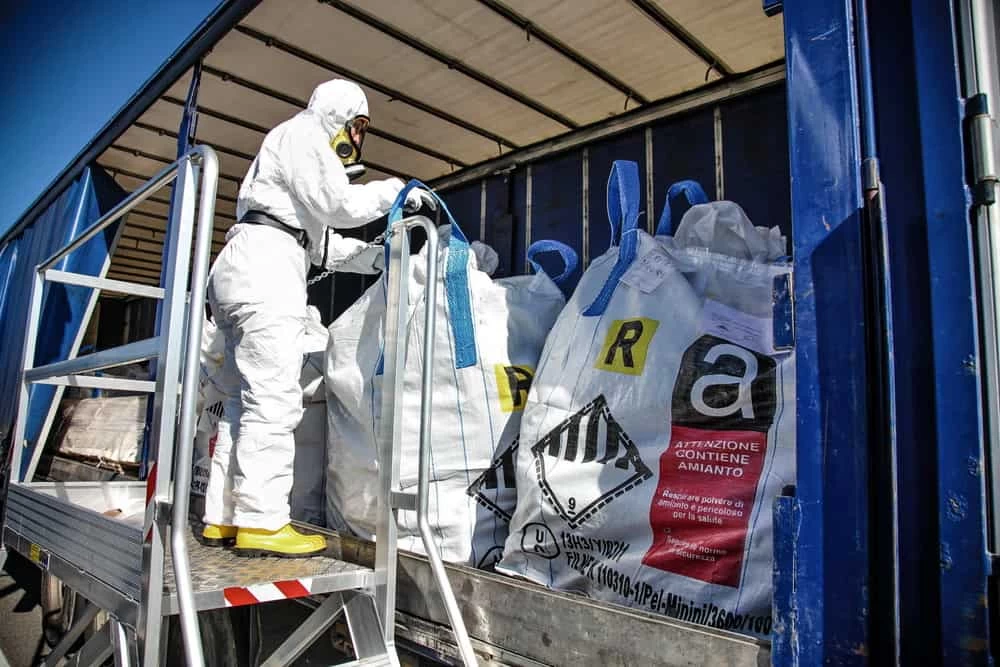
It starts before anyone touches a wall. For any pre-1980 structure in the Wall Street corridor which covers the vast majority of the building stock a licensed inspector conducts a pre-demolition asbestos and hazardous materials survey. If ACM is present, abatement happens first, with proper NYC DEP notification and documentation. We handle this in-house, so there’s no waiting on a separate subcontractor to clear the site before demo can begin.
Once the site is cleared, permit applications go through DOB NOW. Depending on scope and building height and nearly every commercial building in this area exceeds the threshold a licensed Site Safety Manager or Coordinator is assigned to the project. If the property falls within or adjacent to the Wall Street Historic District, LPC review is coordinated before the DOB permit is issued. NYC DOT construction activity permits are pulled for any sidewalk shed, scaffolding, or staging that affects the public right-of-way on streets like Broad, Pine, or Exchange Place.
Then the physical work begins selective or full demolition executed within the specific logistical constraints of Lower Manhattan’s narrow streets, active pedestrian corridors, and neighboring occupied buildings. Debris removal is scheduled within NYC DOT permitted hours. When the scope is complete, permits are closed out and the site is handed off clean.
Commercial and Residential Demolition, Wall Street
Full-Scope Demo From a FiDi Gut Renovation to a Full Floor
Wall Street isn’t one type of project anymore. The neighborhood has a growing permanent residential population living in converted towers like 25 Water Street and 1 Wall Street, alongside the institutional commercial tenants that have always defined the district. We serve both. For residential clients in converted Financial District buildings, that means interior demolition kitchen gut-outs, bathroom teardowns, wall removals with full coordination of co-op or condo board requirements that add an extra approval layer you won’t find in a suburban renovation.
For commercial clients, the scope runs larger. Tenant improvement demolition, full-floor gut-outs, and structural demolition for adaptive reuse projects are all within our documented capability. Asbestos abatement, lead paint removal, mold remediation, and environmental remediation are handled under the same roof no handoffs, no gaps in the chain of custody, no waiting on a third party to clear your site.
Every project regardless of size comes with proper NYC DOB permitting, OSHA-compliant site safety planning, and EPA-certified hazmat handling. In a market where a single regulatory misstep can cost more than the entire demolition contract, having a licensed demolition contractor who manages compliance from start to finish isn’t optional. It’s the only way to do this work in Lower Manhattan without putting your project at risk.
Do I need a NYC DOB permit for interior demolition in a Wall Street building?
Yes and in most cases, you’ll need more than just a standard demolition permit. Interior demolition in Manhattan requires a permit filed through DOB NOW, and depending on the scope and the building’s size, you may also need a licensed Site Safety Manager or Site Safety Coordinator on site. NYC Local Law 196 requires specific site safety credentials for workers on covered projects, and virtually every commercial building in the Wall Street corridor exceeds the square footage or story thresholds that trigger those requirements.
If the building is within or adjacent to the Wall Street Historic District, you’ll also need to coordinate with the Landmarks Preservation Commission before the DOB will issue your permit. That’s a step many contractors aren’t aware of or don’t flag until it causes a delay. We manage the full permit process, including LPC coordination where applicable, so your project doesn’t stall at the application stage.
Does every demolition project in Wall Street require an asbestos inspection first?
For any building constructed before 1980 which covers the overwhelming majority of structures on and around Wall Street a pre-demolition asbestos survey conducted by a licensed inspector is legally required before physical work can begin. The 1960s and 1970s office towers that now line Water Street, Broad Street, and the surrounding blocks were built during the peak era of asbestos use in commercial construction. Asbestos-containing materials in these buildings can include insulation, floor tiles, pipe lagging, ceiling materials, and fireproofing compounds.
If asbestos is found, abatement must be completed and documented with proper NYC DEP notification before demolition proceeds. Skipping this step isn’t just a regulatory risk; it’s a project-ending one. We handle the inspection, abatement, and DEP documentation in-house, which means the site gets cleared and demo begins on a single, uninterrupted timeline rather than waiting on a separate abatement contractor to fit you into their schedule.
How does the Landmarks Preservation Commission affect demolition work near Wall Street?
The Wall Street Historic District is listed on the National Register of Historic Places, and many of the buildings on and immediately surrounding Wall Street are either city-designated landmarks or contributing structures within that district. Any demolition or significant alteration work on a landmarked property or within a designated historic district requires a Certificate of Appropriateness from the Landmarks Preservation Commission before the NYC Department of Buildings will issue a demolition permit.
This means LPC review is not a parallel process you can run alongside your DOB application it has to happen first. For projects at addresses like 14 Wall Street, 23 Wall Street, or anywhere in the immediate historic district footprint, this adds a review step that can affect your start date if it isn’t anticipated and planned for. Contractors who aren’t familiar with this requirement often discover it after they’ve already filed with DOB, which creates delays that are entirely avoidable. We identify LPC jurisdiction at the outset of every project and coordinate the review process before permit applications are submitted.
What does commercial demolition typically cost for a Financial District office project?
Commercial demolition pricing in Lower Manhattan varies based on square footage, building access constraints, hazardous material scope, and permit complexity all of which tend to run higher in the Financial District than in outer borough or suburban markets. As a general benchmark, commercial demolition in the 10,000–20,000 square foot range typically runs $12–$18 per square foot. Projects above 20,000 square feet often fall in the $18–$25 per square foot range, and large-scale structural or full-floor demolition for adaptive reuse projects can run significantly higher depending on the scope.
In Wall Street specifically, a few factors consistently add to project costs: mandatory asbestos abatement in pre-1980 buildings, LPC coordination for historically designated properties, Site Safety Manager requirements for high-rise buildings, and the logistical overhead of working in a narrow-street, high-pedestrian urban environment where equipment staging and debris removal require NYC DOT permits and scheduled access windows. Getting an accurate estimate requires a site visit and a clear scope but any number you get without those two things isn’t a real number.
Can a demolition contractor in Wall Street, NY handle both asbestos removal and demolition?
Not all of them and that distinction matters more in the Financial District than almost anywhere else. Many demolition contractors subcontract asbestos abatement to a separate company, which means your project stops when demo is done, waits for the abatement contractor’s schedule, and then restarts. In a market where construction delays on major projects carry significant daily costs, that handoff is a real problem.
We handle asbestos abatement, lead paint removal, mold remediation, and environmental remediation in-house, with EPA-certified professionals on the same team doing the demolition work. There’s no gap between the abatement clearance and the start of demo. For the office-to-residential conversion projects currently underway throughout the Financial District buildings like 111 Wall Street, 40 Exchange Place, and 222 Broadway that integrated capability is exactly what keeps a complex project on schedule rather than sitting idle while two separate contractors coordinate their timelines.
What should I know about hiring a demolition contractor for a condo or co-op renovation in Lower Manhattan?
Renovating in a converted Financial District building whether it’s a unit at 1 Wall Street, 25 Water Street, or any of the other residential towers that have reshaped the neighborhood comes with an approval layer that most suburban renovation projects don’t have. Before any demolition work can begin, your co-op or condo board will typically require a renovation agreement, proof of contractor insurance, and sometimes a review of the scope of work. That process takes time, and a contractor who isn’t familiar with it can inadvertently delay your start date by submitting incomplete documentation.
Beyond the board approval process, interior demolition in a high-rise residential building also requires coordination with building management for elevator access, debris removal scheduling, and noise restriction compliance. NYC DOB permits are still required for structural work, and if the building itself is a designated landmark as is the case with 1 Wall Street additional LPC considerations apply even to interior renovations. We’re familiar with all of it. Our team has worked in occupied Manhattan residential buildings and knows how to move a project forward within the specific constraints of high-rise condo and co-op renovation work.