West Islip's Aging Homes Deserve More Than a Sledgehammer
Most homes in West Islip were built in the 1950s and ’60s and tearing one down without the right licensed demolition contractor can stop your project cold before the first wall comes down.
I needed a professional consultation explanation of procedure for safe removal of Asbestos in my apartment complex. Without having an account yet, I was very impressed with the caring, knowledgeable and generous advice offered by Jessica, and will look forward to doing business in the future. Thank you so much! I feel much more informed about a sometimes scary endeavor. Peace. Nancy Silva Mineola, NY.
Mia Munoz
Used this company to clean up some water flood in my house. They were fast and easy to work with.very professional, Would recommend to anyone!
Nini Valle
Great company, had a flood and they responded quickly and efficiently. Billed my insurance company directly. I highly recommend this company!
joe colapietro, jr
I had pipe freeze in my basement right before a snow storm and they made to within an hour to help start the clean up process. They we by our side throughout the entire process and even helped with the insurance company. They did such a great job with the cleanup, repair, remidiation, I contracted them to perform the repairs and finishes in the basement. They came with enough manpower and material to get the job done. Leo and Jessica were nothing but a pleasure to deal with!!
Cristian Arredondo c
I had some water damage in my home and Green Island was able to take care of my issue quickly and effectively. I am very pleased with the work they did. They responded quickly and were very professional.
Michael M
Outstanding service! From the office to the field crew everyone was friendly, helpful and responsive. I highly recommend Green Island Group.
Here’s what most West Islip homeowners don’t find out until it’s too late: the Town of Islip requires an asbestos survey before any demolition permit is issued. With roughly 88% of homes in West Islip built before 1980 and a median construction year of 1960 there’s a real chance asbestos is somewhere in your home. Floor tiles, pipe insulation, joint compound, ceiling materials.
When you work with a contractor who handles abatement and demolition under one roof, that discovery doesn’t derail your timeline. We handle the same project from start to finish no waiting on a second company to show up, no gaps in scheduling, no surprise invoices from a subcontractor you never vetted.
For homeowners in West Islip’s canal communities and southern neighborhoods near the Great South Bay, there’s another layer to consider. Properties in flood-prone areas face additional permit requirements through the Town of Islip’s Flood Damage Prevention ordinance. Getting that wrong means rejected plans and a stalled project. Getting it right means your demolition moves forward on schedule, fully documented, with no loose ends that come back to haunt you at closing.
5,000 Projects In. Still Getting the Details Right.
We’re based in Bohemia, NY about 12 miles from West Islip and have been doing this work across Suffolk County for over 12 years. More than 5,000 completed projects on Long Island and in New York City. We maintain active NYS Department of Labor asbestos certifications and carry two million dollars in general liability coverage. Our credentials aren’t just for show they’re what allow us to pull permits, handle hazardous materials legally, and close out a job the way the Town of Islip Building Division expects it to be closed out.
We work the South Shore regularly, and we know what demolition projects in West Islip actually involve from the pre-1980 housing stock to the flood zone considerations along the canals to the four-month permit completion clock that starts the day your permit is issued. That local knowledge is what keeps your project moving when others would be scrambling.
What the Process Actually Looks Like for West Islip Homeowners
It starts with an assessment. Before anything gets touched, we evaluate the structure, identify what hazardous materials may be present, and determine exactly what the Town of Islip permit application will require. For most West Islip homes built in the 1950s or 1960s that means an asbestos survey is part of the process from day one, not a surprise halfway through. We handle that in-house, document it properly, and include it with the permit filing.
Once permitting is underway, we coordinate with the Town of Islip Building Division directly. If your property is in a flood zone common in the southern sections of West Islip near the bay and the canals we account for those requirements before plans are submitted, not after they come back rejected. The four-month completion window the Town assigns at permit issuance is a real deadline, and we build the project schedule around it from the start.
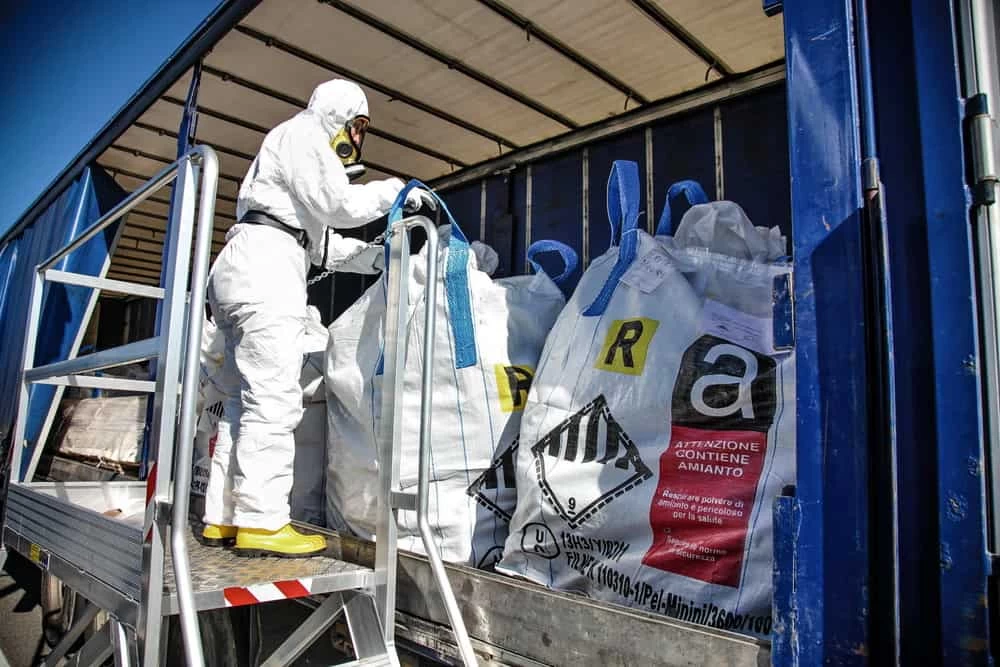
When demolition begins, the work is clean, sequenced, and compliant. We abate hazardous materials before structural demolition proceeds. Debris is removed and disposed of properly. If salvageable materials concrete, steel, recoverable fixtures can be recycled rather than landfilled, we do that. When the job is done, you get full documentation of every phase: abatement records, permit close-out, disposal manifests. That paper trail matters when it’s time to rebuild or sell.
One Team Handles Everything Demo, Abatement, and Cleanup
We handle the full scope: interior demolition, selective demolition, full structural teardown, asbestos abatement, lead paint removal, mold remediation, and debris removal. For West Islip homeowners tackling a gut renovation, a garage teardown, or a full rebuild on a lot where the original 1950s structure has run its course, that means one contract and one team managing every phase.
For commercial clients including the institutional and medical facilities in and around West Islip we’re equipped for larger-scale projects as well. Whether the project is a residential teardown on a canal-adjacent lot or a commercial interior demolition near Montauk Highway, the licensing, insurance, and regulatory compliance we carry applies across the board.
If your project involves an insurance claim water damage, fire damage, storm damage we work directly with insurance companies on your behalf. For homeowners who’ve dealt with flooding in West Islip’s southern neighborhoods, having a contractor who can document the damage, scope the work, and communicate with your insurer directly takes a significant burden off your plate. We’ve done it before, and our clients who’ve been through it reflect that in their reviews.
Does the Town of Islip require an asbestos survey before demolition in West Islip?
Yes and this is one of the most important things to understand before you start planning a demolition project in West Islip. The Town of Islip Building Division requires an asbestos survey as part of the demolition permit application. You cannot submit a complete permit application without it, which means you cannot legally begin demolition without it.
This requirement exists because of exactly the kind of housing stock West Islip has. With the majority of homes in the community built between 1950 and 1969, asbestos-containing materials are genuinely common in floor tile adhesives, pipe insulation, ceiling tiles, roofing materials, and textured joint compounds. If a contractor discovers asbestos mid-project and isn’t licensed to handle it, work stops entirely. When we handle both abatement and demolition, that scenario doesn’t happen. We complete the survey upfront, build abatement into the project plan, and submit a complete permit application from the start.
How long does a demolition permit take to get approved in West Islip, NY?
Permit timelines through the Town of Islip Building Division vary depending on the scope of the project, whether SCDHS (Suffolk County Department of Health Services) review is required, and whether the property is in a flood zone. For straightforward residential demolitions in West Islip, the process can move relatively quickly once the application is complete and properly documented. More complex projects particularly those involving flood zone properties in southern West Islip near the bay and canals or larger commercial structures can take longer if additional review is triggered.
What most homeowners don’t realize is that the four-month completion clock starts the day the permit is issued, not the day you start work. If permitting takes longer than expected and you’re not ready to mobilize immediately, that window can get tight. Filing the application correctly the first time with the asbestos survey, the proper insurance documentation, and any required SCDHS materials included is the most reliable way to avoid delays before the clock even starts.
What's the difference between selective demolition and a full teardown?
Selective demolition means removing specific elements of a structure a wall, a section of flooring, a kitchen, a bathroom, a garage while leaving the rest of the building intact. It’s the most common type of demolition work in West Islip, where many homeowners are renovating mid-century homes rather than tearing them down entirely. Selective demo requires careful planning to protect what stays while removing what goes, and it still triggers the same asbestos survey requirements if the home was built before 1980.
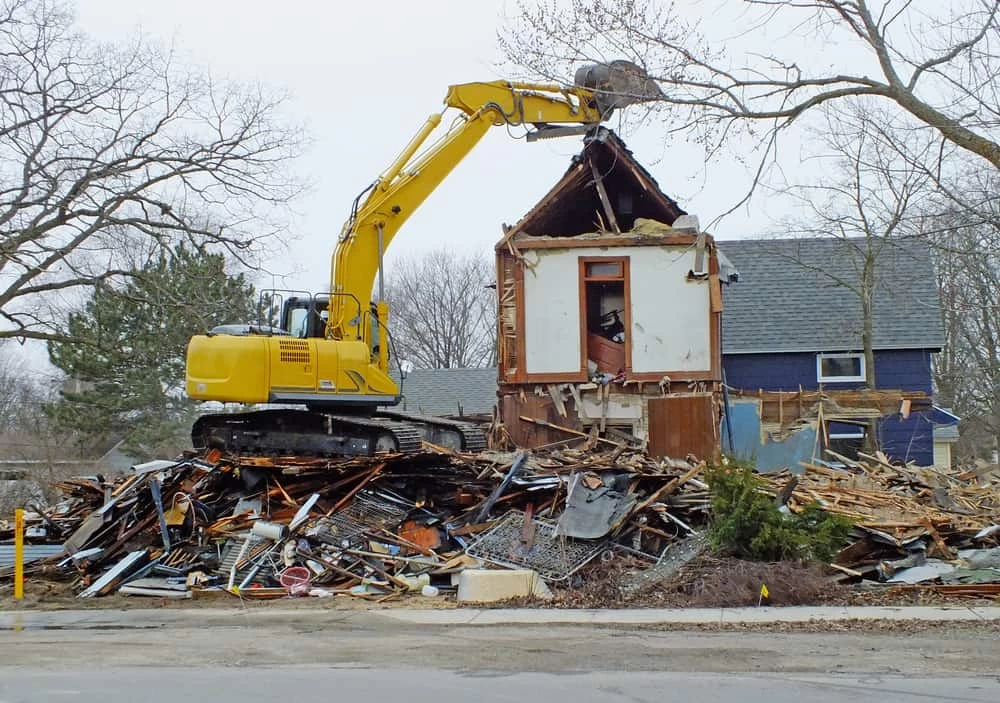
A full teardown is exactly what it sounds like the entire structure is demolished down to the foundation, or the foundation is removed as well depending on the project. This is more common when the existing structure is beyond the point where renovation makes financial sense, or when a homeowner wants to rebuild entirely on the lot. Both types of projects require permits from the Town of Islip, and both carry the same hazardous material obligations. The scope of the work determines the cost and timeline, but the regulatory requirements apply either way.
My West Islip home is near the canal does that affect the demolition process?
It can, yes. Properties in West Islip’s southern neighborhoods particularly those along the canals that feed into the Great South Bay may fall within FEMA-designated flood zones. The Town of Islip requires a Flood Zone Determination for permit applications involving properties in areas of special flood hazard, and demolition plans for those properties must comply with the Town’s Flood Damage Prevention ordinance under Article XL of the local code.
In practical terms, this means the permit application process for a canal-adjacent property in West Islip may involve additional documentation and review by the Town’s engineering division. Plans submitted without addressing flood zone requirements come back rejected, which delays the project and resets parts of the process. If you’re not sure whether your property is in a flood zone, that determination can be made before the permit application is filed and it should be, so the application is complete and accurate from the start. We confirm and account for this at the assessment stage, before anything is submitted.
How much does it cost to demolish a house in West Islip, NY?
Residential demolition costs in West Islip typically range from $8,000 to $25,000 or more depending on the size of the structure, the scope of the work, and what’s found during the asbestos survey. Smaller selective demolition projects removing a garage, gutting a kitchen, taking down an interior wall are at the lower end of that range. Full structural teardowns on larger lots are at the higher end, particularly when hazardous material abatement is required.
The variable that catches most West Islip homeowners off guard is asbestos. If asbestos-containing materials are identified during the required survey which is genuinely common in homes built in the 1950s and 1960s abatement adds to the project cost. Asbestos abatement in a typical residential project runs from a few thousand dollars for limited materials to significantly more for widespread contamination. Handling both abatement and demolition in-house tends to be more cost-efficient than coordinating two separate companies, and it eliminates the scheduling gaps that drive up overall project timelines.
Can a demolition contractor handle the permit filing, or is that something I do myself?
We can and should handle the permit filing on your behalf. In West Islip, demolition permits are filed electronically through the Town of Islip Building Division, and the application requires specific documentation that most homeowners aren’t equipped to compile on their own: a completed building permit application, proof of workers’ compensation and disability insurance in the correct format (ACORD forms are not accepted by the Town), the asbestos survey, and potentially SCDHS coordination depending on the project.
Attempting to file this yourself without knowing what the Town requires typically results in an incomplete application, a rejection, and a delay that pushes your start date back by weeks. We’ve filed permits through the Town of Islip before and know what the application needs to include, how to format the insurance documentation correctly, and whether your specific property will trigger additional review such as flood zone compliance or storm water management requirements for larger disturbance areas. Getting it right the first time is the most straightforward way to protect your four-month completion window once the permit is issued.