Woodhaven's Century-Old Homes Deserve More Than a Wrecking Crew
Most homes in Woodhaven were built before 1940. That means asbestos, lead paint, and attached walls that share a foundation with your neighbor. We handle licensed demolition and hazardous material removal under one roof so nothing gets missed, and nothing surprises you mid-project.
I needed a professional consultation explanation of procedure for safe removal of Asbestos in my apartment complex. Without having an account yet, I was very impressed with the caring, knowledgeable and generous advice offered by Jessica, and will look forward to doing business in the future. Thank you so much! I feel much more informed about a sometimes scary endeavor. Peace. Nancy Silva Mineola, NY.
Mia Munoz
Used this company to clean up some water flood in my house. They were fast and easy to work with.very professional, Would recommend to anyone!
Nini Valle
Great company, had a flood and they responded quickly and efficiently. Billed my insurance company directly. I highly recommend this company!
joe colapietro, jr
I had pipe freeze in my basement right before a snow storm and they made to within an hour to help start the clean up process. They we by our side throughout the entire process and even helped with the insurance company. They did such a great job with the cleanup, repair, remidiation, I contracted them to perform the repairs and finishes in the basement. They came with enough manpower and material to get the job done. Leo and Jessica were nothing but a pleasure to deal with!!
Cristian Arredondo c
I had some water damage in my home and Green Island was able to take care of my issue quickly and effectively. I am very pleased with the work they did. They responded quickly and were very professional.
Michael M
Outstanding service! From the office to the field crew everyone was friendly, helpful and responsive. I highly recommend Green Island Group.
No Hidden Hazards. No Permit Headaches. No Surprises.
When you’re dealing with a pre-war rowhouse on a Woodhaven side street, the demolition itself is rarely the hard part. It’s everything underneath it the asbestos floor tiles, the lead paint on original woodwork, the shared wall with the house next door. Those are the things that turn a straightforward project into a months-long ordeal if the wrong contractor walks in.
What you get with us is a single company that handles asbestos abatement, lead removal, and structural demolition together. No coordinating between three separate vendors. No gap in the timeline while you wait for one contractor to finish before another can start. The scope gets set before work begins, the quote reflects the full picture, and the project moves.
For Woodhaven homeowners specifically, that matters more than it does almost anywhere else in Queens. With a median construction year of 1938 and a significant portion of homes over 120 years old particularly the Victorians near Forest Park hazardous materials aren’t a possibility here, they’re a near certainty. You deserve a contractor who treats that as standard, not as an add-on.
340 Projects In. Still Answering the Phone Ourselves.
We’ve been working in the New York metro area for over 12 years, with more than 340 completed demolition and remediation projects across Queens, Long Island, and the five boroughs. This isn’t a company that dabbles in demo between other jobs. It’s the core of what we do.
We’re licensed through the NYS Department of Labor under Industrial Code Rule 56, registered with the NYC Department of Buildings, and fully compliant with NYC DEP requirements for asbestos abatement in the five boroughs. Those aren’t just credentials on a wall they’re what protect you as the property owner if something gets flagged during the project.
Woodhaven’s Community District 9 has specific permit and compliance requirements that come with working in older, attached residential construction. We’ve navigated that environment repeatedly. When you call, you’re talking to people who already know what a pre-war rowhouse off Jamaica Avenue looks like from the inside and what it takes to take one down the right way.
From the First Call to a Clean, Permitted Job Site
It starts with a site assessment. Before any permits are pulled or any work is scheduled, we walk the property and identify what you’re actually dealing with structural conditions, material hazards, utility connections, and access constraints. In Woodhaven, that assessment almost always includes a pre-demolition hazardous material survey, because the age of the housing stock makes it necessary. You’ll know what’s there before the quote is written, not after the walls come down.
From there, we manage the permit process. In New York City, that means filing the ACP-5 Asbestos Assessment Report before a DOB demolition permit can even be issued, coordinating with the NYC DEP for any required abatement notifications, and handling all the completion documentation that has to go back to the DOB before structural work can proceed. You don’t have to learn what any of that means that’s our job, not yours.
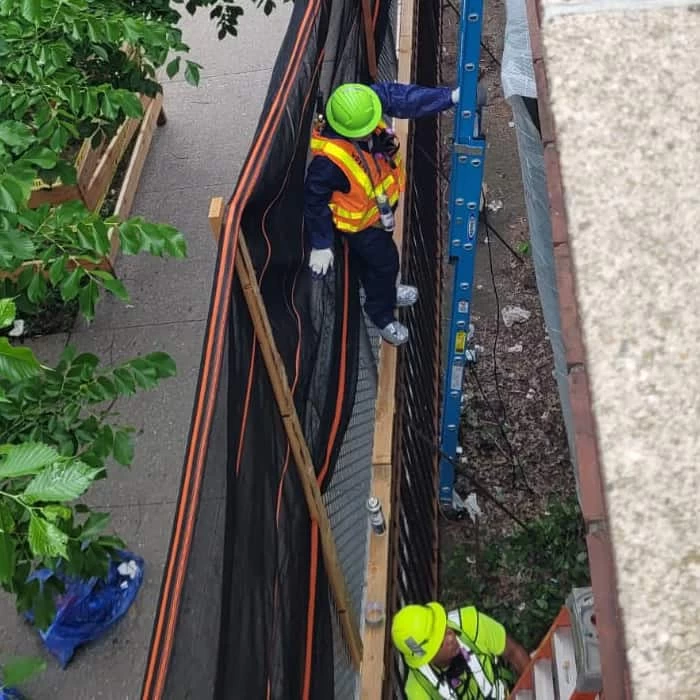
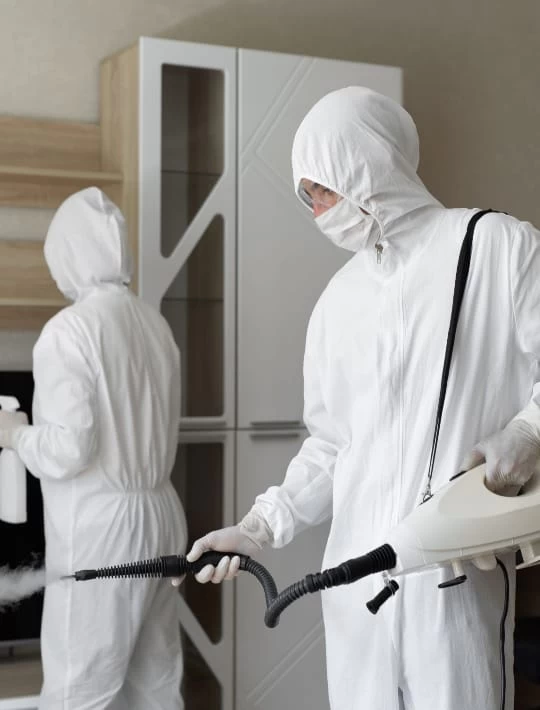
Once permits are in hand, abatement comes first. Any asbestos-containing materials or lead paint are removed, contained, and disposed of by licensed professionals under proper air monitoring. Then the structural demolition work begins whether that’s a selective interior gut, a partial teardown, or a full structural removal. The job ends with debris hauled off the site and documentation in hand, ready for whatever comes next.
Residential demolition in Woodhaven covers a wide range from selective interior demo inside an attached rowhouse to full structural teardowns on lots where a Victorian wood-frame home has reached the end of its life. We handle both ends of that spectrum, and everything between. Interior selective demolition, full structural removal, emergency partial demolition after fire or storm damage, and commercial interior demo for Jamaica Avenue storefronts and mixed-use buildings are all within scope.
Every project we do includes pre-demolition hazardous material testing, permit management from start to finish, licensed asbestos and lead abatement where required, structural demolition by a certified crew, and full debris removal from the site. For properties in Woodhaven’s older residential blocks particularly the wood-frame Victorians near Forest Park and the attached brick rowhouses closer to Atlantic Avenue the abatement phase is built into the project plan from day one, not treated as a surprise line item.
For emergency situations fire damage, severe water intrusion, storm structural compromise we’re available around the clock and bill insurance carriers directly. If you’re dealing with a damaged structure and an open claim, you don’t have to manage the paperwork on top of everything else. We handle the documentation, work with the adjuster, and keep the project moving so the restoration can begin.
Do I need a permit to demolish a wall or room in my Woodhaven home?
In New York City, yes and the permit process for demolition in Woodhaven involves more than just filing paperwork with the DOB. Before any demolition permit can be issued, an Asbestos Assessment Report (called an ACP-5 form) must be filed by a licensed asbestos investigator. This is required under NYC Local Law 76, with no exceptions, regardless of the size of the project. For a neighborhood like Woodhaven where the median home was built in 1938 and a large share of the housing stock dates back to the early 1900s that asbestos investigation almost always turns up something that needs to be addressed before the permit moves forward.
Once the ACP-5 is filed and any required abatement is completed, the DOB issues the demolition permit and work can proceed. The full process typically takes four to eight weeks from initial filing to permit in hand. We manage the entire permit chain ACP-5, DEP notifications, DOB permit, and completion documentation so you’re not navigating it alone.
My Woodhaven house was built in the 1920s. Will there definitely be asbestos?
Not guaranteed, but very likely. Homes built before 1980 may contain asbestos-containing materials, and homes built before 1940 which describes the majority of Woodhaven’s housing stock are at a significantly higher risk. In a 1920s Woodhaven home, asbestos can show up in floor tiles, ceiling tiles, pipe insulation, joint compound, exterior transite siding, roof shingles, and window glazing. In some of the oldest Victorian-era homes near Forest Park, it’s not uncommon to find asbestos present in multiple material categories at once.
The only way to know for certain is through a pre-demolition hazardous material survey conducted by a licensed asbestos investigator. We include this survey as part of the project planning process before any quote is finalized so the scope of abatement is known upfront and factored into the timeline and cost. There are no mid-project surprises that way.
How much does demolition typically cost for a pre-war home in Queens?
The honest answer is that it depends heavily on the scope, the size of the structure, and what hazardous materials are found during the pre-demolition survey. A selective interior demolition gutting a kitchen, bathroom, or basement in an attached rowhouse will cost significantly less than a full structural teardown. In New York City, the regulatory compliance costs alone (ACP-5 filing, licensed abatement, DEP notification, air monitoring, and certified disposal) are unavoidable and add to the total regardless of project size.
For a full structural teardown of a pre-war home in Woodhaven, you should expect the project cost to reflect the age and complexity of the building not just the labor to knock it down. A low quote that doesn’t account for asbestos abatement, permitting, and hazardous disposal isn’t a real quote. We provide comprehensive, all-in pricing after the site assessment, so what you see in the estimate is what the project actually costs.
Can a demolition contractor handle asbestos removal, or do I need to hire someone separately?
You don’t have to hire separately when you work with us and for most Woodhaven homeowners, that’s a significant practical advantage. The typical scenario in this neighborhood is that a property owner hires a demolition contractor, discovers asbestos partway through the project, and then has to pause everything while they find and schedule a separate abatement company. That gap can cost weeks and adds a layer of coordination that most people aren’t prepared for.
We’re licensed for both asbestos abatement and structural demolition. The abatement is handled first, under proper containment and air monitoring, by certified workers and then demolition follows in the same project sequence. One contract, one timeline, one company accountable for the whole thing. For attached rowhouses and older wood-frame homes in Woodhaven, where hazardous materials are almost always part of the picture, this integrated approach is genuinely the more efficient and less stressful way to get the work done.
What happens if there's storm or fire damage and I need emergency demolition right away?
We operate 24 hours a day, seven days a week for emergency demolition and remediation. If a fire damages a structure, if a nor’easter compromises a roof or exterior wall, or if a burst pipe causes flooding that leads to structural instability, you don’t have to wait until Monday morning to get someone on-site. We respond immediately, assess the damage, and begin the stabilization or demolition process as quickly as the situation requires.
For insurance-related emergency work, we bill carriers directly. We document the damage, prepare the reports the adjuster needs, and manage the back-and-forth with the insurance company so you’re not buried in paperwork while you’re also dealing with a damaged home. Queens County has seen multiple FEMA disaster declarations over the past two decades, and Woodhaven’s older housing stock is particularly vulnerable to storm and water damage. If you’re in that situation, the fastest thing you can do is call.
My home shares a wall with my neighbor is interior demolition still safe to do?
Yes, but it requires a level of precision that not every contractor is set up to deliver. Woodhaven’s attached rowhouses and semi-detached wood-frame homes are common throughout the neighborhood, and interior demolition in these buildings means working right up against a shared wall that is also part of your neighbor’s structure. Done incorrectly, that can mean damage to the adjacent property, a liability claim, and a stop-work order from the DOB.
We handle attached construction regularly. The process involves structural assessment before any walls are touched, proper shoring where needed, and careful sequencing to ensure that only the material that’s supposed to come down actually comes down. Containment systems are used throughout to protect the adjacent living space from dust and debris. If you’re planning a gut renovation or partial demolition in an attached Woodhaven rowhouse, the key is hiring a contractor who has done this specific type of work before not one who treats a shared-wall demo the same as an open-lot teardown.