When a Hamptons Home Burns, the Clock Starts Immediately
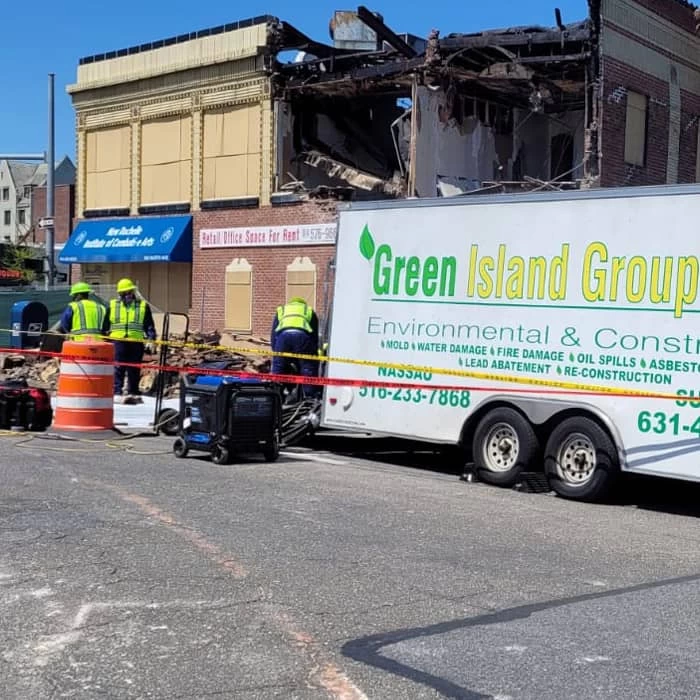
Soot etches. Smoke spreads. Water from suppression soaks into everything. We respond fast to Amagansett properties and handle every phase of fire damage restoration from emergency stabilization to full reconstruction.
I needed a professional consultation explanation of procedure for safe removal of Asbestos in my apartment complex. Without having an account yet, I was very impressed with the caring, knowledgeable and generous advice offered by Jessica, and will look forward to doing business in the future. Thank you so much! I feel much more informed about a sometimes scary endeavor. Peace. Nancy Silva Mineola, NY.
Mia Munoz
Used this company to clean up some water flood in my house. They were fast and easy to work with.very professional, Would recommend to anyone!
Nini Valle
Great company, had a flood and they responded quickly and efficiently. Billed my insurance company directly. I highly recommend this company!
joe colapietro, jr
I had pipe freeze in my basement right before a snow storm and they made to within an hour to help start the clean up process. They we by our side throughout the entire process and even helped with the insurance company. They did such a great job with the cleanup, repair, remidiation, I contracted them to perform the repairs and finishes in the basement. They came with enough manpower and material to get the job done. Leo and Jessica were nothing but a pleasure to deal with!!
Cristian Arredondo c
I had some water damage in my home and Green Island was able to take care of my issue quickly and effectively. I am very pleased with the work they did. They responded quickly and were very professional.
Michael M
Outstanding service! From the office to the field crew everyone was friendly, helpful and responsive. I highly recommend Green Island Group.
What Gets Saved in Amagansett Depends on What Happens in the First 72 Hours
The 24 to 72 hours after a fire are the most critical window in the entire restoration process. Soot is actively etching into surfaces. Smoke is traveling through wall cavities, ductwork, and every porous material in the structure. If the response is slow or incomplete, what started as a contained fire becomes a whole-house contamination problem and the cost of fixing it grows with every hour.
In Amagansett, this window matters even more. A significant share of properties here are second homes or seasonal rentals that may sit vacant for weeks at a time. A fire that starts in an unoccupied home on Further Lane or in a beach cottage near the Dunes can burn and smolder for hours before anyone calls it in. By the time the East Hampton Town fire department has suppressed it and the property owner gets the call from Manhattan, secondary damage is already underway.
The homes in Amagansett are also genuinely old. Much of the housing stock predates 1978, and structures in the historic core go back to the 1700s. That means asbestos-containing materials, lead paint, and original framing that a fire disturbs in ways a standard cleanup crew isn’t equipped to handle. We manage the full scope environmental hazards included so nothing gets missed and nothing gets left behind to cause problems later.
We’re a locally owned restoration company based on Long Island, serving Suffolk County and the East End including Amagansett and the broader East Hampton area. This isn’t a franchise with a rotating crew and a national call center. When you call 631-613-8945, you reach real people including Leo and Jessica, who are named by clients in independent reviews who stay with your project from the first emergency call through the final walkthrough.
That continuity matters on a job like this. Fire damage restoration isn’t a single service it’s a sequence of interconnected work that has to be coordinated carefully. Asbestos abatement, mold prevention, smoke remediation, water extraction, structural repair, and finish work all have to happen in the right order, by the right hands. We handle all of it under one roof, which means no handoffs, no gaps, and no finger-pointing between contractors when something doesn’t line up.
Clients who’ve hired us for fire remediation in Amagansett have come back for subsequent repairs and finishes not because they had to, but because the first phase of work earned the next one.
From the First Call to the Final Inspection Here's Our Process
The first step is stabilization. That means securing the property, boarding up any compromised openings, and preventing further exposure to the elements. On the East End, where coastal weather can move in fast and Route 27 is the only road in, getting a team on-site quickly is not a minor detail it’s the difference between a manageable restoration and a compounding disaster.
Once the structure is secure, the assessment phase begins. Every affected area gets documented not just the visible burn zone, but every space where smoke has traveled. In older Amagansett homes with plaster walls, original wood framing, and aging HVAC systems, smoke migration can extend well beyond the room where the fire occurred. This documentation also forms the foundation of your insurance claim, and we work alongside you through that process to make sure the scope of loss is accurately captured before any adjuster closes the file.
From there, the work moves through environmental testing and hazardous material abatement if needed, full smoke and soot remediation using HEPA air scrubbers and thermal fogging, water extraction and structural drying, and finally reconstruction. If your property is in the Amagansett Historic District, restoration work requiring a building permit is subject to Architectural Review Board oversight and the approach to materials and finishes has to reflect that. We understand those requirements and work within them, not around them.
Full-Scope Restoration Built for High-Value Coastal Properties
Fire damage restoration in Amagansett isn’t a one-size-fits-all job. A $4 million oceanfront home near Atlantic Avenue Beach has different needs than a historic Colonial in the village center, and both are different from a newer build in the Bell Estate neighborhood. Our approach covers the full range emergency board-up and structural stabilization, asbestos and lead paint abatement for pre-1978 construction, smoke and soot remediation throughout the entire affected structure, water damage extraction and drying from firefighting suppression, mold prevention and remediation, contents cleaning, and complete reconstruction and finish work.
The insurance component is built into every project, not treated as an afterthought. Amagansett properties carry high-value policies, and the difference between a properly documented claim and an underdocumented one can be significant. We help you understand what’s covered, work directly with adjusters, and make sure the scope of the claim reflects the actual scope of the loss.
Salt air on the East End also accelerates corrosion and material degradation after a fire. Metal components, electrical systems, and structural elements that have been exposed to both fire damage and coastal humidity deteriorate faster than they would inland. Our restoration process accounts for that not just what’s visibly damaged, but what the coastal environment will continue to affect if it isn’t properly addressed from the start.
What should I do immediately after a fire at my Amagansett property?
The most important thing you can do in the first hour is call a restoration company before you call a general contractor, before you start cleaning anything yourself, and before you let anyone other than emergency personnel back into the structure. Disturbing soot or smoke residue without proper containment spreads contamination further and can compromise your insurance documentation.
If you’re not in Amagansett when the fire occurs which is common for second-home owners who may be in the city we can respond directly to the property, secure it, and begin the documentation process on your behalf. You don’t need to be on-site for the work to start. The East Hampton Town Fire Marshal’s office will also need to clear the structure before restoration work begins, and we coordinate that clearance for you.
How far does smoke damage actually spread in a house after a fire?
Much further than most people expect. Smoke doesn’t stay in the room where the fire started it travels through HVAC ducts, penetrates wall cavities, moves through gaps around plumbing and electrical runs, and settles into every porous surface it reaches. In a matter of minutes, a kitchen fire can deposit odor and soot residue in bedrooms two floors away.
In Amagansett’s older homes particularly those with original plaster walls, wood-framed construction, and aging duct systems smoke migration is especially extensive. The porous nature of historic building materials means smoke penetrates deeply, and surface-level cleaning won’t reach it. Proper remediation requires HEPA air scrubbers, thermal fogging, and in some cases, opening wall cavities to treat what’s inside. If a restoration company only cleans what’s visible, the smell comes back and so does the problem.
Does homeowners insurance cover fire damage restoration costs in Amagansett?
In most cases, yes fire damage is a covered peril under standard homeowners insurance policies. But the amount you actually recover depends heavily on how well the damage is documented and how thoroughly the claim scope is built out. On a high-value Amagansett property, the gap between a well-documented claim and an underdocumented one can run into hundreds of thousands of dollars.
We work with homeowners through the entire insurance process from initial damage documentation to adjuster walkthroughs to final claim settlement. This isn’t just paperwork help. It means making sure that secondary damage like smoke migration, water intrusion from suppression, and mold risk are all captured in the claim before the file is closed. Insurers don’t always volunteer coverage for damage that isn’t clearly documented upfront, and having a restoration team that understands how to build that case makes a real difference in the outcome.
My Amagansett home was built in the 1950s does that change the restoration process?
Yes, significantly. Homes built before 1978 which covers the vast majority of Amagansett’s housing stock, including most of the village center and beach neighborhoods are likely to contain asbestos-containing materials in insulation, floor tiles, roofing, and siding, as well as lead-based paint. When a fire disturbs those materials, the remediation scope expands well beyond smoke and soot cleanup.
Disturbing asbestos without proper abatement is not just a health risk it’s a legal one. New York State requires NYSDOL-certified contractors for any asbestos abatement work, and the EPA’s Renovation, Repair, and Painting rule applies to lead paint in pre-1978 homes. We hold the environmental certifications required for this work, which means you’re not left trying to coordinate a separate abatement contractor after the fire restoration company finishes. Everything is handled in the correct sequence, by a team that’s already on-site and familiar with your property.
How long does fire damage restoration typically take on a Hamptons property?
It depends on the scope of the damage, but most fire restoration projects move through several distinct phases emergency stabilization, environmental testing and abatement if needed, smoke and soot remediation, water extraction and drying, and reconstruction. A smaller fire with contained damage might be fully remediated in a few weeks. A more significant fire involving structural damage, asbestos abatement, and full reconstruction can take several months.
For Amagansett property owners, timing often intersects with seasonal considerations. If your property is a summer rental and a fire occurs in the off-season, there may be a window to complete restoration before the summer season begins but only if the work starts immediately. Delays in the early phases don’t just extend the timeline; they can allow mold to establish in water-saturated materials, which adds a remediation layer that wasn’t there before. Starting fast is always the right call, regardless of when the fire occurs.
Can fire damage restoration be done on a home in the Amagansett Historic District?
Yes but it requires a contractor who understands the local regulatory environment, not just the restoration process. Any work in the Amagansett Historic District that requires a building permit is subject to review by the East Hampton Town Architectural Review Board. The ARB evaluates whether the proposed work is compatible with the historic character of the district, which means materials, finishes, and structural approaches all need to be considered with that standard in mind.
This doesn’t mean restoration is slower or more complicated than it needs to be it means it has to be planned correctly from the start. Our end-to-end service model, which covers everything from emergency stabilization through final finishes and reconstruction, allows the restoration to be designed with ARB requirements built in rather than addressed as an afterthought. For homeowners with properties near the Miss Amelia Cottage corridor or anywhere in the historic village center, this integrated approach is what keeps the project on track and compliant throughout.