When Fire Hits an Amityville Home, We Handle Everything
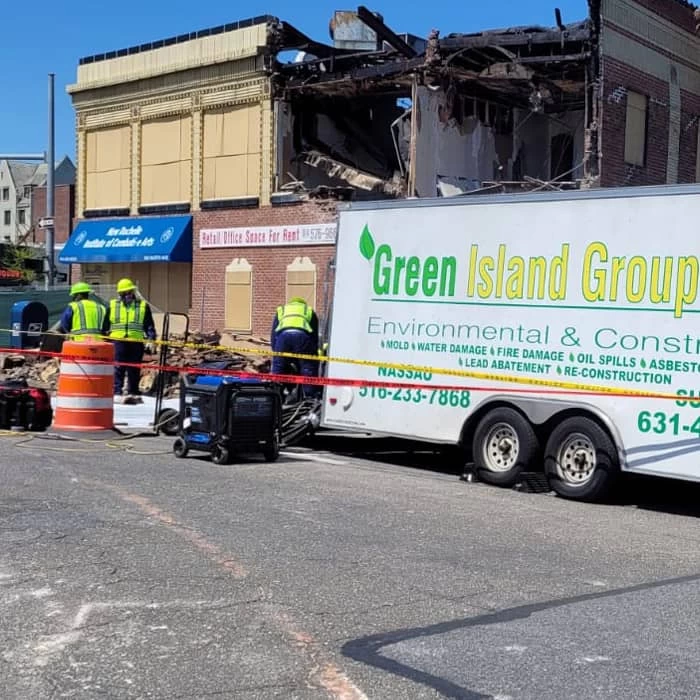
When fire hits your South Shore home in Amityville, the damage doesn’t stop where the flames did. We respond fast, handle everything from emergency stabilization to final finishes, and help you navigate the insurance claim from day one.
I needed a professional consultation explanation of procedure for safe removal of Asbestos in my apartment complex. Without having an account yet, I was very impressed with the caring, knowledgeable and generous advice offered by Jessica, and will look forward to doing business in the future. Thank you so much! I feel much more informed about a sometimes scary endeavor. Peace. Nancy Silva Mineola, NY.
Mia Munoz
Used this company to clean up some water flood in my house. They were fast and easy to work with.very professional, Would recommend to anyone!
Nini Valle
Great company, had a flood and they responded quickly and efficiently. Billed my insurance company directly. I highly recommend this company!
joe colapietro, jr
I had pipe freeze in my basement right before a snow storm and they made to within an hour to help start the clean up process. They we by our side throughout the entire process and even helped with the insurance company. They did such a great job with the cleanup, repair, remidiation, I contracted them to perform the repairs and finishes in the basement. They came with enough manpower and material to get the job done. Leo and Jessica were nothing but a pleasure to deal with!!
Cristian Arredondo c
I had some water damage in my home and Green Island was able to take care of my issue quickly and effectively. I am very pleased with the work they did. They responded quickly and were very professional.
Michael M
Outstanding service! From the office to the field crew everyone was friendly, helpful and responsive. I highly recommend Green Island Group.
Your Amityville Home Restored Without the Guesswork or the Runaround
A fire in your Amityville home doesn’t just burn what it touches. Smoke moves through your HVAC system within minutes, depositing soot on surfaces in rooms that never saw a single flame. In Amityville’s older capes and colonials many built before 1939, with plaster walls, original woodwork, and decades of absorbed life that smoke doesn’t just sit on the surface. It goes deep. And the longer it sits, the harder it is to remove.
Then there’s the water. Fire suppression hoses can push hundreds of gallons into a structure in the time it takes to contain a kitchen fire. In Amityville’s waterfront climate, where humidity off the Great South Bay is already elevated, that moisture creates conditions where mold can begin growing inside your walls within 24 to 48 hours. You’re not just dealing with fire damage anymore you’re racing against a second problem that most people don’t even see coming.
What you get on the other side of a proper restoration is a home that’s genuinely safe, fully documented for your insurance claim, and finished not handed back to you half-done with a list of contractors to call. One team, one point of contact, and a job that doesn’t close until it’s right.
The Team That Stays Until the Job Is Actually Done
We’re a Long Island-owned and operated restoration company not a franchise, not a call center that dispatches whoever’s available. When you call, you reach real people who stay with your project from the first emergency response through the final coat of paint. Our customers have named Leo and Jessica specifically in their reviews not as a formality, but because those are the people who actually showed up, communicated clearly, and followed through.
Amityville’s housing stock is some of the most complex on the South Shore. Pre-war homes near the Triangle district, mid-century builds throughout the village, properties sitting in coastal flood zones along the harbor these aren’t generic restoration jobs, and we don’t treat them like one. We hold the environmental remediation credentials to handle asbestos abatement and lead paint safely in older Amityville homes, which is a legal requirement that a lot of fire-only contractors simply can’t meet.
The satisfaction guarantee isn’t fine print. The job isn’t closed until you’re satisfied with the result.
From the First Call to the Last Walkthrough Here's What to Expect
The first step is getting someone to your door fast. Soot begins permanently bonding to surfaces within 24 to 72 hours of a fire, and in Amityville’s coastal environment, suppression water creates mold risk almost immediately. Response time isn’t just a selling point it directly affects how much of your home can be saved and how much has to be replaced.
Once on-site, we assess the full scope of damage not just the visible burn area, but smoke migration through the HVAC system, water intrusion from firefighting efforts, and any environmental hazards present in the structure. In Amityville, that last part matters more than people expect. A significant share of village homes contain asbestos-containing materials in floor tiles, pipe insulation, or ceiling finishes. When fire disturbs those materials, the restoration can’t legally proceed without proper abatement and we handle that in-house rather than stopping the job and handing you a referral.
From there, the process moves through smoke and soot remediation, odor elimination, structural drying, mold prevention, and full reconstruction. We pull permits through the Village of Amityville Building Department and coordinate with the Village Fire Marshal as required that’s handled for you, not handed off to you. The project doesn’t close until the work passes inspection and you’ve walked through the finished result.
Full Restoration Scope Built for Amityville's Specific Conditions
Fire damage restoration in Amityville isn’t a single service it’s a sequence of connected work that has to be done in the right order by a team qualified to handle all of it. We cover emergency board-up and structural stabilization, complete smoke and soot removal from all affected surfaces and cavities, professional odor elimination that neutralizes smoke at the molecular level rather than masking it, water extraction and structural drying, mold remediation, asbestos and lead paint abatement where required, and full reconstruction through final finishes.
The odor piece is worth addressing directly, because it’s one of the most common concerns from homeowners in older Amityville properties. Plaster walls, original hardwood floors, and older insulation absorb smoke molecules deeply. Surface cleaning doesn’t solve it. We use thermal fogging, hydroxyl generation, or ozone treatment depending on the materials involved the goal is a home that smells like home, not a home that smells like it was cleaned after a fire.
For Amityville homeowners navigating both homeowners insurance and flood insurance simultaneously a common situation given the village’s coastal flood zone status we document the full scope of damage, work directly with your adjuster, and make sure the claim reflects what the job actually costs. That’s not a bonus service. It’s part of how the work gets done here.
Is it safe to stay in my Amityville home after a fire?
In most cases, no at least not immediately, and not without a professional assessment first. Even if the fire was contained to one room, smoke and soot spread through the HVAC system and can coat surfaces throughout the entire home with fine particulate matter that is genuinely harmful to breathe. Carbon monoxide, hydrogen cyanide, and other combustion byproducts can linger in the air well after the visible smoke clears.
In Amityville specifically, there’s an added concern with older homes. If your home was built before 1978 and a significant portion of village properties were fire damage may have disturbed lead-based paint or asbestos-containing materials. Both require professional testing and abatement before the home is safe to occupy. We assess the property before you spend a night there, not after.
How long does fire damage restoration take in Amityville, NY?
It depends on the scope of damage, but a realistic range for a moderate residential fire in Amityville is two to six weeks for full restoration. Smaller fires with limited smoke spread can be resolved faster. Significant structural damage, environmental remediation requirements, or extensive reconstruction will extend that timeline.
One factor that’s specific to Amityville is the permitting process. Because Amityville is an incorporated village, restoration work that involves structural changes, electrical work, or fire protection systems requires permits through the Village Building Department and in some cases a separate Fire Safety and Prevention Permit through the Village Fire Marshal. That process adds time if it isn’t managed proactively. We have experience navigating Amityville’s permitting requirements and can move through that process without unnecessary delays which is a real difference from a contractor who’s never pulled a village permit before.
Does homeowners insurance cover fire damage restoration in New York?
Standard homeowners insurance policies in New York cover fire damage, including smoke damage, water damage from firefighting efforts, and the cost of temporary housing if your home is uninhabitable. What varies is how well the claim is documented and whether the adjuster’s initial assessment captures the full scope of damage including hidden smoke migration, water intrusion in wall cavities, and environmental remediation costs for asbestos or lead paint in older homes.
For Amityville homeowners, this matters more than in most places. Home values in the village average around $631,000, and many residents also carry separate flood insurance policies. Managing two insurance products simultaneously after a compound damage event which is not uncommon in Amityville’s coastal flood zone is complicated. Having a restoration company that documents damage thoroughly and communicates directly with your adjuster is the difference between a claim that covers what it should and one that leaves you paying out of pocket for work the policy was supposed to cover.
What happens to smoke smell in an older Amityville home after a fire?
Smoke odor in an older Amityville home is one of the most persistent and misunderstood parts of fire damage. In pre-war and mid-century Amityville homes with plaster walls, original hardwood floors, older insulation, and sometimes original ductwork smoke molecules don’t just sit on surfaces. They penetrate porous materials and get pulled into wall cavities and HVAC systems. Standard cleaning removes what’s visible, but the odor comes back because the source was never fully addressed.
We use thermal fogging, hydroxyl generators, or ozone treatment to neutralize smoke molecules at the source not cover them with a scent. The right method depends on the materials in your home and the extent of smoke penetration. In a 1940s Amityville cape with original construction throughout, that assessment matters. The goal isn’t a home that smells like cleaning products. It’s a home where you can’t tell there was ever a fire.
Can fire damage restoration also handle mold that develops after the fire?
Yes, and in Amityville it’s something that comes up on nearly every job. Fire suppression water introduces significant moisture into a structure sometimes thousands of gallons depending on how long it took to contain the fire. That water gets into wall cavities, subfloors, and insulation, and in Amityville’s humid South Shore climate, mold can begin colonizing those wet materials within 24 to 48 hours. By the time most homeowners are thinking about restoration, mold is already a factor.
A restoration company that handles only fire and smoke cleanup but doesn’t have mold remediation capability will leave you with a secondary problem that’s just as serious as the original fire damage. We handle both water extraction, structural drying, mold testing and remediation, and environmental clearance so the job is actually finished when it’s finished, not handed back to you with a mold problem developing inside your walls.
Do I need permits for fire restoration work in the Village of Amityville?
Yes, and this is one of the areas where working with a contractor who knows Amityville’s specific requirements makes a real difference. Because Amityville is an incorporated village not just a hamlet within the Town of Babylon it has its own Village Building Department and its own Village Fire Marshal, each with separate permit requirements. Any structural alteration, electrical work, or plumbing associated with restoration requires a building permit through the village. Fire protection systems require a separate Fire Safety and Prevention Permit filed with the Fire Marshal’s office.
Contractors who primarily work in unincorporated Suffolk County communities are sometimes unfamiliar with the village-level permitting layer, which can cause delays, failed inspections, or work that doesn’t meet local code. We have experience navigating Long Island’s incorporated village requirements and handle permit coordination as part of the restoration process you don’t have to track down the right office or figure out what filings are required while you’re already dealing with the aftermath of a fire.