When Fire Hits Your Baldwin Home, Speed Stops the Damage from Compounding
When fire hits a Baldwin home, every hour you wait costs you more. We respond within one hour, handle your insurance claim directly, and take your home from emergency to fully restored — no handoffs, no gaps.
I needed a professional consultation explanation of procedure for safe removal of Asbestos in my apartment complex. Without having an account yet, I was very impressed with the caring, knowledgeable and generous advice offered by Jessica, and will look forward to doing business in the future. Thank you so much! I feel much more informed about a sometimes scary endeavor. Peace. Nancy Silva Mineola, NY.
Mia Munoz
Used this company to clean up some water flood in my house. They were fast and easy to work with.very professional, Would recommend to anyone!
Nini Valle
Great company, had a flood and they responded quickly and efficiently. Billed my insurance company directly. I highly recommend this company!
joe colapietro, jr
I had pipe freeze in my basement right before a snow storm and they made to within an hour to help start the clean up process. They we by our side throughout the entire process and even helped with the insurance company. They did such a great job with the cleanup, repair, remidiation, I contracted them to perform the repairs and finishes in the basement. They came with enough manpower and material to get the job done. Leo and Jessica were nothing but a pleasure to deal with!!
Cristian Arredondo c
I had some water damage in my home and Green Island was able to take care of my issue quickly and effectively. I am very pleased with the work they did. They responded quickly and were very professional.
Michael M
Outstanding service! From the office to the field crew everyone was friendly, helpful and responsive. I highly recommend Green Island Group.
Soot doesn’t wait. Within hours of a fire, it begins permanently bonding to walls, ceilings, and surfaces throughout your Baldwin home. The water used to put out the fire starts creating mold risk just as fast — and in Baldwin’s coastal South Shore environment, where humidity runs higher than inland Nassau County, that window closes even quicker than most homeowners expect.
What you actually need is a team that treats both problems at the same time. Fire and smoke remediation running alongside water extraction and structural drying — not one after the other, not a handoff to a second company weeks later. When that happens correctly, you stop the damage from compounding, you protect your air quality, and you give your insurance claim the documentation it needs to be paid in full.
Baldwin’s housing stock adds another layer. A significant share of homes here were built between the 1940s and 1970s — and in those homes, fire and firefighting water regularly disturb asbestos-containing materials and lead paint that are quietly sitting in floor tiles, pipe insulation, and joint compound. That’s not a worst-case scenario here. It’s a common one. Having a team that’s licensed to handle those materials on the spot means your project doesn’t stop cold the moment something gets uncovered.
We’re a locally owned restoration company based on Long Island, and we’ve completed over 5,000 restoration projects across New York State. We hold IICRC certification for fire and smoke damage restoration, a Nassau County General Contractor license, NYS DOL Asbestos and Mold licenses, USEPA Lead and RRP certifications, and NADCA HVAC certification. That’s the full credential stack — not pieces of it.
We serve Baldwin and Baldwin Harbor directly, and we know what fire damage looks like in this specific community. The Tudor-style homes along the side streets, the split-levels and Cape Cods, the aging oil heating systems — we’ve worked in these homes. We understand the permit environment under Nassau County and the Town of Hempstead, and we carry the licenses required to do the work legally and completely.
When you call us, you’re calling a company with a physical address on Long Island, verifiable state and county licenses, and a track record that’s easy to check.
From the Night of the Fire to Moving Back Into Your Baldwin Home
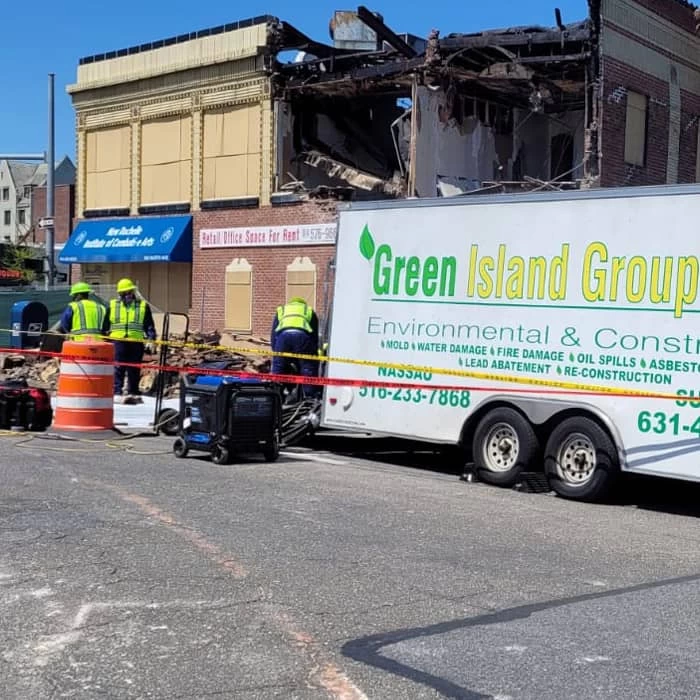
The first call triggers an emergency response. We aim to be on-site at your Baldwin home within one hour — around the clock, every day of the year. The first priority is stabilization: emergency board-up and tarping to secure the structure, followed by an immediate assessment of fire, smoke, water, and any potential hazardous material exposure. In a pre-1980 Baldwin home, that assessment includes checking for asbestos-containing materials before any demolition begins — a step that’s legally required in New York State and one that unlicensed contractors routinely skip.
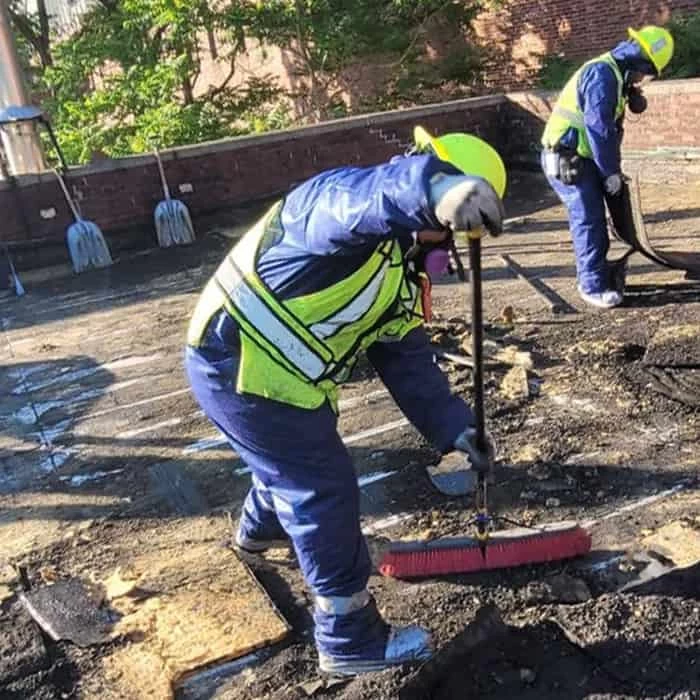
Once the site is secured, remediation runs on parallel tracks. Fire and smoke damage restoration, soot removal, odor elimination through thermal fogging and air scrubbing, water extraction, and structural drying all happen simultaneously — not in a sequence that drags your timeline out by weeks. We document everything to IICRC standards throughout this phase, which is the format your insurance carrier recognizes and expects.
When remediation is complete, reconstruction begins. Because we hold a Nassau County General Contractor license, we can pull the required permits and handle the full rebuild ourselves — walls, flooring, ceilings, structural repairs, whatever the scope requires. You don’t need to find a second contractor. We take it through to the finish, and we stay in contact with you the entire way.
Fire Smoke Damage Restoration Services Baldwin, NY
Everything a Baldwin Fire Restoration Job Actually Needs
Fire damage restoration in Baldwin isn’t a single service — it’s a coordinated response to several problems happening at once. Smoke and soot removal covers every surface affected, including areas well beyond the burn zone, because smoke travels through HVAC systems and embeds in drywall, insulation, and contents throughout the home. We use commercial-grade air scrubbers, ozone treatment, and thermal fogging to restore indoor air quality — not just visible surfaces. Our NADCA-certified HVAC cleaning ensures the ductwork isn’t redistributing smoke particles every time your system runs.
For Baldwin homes with oil heat — which describes a large share of the housing stock here — we also handle oil burner puff-back remediation. A puff-back releases fine oily soot throughout the entire home without an actual fire, and it requires the same professional process: surface cleaning, air treatment, and duct cleaning. Most homeowners’ insurance policies cover it, and we handle the claim the same way we handle a fire loss.
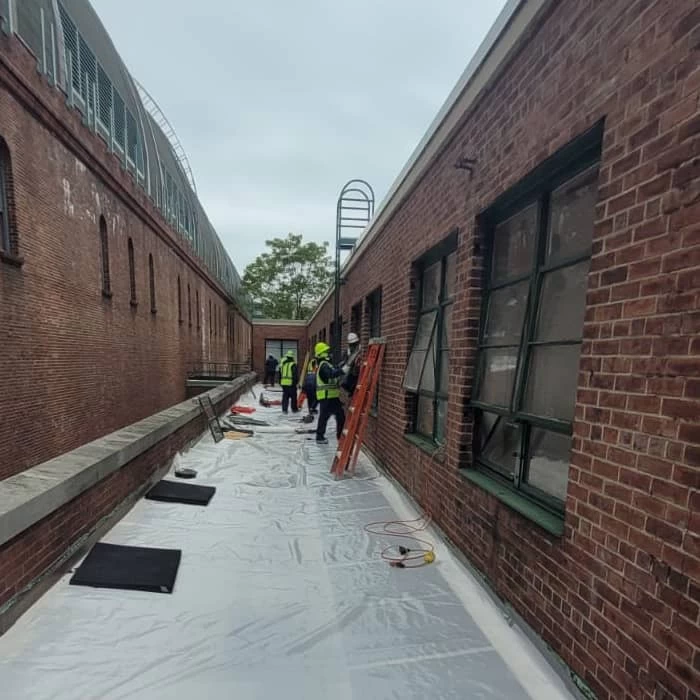
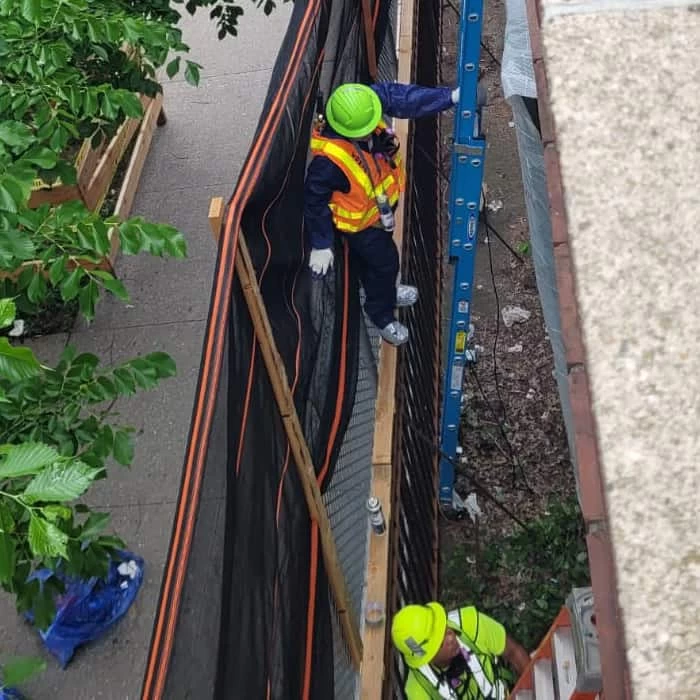
Because so many Baldwin homes predate modern building codes, every project includes a hazardous material evaluation. If asbestos or lead paint is present and disturbed, we handle abatement in-house under our NYS DOL Asbestos License and USEPA Lead and RRP certifications — no subcontractors, no project delays. From emergency response through full reconstruction under our Nassau County General Contractor license, the entire scope stays with one team.
How quickly should I call a fire restoration company after a house fire?
As soon as the fire department clears the scene — ideally within the same hour. Soot begins permanently bonding to surfaces within the first few hours after a fire, and acidic smoke compounds start corroding metal fixtures, appliances, and structural fasteners almost immediately. The longer that process runs, the more material has to be replaced rather than cleaned, which drives your restoration cost up and your insurance payout efficiency down.
The water used to extinguish the fire is its own separate clock. Mold growth can begin within 24 to 48 hours of water exposure, and in Baldwin’s South Shore environment — where coastal humidity is consistently higher than inland Nassau County — that window is tighter than it would be further north. Calling within the first hour isn’t just a good idea. It’s the difference between a manageable restoration and one that compounds into a much larger project.
Will my homeowners insurance cover fire damage restoration in Nassau County?
In most cases, yes — standard homeowners insurance policies cover fire damage, smoke damage, and the water damage caused by firefighting. But what the policy covers and what the insurance company actually pays out without pushback are two different things. Adjusters routinely miss hidden damage: smoke contamination in HVAC ductwork, soot embedded in wall cavities, water saturation behind finished surfaces. If the scope isn’t documented thoroughly, those items don’t make it into the claim.
We bill insurance directly and document every phase of the restoration process to IICRC standards — the format Nassau County insurance carriers recognize and expect. We’ve guided hundreds of Long Island homeowners through this process, and we know where claims get underpaid and how to prevent it. For a Baldwin homeowner with a home valued at over $600,000, the difference between a well-documented claim and a poorly documented one can run into tens of thousands of dollars.
My Baldwin home was built in the 1950s — does that affect the restoration process?
It does, and it’s something you should ask every contractor about before they start work. Homes built before 1980 commonly contain asbestos in floor tiles, pipe insulation, ceiling tiles, and joint compound. Homes built before 1978 frequently have lead paint. Fire and firefighting water disturb both — and once disturbed, New York State Industrial Code Rule 56 requires that a licensed asbestos contractor handle the abatement before any further demolition or reconstruction can proceed.
Nassau County has the highest concentration of pre-1960 housing stock on Long Island, and Baldwin’s post-war development history puts a large share of its homes squarely in this category. A contractor without an NYS DOL Asbestos License has to stop work and bring in a subcontractor the moment asbestos is discovered — adding days or weeks to your displacement. We hold that license in-house, along with USEPA Lead and RRP certifications, so the project keeps moving without interruption when hazardous materials are found.
What is a puff-back, and is it covered by insurance in Baldwin?
A puff-back happens when an oil burner misfires or backfires, releasing a fine oily soot that spreads through your entire home — through the HVAC system, into every room, coating walls, ceilings, furniture, and contents. It doesn’t involve an open flame, but the damage it causes looks very similar to a fire loss and requires the same professional remediation process: surface cleaning, air scrubbing, thermal fogging, and duct cleaning.
Long Island’s South Shore communities, including Baldwin, have one of the highest concentrations of oil-heated homes in the country, and puff-backs are a recurring service need — especially in homes with aging oil heating systems. Most standard homeowners insurance policies in Nassau County cover puff-back damage as a sudden and accidental event. We handle the claim the same way we handle a fire loss: direct billing to your insurer, IICRC-standard documentation, and full remediation from surfaces to ductwork. If you’ve had a puff-back and you’re not sure what to do next, this is exactly the kind of call we get regularly from Baldwin residents.
Can fire damage cause mold problems in my home later on?
Yes, and it’s one of the most common things homeowners don’t anticipate until it’s already a problem. The water used to suppress a fire saturates walls, subfloors, insulation, and structural framing. Unless that moisture is extracted and the structure is dried to measurable standards within the first 24 to 48 hours, mold growth begins — often inside wall cavities and under flooring where you can’t see it.
In Baldwin specifically, the coastal South Shore environment means ambient humidity is higher year-round than in inland Nassau communities. That accelerates the mold timeline and makes thorough structural drying more critical here than in many other areas. We run water extraction and drying simultaneously with fire and smoke remediation — not as a follow-up phase. Everything is monitored with moisture meters and documented throughout the process. And if mold is discovered at any point during the project, we can remediate it on-site under our NYS DOL Mold License without bringing in a separate contractor or adding weeks to your timeline.
How do I know which fire restoration company in Baldwin is actually licensed to do the full job?
Ask for their specific licenses and verify them. In New York State, you can look up contractor licenses through the NYS Department of Labor and Nassau County’s licensing portal. The credentials that matter for a complete fire restoration job in Baldwin are: IICRC certification for fire and smoke damage restoration, a Nassau County General Contractor license for reconstruction work, NYS DOL Asbestos and Mold licenses for hazardous material handling, and USEPA Lead and RRP certifications for pre-1978 homes.
Most restoration companies operating in the Baldwin area — including national franchise operations — hold some of these but not all. A company without a Nassau County GC license can clean and remediate but cannot legally perform the reconstruction. A company without NYS DOL Asbestos certification has to pause your project and bring in a subcontractor when asbestos is found — which, in Baldwin’s older housing stock, happens regularly. We hold every license on that list, which means your project doesn’t stop, doesn’t get handed off, and doesn’t leave gaps that come back as problems later.