When Fire Hits a Barrier Island Home, the Recovery Is Different
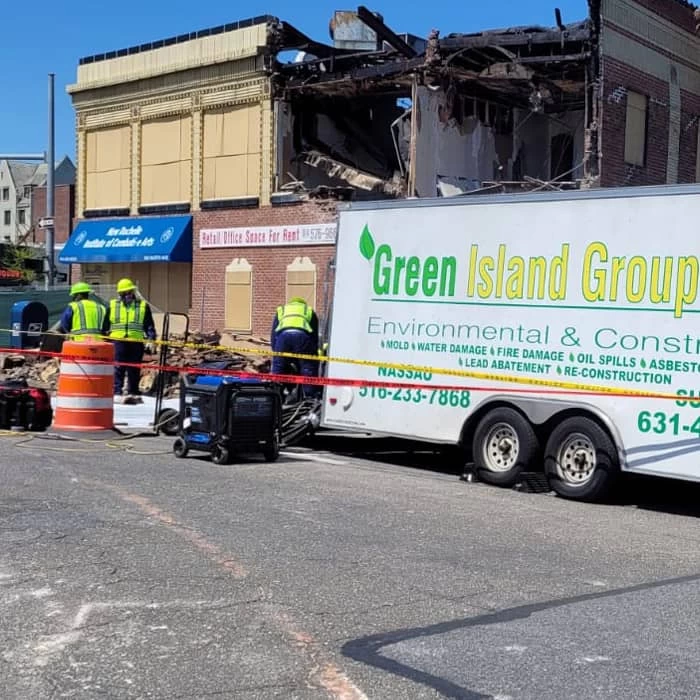
Fire damage in Barnum Island moves fast — and so do the consequences. We respond within the hour, handle everything from smoke cleanup to full reconstruction, and work directly with your insurance company so you don’t have to.
I needed a professional consultation explanation of procedure for safe removal of Asbestos in my apartment complex. Without having an account yet, I was very impressed with the caring, knowledgeable and generous advice offered by Jessica, and will look forward to doing business in the future. Thank you so much! I feel much more informed about a sometimes scary endeavor. Peace. Nancy Silva Mineola, NY.
Mia Munoz
Used this company to clean up some water flood in my house. They were fast and easy to work with.very professional, Would recommend to anyone!
Nini Valle
Great company, had a flood and they responded quickly and efficiently. Billed my insurance company directly. I highly recommend this company!
joe colapietro, jr
I had pipe freeze in my basement right before a snow storm and they made to within an hour to help start the clean up process. They we by our side throughout the entire process and even helped with the insurance company. They did such a great job with the cleanup, repair, remidiation, I contracted them to perform the repairs and finishes in the basement. They came with enough manpower and material to get the job done. Leo and Jessica were nothing but a pleasure to deal with!!
Cristian Arredondo c
I had some water damage in my home and Green Island was able to take care of my issue quickly and effectively. I am very pleased with the work they did. They responded quickly and were very professional.
Michael M
Outstanding service! From the office to the field crew everyone was friendly, helpful and responsive. I highly recommend Green Island Group.
What Full Recovery Actually Looks Like in Barnum Island
A fire doesn’t just leave burn marks. It leaves soot in your HVAC, smoke odor in every room, and water damage from the hoses — all at once. The longer any of it sits, the worse it gets. Acidic soot starts bonding to surfaces within hours. Wet walls start growing mold within 24 to 48 hours. What felt like a contained kitchen fire on Monday can become a much bigger problem by Thursday if the right steps aren’t taken immediately.
For Barnum Island homeowners specifically, that timeline is compressed by the realities of living here. This community sits in a flood zone — many homes already carry moisture vulnerabilities from years of storm exposure, and some still carry the memory of Sandy in their foundations and crawl spaces. When firefighting water meets a home that’s already been through that, mold doesn’t wait. Getting a restoration company that handles fire, water, and mold under one roof isn’t a luxury here — it’s the only approach that makes sense.
There’s also the age of the homes to consider. The majority of housing in Barnum Island was built around 1965, which means asbestos-containing materials and lead-based paint are a real and common part of the picture. A fire disturbs those materials. Cleaning up without the proper licenses isn’t just risky — it’s illegal in New York State, and it can derail your insurance claim entirely. Every step of a proper fire restoration in Barnum Island has to account for what’s inside the walls, not just what’s on them.
We’re a Long Island-based restoration company that holds General Contractor licenses in Nassau County, Suffolk County, and New York City — plus NYS DOL licenses for asbestos abatement and mold remediation, USEPA Lead/RRP certification, NADCA certification for HVAC cleaning, and IICRC certification for both fire and water damage restoration. That’s not a list of credentials for the sake of it. It means one company can legally and technically handle your entire recovery, from the night of the fire to the day you move back in.
We’ve completed more than 5,000 restoration projects across New York State, with significant work throughout Nassau County’s south shore — communities like Oceanside, Island Park, Long Beach, and Barnum Island. The housing stock here, the permit requirements, the insurance carriers, the flood zone conditions — none of it is new to us. When one of our technicians walks into a Barnum Island home built in the 1960s, we already know what we’re likely to find and exactly what needs to happen next.
From Emergency Call to Move-Back-In Day — No Guesswork
The first call triggers an immediate response. We operate 24 hours a day, 365 days a year, and arrive on-site within one hour. The first priority is stabilizing the property — boarding up openings, securing the structure, and stopping any active water intrusion from firefighting suppression before it spreads further. In a community like Barnum Island, where homes sit close together and many have below-grade spaces that are already prone to moisture, that first hour matters more than most people realize.
Once the property is secured, the full assessment begins. Every affected surface is documented — not just for the restoration plan, but for your insurance claim. We bill insurance companies directly and build the documentation that adjusters require to approve a full payout. Smoke and soot removal comes next, using HEPA vacuuming, chemical sponge cleaning, thermal fogging, and air scrubbing to treat surfaces and the air itself, not just what’s visible. If asbestos or lead materials were disturbed — which is common in Barnum Island’s pre-1980 housing stock — licensed abatement is handled as part of the same project, not farmed out to a separate contractor.
From there, the work moves into structural repair and reconstruction. Because we hold a Nassau County General Contractor license, we pull the required Town of Hempstead building permits and complete the rebuild ourselves. You’re not managing multiple companies or chasing down separate contractors while you’re displaced from your home. The process runs in one clean line from emergency response to final walkthrough.
Fire damage restoration in Barnum Island isn’t a single service — it’s a coordinated response to several problems that tend to show up together. Smoke and soot removal, water extraction, odor elimination, mold remediation, asbestos abatement, HVAC cleaning, structural repair, and full reconstruction are all part of what we handle in-house. For a community where the median home was built in 1965 and virtually every property sits in a designated flood zone, that full-service capability isn’t optional — it’s the baseline for doing the job right.
Oil burner puff-backs are worth calling out specifically, because they’re one of the most common fire restoration calls on Long Island every winter and they’re widely misunderstood. A puff-back happens when an oil furnace backfires and coats the interior of a home with fine, oily black soot. It spreads fast, it doesn’t clean with standard products, and it requires the same professional techniques used in fire and smoke restoration — HEPA vacuuming, chemical sponge cleaning, air scrubbing. With Barnum Island’s older, oil-heated housing stock, this is a real and recurring scenario, not an edge case.
Throughout every job, we document the full scope of damage and work directly with your insurance company. Given that homes in this community are valued near $700,000 and carry significant homeowners and flood insurance policies, getting the claim documented correctly — and advocated for properly — is as important as the physical restoration itself. Every phase of the work is IICRC-compliant, which is the standard insurance carriers in Nassau County recognize and require for full claims approval.
What should I do immediately after a house fire in Barnum Island, NY?
The most important thing you can do in the first hour is avoid re-entering the property until it’s been cleared as structurally safe, and call a licensed restoration company immediately. Soot begins bonding to surfaces within hours of a fire, and the water used to suppress the fire starts creating mold risk almost immediately — especially in Barnum Island where homes are in a flood zone and many have below-grade spaces that are already prone to moisture. Every hour you wait makes both problems harder and more expensive to reverse.
Once a restoration company is on-site, we secure the property, document the damage for your insurance claim, and begin the mitigation process before anything has a chance to set or spread. Do not attempt to clean soot yourself — the oily residue from smoke damage smears when handled incorrectly and can permanently stain surfaces that would otherwise be restorable. Let the professionals assess it first.
Does homeowners insurance cover fire damage restoration in Nassau County?
In most cases, yes — standard homeowners insurance policies cover fire damage, including smoke and soot cleanup, water damage from firefighting suppression, and structural repairs. However, the amount you actually recover depends heavily on how well the damage is documented and how the claim is submitted. Insurance adjusters work for the insurance company, not for you, and their initial assessment doesn’t always capture the full scope of what needs to be repaired or replaced.
We bill insurance companies directly and build the documentation that adjusters require — room-by-room assessments, photographs, moisture readings, air quality reports, and itemized restoration plans. For Barnum Island homeowners with properties valued near $700,000 and annual property tax bills over $9,000, the difference between a properly documented claim and a rushed one can easily run into tens of thousands of dollars. Getting it right the first time matters.
My home was built in the 1960s — does fire damage mean I have an asbestos problem?
Potentially, yes — and it’s a question worth taking seriously. Homes built in the 1950s and 1960s routinely contain asbestos-containing materials: floor tiles, pipe insulation, ceiling tiles, textured joint compound, and exterior shingles. When a fire burns through or near these materials — or when restoration crews disturb them during cleanup — asbestos fibers can be released into the air. This is a health hazard and a legal issue, not just a restoration inconvenience.
New York State law requires a separate NYS Department of Labor license to legally perform asbestos abatement. A contractor without that license cannot touch those materials — and if they do, it can void your insurance claim and expose you to liability. Given that the majority of Barnum Island’s housing stock was built around 1965, this isn’t an edge case. It’s a standard consideration for fire damage restoration in this community. We hold the NYS DOL Asbestos Abatement license and handle it as part of the same project, not as a separate contractor you have to find and manage yourself.
How long does fire damage restoration typically take for a Long Island home?
The honest answer is that it depends on the scope, but most residential fire damage restoration projects on Long Island fall somewhere between two weeks and two months from first response to final reconstruction. A contained kitchen fire with limited smoke spread might be resolved in two to three weeks. A fire that involved structural damage, asbestos abatement, mold remediation, and full reconstruction of multiple rooms can take six to eight weeks or longer, especially when permit approvals from the Town of Hempstead are part of the process.
The factor that most affects timeline — beyond the physical scope — is how quickly the insurance claim moves. A well-documented claim submitted by an experienced restoration company gets approved faster than a vague or incomplete one. Our direct billing process and IICRC-compliant documentation are specifically designed to keep the claim moving so the restoration can stay on schedule. Delays in the claim almost always mean delays in your ability to return home.
What is a puff-back, and is it covered as fire damage on Long Island?
A puff-back happens when an oil furnace backfires — instead of igniting cleanly, it releases a burst of unburned fuel that coats the interior of your home with fine, oily black soot. It moves through the HVAC system and spreads to rooms far beyond the furnace itself. It doesn’t look like a fire, and there are no flames involved, but the damage it causes requires the same professional restoration techniques: HEPA vacuuming, chemical sponge cleaning, thermal fogging, and air scrubbing. Standard household cleaning products don’t work — they smear the oily soot and make it worse.
Puff-backs are extremely common on Long Island, particularly in older, oil-heated homes like the majority of properties in Barnum Island. Most standard homeowners insurance policies cover puff-back damage as a sudden and accidental loss, but the claim needs to be documented properly. We handle puff-back remediation as part of our fire and smoke restoration services and work directly with your insurance carrier to make sure the full scope of the damage is captured and covered.
Can fire damage in Barnum Island lead to a mold problem even if there was no flooding?
Yes — and it’s one of the most commonly overlooked consequences of residential fire damage. The water used to suppress a house fire saturates walls, subfloors, insulation, and structural cavities. That moisture doesn’t evaporate on its own, and mold can begin developing within 24 to 48 hours of exposure. You don’t need a flood for mold to take hold — you just need wet building materials and a little time.
In Barnum Island, this risk is compounded by the community’s geography. Homes here sit in a designated flood zone, and many have pre-existing moisture conditions in their foundations, crawl spaces, or below-grade areas from years of storm exposure and tidal influence. A fire adds a significant new moisture load on top of what may already be a vulnerable structure. We hold a NYS DOL Mold Remediation license alongside our fire restoration credentials, which means we assess and address the mold risk as part of the same coordinated response — not as a separate problem you discover six weeks after the fire is supposedly cleaned up.