When a Canal-Side Home Burns, the Damage Doesn't Stop at the Char
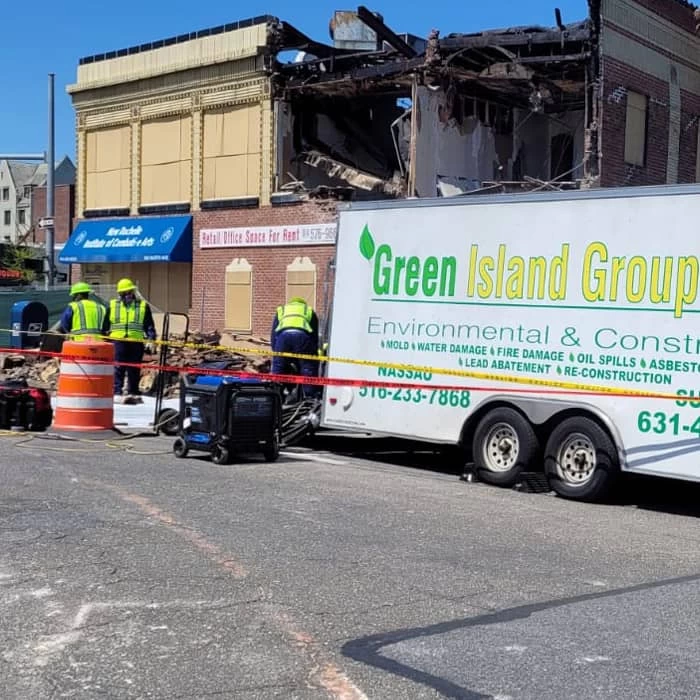
In Bay Park, a fire doesn’t just leave soot — it leaves water in flood-zone foundations, disturbed materials in mid-century walls, and a clock ticking toward mold. We handle fire damage restoration from the first hour to the final walkthrough.
I needed a professional consultation explanation of procedure for safe removal of Asbestos in my apartment complex. Without having an account yet, I was very impressed with the caring, knowledgeable and generous advice offered by Jessica, and will look forward to doing business in the future. Thank you so much! I feel much more informed about a sometimes scary endeavor. Peace. Nancy Silva Mineola, NY.
Mia Munoz
Used this company to clean up some water flood in my house. They were fast and easy to work with.very professional, Would recommend to anyone!
Nini Valle
Great company, had a flood and they responded quickly and efficiently. Billed my insurance company directly. I highly recommend this company!
joe colapietro, jr
I had pipe freeze in my basement right before a snow storm and they made to within an hour to help start the clean up process. They we by our side throughout the entire process and even helped with the insurance company. They did such a great job with the cleanup, repair, remidiation, I contracted them to perform the repairs and finishes in the basement. They came with enough manpower and material to get the job done. Leo and Jessica were nothing but a pleasure to deal with!!
Cristian Arredondo c
I had some water damage in my home and Green Island was able to take care of my issue quickly and effectively. I am very pleased with the work they did. They responded quickly and were very professional.
Michael M
Outstanding service! From the office to the field crew everyone was friendly, helpful and responsive. I highly recommend Green Island Group.
What Getting Your Bay Park Home Back Actually Looks Like
After a fire, most homeowners in Bay Park aren’t just dealing with burned walls. They’re dealing with soot that traveled through the HVAC into every room, firefighting water pooling in a foundation that sits near tidal canals, and the quiet dread that something hazardous — asbestos tile, lead paint — got disturbed in the process. That’s the reality of a fire in a home built in the 1950s on the South Shore.
When the job is done right, you’re not patching over damage — you’re walking back into a home that’s been fully assessed, cleaned, dried, and rebuilt to current code. Smoke odor is gone, not masked. Surfaces that absorbed soot have been properly treated, not painted over. The structural work has permits pulled through the Town of Hempstead Building Department, and every phase has been documented in a way your insurance company can actually use.
For Bay Park homeowners with properties averaging close to $500,000, that documentation matters. The difference between a clean insurance settlement and a prolonged dispute often comes down to how well the restoration was recorded — and whether the contractor doing the work was certified to do it in the first place.
We’re a locally owned restoration company based in Bohemia, NY, holding General Contractor licenses in Nassau County, Suffolk County, and New York City simultaneously. That matters in Bay Park because this hamlet sits within the Town of Hempstead’s jurisdiction — and structural reconstruction after a fire legally requires a Nassau County GC license to pull permits. Many restoration companies operating in this area don’t hold it.
Beyond the GC license, we carry IICRC certification for both fire and water damage restoration, a NYS DOL Asbestos License, USEPA Lead/RRP certification, and a NYS DOL Mold License. For a community where most homes predate 1970, those environmental credentials aren’t optional — they’re what separates a legal, complete restoration from one that cuts corners on the hazardous materials hiding inside your walls.
With over 5,000 completed restoration projects across New York State, we’re not learning on your property.
From the First Call to Move-Back-In Day — Here's the Sequence
The first step is emergency response. We arrive on-site within one hour of your call, around the clock. In Bay Park, that urgency isn’t just about fire damage — it’s about what comes next. Firefighting water in a flood-zone home near Hewlett Bay doesn’t drain the way it does in an inland suburb. It infiltrates, it pools, and mold begins within 24 to 48 hours. We start extraction and structural drying immediately, alongside board-up and securing the property.
From there, the assessment phase begins. Our team documents every affected area — visible fire and char damage, smoke and soot penetration, water intrusion, and any hazardous materials that may have been disturbed. Because Bay Park’s housing stock is predominantly pre-1970 construction, asbestos and lead testing are part of the standard evaluation, not an afterthought. Everything is recorded to insurance-standard specifications before a single wall is touched.
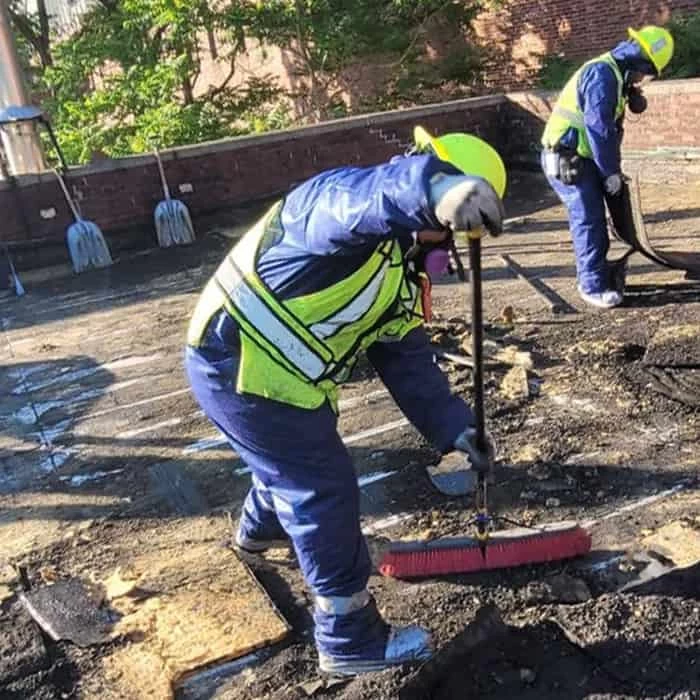
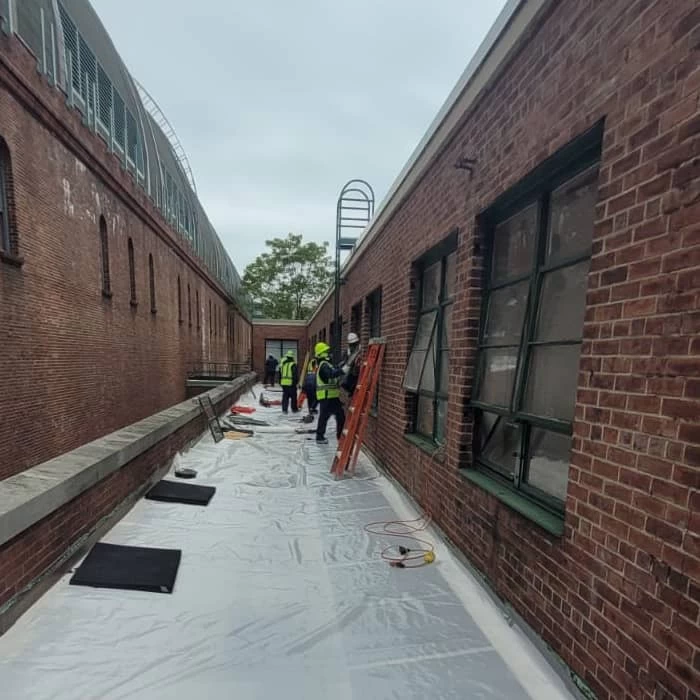
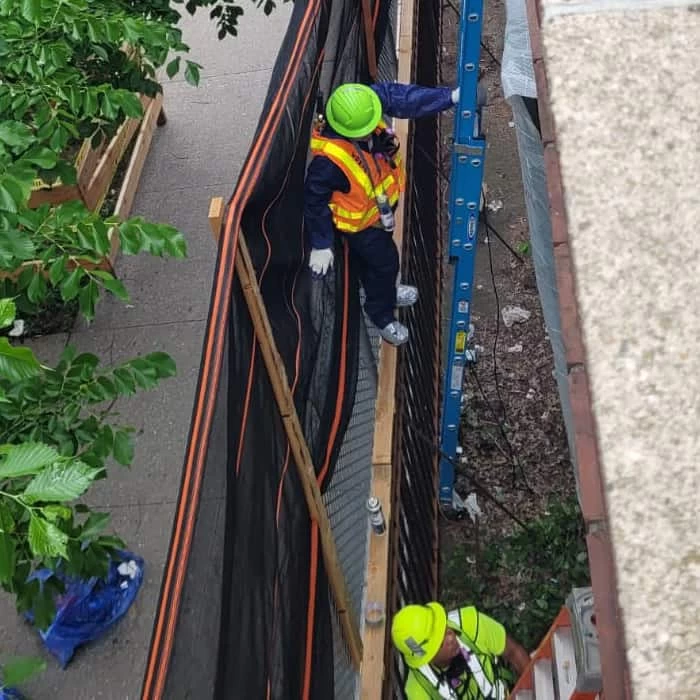
Remediation follows the assessment: soot removal, odor elimination, HVAC decontamination, asbestos or lead abatement if required, and full structural drying. Once the home is clean and stable, reconstruction begins — permitted through the Town of Hempstead, built to current code, and managed by the same company that handled day one. No handoffs. No second contractor to track down.
Built for What Bay Park Homes Actually Throw at a Restoration Crew
Bay Park isn’t a generic Nassau County suburb, and fire damage restoration here isn’t a generic job. The combination of mid-century construction, oil-heat systems, waterfront flood-zone geography, and post-Sandy renovation history creates a specific set of challenges that not every restoration company is equipped to handle — legally or technically.
On the oil heat front: furnace puff-backs are one of the most common calls in this market. When an oil burner backfires, it coats an entire home’s interior in oily black soot that smears and permanently stains if cleaned incorrectly. This is different from dry soot produced by ordinary combustibles, and it requires a different remediation approach. Our technicians are trained specifically on petroleum-based soot — the kind that comes out of the oil burners running in homes throughout Bay Park and East Rockaway every winter.
For homes that were raised and renovated after Hurricane Sandy, fire restoration adds another layer of complexity: mixed-era construction, modified foundations, and materials from two different decades that need to be assessed and rebuilt accurately. We handle the full scope — emergency response, hazardous material abatement, smoke and soot remediation, water extraction, mold prevention, and complete structural reconstruction — all under Nassau County permits, all documented for your insurance claim, and all managed by one team from start to finish.
Does fire damage restoration in Bay Park involve asbestos or lead concerns?
In most cases in Bay Park, yes — and it’s worth taking seriously. The majority of homes in this hamlet were built between the 1920s and late 1960s. Asbestos-containing materials were standard in that era: floor tiles, pipe insulation, ceiling texture, joint compound, and certain types of exterior siding all commonly tested positive for asbestos in pre-1980 construction. Lead paint is a near-certainty in any home built before 1978.
When a fire occurs, it can disturb those materials — through heat, structural damage, or the force of firefighting water. At that point, you’re no longer just dealing with a fire restoration job. You’re dealing with a hazardous materials situation that New York State law requires a licensed contractor to handle. Only a contractor holding a NYS DOL Asbestos License can legally perform asbestos abatement in New York. We hold that license, along with USEPA Lead/RRP certification. You won’t need to find a second contractor for this — and you won’t be left guessing whether the work was done legally.
How does fire damage restoration work with my homeowner's insurance claim?
We bill insurance companies directly and document every phase of the restoration to insurance-standard specifications. That means when your adjuster reviews the claim, they’re looking at a professionally structured scope of work — not a handwritten estimate from a contractor who showed up the day after the fire.
The documentation starts at the emergency response stage and continues through every step: the initial assessment, hazardous material findings, soot and smoke remediation, water extraction, structural drying, and reconstruction. For Bay Park homeowners with properties valued near $500,000, the insurance claim is a major financial event. Adjusters are professionals trained to minimize payouts, and an underdocumented claim is an easy target. Working with an IICRC-certified contractor whose work follows recognized industry standards gives your claim a much stronger foundation — and reduces the back-and-forth that drags the process out while you’re still displaced from your home.
What is a puff-back, and is it covered under fire damage restoration?
A puff-back happens when an oil burner backfires — instead of igniting cleanly, the fuel builds up and ignites all at once, sending a blast of oily black soot through the furnace and into the home’s ductwork, walls, and every room the air system touches. It’s not a traditional fire, but the damage it leaves behind is extensive and requires the same professional remediation process.
Long Island has one of the highest concentrations of oil-heated homes in the country, and Bay Park’s mid-century housing stock runs almost entirely on oil heat. Puff-backs are a high-frequency event in this community, especially during the winter months when furnaces are running continuously. The oily soot from a puff-back is particularly difficult to clean because it smears when handled incorrectly and can permanently stain surfaces if the wrong technique is used. Most homeowner’s insurance policies do cover puff-back damage — we can help document the scope and work directly with your insurer to move the claim forward.
How quickly does mold become a risk after a fire in a Bay Park home?
Mold can begin growing within 24 to 48 hours of water exposure — and in Bay Park, the water exposure from a fire can be significant. Firefighting water doesn’t just sit on the surface. In a community built on filled land adjacent to tidal canals and Hewlett Bay, with many homes in FEMA-designated higher-risk flood zones, that water infiltrates foundations, saturates wall cavities, and pools in crawl spaces in ways that don’t dry naturally.
Many Bay Park homes were also raised and modified after Hurricane Sandy, which means some properties have elevated foundations, modified crawl spaces, or structural configurations that hold moisture differently than a standard build. Our team begins water extraction and structural drying at the same time as fire remediation — not as a separate job scheduled for later. Our NYS DOL Mold License means that if mold is found or develops during the process, it can be addressed by the same crew without bringing in a third contractor. In a flood-zone community, treating water damage as an afterthought is how a $5,000 fire cleanup becomes a $20,000 mold problem.
How long does fire damage restoration typically take for a home in Bay Park?
The timeline depends heavily on the scope of damage, but for a typical Bay Park home, you’re generally looking at one to two weeks for emergency stabilization and remediation, followed by several additional weeks for reconstruction — longer if asbestos abatement, significant structural work, or complex insurance documentation is involved.
A few factors specific to Bay Park can affect the timeline. First, permit processing through the Town of Hempstead Building Department adds time that isn’t a factor if a contractor skips the permit process — which some do, illegally. Permitted work takes longer upfront but protects you legally and ensures the reconstruction holds up to inspection. Second, homes that were modified post-Sandy may have mixed construction that requires more careful assessment before reconstruction begins. Third, if asbestos or lead abatement is required, that phase has its own regulatory timeline under NYS DOL requirements. We’ll give you a realistic project timeline after the initial assessment — not an optimistic number designed to win the job.
Does Green Island Group handle fire restoration for the Town of Hempstead permit process?
Yes — and this is one of the more important practical details to understand before hiring any restoration contractor in Bay Park. Because Bay Park is an unincorporated hamlet within the Town of Hempstead, all structural repairs and reconstruction after a fire fall under the Town of Hempstead Building Department’s jurisdiction. Permits are required for any work involving structural elements, electrical systems, plumbing, or HVAC — and pulling those permits legally requires a Nassau County General Contractor License.
We hold that license. That means we can handle the full permit process directly, without subcontracting the reconstruction phase to a separate GC. For homeowners, this matters because it eliminates a common gap in the restoration process: the point where a remediation company finishes their work and hands you off to a general contractor you’ve never met, who then starts the permitting process from scratch. We manage the entire job — from emergency response through permitted reconstruction — under one license, one team, and one point of contact.