When Your Bayville Home Needs More Than a Cleanup Crew
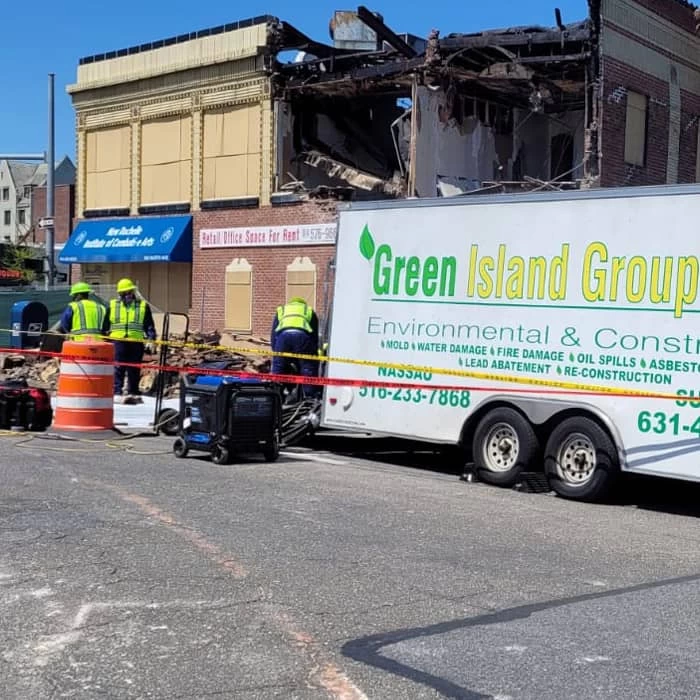
Fire damage in an older North Shore home doesn’t just leave soot — it uncovers layers of complexity that most restoration companies aren’t licensed to handle. We respond fast and take it all the way through.
I needed a professional consultation explanation of procedure for safe removal of Asbestos in my apartment complex. Without having an account yet, I was very impressed with the caring, knowledgeable and generous advice offered by Jessica, and will look forward to doing business in the future. Thank you so much! I feel much more informed about a sometimes scary endeavor. Peace. Nancy Silva Mineola, NY.
Mia Munoz
Used this company to clean up some water flood in my house. They were fast and easy to work with.very professional, Would recommend to anyone!
Nini Valle
Great company, had a flood and they responded quickly and efficiently. Billed my insurance company directly. I highly recommend this company!
joe colapietro, jr
I had pipe freeze in my basement right before a snow storm and they made to within an hour to help start the clean up process. They we by our side throughout the entire process and even helped with the insurance company. They did such a great job with the cleanup, repair, remidiation, I contracted them to perform the repairs and finishes in the basement. They came with enough manpower and material to get the job done. Leo and Jessica were nothing but a pleasure to deal with!!
Cristian Arredondo c
I had some water damage in my home and Green Island was able to take care of my issue quickly and effectively. I am very pleased with the work they did. They responded quickly and were very professional.
Michael M
Outstanding service! From the office to the field crew everyone was friendly, helpful and responsive. I highly recommend Green Island Group.
The hours right after a fire are the ones that determine how long you’re out of your home and how much of it you actually get back. Soot starts bonding to surfaces within hours. Water from suppression soaks into walls and subfloors and begins creating mold risk within 24 to 48 hours. Every hour without a response is another hour of damage compounding quietly behind your walls.
Bayville’s housing stock makes this more complicated than most. More than 85% of homes here were built before 1980, which means fire doesn’t just damage your walls — it can disturb asbestos-containing materials in floor tiles, pipe insulation, and joint compound, plus lead paint in surfaces throughout the home. That’s a regulated hazmat situation, and it requires a company that’s actually licensed to handle it under New York State law.
Then there’s the coastal factor. Bayville sits on a Long Island Sound peninsula, and the ambient humidity here is elevated year-round. When firefighting water saturates an older Bayville home in this environment, mold doesn’t wait. Getting a certified team in fast — one that handles fire, water, and mold under the same roof — is what keeps a contained fire from turning into a months-long displacement.
One License, One Call, One Company That Finishes the Job
We’re a locally owned restoration and construction company serving all of Long Island, including Bayville and other Nassau County communities. We hold a General Contractor license in Nassau County, IICRC certification in both fire and smoke damage restoration and water damage restoration, NYS DOL licenses for asbestos abatement and mold remediation, and a USEPA Lead/RRP certification. That combination isn’t common. Most restoration companies operating on the North Shore can clean up visible damage — but they can’t legally touch the asbestos or lead that a fire disturbs in a pre-1978 home, and they can’t pull permits and rebuild what was lost.
With over 5,000 completed restoration projects across New York State, we’ve worked through the full range of what Long Island homes present — oil burner puff-backs, coastal water intrusion, older structural materials, and the village-level permitting that incorporated communities like Bayville require. You get one point of contact from the night of the fire to the day you move back in.
From Emergency Call to Move-Back-In Day — Here's the Real Process
The first call triggers an emergency response. We aim to be on-site within an hour, which matters in Bayville because getting here requires knowing the North Shore road network — Bayville Avenue is essentially the one way in and out of the village, and a company that knows these roads gets there faster than one dispatching blind from a distant location. The first priority on arrival is stabilization: boarding up openings, tarping the roof if needed, and assessing the structure for safety before anything else happens.
From there, the scope gets documented in full. That documentation isn’t just for your records — it’s built to support your insurance claim, using IICRC-standard protocols that adjusters recognize and accept. For a home in Bayville, that scope almost always includes testing for asbestos and lead before any demolition begins. If those materials are present and were disturbed by the fire, abatement happens under the NYS DOL licenses required by law, before reconstruction work starts.
Once the structure is clean, dried, and cleared, reconstruction begins under our General Contractor license. Permits get pulled through the Village of Bayville’s own Building Department — which operates independently from Nassau County — and the work moves forward to code. You don’t hand off to a second contractor and start over. The team that assessed your home is the team that restores it.
Everything Your Bayville Home Actually Needs After a Fire
Fire damage restoration in Bayville isn’t a single service — it’s a sequence of licensed, coordinated work that covers every category of damage a fire creates. That starts with emergency stabilization and structural assessment, moves through water extraction and structural drying from suppression efforts, and includes smoke and soot removal from all surfaces, contents, and HVAC systems. Oily soot from oil burner puff-backs — one of the most common fire-adjacent damage events in Nassau County’s oil-heated housing stock — requires a different cleaning approach than dry soot, and it embeds in ductwork and porous surfaces in ways that standard cleanup misses entirely.
For homes built before 1980, which is the overwhelming majority of properties in Bayville, the scope also includes pre-demolition hazardous material testing, licensed asbestos abatement if required, and lead-safe work practices under the USEPA RRP rule. These aren’t optional add-ons — they’re legal requirements for any contractor doing demolition or reconstruction in a pre-1978 home, and skipping them creates both health and liability exposure for the homeowner.
Full reconstruction is handled under our Nassau County General Contractor license, with permits pulled through the Village of Bayville’s Building Department. If the fire occurred alongside storm water intrusion — a real scenario given Bayville’s Long Island Sound coastline and documented flood risk — we handle water damage restoration and mold remediation concurrently, not as a separate engagement you have to coordinate yourself.
Is it safe to go back inside my Bayville home after a fire?
Not until a professional has assessed the structure. Even if the fire looks contained to one room, smoke travels through every gap, duct, and wall cavity in the house. Soot deposits throughout the home, and in Bayville’s older housing stock — where many homes have original plaster walls, older HVAC systems, and decades of layered materials — that contamination goes deeper than it looks on the surface.
Beyond smoke and soot, there’s a structural question. Fire can compromise load-bearing elements without making them obviously visible, and water from suppression efforts weakens flooring and subfloor assemblies. If the fire disturbed asbestos-containing materials — which is a real possibility in any Bayville home built before 1980 — re-entering without proper clearance creates a genuine inhalation hazard. Wait for a licensed assessment before going back in, and don’t let anyone start cleaning or demo work until hazardous material testing has been completed.
Will my homeowner's insurance cover the full cost of fire restoration?
Most standard homeowner’s policies cover fire damage, but what gets paid out depends heavily on how the claim is documented. The difference between a fully covered restoration and a partially paid claim usually comes down to scope — whether every category of damage was identified, itemized, and submitted correctly from the start.
In a Bayville home, that scope is often more complex than a straightforward fire cleanup. Asbestos abatement, lead-safe demolition, mold remediation from suppression water, and full structural reconstruction are all legitimate, covered line items — but they need to be documented to IICRC standards and submitted with the right supporting detail. Insurance adjusters work from what’s in front of them. If the documentation is incomplete, the payout reflects that. We handle the documentation and bill the insurer directly, which keeps the process moving and reduces the back-and-forth that leaves homeowners waiting.
What happens if asbestos is found during fire damage cleanup in my home?
Work stops until it’s properly handled. Under New York State law, asbestos abatement requires a NYS Department of Labor Asbestos License — a contractor without that license cannot legally disturb, remove, or dispose of asbestos-containing materials. In Bayville, where more than 85% of homes were built before 1980, the presence of asbestos in floor tiles, pipe insulation, ceiling materials, or joint compound is common enough that testing before any demolition is standard practice, not a precaution.
When asbestos is confirmed, the abatement process involves containment of the affected area, removal by licensed technicians using proper protective equipment and disposal protocols, and air clearance testing before any reconstruction work begins. This adds time to the overall project, but it’s not optional — and it’s not something to work around. We hold the NYS DOL Asbestos License required to do this work lawfully, which means the abatement and the restoration happen under the same contract rather than requiring you to find a separate licensed abatement company while your home sits open.
How long does fire damage restoration typically take in Bayville, NY?
It depends on the scope, but for a typical residential fire in Bayville, you’re generally looking at anywhere from a few weeks for a contained room-level fire to several months for a more significant structural loss. The timeline is shaped by several factors that are specific to this area.
Older homes — and Bayville has a lot of them, with more than a quarter of the village’s housing stock built before 1939 — tend to reveal additional complexity during demolition. Original construction materials, non-standard framing, and layered renovations from different eras all affect how the work proceeds. Permitting through the Village of Bayville’s own Building Department adds a step that’s separate from Nassau County permitting, and that process has its own timeline. If hazardous material testing comes back positive for asbestos or lead, abatement adds time before reconstruction can begin. The most accurate timeline comes from a thorough initial assessment — one that accounts for what’s actually in your home, not a generic estimate built on assumptions.
What is an oil burner puff-back, and does fire restoration cover it in Bayville?
A puff-back happens when an oil furnace misfires and expels a blast of unburned fuel oil as a fine, oily soot. It can coat an entire floor — or an entire house — in seconds. Long Island has one of the highest concentrations of oil-heated homes in the country, and Bayville’s older housing stock runs heavily on oil heat, which makes puff-backs one of the most common damage events in this area.
The soot from a puff-back is different from fire soot. It’s oily, it smears when disturbed, and it embeds in every porous surface it touches — walls, ceilings, upholstery, clothing, and especially HVAC ductwork. Standard dry-vacuuming or general cleaning makes it worse, not better. Proper remediation requires specialized cleaning agents, air scrubbers, and NADCA-standard duct cleaning to actually remove the contamination rather than spread it. Puff-back cleanup falls squarely within fire and smoke damage restoration, and most homeowner’s insurance policies cover it. If you’ve had a puff-back in your Bayville home, the visible soot is only part of what needs to be addressed.
Can fire damage also lead to mold problems in a Bayville home?
Yes, and it happens faster than most people expect. The water used to extinguish a fire saturates walls, flooring, insulation, and structural framing — and in the right conditions, mold can begin colonizing within 24 to 48 hours. Bayville’s coastal position on Long Island Sound means ambient humidity here is naturally elevated compared to inland communities, which shortens that window further.
In an older home with plaster walls and older insulation materials, water doesn’t just sit on the surface — it wicks deep into the structure and stays there if it isn’t extracted and dried properly. If a restoration company addresses the fire and smoke damage but doesn’t treat the water intrusion with the same urgency, mold becomes the next problem. We hold the NYS DOL Mold Remediation License required to legally perform mold remediation in New York, and because we handle water damage restoration under the same IICRC certification, we’re treating both crises from day one — not discovering the mold problem six weeks later when it’s already spread behind your walls.