When Your Home Is Older Than the Parkway Running Through It, Cleanup Gets Complicated
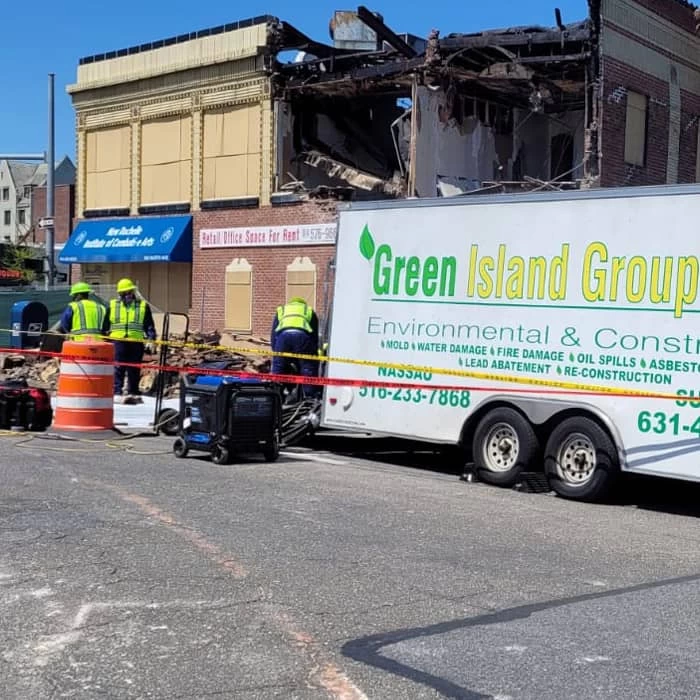
Most homes in Bellerose Terrace were built before 1939. Fire damage in a home like that isn’t just a cleanup job — it’s a licensed operation. We handle fire damage restoration in Bellerose Terrace, NY from the first emergency call through the final rebuild, under one roof.
I needed a professional consultation explanation of procedure for safe removal of Asbestos in my apartment complex. Without having an account yet, I was very impressed with the caring, knowledgeable and generous advice offered by Jessica, and will look forward to doing business in the future. Thank you so much! I feel much more informed about a sometimes scary endeavor. Peace. Nancy Silva Mineola, NY.
Mia Munoz
Used this company to clean up some water flood in my house. They were fast and easy to work with.very professional, Would recommend to anyone!
Nini Valle
Great company, had a flood and they responded quickly and efficiently. Billed my insurance company directly. I highly recommend this company!
joe colapietro, jr
I had pipe freeze in my basement right before a snow storm and they made to within an hour to help start the clean up process. They we by our side throughout the entire process and even helped with the insurance company. They did such a great job with the cleanup, repair, remidiation, I contracted them to perform the repairs and finishes in the basement. They came with enough manpower and material to get the job done. Leo and Jessica were nothing but a pleasure to deal with!!
Cristian Arredondo c
I had some water damage in my home and Green Island was able to take care of my issue quickly and effectively. I am very pleased with the work they did. They responded quickly and were very professional.
Michael M
Outstanding service! From the office to the field crew everyone was friendly, helpful and responsive. I highly recommend Green Island Group.
What Actually Changes When the Restoration Is Done Right
The fire is out. The trucks are gone. But what you’re left with — the soot on the walls, the smell that won’t leave, the water sitting in your subfloor from the hoses — that’s where the real work starts. And in a home built in the 1930s or 1940s, that work is more involved than most people expect.
Bellerose Terrace’s housing stock is almost entirely pre-1980 construction. That means asbestos-containing materials are likely present in your floor tiles, pipe insulation, or joint compound. Lead paint is on virtually every surface. These aren’t hypothetical risks — they’re legal requirements. Disturbing those materials without the right licenses isn’t just dangerous, it’s a code violation. When the restoration is handled correctly, those hazards are identified, documented, and addressed before anyone picks up a tool.
The other thing that changes when it’s done right: the smell is actually gone. Not masked. Not temporarily covered. Smoke odor embeds itself into wall cavities, insulation, and ductwork — especially in older homes with original plaster walls and aging HVAC systems. Real odor elimination means treating the source, not the surface. When you walk back into your home, it should smell like your home again.
Licensed Fire Restoration Service, Bellerose Terrace
One License, One Team, Zero Handoffs
We are a locally operated restoration company serving Nassau County, Suffolk County, Queens, and New York City. We hold a Nassau County General Contractor license — which means we can legally take your Bellerose Terrace property from emergency response all the way through full structural reconstruction without handing the job to a second contractor you’ve never met.
That matters more in Bellerose Terrace than it does in most places. The community sits right on the Nassau-Queens line, and the homes along Superior Road and off Jericho Turnpike are the kind of dense, attached construction where fire doesn’t stay contained to one unit. We also hold NYS DOL Asbestos and Mold licenses and USEPA Lead/RRP certification — the credentials that make restoration in pre-war housing stock legal, not just possible.
With over 5,000 completed restoration projects across New York State and IICRC Fire and Smoke Restoration Technician certification, we’ve seen what fire does to older Nassau County homes and know exactly how to bring them back.
From the Moment You Call to the Day You Move Back In
The first call triggers an emergency response — 24 hours a day, 365 days a year. Our target is on-site within one hour. In Bellerose Terrace, that means arriving while the situation is still controllable, before acidic soot has had time to permanently bond to surfaces and before the firefighting water sitting in your walls has had a chance to generate mold. Nassau County’s humid summers make that 24-to-48-hour mold window very real.
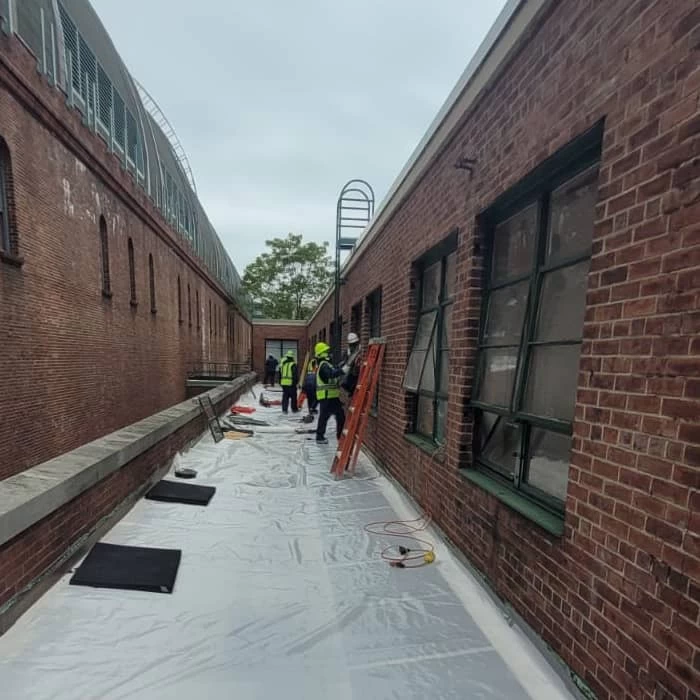
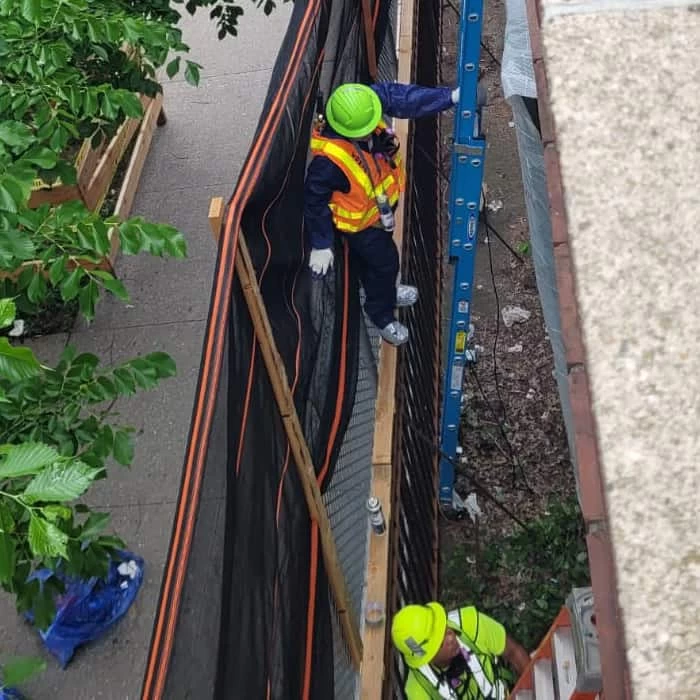
Once on-site, we conduct a full damage assessment — not just the burn zone, but the full scope of smoke migration. In attached and semi-attached homes like those common throughout Bellerose Terrace, smoke travels through shared walls, party walls, and ductwork into spaces that look untouched. Thermal imaging and moisture meters identify what the eye misses. If asbestos or lead is a factor — and in pre-1980 construction, it usually is — testing and licensed abatement happen before any demolition or structural work begins, in compliance with New York State and Nassau County requirements.
From there, the process moves through water extraction, structural drying, smoke and soot remediation, odor elimination, and finally reconstruction. Because we hold a Nassau County GC license, every phase stays under one contract. You get one point of contact, one accountable team, and a clear timeline from start to finish.
Fire and Smoke Damage Restoration, Bellerose Terrace NY
Everything the Job Actually Requires — Not Just the Easy Parts
Fire damage restoration in Bellerose Terrace covers a lot of ground. Emergency board-up and tarping to secure the property. Water extraction and structural drying from firefighting suppression. Smoke and soot removal from surfaces, wall cavities, and HVAC systems. Odor elimination at the source — not deodorizer sprayed over the problem. And for homes with oil heat, which is common throughout this part of Nassau County, furnace puffback cleanup is a documented, recurring service need here. A puffback coats an entire home’s interior with fine oily soot through the duct system — it requires a different approach than fire soot, and we handle it regularly.
For any property built before 1980, the job also includes asbestos testing and, where necessary, licensed abatement under NYS DOL certification. Pre-1978 homes require USEPA Lead/RRP-compliant handling during any demolition or repair work. These aren’t add-ons — they’re legal requirements for restoration work in Bellerose Terrace’s housing stock, and we include them in how we approach every job here.
Once remediation is complete, reconstruction begins. Framing, drywall, flooring, painting, and full structural rebuild are all handled in-house under our Nassau County GC license. We also bill insurance directly and document every step to insurance-company standards, which means fewer disputes and faster approvals on claims for properties valued well into the $800,000 range common in this community.
Is my Bellerose Terrace home safe to enter after a fire?
That depends on the extent of the damage, and you should not assume it’s safe until a professional has assessed it. Structural integrity is the first concern — fire weakens load-bearing elements in ways that aren’t always visible. But in Bellerose Terrace’s older housing stock, there’s a second layer: asbestos-containing materials and lead paint are common in pre-1980 construction, and fire disturbs those materials, creating airborne hazards that you can’t see or smell.
We assess both structural safety and hazardous material exposure before recommending re-entry. If the fire involved your HVAC system or spread smoke through ductwork — which happens frequently in attached homes — air quality testing is also part of that evaluation. Don’t rely on a visual check. The risks in an older Bellerose Terrace home are real, and some of them are invisible.
How does the insurance claim process work for fire damage restoration?
We bill insurance directly and handle the documentation throughout the restoration process. That means your insurer receives IICRC-compliant documentation at every stage — from the initial damage assessment through final reconstruction — which is the format insurance carriers recognize and process most efficiently.
For Bellerose Terrace homeowners carrying policies on properties valued at $562,000 to over $800,000, getting the claim right matters. The most common friction point is scope disputes — the insurance company’s estimate doesn’t account for asbestos abatement, lead paint handling, or the full extent of smoke migration into adjacent spaces. Because we document everything and hold the certifications insurers look for, those disputes are minimized. You’re not left negotiating alone.
What is a furnace puffback and does it count as fire damage?
A puffback happens when an oil burner misfires and forces a wave of fine, oily soot back through your home’s duct system. It’s not a fire in the traditional sense — there’s no flame, no structural damage — but the contamination can be extensive. Soot deposits on walls, ceilings, furniture, clothing, and inside every duct in the home. It’s one of the messiest and most underestimated restoration jobs there is.
Oil heat is common throughout Bellerose Terrace and the surrounding Nassau County communities, and puffback incidents are a documented, recurring service need in this area specifically. Most homeowner’s insurance policies cover puffback cleanup under the fire damage or sudden and accidental damage provisions — but coverage varies by policy, so it’s worth confirming with your carrier before work begins. We handle puffback cleanup regularly and can document the damage for your claim from the start.
How long does fire damage restoration take for a home in Bellerose Terrace?
It depends on the scope of the damage, but a realistic range for a moderate residential fire in an older Nassau County home is two to six weeks for remediation, followed by additional time for reconstruction if structural work is needed. Homes in Bellerose Terrace often add time to that estimate because of the age of the construction — pre-war and mid-century homes frequently require asbestos testing before demolition can begin, and abatement adds days to the timeline depending on what’s found.
The other factor unique to this area is mold risk. Nassau County’s humid summer climate means that firefighting water left in walls or subfloors can generate mold growth within 24 to 48 hours. If water extraction and structural drying aren’t started immediately, mold remediation becomes part of the scope — and that extends the timeline and the cost. Starting fast is the single biggest thing you can do to keep the project on track.
Can smoke from a neighbor's fire damage my attached home in Bellerose Terrace?
Yes, and it happens more often than people expect. Bellerose Terrace is one of the densest communities in Nassau County, with attached and semi-attached homes sharing walls, attics, and ductwork. Smoke doesn’t stop at a property line. It migrates through shared wall cavities, travels through party walls, and gets pulled into adjacent HVAC systems — leaving a neighboring unit with significant smoke and soot contamination even if there was no direct fire contact on that side.
If your neighbor had a fire and you’re noticing a persistent smell, discoloration on walls, or a haze that won’t clear, that’s not your imagination. It warrants a professional assessment. Your homeowner’s insurance may cover smoke damage to your unit even if the fire originated next door — document everything and contact your carrier. We can assess the full scope of smoke migration across both units and provide documentation that supports your claim.
Does Green Island Group handle both the cleanup and the rebuild, or do I need two contractors?
We handle both — and that’s not common in this industry. Most restoration companies are licensed for cleanup and remediation, but they are not licensed general contractors. That means when the remediation is done, they hand the job off to a separate GC for reconstruction, and you’re suddenly managing two contracts, two timelines, and two companies that may not communicate well with each other.
We hold a Nassau County General Contractor license specifically, which authorizes us to perform full reconstruction work on Bellerose Terrace properties — framing, drywall, flooring, painting, structural rebuild. The entire job stays under one contract and one team. For homeowners in a community like Bellerose Terrace, where properties carry significant value and the rebuild after a fire can be a major project, having a single accountable contractor from day one makes the recovery process considerably more manageable.