Bethpage Homes Are Older — The Cleanup Has to Be Smarter
When three out of four homes in Bethpage were built before 1970, a fire doesn’t just leave soot — it uncovers decades of hidden hazards. We handle fire damage restoration in Bethpage with the licenses and certifications to manage all of it, from the first call to the day you move back in.
I needed a professional consultation explanation of procedure for safe removal of Asbestos in my apartment complex. Without having an account yet, I was very impressed with the caring, knowledgeable and generous advice offered by Jessica, and will look forward to doing business in the future. Thank you so much! I feel much more informed about a sometimes scary endeavor. Peace. Nancy Silva Mineola, NY.
Mia Munoz
Used this company to clean up some water flood in my house. They were fast and easy to work with.very professional, Would recommend to anyone!
Nini Valle
Great company, had a flood and they responded quickly and efficiently. Billed my insurance company directly. I highly recommend this company!
joe colapietro, jr
I had pipe freeze in my basement right before a snow storm and they made to within an hour to help start the clean up process. They we by our side throughout the entire process and even helped with the insurance company. They did such a great job with the cleanup, repair, remidiation, I contracted them to perform the repairs and finishes in the basement. They came with enough manpower and material to get the job done. Leo and Jessica were nothing but a pleasure to deal with!!
Cristian Arredondo c
I had some water damage in my home and Green Island was able to take care of my issue quickly and effectively. I am very pleased with the work they did. They responded quickly and were very professional.
Michael M
Outstanding service! From the office to the field crew everyone was friendly, helpful and responsive. I highly recommend Green Island Group.
The fire is out. The Bethpage Fire Department has cleared the scene. Now the real work starts — and how it gets handled in the next 24 to 48 hours will determine how much of your home is salvageable and how much has to be replaced. Soot bonds permanently to surfaces within hours. The water used to suppress the fire starts growing mold inside your walls before the smell even fades. Every hour without a certified team on-site is damage compounding on damage.
For a home built in the 1950s or early 1960s — which describes the majority of houses in Bethpage — a fire doesn’t just burn drywall. It disturbs floor tile adhesive, pipe insulation, ceiling material, and layers of paint that were applied long before asbestos and lead were banned from residential construction. That’s the reality of this housing stock. A restoration company that isn’t licensed to handle those materials can clean up what’s visible and leave the rest behind — legally and literally.
When the job is done right, you’re not just getting soot wiped off walls. You’re getting a home that’s structurally sound, environmentally cleared, and documented thoroughly enough that your insurance claim holds up. You get your house back — not a version of it that looks fine until the next inspection.
We’re a locally owned restoration and environmental services company serving Nassau County and the greater Long Island area. We hold a Nassau County General Contractor License, which means we’re legally authorized to perform reconstruction work in Bethpage — not just clean up and hand you off to someone else. IICRC-certified for both fire and smoke damage restoration and water damage restoration, NYS DOL licensed for asbestos and mold, and USEPA Lead/RRP certified, we carry every credential that a fire in a pre-1970 Bethpage home is likely to require.
With over 5,000 completed restoration projects across New York State, we’ve worked through Nassau County’s permit process, dealt with the Town of Oyster Bay’s building requirements, and restored homes that look a lot like yours — post-WWII capes, ranches, and split-levels with oil heat, original construction materials, and decades of character worth preserving. We bill insurance directly, document everything to insurance standards, and stay involved through the entire claims process so you’re not navigating it alone.
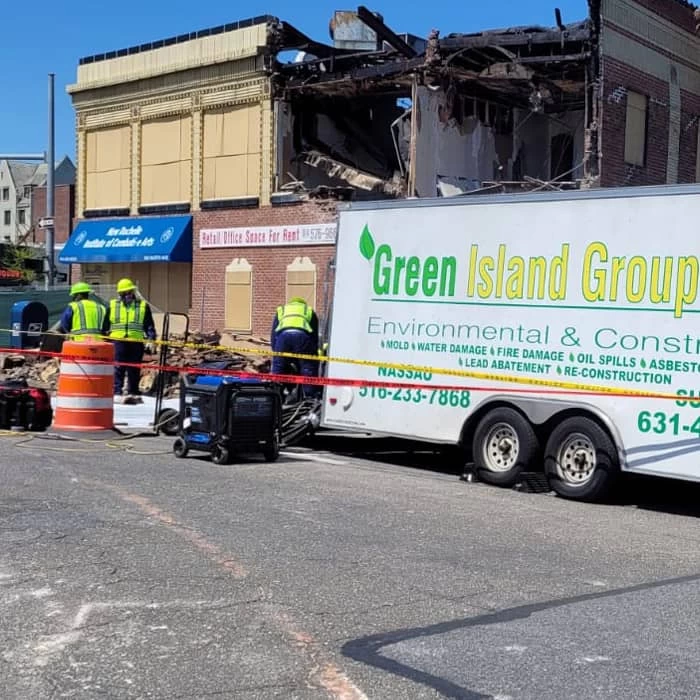
The process starts the moment you call. We’re available 24 hours a day, 7 days a week, and can be on-site at your Bethpage home within an hour. That first response matters more than most people realize — emergency board-up and stabilization, water extraction from firefighting suppression, and an immediate assessment of what hazardous materials may have been disturbed. In a home built before 1978, that assessment isn’t optional. It’s the step that determines what the rest of the project legally requires.
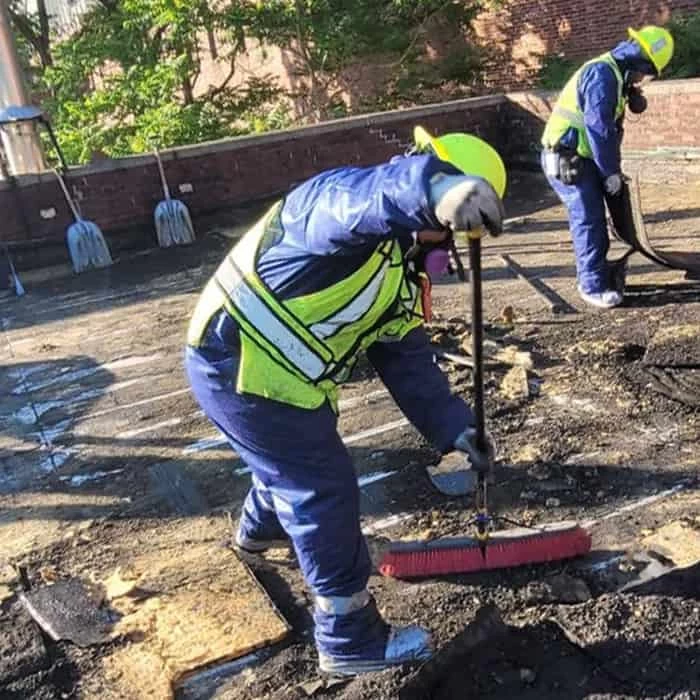
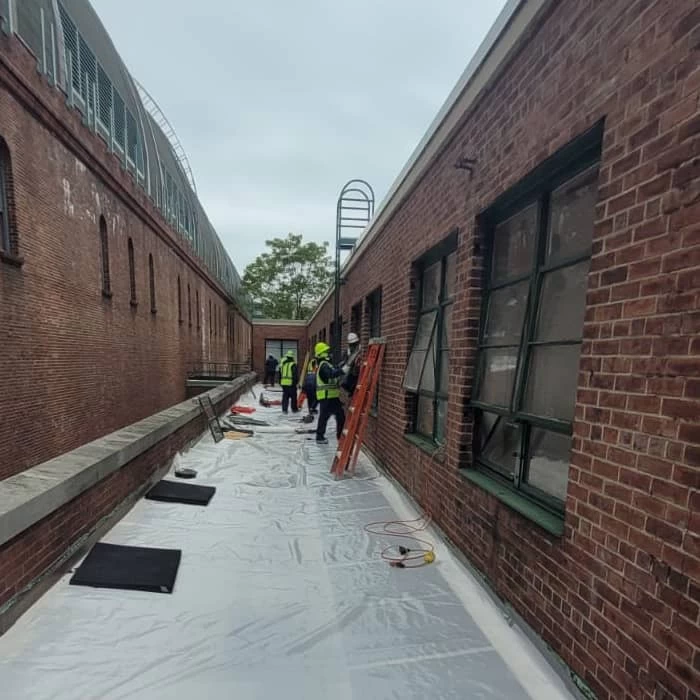
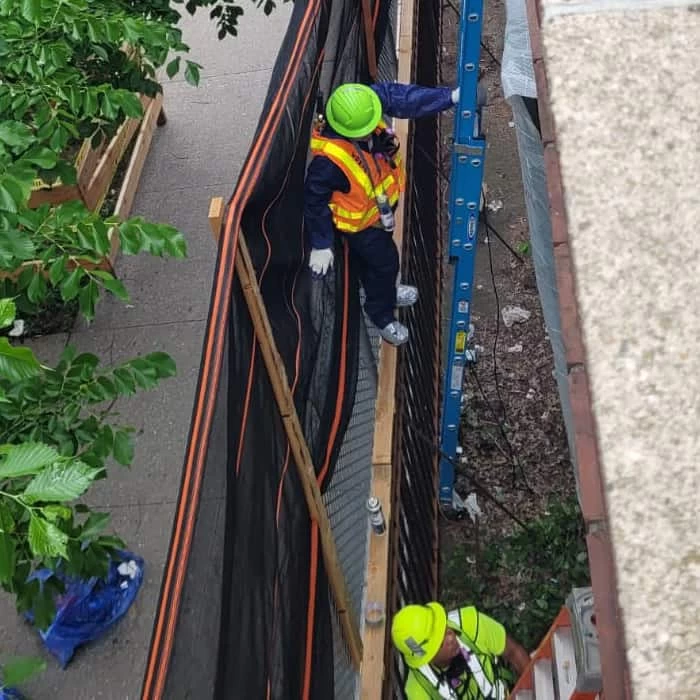
Once the property is stabilized and the scope is documented, the remediation phase begins. That means soot and smoke removal from surfaces, structural materials, and HVAC ductwork — because smoke travels through an entire home’s air system, not just the room where the fire started. If asbestos-containing materials were disturbed, those are abated under NYS DOL licensing before any reconstruction begins. If the firefighting water created mold conditions, that’s addressed under a separate NYS DOL Mold License before walls are closed back up.
After remediation, reconstruction begins — permitted through the Town of Oyster Bay’s Building Division, which governs all structural repair work in Bethpage. Because we hold a Nassau County GC License, we pull the permits, manage the inspections, and complete the rebuild. You don’t coordinate between three separate companies. You deal with us, from the emergency call through the final walkthrough.
Fire Smoke Damage Restoration Services Bethpage NY
Everything Your Bethpage Home Needs Under One License
Fire damage restoration in Bethpage covers more ground than it does in most places — and that’s a direct result of when this community was built. Homes along the residential streets off Stewart Avenue and Broadway, the ranches and capes throughout the 11714 ZIP code, were constructed during an era when asbestos was standard in floor tiles, pipe wrap, and joint compound, and lead paint was applied to every surface. A fire that damages those materials doesn’t just create a cleaning project. It creates a regulated hazardous materials situation that requires licensed abatement before restoration work can legally proceed.
Our fire restoration service in Bethpage includes emergency response and board-up, full soot and smoke removal, NADCA-certified HVAC cleaning to clear smoke particles from the ductwork that runs throughout your home, asbestos testing and abatement where required, lead paint handling under USEPA RRP protocols, mold prevention and remediation from firefighting water exposure, and complete structural reconstruction under Nassau County GC licensing. We’re also the company to call after an oil burner puff-back — a common issue in Bethpage’s older, oil-heated homes that coats interiors in fine oily soot and requires the same professional remediation process as fire damage, even without an open flame.
Every project is documented to insurance standards from day one. We bill your insurance carrier directly and stay involved through the claims process — including material selection and scope reviews — so the settlement reflects the actual cost of restoring your home, not a lowball estimate that leaves you covering the difference.
What should I do immediately after a house fire in Bethpage, NY?
The most important thing you can do in the first hour is call a certified restoration company — before you re-enter the property, before you start cleaning anything, and before you call your insurance company. The Bethpage Fire Department will clear the scene when it’s safe, but “safe to enter” doesn’t mean the structure is stable or that the air is breathable. Soot particles are microscopic and toxic, and in a home built before 1970 — which covers most of Bethpage — disturbed asbestos fibers and lead dust can be present in the air without any visible sign.
Once you’ve made that call, document everything you can from outside or from a safe distance using your phone. Photos and video taken before any cleanup begins are critical for your insurance claim. Don’t throw anything away, don’t wipe anything down, and don’t run your HVAC system — that will push smoke particles and potential contaminants through every room in the house. Let the certified team assess and contain the situation first.
How long does fire damage restoration typically take in Bethpage?
It depends on the scope, but most residential fire restoration projects in Bethpage run anywhere from two to eight weeks from initial response to completed reconstruction. A contained kitchen fire in a ranch-style home might be resolved in two to three weeks. A fire that spread to wall cavities, triggered mold from suppression water, and disturbed asbestos-containing materials — a realistic scenario in a 1950s Bethpage cape — can take six to eight weeks once abatement, drying, remediation, and permitted reconstruction are all factored in.
The Town of Oyster Bay’s building permit process adds a step that homeowners sometimes don’t anticipate. Any structural repairs in Bethpage require a permit through the Town’s Building Division, and inspections have to be scheduled at key stages of the reconstruction. Working with a contractor who already knows that process — and has an established track record with Nassau County permitting — keeps the project moving without unnecessary delays waiting on approvals.
Does homeowners insurance cover fire damage restoration costs in Nassau County?
In most cases, yes — standard homeowners insurance policies cover fire damage, including smoke damage, water damage from firefighting suppression, and the cost of temporary housing if your home is uninhabitable. But what gets covered and how much you receive depends heavily on how the damage is documented and how the claim is filed. Nassau County home values are significant — median values in Bethpage are approaching $625,000 to over $800,000 depending on the source — and the gap between a well-documented claim and a poorly documented one can be tens of thousands of dollars.
We document every element of the damage in the format insurance adjusters use, bill the carrier directly, and stay involved through the entire claims process. If your insurer disputes the scope or the cost, we’re in a position to respond with documentation. We’ve also helped clients through material selection to ensure replacement costs are accurately captured — not substituted with cheaper alternatives that don’t match the original home. You shouldn’t be navigating that process alone while you’re displaced from your house.
My Bethpage home was built in the 1950s — does fire damage mean asbestos exposure?
It very likely means asbestos-containing materials were present in the home, and a fire may have disturbed them. Homes built in Bethpage during the 1940s through the 1960s — which accounts for the majority of the housing stock here — commonly contain asbestos in floor tile adhesive, vinyl floor tiles, pipe and duct insulation, ceiling tiles, textured plaster, and joint compound. When these materials are damaged by fire, heat, or the physical force of firefighting, asbestos fibers can become airborne.
Under New York State law, asbestos abatement requires a NYS DOL Asbestos License. A restoration contractor without that license cannot legally test for or remove asbestos-containing materials — which means either the work doesn’t get done, or it gets done without proper licensing, which creates liability for you as the homeowner. We hold the NYS DOL Asbestos License and handle testing, abatement, and clearance as part of the restoration process. You don’t need to find a separate abatement contractor — and you shouldn’t have to.
What is a puff-back and why is it common in Bethpage homes?
A puff-back happens when an oil burner misfires and sends a backdraft of combustion gases and soot back through the heating system and into the living space. It can coat an entire home in fine, oily black soot in a matter of seconds — walls, ceilings, furniture, clothing, and HVAC ductwork included. It’s not technically a fire, but the damage it leaves behind requires the same professional remediation process.
Bethpage has one of the highest concentrations of oil-heated homes in Nassau County, largely because the housing stock was built during the post-WWII era when oil heat was the standard. Older furnaces that haven’t been recently serviced, aging oil tanks, and heating systems that have been running for decades are all factors that increase puff-back risk — and all of them describe a significant portion of the homes in this community. If your oil burner has backfired, the oily soot it leaves behind doesn’t respond to household cleaning products. It requires professional soot removal, NADCA-certified duct cleaning, and odor elimination to fully resolve.
How does smoke damage affect indoor air quality in older Bethpage homes?
Smoke particles are small enough to penetrate wall cavities, insulation, and HVAC ductwork — not just settle on visible surfaces. In a home with original mid-century construction, smoke from a fire or a puff-back can work its way into places that standard cleaning never reaches. The result is a home that looks clean but continues to off-gas odors and circulate microscopic particles through the air system every time the heat or air conditioning runs.
For families with children, elderly residents, or anyone with asthma or respiratory conditions — all common in a community with Bethpage’s demographic profile — this isn’t a minor inconvenience. It’s a genuine health concern. We use air scrubbers, thermal fogging, ozone treatment, and NADCA-certified HVAC cleaning to restore indoor air quality throughout the entire structure, not just the rooms that show visible damage. The goal is a home where the air is actually clean — not one that passes a visual inspection but still smells like smoke six months later.