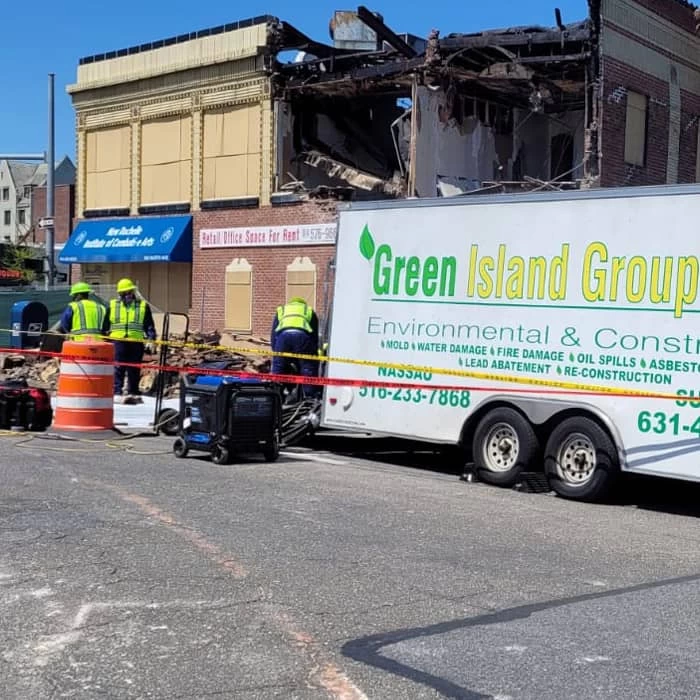
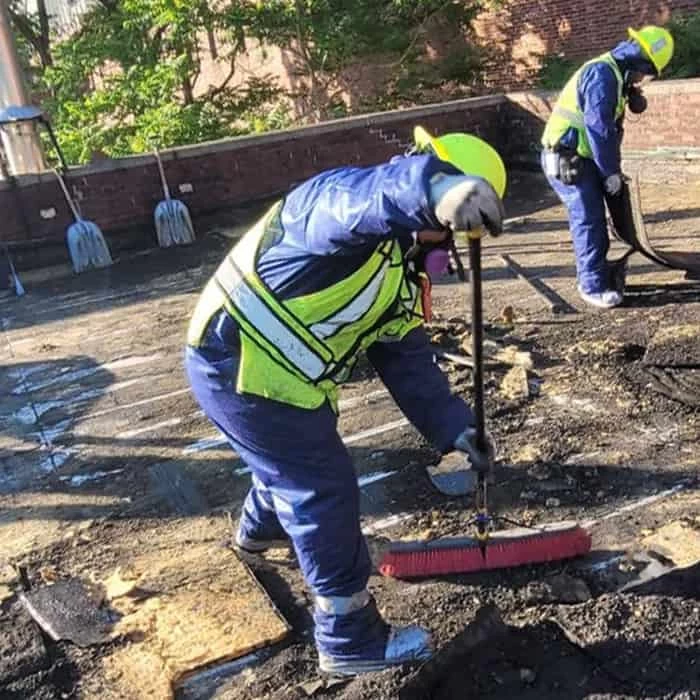
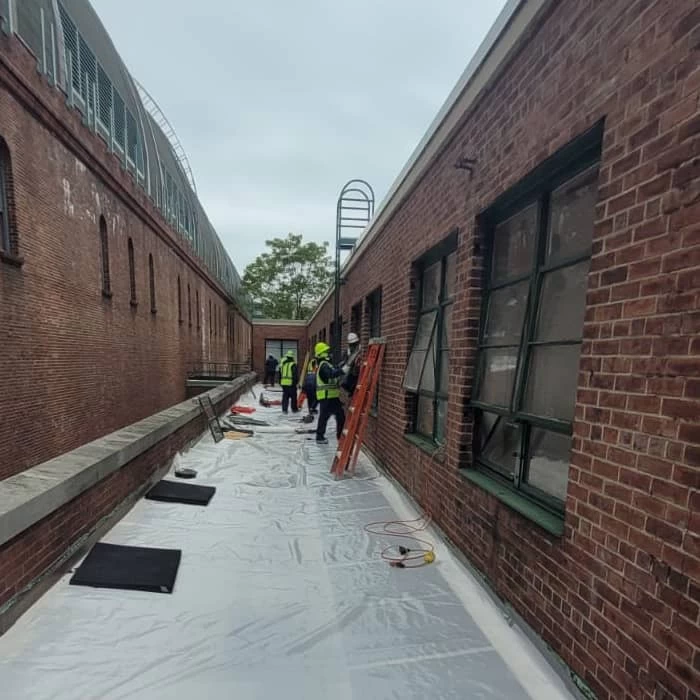
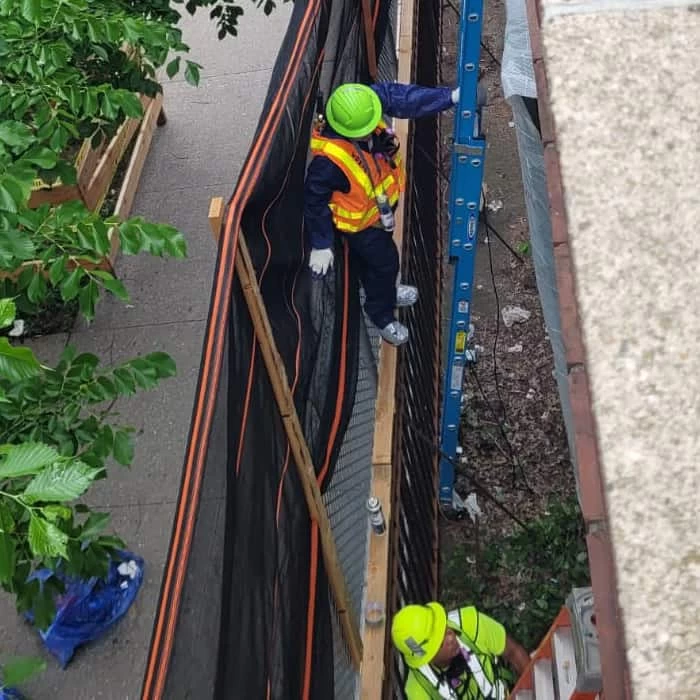
When fire hits a home in Blue Point, the damage goes deeper than what you can see. We handle fire damage restoration from the first emergency call all the way through reconstruction so you’re not managing three different contractors while your family is displaced.
I needed a professional consultation explanation of procedure for safe removal of Asbestos in my apartment complex. Without having an account yet, I was very impressed with the caring, knowledgeable and generous advice offered by Jessica, and will look forward to doing business in the future. Thank you so much! I feel much more informed about a sometimes scary endeavor. Peace. Nancy Silva Mineola, NY.
Mia Munoz
Used this company to clean up some water flood in my house. They were fast and easy to work with.very professional, Would recommend to anyone!
Nini Valle
Great company, had a flood and they responded quickly and efficiently. Billed my insurance company directly. I highly recommend this company!
joe colapietro, jr
I had pipe freeze in my basement right before a snow storm and they made to within an hour to help start the clean up process. They we by our side throughout the entire process and even helped with the insurance company. They did such a great job with the cleanup, repair, remidiation, I contracted them to perform the repairs and finishes in the basement. They came with enough manpower and material to get the job done. Leo and Jessica were nothing but a pleasure to deal with!!
Cristian Arredondo c
I had some water damage in my home and Green Island was able to take care of my issue quickly and effectively. I am very pleased with the work they did. They responded quickly and were very professional.
Michael M
Outstanding service! From the office to the field crew everyone was friendly, helpful and responsive. I highly recommend Green Island Group.
What Full Restoration Actually Looks Like in Blue Point
A lot of homeowners in Blue Point see the burned area and think that’s the scope of the damage. It almost never is. Smoke travels through your HVAC system and into wall cavities, reaching rooms that never saw a flame. Soot starts permanently etching surfaces within 24 to 72 hours. The longer it sits, the more it costs to fix and the harder it becomes to get your home back to what it was.
Blue Point’s housing stock makes this more complicated than most. The median home here was built in 1967, and more than 20% of local homes predate 1940. That means there’s a real chance your walls, flooring, or insulation contain asbestos-containing materials that legally cannot be disturbed without a state-certified contractor. Most fire restoration companies can’t handle that in-house. We can and that matters when the full scope of damage runs through materials that require environmental remediation before reconstruction can even begin.
Water from firefighting suppression is another piece people don’t think about. A fire hose delivers roughly 250 gallons per minute. That water soaks into subfloors, wall cavities, and insulation and mold can start growing within 24 to 48 hours. When you’re on the Great South Bay and coastal humidity is already elevated, that timeline gets shorter. A real recovery means addressing all of it: the fire, the smoke, the water, and everything underneath.
We’re independently owned and operated on Long Island not a franchise dispatched from a regional hub. That distinction matters more than it might sound. When you call, you reach real people who know Suffolk County’s permitting requirements, the Town of Brookhaven’s building division, and what it actually takes to restore a home in Blue Point. There’s no national call center between you and the people doing the work.
We’ve handled fire, smoke, water, mold, and environmental remediation across Long Island for years. Our team manages the entire process from emergency board-up through final finishes without handing your project off to subcontractors mid-stream. Customers have named Leo and Jessica specifically in independent reviews for the kind of communication and follow-through that makes a genuinely stressful situation manageable.
In a hamlet like Blue Point, reputation travels fast. Between the Bayport-Blue Point Gazette, the school district, and neighbors who’ve lived here for decades, word gets around. We intend to earn yours.
The first step is stabilization. That means getting to your property fast documented response times from real customers put us at under an hour securing the structure, boarding up openings, and stopping any ongoing water intrusion from firefighting suppression. In Blue Point’s older homes, that initial assessment also includes identifying whether the damaged areas involve materials that require an asbestos survey before any demolition or renovation can legally proceed under NYSDOL Industrial Code Rule 56. That’s not a formality it’s the law, and skipping it creates serious liability.
Once the structure is safe and the scope is documented, remediation begins. That covers soot and smoke removal from all affected surfaces, HEPA-filtered air scrubbing, thermal fogging or hydroxyl treatment for genuine odor elimination, full drying and moisture mapping for suppression water, and mold remediation if growth has already started. Every affected HVAC duct gets addressed not just the rooms with visible damage. We document everything in detail throughout this phase because that documentation is what your insurance adjuster needs to process a proper claim.
Reconstruction follows once the home is fully remediated and cleared. We pull the required permits through the Town of Brookhaven Building Division, coordinate inspections, and carry the project through to finished living space. You don’t need to find a separate general contractor or manage the handoff yourself. The same team that responded on day one sees the project through to the end.
Fire damage restoration in Blue Point isn’t a single service it’s a sequence of specialized work that has to happen in the right order, by contractors who are licensed and certified for each phase. We cover the full sequence: emergency response and structural stabilization, smoke and soot remediation, water extraction and structural drying, environmental testing and asbestos abatement for pre-1980 homes, mold remediation, and complete reconstruction through final finishes. Every phase is handled in-house.
The asbestos piece is worth understanding clearly. If your home was built before 1980 which describes a substantial portion of Blue Point’s housing stock New York State requires an asbestos survey before any renovation or demolition work begins, regardless of whether there’s visible asbestos. A contractor who isn’t NYSDOL-certified for abatement cannot legally complete the full scope of restoration in your home. That’s a compliance requirement that affects real projects in this area every year. Our environmental remediation credentials mean we can take your project from damaged to fully restored without stopping at the phase that requires a different licensed company.
Oil burner puff-backs are also a documented reality in Blue Point’s older, oil-heated homes. A puff-back coats every surface in a fine layer of oily soot walls, ceilings, HVAC ducts, contents and requires the same professional remediation as a structural fire event. If that’s what you’re dealing with, the process is the same: full assessment, scope documentation for your insurance carrier, remediation, and clearance testing before you move back in.
Is it safe to stay in my Blue Point home after a fire?
In most cases, no at least not until a professional assessment is completed. Soot from residential fires contains carcinogens and toxic compounds from burned synthetic materials like carpet, furniture foam, and painted surfaces. Even in rooms that didn’t burn, airborne particulates can reach levels that are genuinely harmful, especially for children. In Blue Point, where 41% of households have kids under 18, that’s not a theoretical concern.
Beyond air quality, there are structural considerations. Fire weakens framing members, and suppression water compromises subfloors and wall assemblies in ways that aren’t always visible from the surface. A home that looks intact can have hidden structural issues or active mold growth within 24 to 48 hours of water intrusion especially in the coastal humidity conditions along the Great South Bay. The right call is to have the property assessed before anyone re-enters for anything beyond retrieving essential items.
How does the insurance claim process work for fire damage restoration?
Most homeowners in Blue Point have never filed a major property claim, and the process can feel overwhelming when you’re already dealing with the aftermath of a fire. The short version: your insurer will assign an adjuster to assess the damage and determine the scope of covered repairs. The problem is that adjusters are working from their own assessment, and if the full extent of the damage isn’t properly documented including hidden smoke contamination, HVAC involvement, and suppression water the initial claim may not reflect what a complete restoration actually costs.
We document the full scope of damage throughout the remediation process and coordinate directly with your adjuster to make sure nothing is missed. This matters practically: if smoke has traveled into your HVAC system or soot has penetrated wall cavities in rooms that didn’t burn, that needs to be in the claim. Customers have specifically noted in independent reviews that this support made a real difference in what they were ultimately able to recover. You’re entitled to a proper restoration not just the minimum the adjuster initially scopes.
What is an oil burner puff-back and how is it cleaned up?
A puff-back happens when an oil burner misfires or backfires, releasing a burst of unburned oil as a fine, oily mist that travels through your HVAC system and coats virtually every surface in the home. Walls, ceilings, window frames, furniture, clothing, and ductwork all end up covered in a layer of soot that looks and smells like a fire because chemically, it is. It’s one of the more common fire-related events in Long Island’s older oil-heated housing stock, and Blue Point’s mid-century and pre-war homes are particularly susceptible given the age of many heating systems.
Cleanup requires the same professional remediation process as a structural fire: full assessment, surface decontamination, HVAC cleaning, content treatment, and odor elimination using thermal fogging or hydroxyl technology. Homeowners who try to wipe it down themselves typically spread the contamination further the oily soot embeds into porous surfaces quickly. Most homeowner’s insurance policies cover puff-back damage, so the first step after a puff-back is the same as after any fire: document everything and call a restoration company before touching anything.
Do Blue Point homes require asbestos testing before fire damage repairs begin?
If your home was built before 1980, yes and in Blue Point, that describes a significant portion of the local housing stock. New York State’s Industrial Code Rule 56, enforced by the NYSDOL, requires an asbestos survey before any demolition, renovation, or repair work that could disturb building materials. This applies regardless of whether you can see asbestos or not. Materials commonly found in Blue Point’s older homes floor tiles, pipe insulation, attic insulation, roofing materials, and siding frequently contain asbestos-containing materials that become a health and legal issue the moment a fire disturbs them.
The practical consequence is that a restoration contractor who isn’t NYSDOL-certified for asbestos abatement cannot legally complete the full scope of work in your home. They have to stop at the phase that requires environmental remediation and bring in a separate certified company which adds time, coordination complexity, and cost. We hold the environmental remediation credentials to handle asbestos abatement in-house, so your project doesn’t stall at that phase. If the survey finds no ACMs, the process moves forward immediately. If it does, we handle it as part of the same project.
How long does fire damage restoration typically take from start to finish?
The honest answer is that it depends on the scope and in Blue Point, the scope is often larger than it initially appears. A contained kitchen fire with limited smoke spread might take two to four weeks from emergency response through final finishes. A more significant event involving structural damage, HVAC contamination, suppression water, and environmental remediation in an older home can run three to six months or longer.
The variables that extend timelines in this area specifically include the age of the housing stock older homes require more careful assessment and often trigger asbestos survey requirements before reconstruction can begin. Town of Brookhaven permit processing adds time to the reconstruction phase, and that’s not something you can rush. What you can control is how quickly you get a qualified restoration company on-site. Every day of delay after a fire increases soot penetration, water damage, and the likelihood of mold growth all of which expand the scope and extend the timeline. Getting the process started fast is the single most effective thing you can do to shorten the overall recovery.
How do I know if smoke damage reached rooms that didn't catch fire?
Smoke doesn’t stay where the fire was. It moves through HVAC ducts, travels through wall cavities, and penetrates porous materials drywall, wood framing, insulation, upholstery in rooms that may look completely untouched. The smell is often the first indicator, but smell alone doesn’t tell you the full story. Soot particles and combustion byproducts can be present at harmful levels in rooms where you can’t detect an odor with your nose.
A proper assessment uses air quality testing and surface sampling to determine the actual extent of contamination not just a visual walkthrough. In Blue Point’s older homes, where HVAC systems often run through multiple floors and uninsulated attic spaces, smoke can travel further than in newer construction with tighter duct systems. If your HVAC was running during or after the fire, assume the contamination has spread beyond the visible burn area until testing proves otherwise. Addressing only the rooms with visible damage and leaving the HVAC system untreated is one of the most common mistakes homeowners make after a fire and one of the most expensive ones to correct later.