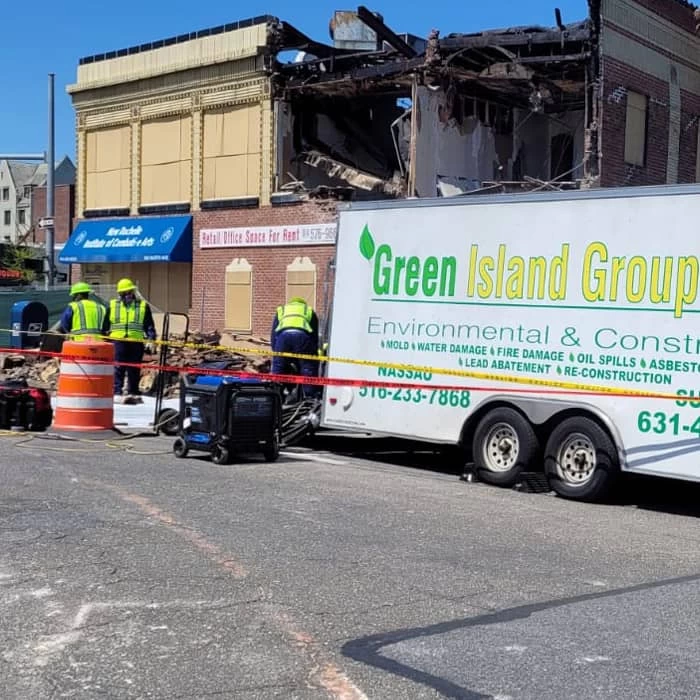
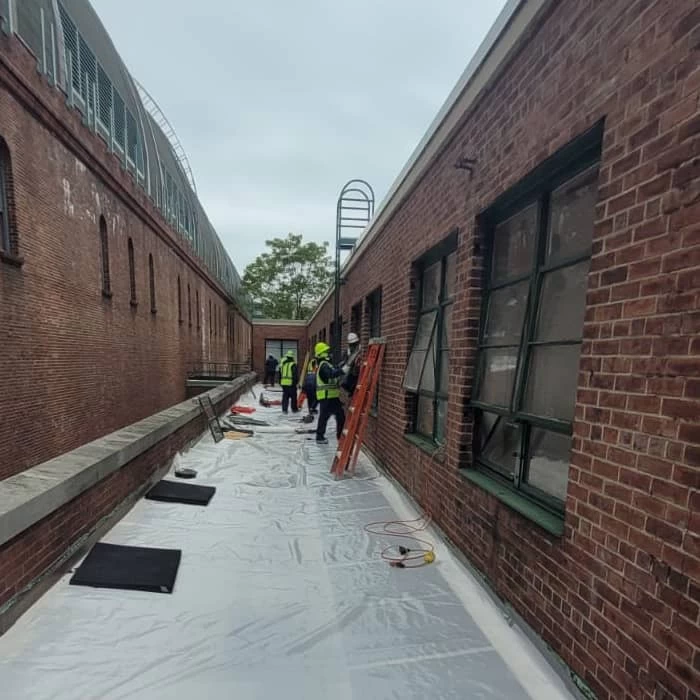
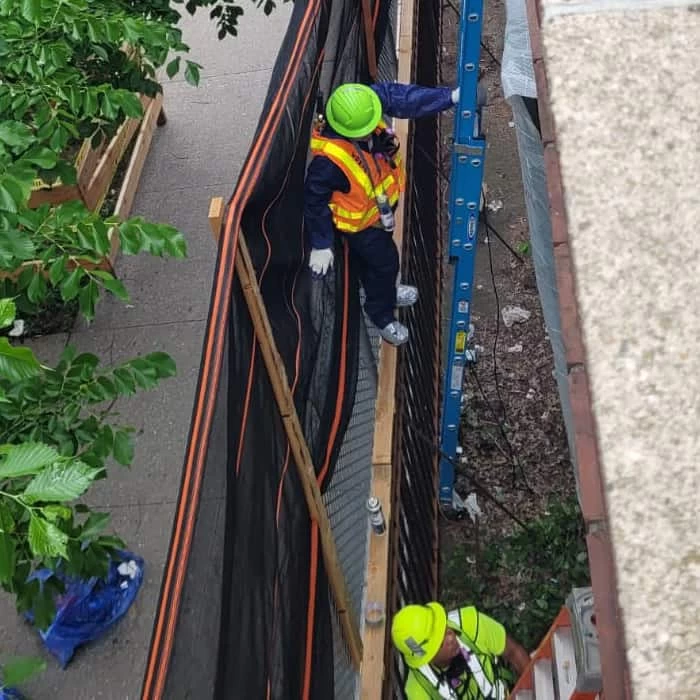
When fire hits a Cedarhurst colonial or Tudor home, the damage runs deeper than what you can see. We handle fire damage restoration from emergency response through complete rebuild — one company, one call, no handoffs.
I needed a professional consultation explanation of procedure for safe removal of Asbestos in my apartment complex. Without having an account yet, I was very impressed with the caring, knowledgeable and generous advice offered by Jessica, and will look forward to doing business in the future. Thank you so much! I feel much more informed about a sometimes scary endeavor. Peace. Nancy Silva Mineola, NY.
Mia Munoz
Used this company to clean up some water flood in my house. They were fast and easy to work with.very professional, Would recommend to anyone!
Nini Valle
Great company, had a flood and they responded quickly and efficiently. Billed my insurance company directly. I highly recommend this company!
joe colapietro, jr
I had pipe freeze in my basement right before a snow storm and they made to within an hour to help start the clean up process. They we by our side throughout the entire process and even helped with the insurance company. They did such a great job with the cleanup, repair, remidiation, I contracted them to perform the repairs and finishes in the basement. They came with enough manpower and material to get the job done. Leo and Jessica were nothing but a pleasure to deal with!!
Cristian Arredondo c
I had some water damage in my home and Green Island was able to take care of my issue quickly and effectively. I am very pleased with the work they did. They responded quickly and were very professional.
Michael M
Outstanding service! From the office to the field crew everyone was friendly, helpful and responsive. I highly recommend Green Island Group.
The first 24 to 48 hours after a fire are the ones that determine how much of your home you actually get back. Soot starts bonding permanently to surfaces within hours. The water used to put the fire out — and there’s always water — can start growing mold inside your walls before the smoke smell even fades. Waiting, or hiring the wrong company, costs you more than money.
In Cedarhurst, most homes were built in the early to mid-20th century. That means original plaster walls, wood framing, and in many cases, materials that require licensed abatement before any restoration work can legally begin. A company that isn’t licensed for asbestos and lead can’t finish the job in your home — they have to stop, bring in someone else, and you’re stuck coordinating two contractors while your family is displaced.
When you have one company that handles everything — emergency stabilization, environmental abatement, structural cleanup, and full reconstruction — the process moves faster, the documentation is cleaner for your insurance claim, and you’re not left managing a project that should be managed for you. That’s the difference between getting your home back and getting stuck in the middle of a restoration that stalled.
Credentialed Where It Actually Counts in Cedarhurst
We’re a locally owned restoration and environmental services company serving Cedarhurst, Nassau County, Suffolk County, Queens, and New York City. With over 5,000 completed restoration projects across New York State, this isn’t a company still figuring things out on your property.
We hold IICRC certification for fire and water damage restoration — the only ANSI-accredited certification in the industry and the one insurance companies actually recognize when processing claims. We also carry a Nassau County General Contractor License, NYS DOL Asbestos and Mold licenses, and USEPA Lead/RRP certification. That combination is rare. It means we can legally handle every phase of fire restoration in Cedarhurst’s older housing stock, including the hazardous materials that most restoration companies have to walk away from.
We bill insurance companies directly, document every phase of the job, and stay involved through the entire claims process — not just the cleanup. In a community like Cedarhurst, where your home represents a serious investment, that kind of accountability matters.
From the Emergency Call to the Day You Walk Back In
It starts with a call — any time, any day. We operate 24/7 with a one-hour on-site response commitment. When the Lawrence-Cedarhurst Fire Department clears your property, the restoration clock is already running. Our team arrives, secures the structure, and begins emergency stabilization immediately — boarding up openings, extracting standing water, and setting up industrial drying equipment to stop mold before it starts.
From there, the process moves into assessment. Because the majority of Cedarhurst’s homes predate 1987, New York State law requires an asbestos survey before any demolition or renovation work begins. We handle that survey and, if asbestos or lead is found — which is common in Cedarhurst’s older colonial and Tudor homes — we perform the licensed abatement in-house. No subcontractors, no delays, no extra coordination on your end.
Once the property is cleared and stabilized, full restoration begins. That means smoke and soot removal, odor elimination with professional-grade equipment, HVAC cleaning, structural repairs, and complete reconstruction if needed. Because we hold a Nassau County General Contractor License, we can pull the required permits through the Village of Cedarhurst’s Building Department directly. You don’t have to manage that. We handle it, document it, and keep your insurance company informed at every step.
Built for Cedarhurst Homes — Not a Generic Checklist
Fire restoration in a Cedarhurst home isn’t a standard job. The older construction, the oil-heat systems, the proximity to the South Shore — all of it shapes what the work actually involves. Oil-fired furnaces common in Cedarhurst are prone to a malfunction called a puff-back, where unburned oil ignites and blasts oily, fine-particle soot through every duct and into every room. That soot behaves differently than dry soot from a typical fire — it smears when handled wrong and embeds deep into porous surfaces. Cleaning it requires a specific approach, and our team is trained for exactly that.
The full scope of what’s covered includes emergency structural stabilization, water extraction and drying, smoke and soot removal, odor elimination, asbestos and lead abatement where required, mold remediation, HVAC cleaning, and complete structural reconstruction. Every phase is documented to insurance standards, and we bill your insurance company directly. We also hold NYS and NYC M/WBE certification — a government-verified credential that confirms we’re a legitimate, financially stable business.
For Cedarhurst homeowners with properties valued at $1 million or more, the stakes of a proper restoration are significant. This is the kind of work where cutting corners costs far more than it saves.
Does my homeowner's insurance cover fire damage restoration in Cedarhurst, NY?
In most cases, yes — standard homeowner’s insurance policies cover fire damage restoration, including cleanup, structural repairs, and rebuilding. But the details matter. Your policy will have a deductible, and the insurance company will send an adjuster to assess the damage and determine what they’re willing to pay. That number isn’t always final, and it isn’t always fair.
What helps is having a restoration company that documents everything thoroughly from the moment we arrive — photos, moisture readings, scope of damage, materials affected — and submits that documentation in a format insurance companies actually use. We bill insurance companies directly and stay involved through the claims process, including attending material selection appointments when needed. In Cedarhurst, where homes are valued well into the seven figures, having someone in your corner during the claims process isn’t optional — it’s the difference between a full recovery and a shortfall you’re covering out of pocket.
How quickly does mold start growing after a house fire in Cedarhurst?
Mold can begin developing in water-saturated materials within 24 to 48 hours of the fire being extinguished. In Cedarhurst’s older colonial and Tudor homes, there’s plenty of material for mold to work with: original plaster, wood framing, older insulation, and wall cavities that hold moisture long after surfaces feel dry.
The water used to fight the fire soaks into walls, floors, and structural members in ways that aren’t visible from the surface. Without professional extraction equipment and structural drying, that moisture stays trapped. We deploy industrial drying equipment immediately upon arrival and monitor moisture levels throughout the process. We also hold a NYS DOL Mold License, which means if mold is already present or develops during restoration, we can remediate it legally and in-house — no separate contractor, no added delay.
Do I need a permit to repair fire damage in my Cedarhurst home?
Yes, if the repairs involve any structural work — removing and replacing damaged walls, framing, roofing, or other structural elements — you need a permit from the Village of Cedarhurst’s Building Department. Cedarhurst operates its own Building Department under Chapter 95 of the Village Code, and the permit requirement applies to any construction, demolition, alteration, or structural improvement. This is on top of any Nassau County or New York State requirements.
The contractor performing the work needs to be a licensed general contractor in Nassau County to legally pull those permits. Many restoration companies that specialize only in cleanup and remediation don’t hold a General Contractor License and can’t do this on your behalf — which means you’d be responsible for finding and hiring a second company to handle the rebuild. We hold a Nassau County General Contractor License and handle permitting through the village directly. You don’t have to navigate that process yourself.
What is puff-back damage and is it common in Cedarhurst?
A puff-back happens when an oil-fired furnace malfunctions and unburned oil ignites inside the combustion chamber, sending a blast of oily, fine-particle soot through the home’s ductwork and into every room. It doesn’t produce an open flame or structural fire, but the soot it leaves behind is particularly difficult to clean because it’s oily rather than dry — it smears when handled incorrectly and penetrates porous surfaces like walls, ceilings, and fabrics deeply.
Puff-backs are very common in Cedarhurst and across the South Shore, where oil heat is standard in the older colonial and Tudor homes that make up most of the local housing stock. Many Cedarhurst homeowners experience a puff-back without ever having a traditional fire. We handle puff-back cleanup as a distinct service — not as an afterthought — including professional HVAC cleaning to remove soot from the ductwork itself. If you leave the ducts uncleaned, the soot circulates every time your system runs.
What happens if asbestos is found during fire damage repairs in my home?
Under New York State Code Rule 56 (12 NYCRR Part 56), any renovation, repair, or demolition work in a building constructed before 1987 requires an asbestos survey before work begins. Given that most of Cedarhurst’s housing stock was built in the early to mid-20th century, this requirement applies to nearly every fire restoration project in the village. Asbestos was commonly used in pipe insulation, floor tiles, ceiling tiles, and joint compound — materials that a fire can disturb and make hazardous.
If asbestos is found, only a NYS DOL-licensed contractor can legally perform the abatement. A restoration company without that license has to stop work and bring in a separate licensed firm, which adds time, cost, and coordination burden when you’re already displaced. We hold the NYS DOL Asbestos License and handle abatement in-house. The survey, the abatement, and the restoration all happen under one contract, and the process doesn’t stall because of a licensing gap.
How long does fire damage restoration typically take for a Cedarhurst home?
The honest answer is that it depends on the scope of the damage — and in Cedarhurst’s older homes, the scope often expands once work begins. A contained kitchen fire with smoke damage throughout the first floor might take two to four weeks. A fire that affects structural elements, requires asbestos abatement, and involves significant water damage from suppression efforts can take eight to twelve weeks or longer.
What affects the timeline most in Cedarhurst specifically is the age of the housing stock. Pre-war and mid-century colonial homes often have materials that require licensed abatement before any reconstruction can begin, and that process has its own regulatory timeline. Permitting through the Village of Cedarhurst’s Building Department adds additional steps that can’t be skipped. The fastest path through all of it is having one company that handles every phase — abatement, permitting, cleanup, and rebuild — without stopping to hand off to another contractor. Every handoff adds time. Our single-company model is specifically designed to eliminate those gaps.