Central Islip Homes Hide More Damage Than You Think
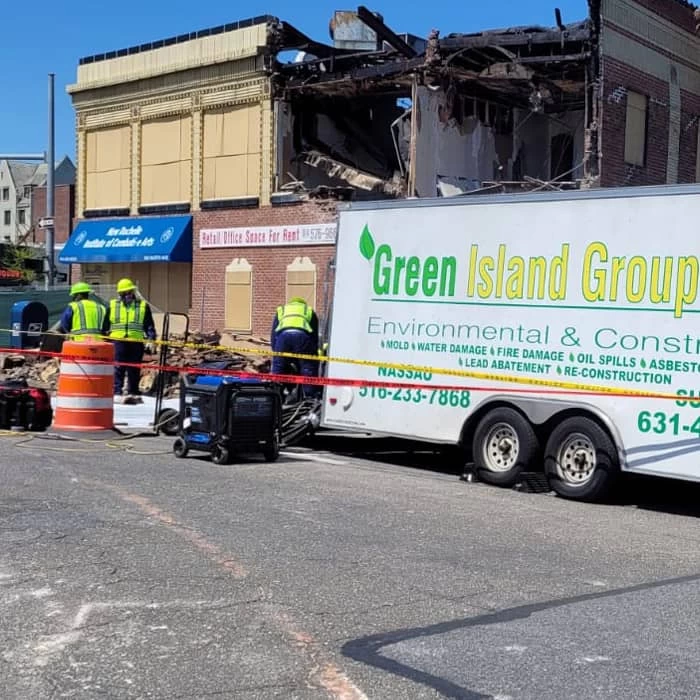
Smoke travels. Soot settles deep. And in a neighborhood full of mid-century homes, what’s behind your walls after a fire can be just as serious as what burned. We respond fast and go further than cleanup.
I needed a professional consultation explanation of procedure for safe removal of Asbestos in my apartment complex. Without having an account yet, I was very impressed with the caring, knowledgeable and generous advice offered by Jessica, and will look forward to doing business in the future. Thank you so much! I feel much more informed about a sometimes scary endeavor. Peace. Nancy Silva Mineola, NY.
Mia Munoz
Used this company to clean up some water flood in my house. They were fast and easy to work with.very professional, Would recommend to anyone!
Nini Valle
Great company, had a flood and they responded quickly and efficiently. Billed my insurance company directly. I highly recommend this company!
joe colapietro, jr
I had pipe freeze in my basement right before a snow storm and they made to within an hour to help start the clean up process. They we by our side throughout the entire process and even helped with the insurance company. They did such a great job with the cleanup, repair, remidiation, I contracted them to perform the repairs and finishes in the basement. They came with enough manpower and material to get the job done. Leo and Jessica were nothing but a pleasure to deal with!!
Cristian Arredondo c
I had some water damage in my home and Green Island was able to take care of my issue quickly and effectively. I am very pleased with the work they did. They responded quickly and were very professional.
Michael M
Outstanding service! From the office to the field crew everyone was friendly, helpful and responsive. I highly recommend Green Island Group.
Your Central Islip Home Back Without the Hidden Surprises Left Behind
A fire doesn’t stay where it started. Smoke moves through your HVAC system and deposits soot in rooms that never saw a flame. The smell that lingers weeks later isn’t just unpleasant it’s a sign that something wasn’t fully addressed. When the job is done right, you’re not just looking at clean walls. You’re breathing clean air, sleeping without that smell, and not wondering what’s still lurking behind the drywall.
In Central Islip, where nearly half of all homes were built before 1970, fire damage almost always involves more than what’s visible. Those older walls, ceilings, and floor tiles often contain asbestos-containing materials and once a fire disturbs them, you’re dealing with a hazardous materials situation, not just a cleanup. Most restoration companies aren’t equipped to handle that legally or safely. We are.
Water is the other piece people don’t expect. Firefighting hoses push roughly 250 gallons per minute enough to soak through your subfloor, saturate your insulation, and create the exact conditions mold needs to take hold within 48 hours. Getting ahead of that secondary damage is just as important as addressing the fire itself, and we handle both without handing you off to someone else.
We’re a locally owned restoration company serving Central Islip and the broader Suffolk County area. Not a franchise. Not a call center that dispatches whoever’s available. When you call, you’re reaching a Long Island team that knows these homes the oil burners, the pre-1970s construction, the asbestos risk that comes with it because we’ve worked in them.
Customers who’ve gone through this process with us don’t just say we were good. They name Leo and Jessica specifically. That kind of continuity knowing who to call, knowing they’ll pick up, knowing they already understand your project matters when you’re displaced and trying to hold things together.
From the neighborhoods around Carleton Avenue to the newer developments near the old psychiatric center grounds, our team has seen what fire does to Central Islip homes. We know what to look for, what the Town of Islip requires for permits, and how to navigate the insurance process so you’re not left doing it alone.
What Happens From Your First Call to Your Final Walkthrough
The first call triggers an emergency response board-up, tarping, and stabilization to stop additional damage from weather, debris, or unauthorized entry. In Central Islip, where nor’easters and cold snaps can follow a fire quickly, getting the structure secured fast isn’t optional. That first step protects everything that comes after it.
From there, the assessment phase identifies every category of damage not just the char and soot you can see, but the smoke that traveled through your ductwork, the water that soaked into your subfloor, and any materials that may require environmental handling before restoration work can begin. In homes built before 1970, that assessment includes checking for asbestos-containing materials. New York State requires certified abatement before those materials can be disturbed and we hold the credentials to handle that without bringing in a third party.
Once the scope is clear, the work moves in a logical sequence: hazardous material handling first, then water extraction and drying, then soot and smoke remediation, then odor elimination through thermal fogging and HVAC decontamination, and finally reconstruction through to finished surfaces. The Town of Islip building permit process is handled as part of that reconstruction phase you don’t have to figure that out yourself. At the end, you do a walkthrough. If something isn’t right, it gets addressed. The job isn’t closed until you say it is.
Built for What Central Islip's Older Homes Actually Need
Fire damage restoration in Central Islip isn’t a one-size-fits-all job. The housing stock here most of it built between the 1940s and 1960s comes with specific challenges that a general cleanup crew isn’t prepared for. Asbestos in ceiling tiles, pipe insulation, and floor adhesive. Lead paint in virtually every pre-1978 wall. Oil-fired heating systems that can produce puffback damage a different kind of soot, oilier and more penetrating, that requires a different remediation approach entirely. These aren’t edge cases in this zip code. They’re the norm.
We handle the full arc of fire damage restoration: emergency stabilization and board-up, asbestos and environmental assessment, water extraction and structural drying, soot and smoke remediation, odor elimination, mold prevention, and complete reconstruction through to finished surfaces. Every phase is handled by our team under the same roof no handoffs, no subcontractors you’ve never met, no gaps in accountability.
The insurance piece is built into our process too. Most Central Islip homeowners navigating a major fire claim are doing it for the first time. We work alongside you and your adjuster, document the full scope of damage in a format insurers recognize, and make sure the claim reflects what actually needs to be done not just what’s easiest to approve. That alone has made the difference for families in this community who would otherwise have been left undercompensated and overwhelmed.
Is it safe to stay in my Central Islip home after a fire?
In most cases, no at least not immediately, and not until a proper assessment has been completed. Soot contains carbon monoxide residue, volatile organic compounds, and in older Central Islip homes, potentially disturbed asbestos particles. These aren’t visible to the eye, but they’re present in the air and on surfaces throughout the home, including rooms that had no direct fire contact. Smoke travels through HVAC systems and settles in places you wouldn’t think to check.
The decision to re-enter should be based on an actual assessment, not just how the home looks or smells. We can determine whether air quality is safe, whether structural integrity is intact, and whether any hazardous materials were disturbed. Until that assessment is done, the safest call is to stay out. If you have children and Central Islip has a high proportion of young families that caution is especially important.
How quickly does smoke and soot damage become permanent after a fire?
Faster than most people expect. Soot begins permanently etching and staining porous surfaces drywall, grout, wood, fabric within 24 to 72 hours of a fire. Plastics and synthetic materials can discolor within hours. The longer soot sits, the deeper it bonds, and the more likely you are to need full replacement rather than cleaning. That’s a meaningful cost difference.
This is why response time matters as much as it does. The window between when the fire department leaves and when permanent damage sets in is narrow. Our documented sub-hour response time for Central Islip isn’t just a selling point it’s the practical difference between surfaces that can be cleaned and surfaces that have to be replaced. Getting there fast protects your home and your claim.
Does homeowners insurance cover fire damage restoration in New York?
Standard homeowners insurance policies in New York do cover fire damage restoration, including smoke and soot cleanup, water damage from firefighting suppression, and structural repairs. What varies is the scope of what gets approved and that’s where a lot of homeowners run into problems. Adjusters work from estimates, and if the documentation doesn’t capture the full scope of damage, the approved amount may fall short of what’s actually needed to restore the home properly.
In Central Islip specifically, older homes often have damage that isn’t immediately visible smoke in the ductwork, water in the subfloor, asbestos-containing materials that require certified abatement before any reconstruction can begin. All of that needs to be properly documented and included in the claim. We work directly with your adjuster using Xactimate-aligned pricing and thorough scope documentation, so the claim reflects the real job not just the surface damage.
What is puffback damage, and is it common in Central Islip?
A puffback happens when an oil-fired heating system malfunctions and backfires, sending a burst of oily soot through the furnace exhaust and into the home. It can happen suddenly sometimes without any visible fire at all and the soot it produces spreads fast, coating walls, ceilings, furniture, and HVAC components throughout the house. It looks and smells like a fire, but the soot is different: oilier, stickier, and harder to remove than standard fire soot.
It’s genuinely common on Long Island, and Central Islip is no exception. The community’s housing stock is dominated by mid-century homes with oil-fired heating systems that are aging and, in some cases, poorly maintained. Puffback claims are a regular occurrence in this area enough that local restoration companies specifically list it as a service. Our remediation approach is built to handle the specific chemistry of puffback soot, not just standard fire damage protocols.
How long does fire damage restoration typically take for a home in Central Islip?
It depends on the scope of the damage, but for a typical single-family home in Central Islip a ranch or cape built in the mid-20th century a moderate fire affecting one or two rooms can take anywhere from two to six weeks to fully restore. A more significant fire involving structural damage, environmental hazards, or extensive reconstruction can run two to four months. These aren’t arbitrary timelines they reflect the actual sequence of work that has to happen in the right order.
In Central Islip’s older homes, the timeline is often extended by the environmental assessment and abatement phase. If asbestos-containing materials were disturbed, New York State requires certified abatement before any reconstruction work can begin and that process has its own timeline and documentation requirements. Understanding this upfront helps you plan realistically for displacement, temporary housing costs, and insurance reimbursement timing. A restoration company that gives you an honest scope and timeline from the start is worth more than one that tells you what you want to hear.
How do I choose a fire restoration company in Central Islip, NY?
The most important things to verify are full-service capability, environmental credentials, and insurance experience in that order. A company that only handles cleanup but not reconstruction will hand you off mid-project. A company without asbestos abatement certification cannot legally complete a restoration in most Central Islip homes built before 1980. And a company that doesn’t have experience working alongside insurance adjusters will leave you doing the hardest part of the process alone.
Local accountability matters too. In a community like Central Islip, a locally owned company with a real local reputation has more skin in the game than a national franchise whose accountability is to a corporate office somewhere else. Ask who you’ll be working with, whether you’ll have a consistent point of contact, and whether the company has handled homes similar to yours specifically older Long Island construction with the environmental considerations that come with it. Those questions will tell you a lot about whether a company is actually built for this work or just showing up to do the minimum.