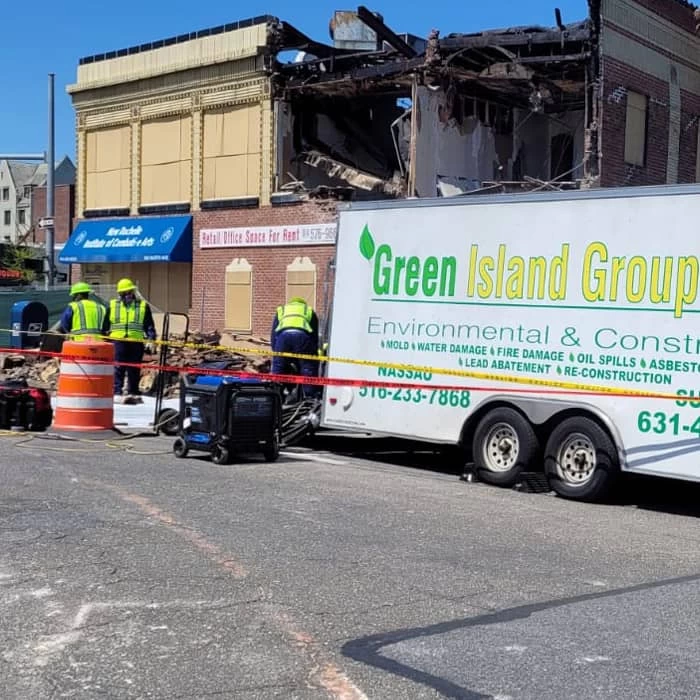
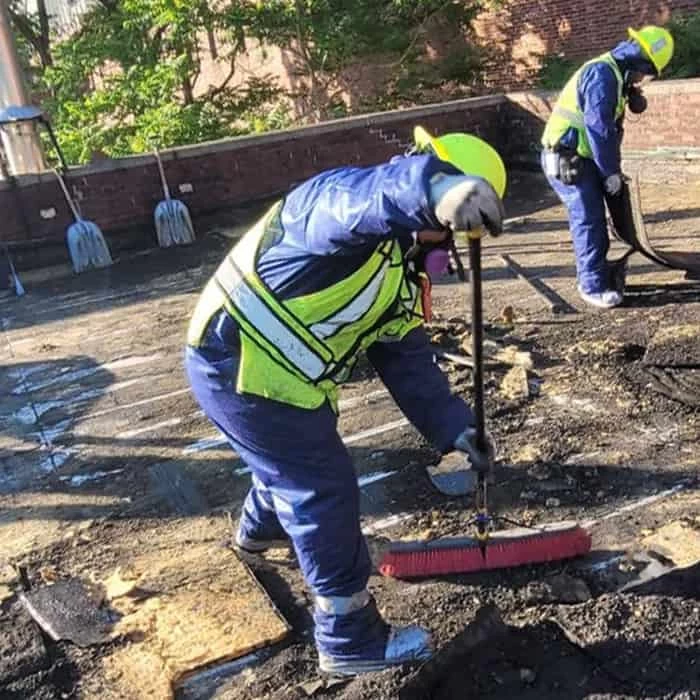
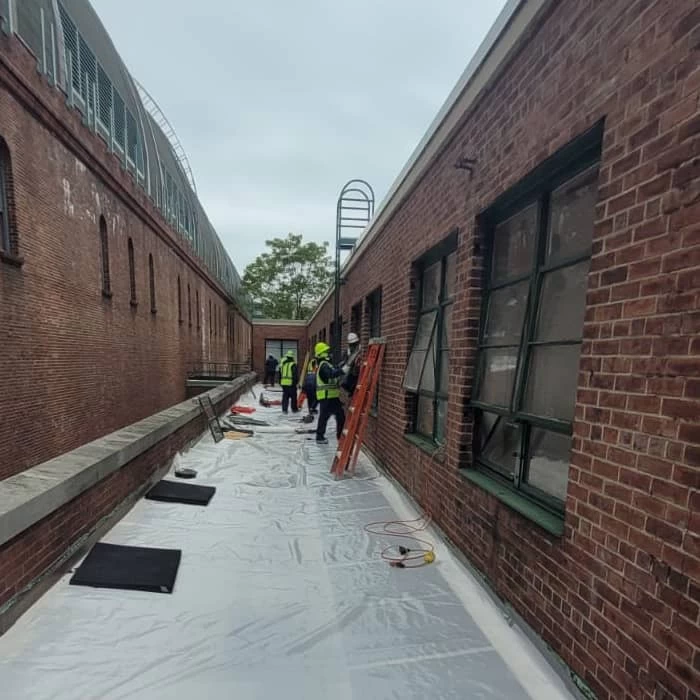
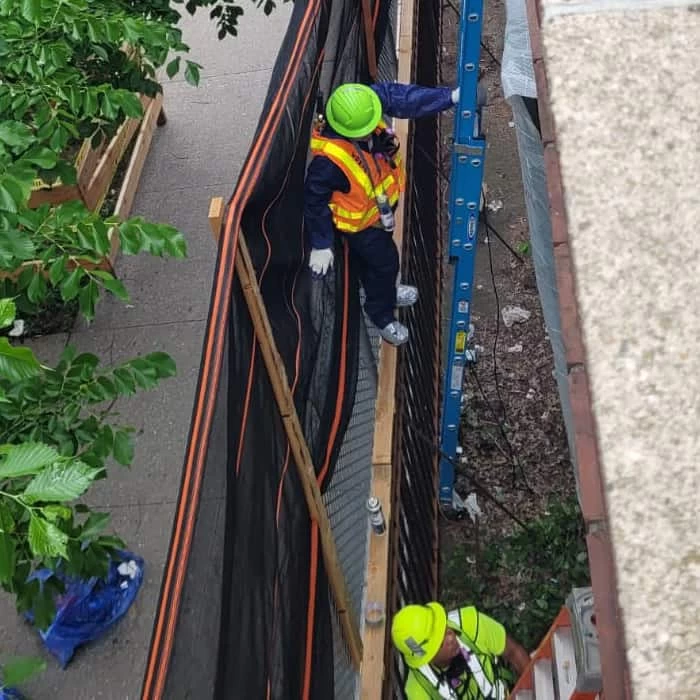
When fire hits a Copiague home, the visible damage is rarely the whole story. We handle everything from the first emergency call to the final walkthrough so you’re not left managing three contractors while your family waits to come home.
I needed a professional consultation explanation of procedure for safe removal of Asbestos in my apartment complex. Without having an account yet, I was very impressed with the caring, knowledgeable and generous advice offered by Jessica, and will look forward to doing business in the future. Thank you so much! I feel much more informed about a sometimes scary endeavor. Peace. Nancy Silva Mineola, NY.
Mia Munoz
Used this company to clean up some water flood in my house. They were fast and easy to work with.very professional, Would recommend to anyone!
Nini Valle
Great company, had a flood and they responded quickly and efficiently. Billed my insurance company directly. I highly recommend this company!
joe colapietro, jr
I had pipe freeze in my basement right before a snow storm and they made to within an hour to help start the clean up process. They we by our side throughout the entire process and even helped with the insurance company. They did such a great job with the cleanup, repair, remidiation, I contracted them to perform the repairs and finishes in the basement. They came with enough manpower and material to get the job done. Leo and Jessica were nothing but a pleasure to deal with!!
Cristian Arredondo c
I had some water damage in my home and Green Island was able to take care of my issue quickly and effectively. I am very pleased with the work they did. They responded quickly and were very professional.
Michael M
Outstanding service! From the office to the field crew everyone was friendly, helpful and responsive. I highly recommend Green Island Group.
Most homeowners are surprised to learn that the fire itself is only part of the damage. Smoke moves fast through HVAC systems, into wall cavities, across rooms that never saw a flame. Soot starts permanently etching surfaces within 24 to 72 hours. If that window closes before proper remediation begins, you’re not just dealing with cosmetic damage anymore.
For homes in Copiague’s waterfront peninsula neighborhoods American Venice, Amity Harbor, Copiague Harbor there’s a second layer that compounds everything. The water used to fight a fire comes in at roughly 250 gallons per minute. In a community where the water table is close to the surface and ambient humidity is already elevated from the Great South Bay, that suppression water creates an accelerated mold risk. Mold can start growing in as little as 24 to 48 hours inside walls and subfloors you can’t even see.
Copiague’s housing stock adds another dimension. A large portion of homes here were built in the 1940s through 1960s, when asbestos was standard in floor tiles, pipe insulation, and boiler wrap. A fire even a contained kitchen fire can disturb those materials. A restoration company without licensed environmental remediation capability is legally prohibited from completing a full restoration in those homes. When the job is done right, you get your home back fully not mostly.
We’re a locally owned, Long Island-based restoration company not a franchise, not a national call center routing jobs to whoever’s available. When you reach out, you’re talking to the same team that shows up, does the work, and sees it through to the end. Customers name Leo and Jessica specifically in their reviews, not because that’s unusual for a good company, but because it’s unusual for this industry.
Our service area covers Nassau and Suffolk Counties, and we know the South Shore. That means understanding the Town of Babylon permit process, knowing what older Copiague ranch homes are likely to contain, and recognizing that American Venice canal access isn’t the same as working on a standard residential block. That kind of local familiarity changes how a job gets planned and executed.
The satisfaction guarantee “We’re not done until you’re happy” isn’t a tagline. It’s the reason customers who came in for fire cleanup ended up hiring us for their full basement reconstruction afterward.
The first call triggers an emergency response. We assess the full scope not just what burned, but where smoke traveled, where suppression water saturated, and whether the structure’s age raises any environmental flags. In a pre-1978 Copiague home, that assessment includes evaluating for asbestos-containing materials and lead paint before any demolition or reconstruction begins. Skipping that step isn’t just a corner cut it’s a legal issue.
From there, the work moves in a clear sequence: structural stabilization and board-up if needed, water extraction and drying, smoke and soot removal, odor treatment, environmental remediation where required, and then full reconstruction through finishes. The Town of Babylon Building Department requires permits for any structural, electrical, or plumbing work and a Fire Underwriter’s Certificate of Approval is mandatory for all electrical repairs. We handle the permit coordination, so you’re not chasing paperwork while trying to manage a claim.
The insurance piece runs parallel to the restoration work, not after it. We work directly with adjusters, use industry-standard estimating, and help you document the full scope of damage so nothing gets left out of your claim. For most Copiague homeowners, this is the first time they’ve filed a claim this size having someone walk through it with you makes a real difference.
Fire damage restoration in Copiague isn’t a single-scope job. What we deliver covers the full range emergency board-up and structural stabilization, smoke and soot removal from surfaces and HVAC systems, water extraction and structural drying from firefighting suppression, mold remediation, odor elimination, asbestos abatement for older homes, and complete reconstruction through final finishes. One company, one contract, one point of accountability.
For properties in Copiague’s coastal peninsula neighborhoods, the environmental scope is especially relevant. American Venice, Amity Harbor, and Copiague Harbor sit directly on the Great South Bay and its canal systems. Restoration work near those waterways may require NYSDEC permits in addition to the standard Town of Babylon building permits something a company unfamiliar with Suffolk County’s regulatory environment can easily miss. We know the difference and handle both.
The insurance coordination is built into our process, not offered as an add-on. We document damage thoroughly, communicate directly with your adjuster, and use Xactimate the industry-standard estimating software that insurance companies recognize so your claim reflects the actual scope of work. For Copiague homeowners whose homes represent their primary financial asset, that documentation process is what stands between a full recovery and a shortfall.
What should I do immediately after a house fire in Copiague, NY?
The most important thing you can do in the first hour is call a restoration company before you do much else. Don’t open windows to air things out, don’t run fans, and don’t try to clean soot yourself all of those actions can spread contamination further into the home. The fire department will clear the structure for re-entry when it’s safe, but that clearance doesn’t mean the damage has stopped progressing.
Soot begins permanently bonding to surfaces within 24 to 72 hours. Smoke that traveled through your HVAC system is already sitting in ductwork and adjacent rooms. If your home was built before 1978 which describes the majority of Copiague’s housing stock a fire may have disturbed asbestos-containing materials in floor tiles, pipe insulation, or boiler wrap. That’s a hazardous materials situation that requires licensed abatement before any reconstruction begins. Getting a professional on-site quickly isn’t just about speed it’s about preventing a manageable situation from becoming a significantly more expensive one.
Does homeowners insurance cover fire damage restoration costs in New York?
In most cases, yes standard homeowners insurance policies cover fire damage, including smoke damage, water damage from firefighting efforts, and the cost of temporary housing if your home is uninhabitable. But what gets covered and how much you receive depends heavily on how the claim is documented and submitted. Insurance companies work from their own estimates, and those estimates don’t always reflect the full scope of what a restoration actually requires.
This is where having a restoration company that actively participates in the claims process matters. We work directly with adjusters and use Xactimate estimating the same platform insurance companies use so there’s no gap between what’s claimed and what the work actually costs. For Copiague homeowners, where median home values are approaching $600,000 and the home is typically the family’s primary asset, that alignment between the restoration scope and the insurance payout is critical. A shortfall in the claim is a shortfall in your recovery.
How does fire damage affect older Copiague homes differently than newer construction?
Significantly. Copiague’s housing stock is predominantly post-World War II construction most of it built between the 1940s and 1960s which means a realistic portion of homes contain asbestos-containing materials. Asbestos was used in vinyl floor tiles, pipe insulation, boiler wrap, attic insulation, and even exterior siding in homes of that era. A fire disturbs those materials, and once disturbed, they require licensed abatement under New York State Department of Labor certification before any restoration or reconstruction work can proceed.
Lead-based paint is a parallel concern in pre-1978 homes and requires handling under EPA Renovation, Repair, and Painting (RRP) protocols. A restoration company that doesn’t hold these credentials can’t legally complete a full restoration in an older Copiague home and one that skips the assessment entirely is creating a liability for the homeowner down the road. The environmental scope isn’t an edge case in this community. It’s a standard consideration for a large portion of the housing stock, and it’s part of how we approach every job in this area.
Why is mold such a concern after a fire in a Copiague waterfront neighborhood?
Because the water used to fight a fire doesn’t just disappear. A fire hose delivers roughly 250 gallons per minute, and even a contained fire in a single room can result in thousands of gallons of water absorbed into floors, walls, and ceilings. Under normal conditions, that water needs to be extracted and the structure dried within 24 to 48 hours to prevent mold growth. In Copiague’s waterfront peninsula neighborhoods American Venice, Amity Harbor, and Copiague Harbor those conditions aren’t normal.
The Great South Bay creates an elevated ambient humidity environment year-round. The water table in the peninsula neighborhoods is close to the surface, which limits how quickly moisture drains from the structure. That combination accelerates the timeline for mold colonization significantly. A restoration company that addresses the fire and smoke but leaves the suppression water unmanaged is leaving you with a mold problem that will surface weeks later often after the initial insurance claim has already been closed. Water extraction and structural drying are part of the fire restoration process with us, not a separate job.
How long does fire damage restoration typically take for a Copiague home?
It depends on the scope, but a realistic range for a moderate fire in a single-family Copiague home is four to eight weeks from initial cleanup through full reconstruction. Smaller, more contained fires a kitchen fire that didn’t spread structurally can move faster. Larger events, or situations where environmental remediation is required for asbestos or lead paint, add time because abatement must be completed and cleared before reconstruction begins.
The permit timeline is a real factor in Copiague specifically. Because the hamlet is unincorporated within the Town of Babylon, all building permits for structural, electrical, and plumbing work go through the Town of Babylon Building Department. Electrical repairs also require a Fire Underwriter’s Certificate of Approval before work can be finalized. These aren’t optional steps they’re legal requirements, and a restoration company that skips them creates problems for you at resale. Working with a company experienced in the Town of Babylon permit process helps keep that timeline moving without unnecessary delays.
Can smoke from a neighbor's fire damage my home in Copiague?
Yes, and it happens more often than people expect in Copiague’s densely built neighborhoods. Post-World War II ranch-style homes here were built on relatively small lots with minimal setbacks meaning a fire at one property can send significant smoke into adjacent structures even if the flames never spread. Smoke infiltrates through windows, HVAC intakes, attic vents, and any gaps in the building envelope. Once inside, it deposits soot on surfaces and penetrates porous materials including drywall, insulation, and upholstery.
The April 2016 fire in American Venice that damaged five homes is a real example of how quickly fire and smoke can affect multiple properties in Copiague’s peninsula neighborhoods. If your home was exposed to a neighbor’s fire, it’s worth having a professional assessment even if there’s no visible char. Soot that isn’t removed begins etching surfaces permanently within 72 hours, and smoke odor that isn’t treated at the source doesn’t go away on its own. Your homeowners insurance may cover smoke damage to your property from a neighboring fire documentation from a professional assessment is what makes that claim viable.