When Your East Farmingdale Home Needs More Than a Cleanup Crew
Fire damage in a 1950s Cape Cod or post-war ranch isn’t just about what burned it’s about what’s hiding in the walls, the HVAC, and the floor tiles. We handle fire damage restoration in East Farmingdale from the first emergency call to the final finished room.
I needed a professional consultation explanation of procedure for safe removal of Asbestos in my apartment complex. Without having an account yet, I was very impressed with the caring, knowledgeable and generous advice offered by Jessica, and will look forward to doing business in the future. Thank you so much! I feel much more informed about a sometimes scary endeavor. Peace. Nancy Silva Mineola, NY.
Mia Munoz
Used this company to clean up some water flood in my house. They were fast and easy to work with.very professional, Would recommend to anyone!
Nini Valle
Great company, had a flood and they responded quickly and efficiently. Billed my insurance company directly. I highly recommend this company!
joe colapietro, jr
I had pipe freeze in my basement right before a snow storm and they made to within an hour to help start the clean up process. They we by our side throughout the entire process and even helped with the insurance company. They did such a great job with the cleanup, repair, remidiation, I contracted them to perform the repairs and finishes in the basement. They came with enough manpower and material to get the job done. Leo and Jessica were nothing but a pleasure to deal with!!
Cristian Arredondo c
I had some water damage in my home and Green Island was able to take care of my issue quickly and effectively. I am very pleased with the work they did. They responded quickly and were very professional.
Michael M
Outstanding service! From the office to the field crew everyone was friendly, helpful and responsive. I highly recommend Green Island Group.
A fire in East Farmingdale rarely ends where the flames stopped. Smoke travels through HVAC systems and settles into rooms that never saw a flame. Soot starts permanently etching surfaces within 24 to 72 hours. And the water used to put the fire out delivered at roughly 250 gallons per minute soaks through floors, ceilings, and walls, creating a mold risk that can show up within two days if it’s not addressed fast.
Most of East Farmingdale’s housing stock was built between 1940 and 1969. That’s the era when asbestos was standard in insulation, floor tiles, pipe wrap, and ceiling materials. If a fire disturbs any of that, New York State law requires certified abatement before restoration work can legally move forward. A company without environmental remediation credentials simply cannot finish the job here and you’d be left managing a second contractor in the middle of an already overwhelming situation.
What you actually need after a fire is a team that handles all of it: the soot, the smoke odor, the water damage, the environmental hazards, and the full reconstruction back to pre-loss condition. That’s the only outcome worth calling about.
Green Island Group is independently owned and operated on Long Island not a franchise running on a national script. When you call, you reach the actual team that will manage your project. Customers name Leo and Jessica specifically in their reviews, not because it’s a marketing line, but because those are the real people who showed up, answered questions, and stayed accountable through the whole process.
East Farmingdale sits within the Town of Babylon in Suffolk County, and that matters operationally. We know the permit process through the Town of Babylon’s building department, not a village office. Environmental work has to meet NYSDOL certification requirements. We understand this territory the regulatory landscape, the older housing stock along the residential streets near Route 110, and what it actually takes to restore a home in East Farmingdale correctly.
The satisfaction guarantee isn’t a tagline. It’s a direct commitment: the job isn’t done until you’re satisfied with the result.
Fire Damage Restoration Process, East Farmingdale NY
No Handoffs, No Gaps Here's What to Expect
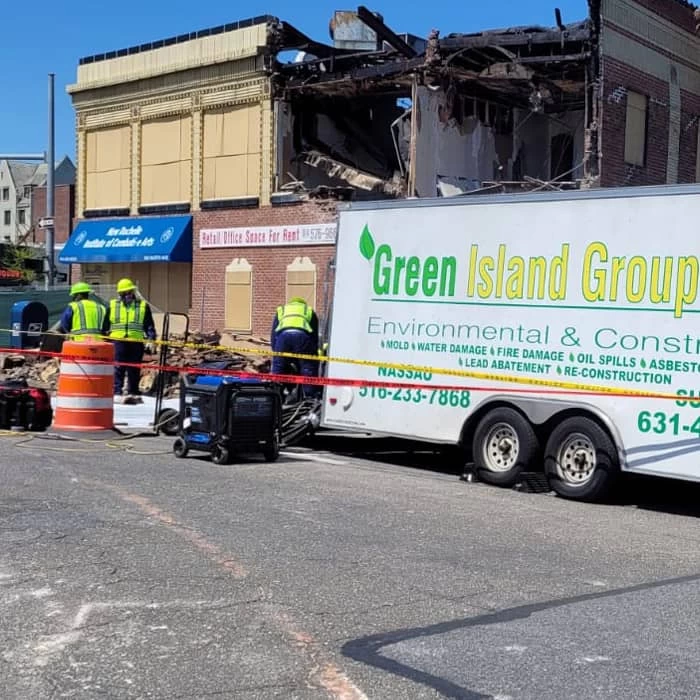
The process starts the moment you call. We respond quickly documented by real customers who noted arrival within an hour of an emergency call because in fire restoration, every hour of delay increases the total damage. The first priority is stabilizing the property: emergency board-up, tarping if needed, and a full assessment of what the fire, smoke, and water have affected beyond the visible burn area.
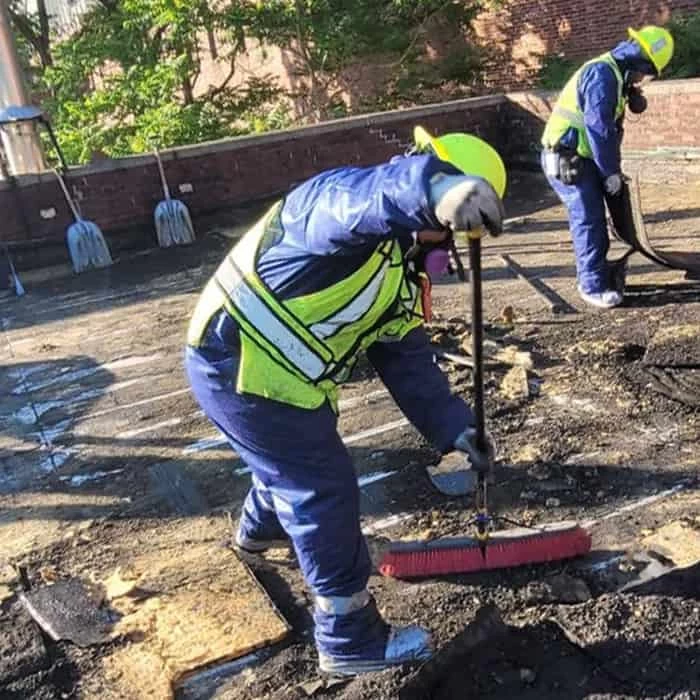
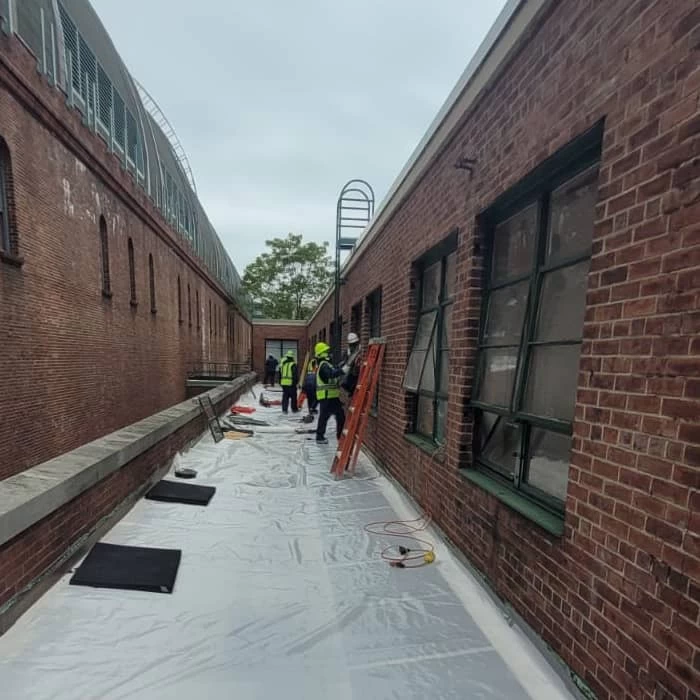
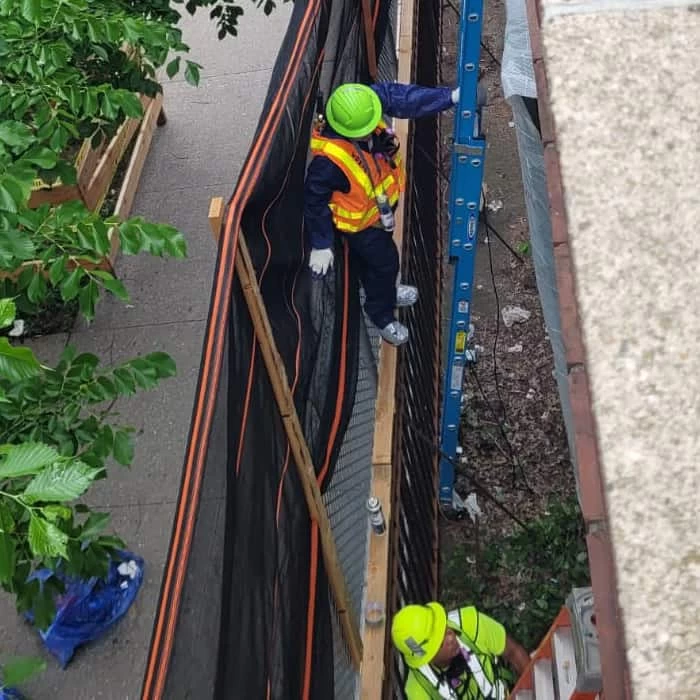
From there, the work moves into remediation. That means soot and smoke cleanup throughout the affected areas including rooms that look untouched but have smoke residue in the HVAC system or on porous surfaces. If the home was built before 1980, which covers most of East Farmingdale’s residential stock, the assessment includes checking for asbestos-containing materials that may have been disturbed. If abatement is required, we handle it directly no need to pause the project and find a separate certified contractor.
Once the structure is clean, safe, and environmentally cleared, reconstruction begins. Drywall, flooring, trim, paint through to the final finishes. One company manages the entire scope, which means one point of contact, one timeline, and no gaps between the remediation crew and the rebuild crew. Your insurance documentation is handled throughout, so your claim reflects the full scope of what was done.
Fire and Smoke Damage Restoration Services, East Farmingdale
Everything the Fire Left Behind Addressed in Full
Fire damage restoration in East Farmingdale covers more ground than most homeowners expect when they first call. The visible damage charred walls, burned flooring, smoke-stained ceilings is only part of the picture. Our scope includes emergency stabilization, structural drying, smoke and soot removal, odor elimination using professional-grade equipment, and full reconstruction through final finishes. If firefighting water created moisture conditions in the walls or subfloor, mold remediation is addressed before the rebuild begins.
For East Farmingdale homes built before 1978 which is the majority of the community the EPA’s Renovation, Repair, and Painting Rule applies, and lead paint disturbance during restoration requires a certified renovation firm. We carry the certifications to handle this legally, which protects you from liability and ensures the work is done to code. This is particularly relevant for the residential streets in the Farmingdale Union Free School District zone, where a significant portion of the housing stock dates to the 1950s and early 1960s.
Commercial properties along the Route 109 corridor are also within scope. Whether it’s a residential home or a commercial building, the process adapts to the size and complexity of the loss and insurance documentation is handled throughout to support your claim with the adjuster.
Does fire damage restoration in East Farmingdale require permits from the Town of Babylon?
Yes and this is one of the most important things to understand before restoration work begins. East Farmingdale is an unincorporated hamlet within the Town of Babylon, which means building permits for structural restoration and reconstruction go through the Town of Babylon’s building department, not a village office. This is different from the neighboring Village of Farmingdale, which has its own village building department. If a contractor skips the permit process or doesn’t know which jurisdiction applies, it can create serious problems when you go to sell the home or when your insurance company reviews the completed work. We handle the permit process as part of the job you don’t need to navigate that on your own while also managing your family’s displacement and your insurance claim.
My East Farmingdale home was built in the 1950s does that affect the fire restoration process?
It does, and it’s one of the most important questions you can ask. Homes built between 1940 and 1969 which describes the majority of East Farmingdale’s residential stock were commonly constructed using asbestos-containing materials in insulation, floor tiles, ceiling tiles, and pipe wrap. A fire that disturbs any of those materials triggers New York State Department of Labor requirements for certified asbestos abatement before restoration work can legally proceed. Homes built before 1978 also fall under the EPA’s lead paint rules, which require a certified renovation firm to handle any disturbance of lead-painted surfaces. We carry both certifications, which means the restoration project doesn’t have to pause while you locate a separate environmental contractor. The abatement and the restoration happen under one roof, on one timeline.
How does the insurance claim process work when I hire Green Island Group?
After a fire, your insurance company will send an adjuster to assess the damage and determine the payout. The problem is that adjusters are working from their own documentation, and if the damage isn’t fully and accurately captured including smoke penetration in the HVAC, hidden moisture from firefighting water, and any environmental hazards the claim may not reflect the true scope of what needs to be restored. We document damage comprehensively from the start, work directly with your adjuster, and use industry-standard Xactimate pricing so the claim reflects the actual restoration required. For East Farmingdale homeowners with median home values around $620,000, an underpaid claim isn’t a minor inconvenience it’s a significant financial loss. Multiple customers have specifically noted the insurance guidance as one of the most valuable parts of working with us.
How quickly does smoke damage spread after a fire in my home?
Faster than most people expect. Soot begins permanently etching and staining surfaces within 24 to 72 hours of a fire. Smoke doesn’t stay in the room where the fire occurred it travels through HVAC ductwork and deposits residue in every room the system serves. Porous surfaces like drywall, wood trim, insulation, and upholstery absorb smoke odor quickly, and if that odor isn’t treated with professional equipment not consumer-grade air fresheners or ozone machines it will persist long after the visible cleanup is done. In East Farmingdale’s older homes, where original ductwork from the 1950s or 1960s may still be in place, smoke can penetrate deeply into the system and require full duct cleaning as part of the restoration scope. The window to prevent permanent damage is short, which is why response time matters so much in this type of emergency.
Can fire damage cause mold in my home, and how soon does it develop?
Yes and it’s one of the most overlooked parts of fire damage. When firefighters suppress a house fire, they’re delivering water at a rate of roughly 250 gallons per minute. That volume of water saturates floors, walls, ceilings, and structural framing. If that moisture isn’t extracted and dried professionally within 24 to 48 hours, mold can begin colonizing particularly in areas with limited airflow, like wall cavities, subfloor spaces, and attic insulation. In East Farmingdale, where many homes have older construction with less vapor-resistant building materials, moisture can travel further and faster into structural components than it would in newer builds. Our process includes structural drying and moisture mapping alongside the fire and smoke remediation because treating the fire damage without addressing the water damage just trades one problem for another. Mold remediation is handled in-house if it’s needed, so the project doesn’t get split between contractors.
Is it safe to stay in my East Farmingdale home after a fire while restoration is happening?
That depends on the scope of the damage, and it’s a question worth taking seriously rather than assuming either way. After a fire, air quality in the home can be significantly compromised soot particles, carbon residue, and smoke chemicals are respiratory hazards, particularly for children and anyone with asthma or allergies. In East Farmingdale homes built before 1980, a fire that disturbs asbestos-containing materials creates an additional airborne hazard that makes the home unsafe to occupy until abatement is completed and air quality is verified. Even in homes where the fire was contained to one room, HVAC systems can distribute particulates throughout the entire living space. We assess habitability as part of the initial evaluation and give you a straight answer about whether the home is safe to occupy during the restoration process not a generic disclaimer, but a specific assessment based on what the inspection actually found. Your family’s health comes first, and that conversation happens at the start, not after you’ve already been sleeping in a compromised space.