When Fire Hits East Garden City, We Handle Everything From Day One
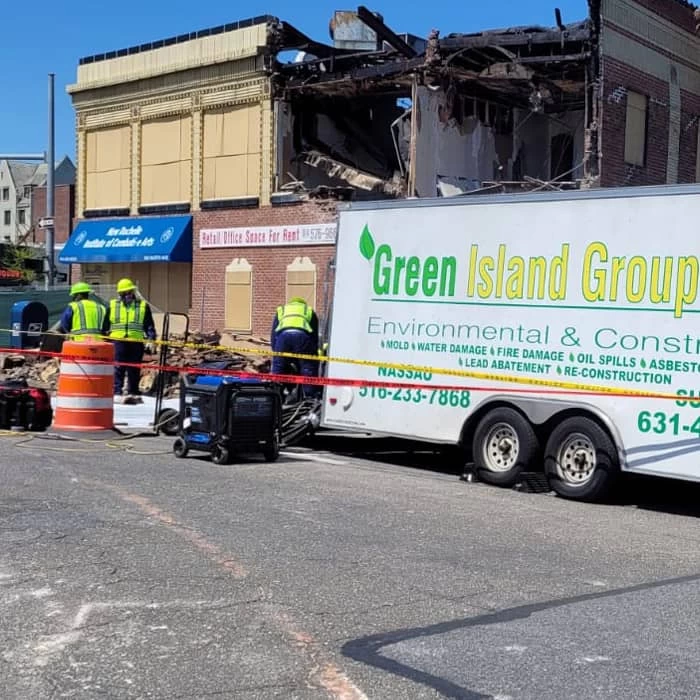
Fire damage doesn’t wait, and neither should we. Green Island Group responds within the hour — handling everything from smoke and soot to full structural restoration in East Garden City and across Nassau County.
I needed a professional consultation explanation of procedure for safe removal of Asbestos in my apartment complex. Without having an account yet, I was very impressed with the caring, knowledgeable and generous advice offered by Jessica, and will look forward to doing business in the future. Thank you so much! I feel much more informed about a sometimes scary endeavor. Peace. Nancy Silva Mineola, NY.
Mia Munoz
Used this company to clean up some water flood in my house. They were fast and easy to work with.very professional, Would recommend to anyone!
Nini Valle
Great company, had a flood and they responded quickly and efficiently. Billed my insurance company directly. I highly recommend this company!
joe colapietro, jr
I had pipe freeze in my basement right before a snow storm and they made to within an hour to help start the clean up process. They we by our side throughout the entire process and even helped with the insurance company. They did such a great job with the cleanup, repair, remidiation, I contracted them to perform the repairs and finishes in the basement. They came with enough manpower and material to get the job done. Leo and Jessica were nothing but a pleasure to deal with!!
Cristian Arredondo c
I had some water damage in my home and Green Island was able to take care of my issue quickly and effectively. I am very pleased with the work they did. They responded quickly and were very professional.
Michael M
Outstanding service! From the office to the field crew everyone was friendly, helpful and responsive. I highly recommend Green Island Group.
What Gets Saved When the Right Team Shows Up First in East Garden City
Most of the damage after a fire isn’t from the flames — it’s from what happens in the hours that follow. Soot starts bonding to surfaces within minutes. Smoke works its way through wall cavities and HVAC systems far beyond anything you can see. The water used to put the fire out begins its own countdown, and in Nassau County’s humid summers, mold can take hold in less than 24 hours. Every hour without professional intervention is an hour that turns a manageable loss into a much larger one.
East Garden City’s building stock adds another layer to this. A significant portion of the homes in and around this area were built in the 1940s and 1950s — which means there’s a real chance that fire has disturbed asbestos-containing materials or lead-based paint. That’s not something you can hand off to a general cleanup crew. It requires licensed professionals who can legally and safely handle hazardous materials under New York State law, without stopping the job midway to bring in a separate contractor.
For commercial properties — and East Garden City has plenty of them, from the office corridors along Stewart Avenue to the institutional facilities near Mitchel Field — the stakes are higher still. Business interruption costs accumulate fast. The difference between a restoration team that shows up within the hour and one that arrives the next morning can mean days of additional closure, deeper structural damage, and a far more complicated insurance claim.
Licensed for Everything Fire Uncovers in East Garden City and Nassau County
Green Island Group is a Long Island-owned restoration company based in Bohemia, NY, serving East Garden City and Nassau County communities. With over 5,000 completed restoration projects across New York State, we’ve handled everything from residential kitchen fires on the Garden City fringe to large-scale commercial losses near the Meadowbrook Parkway corridor that runs directly through East Garden City.
What sets us apart isn’t just experience — it’s the combination of licenses that most restoration companies simply don’t hold. We maintain IICRC certification for fire and smoke damage restoration. NYS DOL licenses for asbestos and mold. USEPA Lead/RRP certification. General Contractor licenses in Nassau County, Suffolk County, and New York City. When fire uncovers something unexpected in a pre-1980 home in East Garden City or a legacy commercial building, there’s no project stoppage, no scramble for a separate contractor — just one fully licensed team that keeps moving.
We also carry NYS and NYC M/WBE certification, which matters specifically in East Garden City, where Nassau County institutional clients and facilities managers often have procurement compliance requirements that most restoration companies can’t meet.
Emergency Fire Damage Restoration East Garden City
From the First Call to the Final Walkthrough — Our Process in East Garden City
It starts the moment you call. We answer 24 hours a day, every day, and our goal is to have a crew on-site within one hour. The Meadowbrook State Parkway runs directly through East Garden City, which makes our response time from our Long Island staging locations genuinely fast — not a marketing promise. When our crew arrives, the first priority is stabilization: securing the structure, boarding openings, and stopping the spread of soot and smoke damage before it reaches areas the fire never touched.
From there, the scope assessment begins. Every affected surface gets documented — walls, ceilings, HVAC systems, structural cavities — because what you can see is rarely the full picture. If asbestos or lead-containing materials have been disturbed, that gets identified and addressed under the appropriate NYS DOL licenses before any other work proceeds. This step protects you legally and keeps the project on a clean timeline. In East Garden City, structural repairs require permits through the Town of Hempstead Building Department, and our Nassau County General Contractor license means we pull those permits directly — you don’t have to manage that piece.
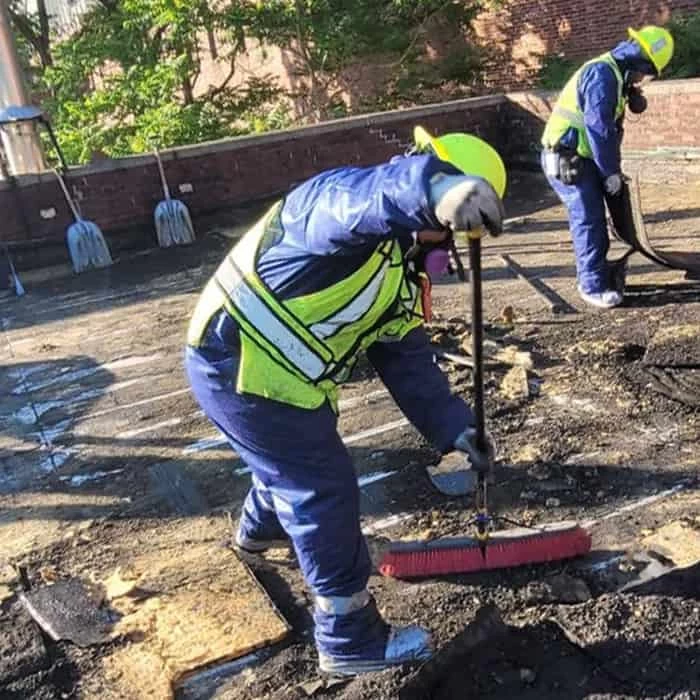
Once the hazardous materials are cleared and the scope is documented, the restoration moves into remediation: soot and smoke removal, odor elimination using air scrubbers and ozone treatment, water extraction and structural drying, and HVAC decontamination. After remediation, reconstruction begins — framing, drywall, finishes, whatever the fire took. Throughout the entire process, we handle the insurance documentation and bill the carrier directly, so you’re not navigating that paperwork on top of everything else.
Fire Smoke Damage Restoration Service East Garden City
Every Phase Covered — From Smoke Cleanup to Full Reconstruction
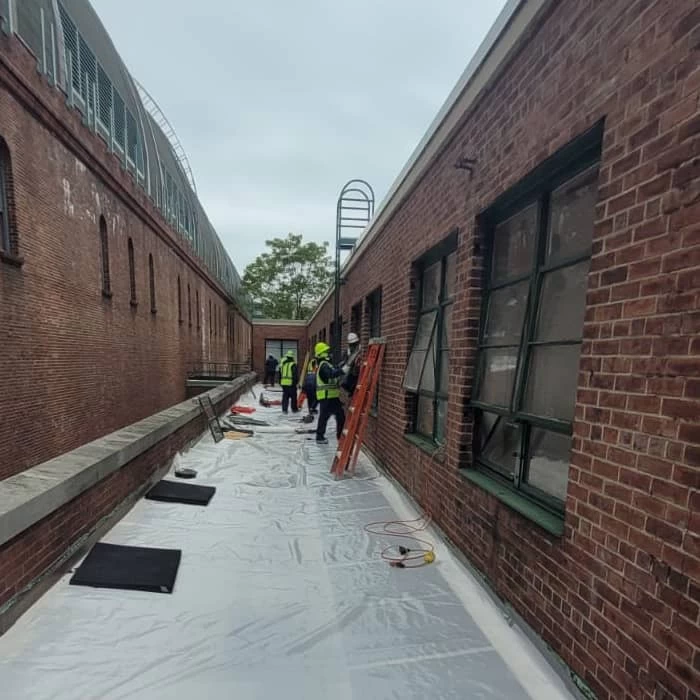
Fire damage restoration isn’t a single service — it’s a sequence of interconnected steps, and a gap anywhere in that sequence creates problems down the road. We cover the full sequence under one roof: emergency response and structural stabilization, soot and smoke remediation, water extraction and drying, hazardous materials abatement, odor elimination, HVAC cleaning, and complete structural reconstruction. For East Garden City homeowners dealing with a residential loss, that means you’re not handing off between three different contractors — one company manages the job from the night of the fire to the day you move back in.
For commercial property owners and facilities managers in East Garden City — including those overseeing properties near Nassau Community College, the Coliseum complex on Charles Lindbergh Boulevard, or the commercial corridors along Old Country Road — our service extends to commercial-scale losses. Large HVAC systems, institutional building materials, and commercial property insurance programs all require a different level of documentation and contractor capability than a standard residential claim. Our commercial GC licensing and NAICS codes for commercial fire and flood restoration (236220) mean we’re built for this work, not adapting residential processes to a commercial setting.
Smoke damage is also addressed well beyond the visible burn zone. Microscopic soot particles travel through ductwork and wall cavities into rooms that never showed a flame. Our NADCA-certified HVAC cleaning and air quality restoration process ensures the entire structure — not just the affected rooms — is safe and cleared before the job is considered complete.
What should I do immediately after a fire at my East Garden City property?
The most important thing you can do in the first few minutes is get everyone out and stay out until the fire department clears the structure. Once it’s safe to make calls, contact your insurance company to open a claim, then call us immediately — not the next morning. Every hour that passes allows soot to bond more permanently to surfaces and gives firefighting water more time to saturate structural materials. In East Garden City’s climate, that water can trigger mold growth in under 24 hours during warmer months.
Don’t try to clean soot yourself. Dry wiping soot without the right technique and products actually pushes it deeper into porous surfaces, making professional removal harder and more expensive. Leave the structure as-is, document what you can with photos if it’s safe to do so, and let our restoration team assess the full scope when we arrive. We can be on-site in East Garden City within one hour of your call — that response window is what limits how far the damage spreads.
How do I know if my fire damage claim will be covered by homeowners insurance?
Most standard homeowners insurance policies in Nassau County cover fire damage, including smoke and soot cleanup, water damage from firefighting efforts, and structural repairs. What varies is the scope of what gets approved — and that’s where having a thorough, licensed contractor doing the documentation makes a real difference. Insurance adjusters work from what’s documented. If the soot in your HVAC system or the smoke damage in rooms far from the fire isn’t captured in the initial assessment, it may not make it into the claim.
We document every phase of the restoration in insurance-standard format and bill carriers directly. For East Garden City properties — where median home values in ZIP code 11530 are close to $1 million — the gap between a well-documented claim and a poorly documented one can easily be tens of thousands of dollars. We’ve guided hundreds of Long Island families through this process, including advocating with adjusters when the initial scope assessment underestimates the true extent of the damage. You shouldn’t have to fight that battle alone while also dealing with displacement.
Can a house with asbestos or lead paint be safely restored after a fire in Nassau County?
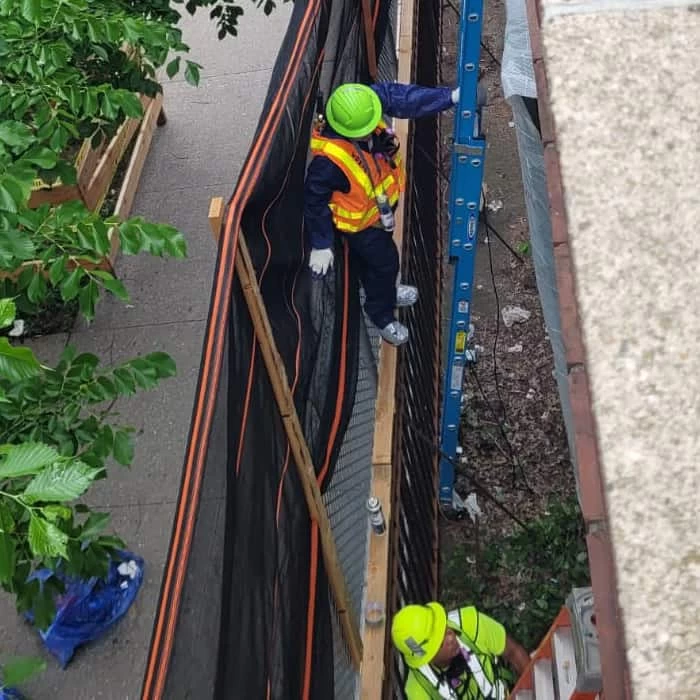
Yes — but only if the contractor handling the restoration holds the right licenses. In New York State, asbestos abatement must be performed by a contractor licensed through the NYS Department of Labor. The same applies to lead paint disturbance under USEPA Lead/RRP regulations. Fire commonly disturbs both materials in homes built before 1980, which describes a large portion of the residential building stock in and around East Garden City. Floor tiles, ceiling tiles, pipe insulation, joint compound, and roofing materials from that era frequently contain asbestos.
If a restoration company without these licenses encounters asbestos mid-project, they’re legally required to stop work — which means delays, cost overruns, and a gap in project accountability while you find a separate abatement firm. We hold both the NYS DOL Asbestos License and USEPA Lead/RRP certification, so when hazardous materials are identified during the scope assessment, the project doesn’t stop. The abatement is handled by our team, under the same project management, on the same timeline. For older homes near the Garden City and Uniondale fringe, this isn’t a rare scenario — it’s something we’re prepared for on nearly every job.
Do I need a permit for fire damage repairs in East Garden City, and who handles that?
Any structural repair work following fire damage in East Garden City requires permits from the Town of Hempstead Building Department. This includes framing repairs, drywall replacement, electrical work, and any other work that touches the structure of the building. Pulling those permits legally requires a licensed General Contractor — a credential that many restoration companies operating in Nassau County don’t actually hold.
We hold a Nassau County General Contractor license, which means we handle the permit process directly. You don’t have to figure out the Town of Hempstead application process while also managing displacement, insurance calls, and everything else that comes with a fire loss. The Nassau County Fire Marshal’s office may also be involved in documenting the fire’s cause and origin for significant losses in this area — that documentation is typically required as part of the insurance claim, and having a licensed contractor coordinating the full scope from day one keeps that process cleaner and faster.
How long does fire damage restoration typically take for a home in Nassau County?
The honest answer is that it depends heavily on the scope of the damage — and the scope is almost always larger than it looks on the first day. A contained kitchen fire with limited smoke spread might take two to three weeks from emergency response through final reconstruction. A fire with significant structural damage, widespread smoke distribution through the HVAC system, and hazardous materials involvement can take several months. The variables that extend timelines most often are undiscovered damage (smoke in wall cavities, water in subfloor materials), permit processing through the Town of Hempstead, and insurance adjuster response times.
What we control is our side of that timeline. Emergency stabilization happens within the first hour. Scope documentation is completed thoroughly on the front end so there are no surprises mid-project that require stopping and restarting. Insurance documentation is handled proactively so the claim moves forward in parallel with the physical work. For East Garden City commercial properties where business interruption costs are a real factor, that kind of parallel-track project management is what minimizes total downtime — not just restoration speed, but the administrative coordination that keeps everything moving together.
Why does Green Island Group serve East Garden City specifically, and what makes us different here?
East Garden City isn’t a typical Nassau County suburb — it’s the Nassau Hub, with a mix of commercial properties, institutional facilities, and mid-century residential homes that creates a fire restoration demand profile unlike most of the communities around it. The presence of Nassau Community College, the Coliseum complex on Charles Lindbergh Boulevard, and dense commercial corridors means that fire losses here can range from a residential home on the Uniondale fringe to a large commercial building requiring institutional-scale remediation. Most restoration companies are built for one or the other. We’re licensed and equipped for both.
The other honest answer is that this area sits at the intersection of Nassau County’s highest-value real estate and some of its most economically mixed neighborhoods. That means property owners here — whether they’re homeowners in the 11530 ZIP code or commercial tenants along Stewart Avenue — deserve a contractor who shows up fully licensed, documents thoroughly, and doesn’t cut corners on the scope of work just because the insurance company is paying. Green Island Group is locally owned, holds every license required to complete the full job legally in Nassau County, and has the track record — over 5,000 completed projects in New York State — to back it up.