East Meadow's Older Homes Deserve More Than a Surface Cleanup
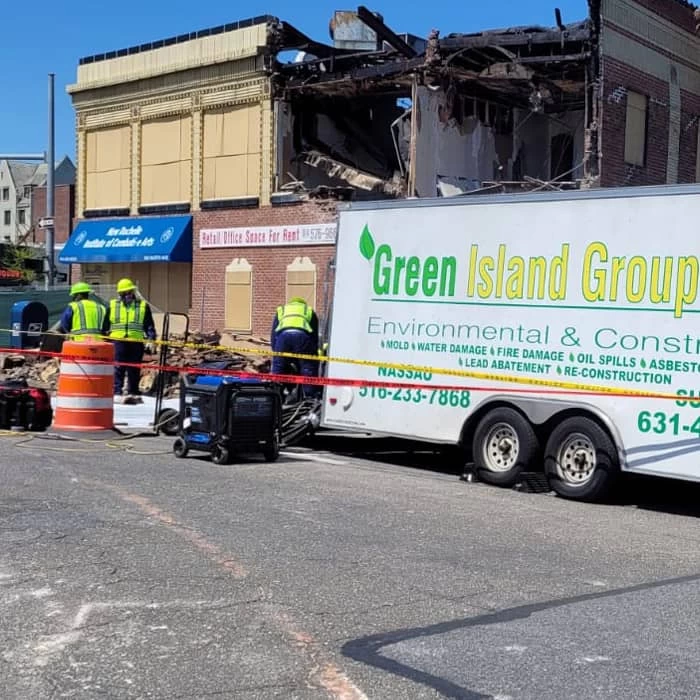
When a fire hits a 1950s Cape Cod or ranch home in East Meadow, the damage runs deeper than what you can see. We handle fire damage restoration from emergency response through full reconstruction — one call, one team, no handoffs.
I needed a professional consultation explanation of procedure for safe removal of Asbestos in my apartment complex. Without having an account yet, I was very impressed with the caring, knowledgeable and generous advice offered by Jessica, and will look forward to doing business in the future. Thank you so much! I feel much more informed about a sometimes scary endeavor. Peace. Nancy Silva Mineola, NY.
Mia Munoz
Used this company to clean up some water flood in my house. They were fast and easy to work with.very professional, Would recommend to anyone!
Nini Valle
Great company, had a flood and they responded quickly and efficiently. Billed my insurance company directly. I highly recommend this company!
joe colapietro, jr
I had pipe freeze in my basement right before a snow storm and they made to within an hour to help start the clean up process. They we by our side throughout the entire process and even helped with the insurance company. They did such a great job with the cleanup, repair, remidiation, I contracted them to perform the repairs and finishes in the basement. They came with enough manpower and material to get the job done. Leo and Jessica were nothing but a pleasure to deal with!!
Cristian Arredondo c
I had some water damage in my home and Green Island was able to take care of my issue quickly and effectively. I am very pleased with the work they did. They responded quickly and were very professional.
Michael M
Outstanding service! From the office to the field crew everyone was friendly, helpful and responsive. I highly recommend Green Island Group.
Most East Meadow homes were built in the 1950s. That’s not just a fun fact — it changes everything about how fire damage gets handled. When a fire burns through a home with original floor tiles, pipe insulation, or joint compound from that era, you’re not just dealing with soot and smoke. You’re dealing with materials that may contain asbestos. Under New York State law, that work can only be done legally by a licensed contractor. Most restoration companies operating in Nassau County aren’t set up for it. We are.
Smoke doesn’t stay in the room where the fire started. It moves through your ductwork, settles into wall cavities, and bonds to surfaces throughout the house — often in rooms that look completely untouched. In a home with 60-year-old ductwork that’s never been professionally cleaned, that contamination spreads fast and goes deep. Getting it out requires more than airing out the house. It requires certified technicians who know where to look and what to do when they find it.
And then there’s the water. Every fire the East Meadow Fire Department suppresses leaves behind thousands of gallons of it — soaked into walls, subfloors, and insulation. Mold can start growing within 24 to 48 hours of that exposure. If the water damage isn’t addressed at the same time as the fire and smoke cleanup, you’re not solving the problem — you’re delaying a second one.
We’re an independently owned restoration company based on Long Island — not a franchise, not a national call center. When you call us after a fire at your East Meadow home, you’re reaching a local team that knows Nassau County’s housing stock, understands the Town of Hempstead’s permitting process, and holds every license required to do this work legally from start to finish.
That means NYS DOL licensing for asbestos and mold, USEPA Lead/RRP certification for pre-1978 homes, IICRC certification for fire and smoke restoration, and a Nassau County General Contractor License to handle the rebuild. Most companies can do part of this. We can do all of it — which matters enormously when your home near Eisenhower Park or off Hempstead Turnpike was built in an era when hazardous materials were standard construction.
We also bill your insurance company directly and document every phase of the job to IICRC standards — the format insurers recognize and accept. You shouldn’t have to fight your own insurance company while you’re displaced from your home. That’s our job.
The first thing we do is get there. We commit to on-site arrival within one hour of your call — any time of day or night. East Meadow fires don’t follow business hours, and neither do we. The August 2024 fire on Prospect Avenue was called in through a medical alert system in the early morning hours. That’s the reality of when these things happen, and that’s why our response doesn’t wait until 9 AM.
When we arrive, we assess the full scope of damage — not just what’s visible. That includes testing for asbestos-containing materials in the affected areas, evaluating smoke travel through the HVAC system, and beginning water extraction immediately if firefighting water is present. In a pre-1980 East Meadow home, this assessment phase is critical. We’re not just looking at the burn zone — we’re looking at what the fire disturbed inside the walls and under the floors.
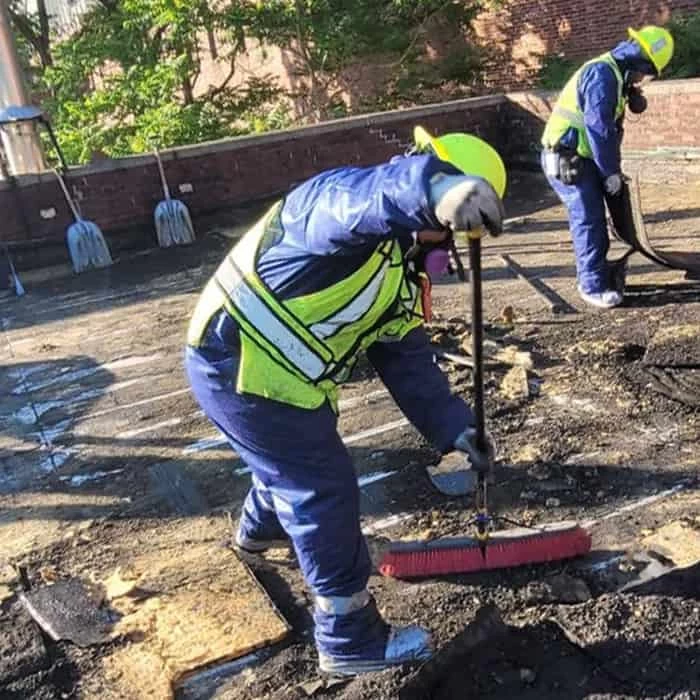
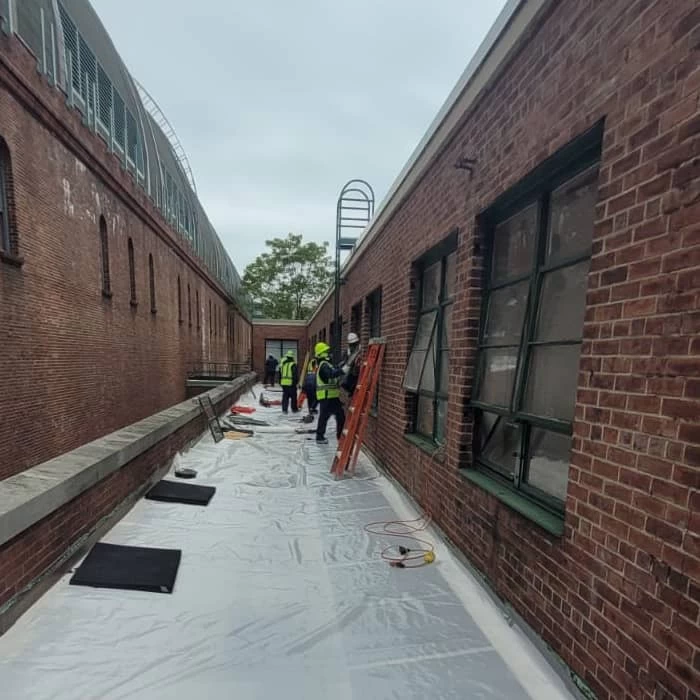
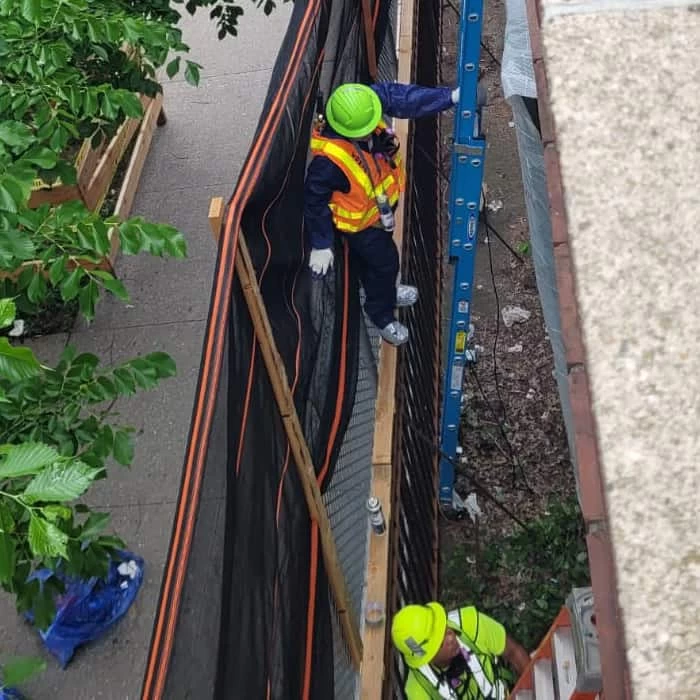
From there, we move through a structured process: hazardous material abatement if required under NYS ICR 56 and Nassau County’s EHRP/EHRT regulations, full soot and smoke remediation including duct cleaning, structural drying, and finally reconstruction under our Nassau County General Contractor License. Every phase is documented for your insurance claim. You don’t manage the moving parts — we do.
Fire damage restoration in a 1950s East Meadow home is a different job than it is in a newer build. The materials are different, the regulatory requirements are different, and the hidden risks are different. Our service is built around that reality — not around a generic checklist that works the same everywhere.
Every job starts with emergency stabilization: board-up, tarping, and securing the structure so no additional damage occurs before remediation begins. From there, we handle asbestos and lead paint testing and abatement where required — a legal necessity in most East Meadow homes given their construction era, and something Nassau County’s EHRP/EHRT compliance framework enforces on top of state standards. Soot and smoke removal follows, including thermal fogging, air scrubbing, ozone treatment, and NADCA-certified HVAC cleaning to address contamination that’s traveled through the duct system.
We also address the oil heat reality that’s specific to Long Island’s older housing stock. If your home has an aging oil burner and you’ve experienced a puff-back — where the furnace backfires and coats your interior in soot — that’s handled the same way we handle smoke damage from a structural fire. It’s the same contamination, the same cleanup process, and it’s covered by most Nassau County homeowners’ insurance policies. When remediation is complete, our licensed team handles the full reconstruction, pulling all required Town of Hempstead permits and carrying the job through final inspection.
Can I stay in my East Meadow home after a fire, even a small one?
In most cases, no — and the reason isn’t always obvious from what you can see. Even after a contained kitchen fire or a small room fire, smoke and soot travel through your HVAC system and settle into materials throughout the house. In an East Meadow home built in the 1950s, that ductwork may have never been professionally cleaned, which means contamination moves fast and spreads wide. Breathing in post-fire air — even in rooms that look unaffected — means exposure to combustion byproducts including benzene and formaldehyde that linger in porous materials.
There’s also the asbestos question. If the fire disturbed any original flooring, pipe insulation, or ceiling tiles in a pre-1980 East Meadow home, those materials may have released asbestos fibers. Until testing is done and the results are known, the home is not safe to occupy. A professional assessment will tell you quickly whether temporary relocation is necessary and for how long — most insurance policies cover additional living expenses during that period.
How does fire damage insurance work in Nassau County, and will it cover everything?
Standard homeowners’ insurance in Nassau County covers fire damage, smoke damage, and the water damage caused by fire suppression — but the scope of what gets approved often depends on how thoroughly the damage is documented. Insurance adjusters work from the information they’re given. If the restoration company you hire doesn’t document to IICRC standards, you may end up with a settlement that doesn’t reflect the full scope of what needs to be repaired.
We bill insurance companies directly and create a complete, IICRC-formatted documentation package for every phase of the job — the format adjusters recognize and accept. We’ve guided hundreds of Long Island families through the claims process, and we know where gaps tend to appear: underdocumented smoke travel, missed asbestos abatement costs, and depreciation disputes on older East Meadow homes with pre-1980 construction. We advocate for the full scope of your coverage so you’re not absorbing costs that should be covered.
What is a puff-back, and do East Meadow homeowners need to worry about it?
A puff-back happens when an oil burner malfunctions and backfires, forcing a cloud of soot through your heating system and into every room connected to it. There’s no actual fire — but the contamination is just as serious as smoke damage from a structural fire. Walls, ceilings, furniture, and contents can be coated in oily, acidic soot that bonds to surfaces quickly and is extremely difficult to remove without professional equipment.
This is a particularly relevant risk in East Meadow. The majority of the hamlet’s housing stock was built in the 1950s with oil heating systems that, while maintained, are aging. Puff-backs are a heating-season phenomenon — they tend to happen in October and November when furnaces are turned on for the first time after summer, or during cold snaps in January and February when systems are working hard. Most Nassau County homeowners’ insurance policies cover puff-back cleanup under the smoke damage provision. If it’s happened to you, the cleanup process is the same as post-fire smoke remediation, and it needs to start quickly before the soot has time to permanently bond.
Does fire damage restoration in East Meadow require permits or inspections?
Yes — and this is one area where choosing the wrong contractor creates real problems down the road. Any structural repairs, electrical work, plumbing, or HVAC replacement following a fire in East Meadow requires permits from the Town of Hempstead and must pass inspection before the work is considered complete. If a contractor performs reconstruction without pulling the proper permits, you may face issues when you go to sell the home or when your insurance company requests documentation of the completed work.
Asbestos abatement adds another layer. Nassau County enforces its own EHRP/EHRT compliance requirements on top of New York State’s Industrial Code Rule 56 — meaning abatement work has to be performed by a NYS DOL-licensed contractor and documented to county standards. We hold Nassau County General Contractor License and NYS DOL Asbestos License, so we handle permitting, abatement documentation, and inspection coordination as part of the restoration process. You don’t have to track any of that separately.
How long does fire damage restoration take for a typical East Meadow home?
It depends on the scope, but here’s a realistic breakdown for the kind of homes East Meadow has. For a moderate fire — say, a kitchen fire that caused significant smoke damage throughout the main level — expect the remediation phase to take one to two weeks. That includes soot removal, HVAC cleaning, and structural drying. If asbestos abatement is required, which is common in pre-1980 construction, that adds time because abatement work has specific procedural and clearance testing requirements under New York State law.
Reconstruction adds additional time depending on what needs to be rebuilt. A kitchen gut-and-rebuild in a 1950s ranch can take four to eight weeks once permits are pulled from the Town of Hempstead. The honest answer is that timelines vary, and anyone who gives you a firm completion date before they’ve assessed the full scope of damage is guessing. What we can tell you is that every phase of the job is documented in real time, and your insurance company is kept informed throughout — so there are no surprises at the end.
Is our team able to handle fire restoration in East Meadow's older neighborhoods specifically?
Yes — and the age of East Meadow’s housing stock is actually why we’re a better fit for this community than a generalist restoration company. Homes in neighborhoods throughout East Meadow — from the streets near Barnum Woods and W.T. Clarke High School to the blocks running off Hempstead Turnpike — were predominantly built in the 1950s. That era of construction routinely included asbestos floor tiles, lead paint, and ductwork that was never designed to be cleaned. A fire in one of these homes is a more complex restoration project than a fire in a newer build, and it requires a company licensed and equipped for all of it.
We hold NYS DOL Asbestos License, NYS DOL Mold License, USEPA Lead/RRP Certification, IICRC Fire and Smoke Restoration Technician certification, and Nassau County General Contractor License. That’s the complete credential set required to legally and safely restore a pre-1980 East Meadow home from emergency board-up through final inspection — without subcontracting any phase of the work to a separate company. One team, one point of contact, start to finish.