When Your Ranch Home Takes a Hit, You Need More Than a Cleanup Crew
We handle fire damage restoration in East Patchogue from the first emergency call to the day you walk back through your front door one team, no handoffs, no gaps.
I needed a professional consultation explanation of procedure for safe removal of Asbestos in my apartment complex. Without having an account yet, I was very impressed with the caring, knowledgeable and generous advice offered by Jessica, and will look forward to doing business in the future. Thank you so much! I feel much more informed about a sometimes scary endeavor. Peace. Nancy Silva Mineola, NY.
Mia Munoz
Used this company to clean up some water flood in my house. They were fast and easy to work with.very professional, Would recommend to anyone!
Nini Valle
Great company, had a flood and they responded quickly and efficiently. Billed my insurance company directly. I highly recommend this company!
joe colapietro, jr
I had pipe freeze in my basement right before a snow storm and they made to within an hour to help start the clean up process. They we by our side throughout the entire process and even helped with the insurance company. They did such a great job with the cleanup, repair, remidiation, I contracted them to perform the repairs and finishes in the basement. They came with enough manpower and material to get the job done. Leo and Jessica were nothing but a pleasure to deal with!!
Cristian Arredondo c
I had some water damage in my home and Green Island was able to take care of my issue quickly and effectively. I am very pleased with the work they did. They responded quickly and were very professional.
Michael M
Outstanding service! From the office to the field crew everyone was friendly, helpful and responsive. I highly recommend Green Island Group.
A fire doesn’t just burn what it touches. Smoke moves through every room, settles into walls, gets pulled through your HVAC system, and embeds itself into the wood framing and insulation of your home within hours. In East Patchogue’s ranch homes and hi-ranches where open floor plans mean there are no walls to stop it a contained kitchen fire can contaminate the entire house before the trucks leave your driveway.
That’s the part most homeowners don’t find out until weeks later, when the smell won’t go away or the air quality test comes back wrong. Getting ahead of it requires a full assessment of the structure, not just the room where the fire started.
East Patchogue also has something most inland communities don’t: a housing stock that’s largely pre-1980, sitting a short distance from the Great South Bay. That combination matters here. Older homes commonly contain asbestos in floor tiles, pipe insulation, and ceiling materials and when fire or firefighting crews disturb those materials, it becomes a hazardous situation that requires state-certified abatement before any restoration work can legally move forward. Add the coastal humidity and salt air that accelerates corrosion in fire-damaged metal components, and you’re looking at a job that needs a team equipped for all of it not just the visible damage.
A Long Island Team That Knows What's Behind Your Walls
We’re a locally owned restoration company serving Suffolk and Nassau Counties not a franchise, not a call center, not a rotating crew dispatched from somewhere else. When you call, you reach people who work and live on Long Island, who know the housing stock in communities like East Patchogue, and who understand what a fire in a 1960s ranch home on the South Shore actually involves.
Jessica and Leo manage client relationships directly, and you’ll hear their names in reviews from real customers across the Island not because it’s a talking point, but because that’s genuinely how we operate. Jessica specifically has been recognized for helping homeowners navigate insurance claims, which for most people is the most confusing and consequential part of this entire process.
Our work covers everything: emergency stabilization, smoke and soot remediation, water extraction from firefighting, asbestos and mold abatement, demolition, reconstruction, and final finishes. From the first call to move-in day, it’s one team and one point of contact and we don’t consider the job done until you’re satisfied with the result.
Fire Damage Restoration Process, East Patchogue NY
From Emergency Call to Move-In Day Here's What to Expect
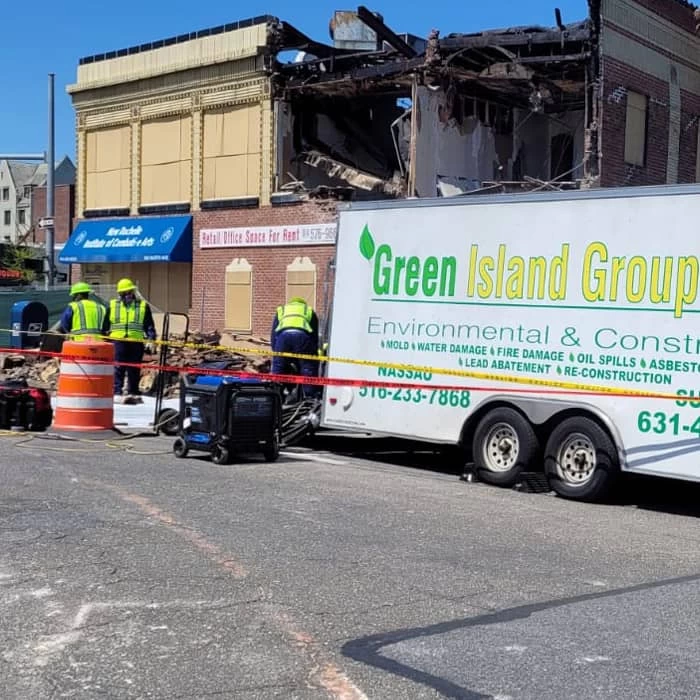
The first step is stabilization. That means securing the structure board-up, tarping, whatever is needed to protect your home from further exposure and assessing the full scope of damage. In East Patchogue, that assessment always includes checking for disturbed asbestos-containing materials, because in a home built before 1980, it’s not a question of whether those materials exist. It’s a question of whether the fire or the suppression effort disturbed them. That determination has to happen before any remediation work begins, and it has to be done by a New York State-certified team.
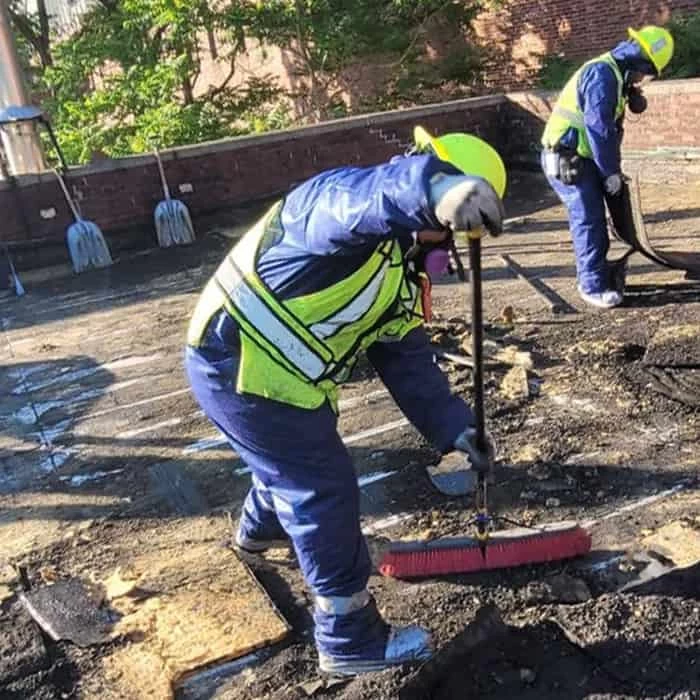
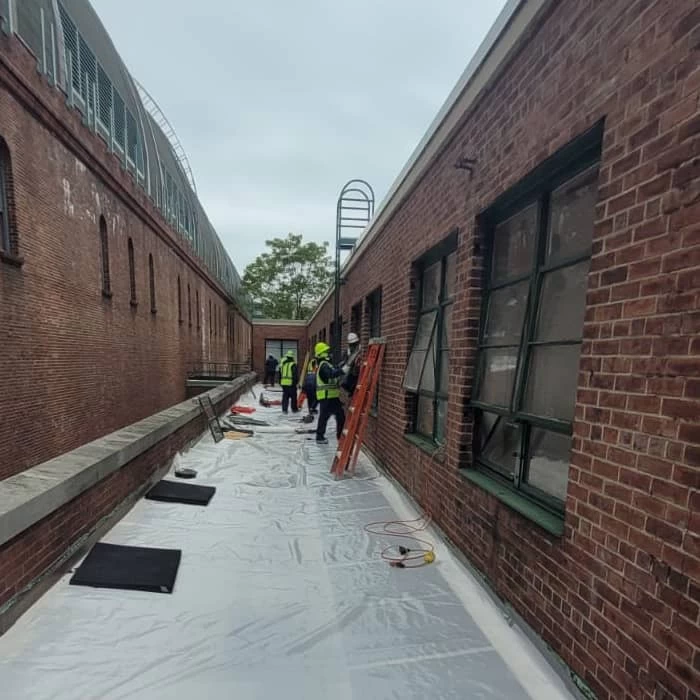
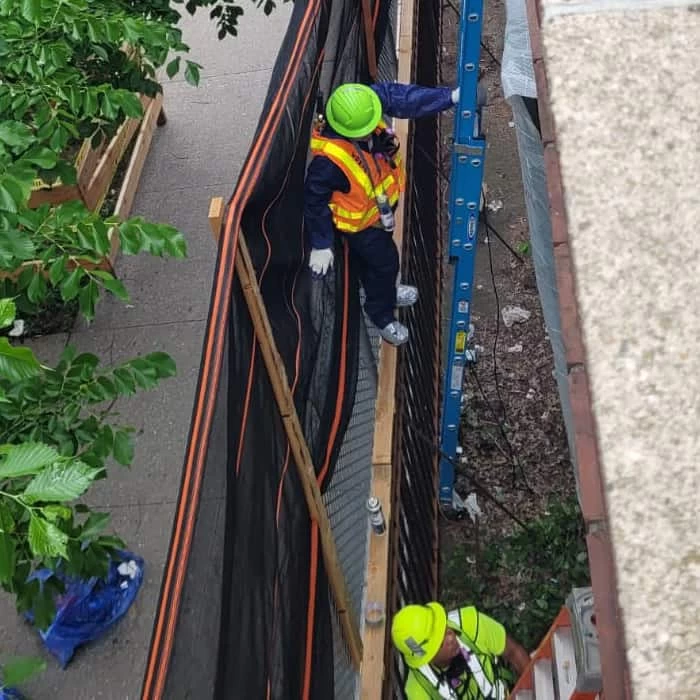
Once the scope is established, the remediation phase begins soot removal, smoke odor treatment, water extraction from firefighting, structural drying, and mold prevention. Smoke gets into places that aren’t obvious: ductwork, wall cavities, attic insulation, soft goods. We address all of it, not just the surfaces you can see. If asbestos abatement is required, that work is completed under proper containment protocols before anything else moves forward.
From there, reconstruction begins. Framing, drywall, electrical, plumbing, HVAC whatever the fire took, it gets rebuilt. Any work requiring permits goes through the Town of Brookhaven Building Department, and we manage that process as part of the project. Throughout all of it, you have one point of contact who knows where the job stands and can tell you when you’re coming home.
Fire Smoke Damage Restoration Services, Suffolk County
Everything the Fire Touched and Everything It Didn't That Still Needs Attention
Fire damage restoration isn’t a single service it’s a sequence of specialized work that has to happen in the right order. We cover the full sequence: emergency response and structural stabilization, smoke and soot remediation, odor neutralization, water damage mitigation from firefighting suppression, asbestos and mold abatement, demolition of unsalvageable materials, full reconstruction, and finish work. Nothing gets handed off to a separate contractor mid-project.
For East Patchogue homeowners specifically, the environmental piece is not optional or supplemental it’s central. The majority of homes in this community were built before asbestos was phased out of residential construction materials. A fire that damages flooring, ceilings, or mechanical systems in a pre-1980 home has almost certainly disturbed materials that require certified handling. We carry New York State certifications for both asbestos abatement and mold remediation, which means the work can be completed legally and safely without bringing in a separate environmental contractor and adding weeks to your timeline.
The insurance process is also part of what we handle here. Most homeowners in Brookhaven Town have never filed a claim this size, and the documentation requirements damage scope, itemized estimates, adjuster communication can be overwhelming on top of everything else a fire displacement involves. We have a documented track record of walking clients through that process and making sure the claim reflects the full scope of what needs to be restored.
Is it safe to stay in my East Patchogue home after a fire?
In most cases, no at least not until a proper assessment has been completed. Even if the fire was contained to one room, smoke and soot travel fast through an open-plan home, and the air quality throughout the structure can be compromised well beyond the area of visible damage. Soot particles are fine enough to be inhaled deeply, and the chemical composition of smoke from a house fire which often includes burning synthetics, treated wood, and older materials makes prolonged exposure a real health concern.
In East Patchogue specifically, there’s an additional layer to consider. Homes built before 1980 commonly contain asbestos in flooring, ceiling tiles, pipe insulation, and joint compound. If the fire or the suppression effort disturbed any of those materials, the air inside your home may contain asbestos fibers which are invisible and require professional testing to detect. Until that assessment is done by a certified team, re-entry should be limited. We can tell you clearly what was found and when it’s safe to return.
How long does fire damage restoration typically take for a Long Island home?
It depends on the scope, but for a typical East Patchogue ranch or Cape Cod, you’re generally looking at anywhere from a few weeks for smoke and soot remediation to several months if structural reconstruction is involved. The variables that affect timeline most are the extent of the burn, how deeply smoke penetrated the structure, whether asbestos abatement is required, and how quickly permits can be pulled through the Town of Brookhaven Building Department.
The asbestos piece is worth understanding specifically. If testing confirms the presence of disturbed asbestos-containing materials which is common in pre-1980 homes that abatement work has to be completed under containment protocols before any other restoration can proceed. It adds time, but it’s not optional. Skipping it or rushing it creates legal liability and health risk. We give you an accurate timeline upfront, including the regulatory steps, rather than telling you what you want to hear.
Does homeowners insurance cover fire damage restoration in New York?
Generally, yes fire damage is one of the most commonly covered perils in a standard homeowners insurance policy. But what your policy actually pays out depends heavily on how the claim is documented and communicated. Insurance carriers require itemized estimates, typically in a format called Xactimate, and they will often push back on scope items that aren’t clearly documented or justified. If the adjuster’s estimate doesn’t capture the full extent of the damage including smoke migration into areas away from the fire, asbestos abatement costs, or water damage from firefighting you may receive a settlement that doesn’t cover what the job actually requires.
This is where having a restoration company that understands the claims process matters as much as the restoration work itself. We’ve helped East Patchogue homeowners navigate this process directly communicating with adjusters, documenting scope thoroughly, and making sure the claim reflects what a complete restoration actually involves. For most homeowners, this is the largest claim they’ll ever file. Having someone in your corner who knows how it works is worth a lot.
What's the difference between fire cleanup and full fire damage restoration?
Fire cleanup typically refers to debris removal, surface cleaning, and basic soot wiping the kind of work that makes a space look cleared out. Fire damage restoration is the complete process: assessing and remediating smoke and soot throughout the entire structure, extracting water from firefighting suppression, treating and neutralizing odor at the source, testing for and abating any hazardous materials, demolishing what can’t be saved, and rebuilding the home to its pre-loss condition. The difference in scope is significant.
For a homeowner in East Patchogue, this distinction matters practically. A cleanup crew can remove visible debris from a fire-damaged kitchen. But the smoke that traveled through the HVAC system into every bedroom, the moisture that soaked into the subfloor from 5,000 gallons of suppression water, the asbestos-containing floor tiles that were disturbed during the fire none of that gets addressed by cleanup alone. Restoration means the whole house is brought back, not just the room that burned.
Does fire damage lead to mold problems in South Shore Long Island homes?
Yes, and it happens faster than most people expect. Fire hoses deliver a significant volume of water in a short period enough to saturate floors, walls, and ceilings throughout the affected area. On the South Shore of Long Island, where coastal humidity is already elevated compared to inland communities, that moisture has ideal conditions to support mold growth. Under the right conditions, mold can begin developing within 24 to 48 hours of water intrusion.
In East Patchogue homes many of which have older construction with less vapor barrier protection and more porous building materials the risk is especially real. Structural drying has to begin quickly and has to be thorough, including wall cavities and subfloor assemblies, not just surface areas. If mold does develop, New York State requires that remediation be performed by a certified contractor. We hold that certification and include moisture assessment and mold prevention as part of the fire restoration process not as an add-on discovered later.
How does fire damage restoration work differently for older homes in East Patchogue?
Older homes require a more careful and layered approach than newer construction. The majority of homes in East Patchogue were built between the 1940s and 1970s a period when asbestos was commonly used in floor tiles, ceiling materials, pipe insulation, and joint compound, and when electrical systems weren’t built to modern safety standards. A fire in one of these homes doesn’t just damage the structure. It potentially disturbs materials that are now regulated hazardous substances, and it may expose outdated wiring or mechanical systems that need to be brought up to current code as part of the rebuild.
Before any restoration work begins in a pre-1980 home, a certified assessment for asbestos-containing materials is required. If those materials were disturbed, abatement has to happen under containment protocols and that work requires a New York State-licensed contractor. Any reconstruction that follows will also need to meet current Town of Brookhaven building codes, which means permits and inspections are part of the process. This adds steps, but it also means the home comes back better protected than it was before the fire with updated systems, proper documentation, and no hidden hazards left behind.