When a Hamptons-Area Home Burns, the Stakes Are Different
Fire damage in East Quogue isn’t just a cleanup job it’s a high-value property, a complex insurance claim, and a home that deserves to be fully restored. We handle all of it.
I needed a professional consultation explanation of procedure for safe removal of Asbestos in my apartment complex. Without having an account yet, I was very impressed with the caring, knowledgeable and generous advice offered by Jessica, and will look forward to doing business in the future. Thank you so much! I feel much more informed about a sometimes scary endeavor. Peace. Nancy Silva Mineola, NY.
Mia Munoz
Used this company to clean up some water flood in my house. They were fast and easy to work with.very professional, Would recommend to anyone!
Nini Valle
Great company, had a flood and they responded quickly and efficiently. Billed my insurance company directly. I highly recommend this company!
joe colapietro, jr
I had pipe freeze in my basement right before a snow storm and they made to within an hour to help start the clean up process. They we by our side throughout the entire process and even helped with the insurance company. They did such a great job with the cleanup, repair, remidiation, I contracted them to perform the repairs and finishes in the basement. They came with enough manpower and material to get the job done. Leo and Jessica were nothing but a pleasure to deal with!!
Cristian Arredondo c
I had some water damage in my home and Green Island was able to take care of my issue quickly and effectively. I am very pleased with the work they did. They responded quickly and were very professional.
Michael M
Outstanding service! From the office to the field crew everyone was friendly, helpful and responsive. I highly recommend Green Island Group.
What Full Restoration Actually Looks Like in East Quogue
After a fire, most homeowners are surprised by how far the damage actually reaches. Smoke doesn’t stop at the room where the fire started it moves through HVAC systems, wall cavities, and every porous surface in the home. Soot begins permanently etching finishes within 24 to 72 hours. The water used to put the fire out creates its own crisis: saturated floors, soaked insulation, and the real risk of mold taking hold within two days. When restoration is done right, none of that becomes a permanent problem.
In East Quogue, the stakes are higher than in most places. With median home values approaching $900,000, getting the restoration wrong or hiring someone who only handles part of the job can permanently affect what your property is worth. Many of the homes here were built before 1980, which means fire damage can disturb materials that require licensed environmental handling, not just a cleanup crew. Homes in Shinnecock Shores and other bay-side communities also deal with elevated coastal humidity, which accelerates mold growth after water intrusion from firefighting. These aren’t generic risks they’re specific to East Quogue, and they require a company equipped to address all of them.
What you get on the other side of a proper restoration is a home that’s structurally sound, smoke-free at the air quality level not just surface-level and documented thoroughly enough that your insurance claim reflects the full scope of what happened. That last part matters more than most people realize until they’re in the middle of it.
We’re a locally owned Long Island restoration company not a national franchise routing your call to a network operator. When you reach out, you’re working with a Long Island team that knows Suffolk County, understands the South Fork’s housing stock, and has real accountability in the communities we serve. In a hamlet like East Quogue, where reputation travels fast and homeowners have high standards, that matters.
What separates us from most in the market is that we handle everything emergency response, smoke and soot remediation, water extraction, environmental hazard removal, and full reconstruction through final finishes. You won’t be handed off to a subcontractor halfway through. Clients have come back to contract us for the rebuild after the remediation because they didn’t want to start over with someone new. That kind of continuity isn’t common in this industry.
Customers regularly name specific staff members including Jessica, who is consistently praised for guiding homeowners through the insurance process with real knowledge and care because this is a company where you deal with the same people from the first call to the final walkthrough.
From the First Call to the Final Walkthrough, Here's What to Expect
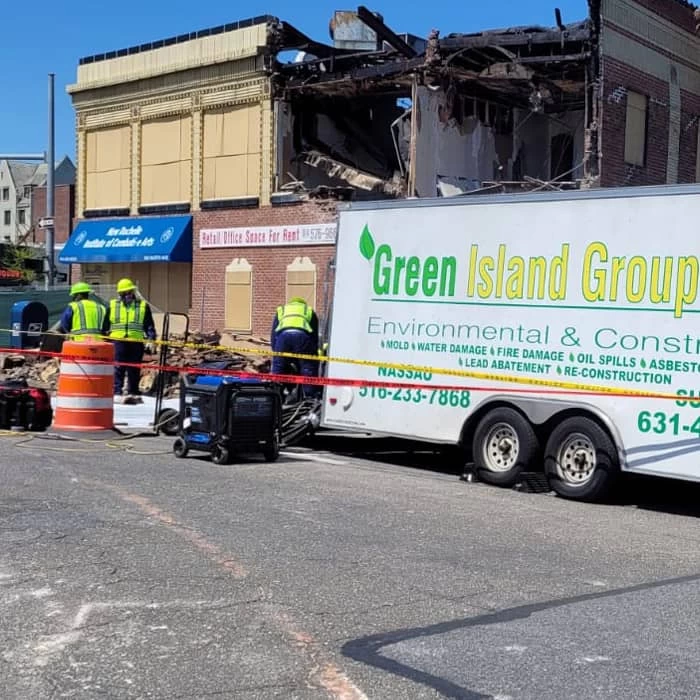
The first step is stabilization. We respond fast within the hour in documented cases because the window between a fire being extinguished and secondary damage compounding is short. That means emergency board-up, securing the structure, and beginning water extraction before mold has a chance to establish. In East Quogue, where the volunteer fire department has responded to fires requiring eight departments and nearly three hours to suppress as happened in the Hampton Point neighborhood in January 2025 the volume of suppression water left behind can be significant. Getting ahead of that water is critical.
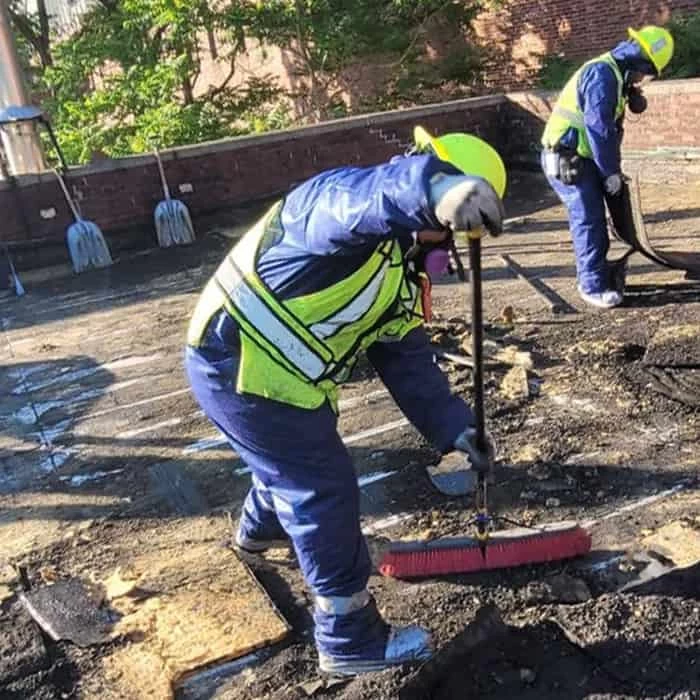
Once the property is stabilized, the full damage assessment begins. This includes visible burn damage, but also smoke penetration into the HVAC system, hidden moisture in wall cavities, and for the many East Quogue homes built before 1980 a check for asbestos-containing materials that may have been disturbed. Any environmental hazards are handled by licensed professionals before the broader remediation moves forward. This step is something fire-only contractors often skip or can’t legally perform, and it’s one of the reasons a full-service company makes a real difference here.
Smoke and odor remediation follows, using thermal fogging and HEPA air scrubbing to eliminate contamination at the molecular level not mask it. From there, reconstruction begins, with us pulling the required permits through the Town of Southampton Building and Zoning Division and managing the project through final finishes. Throughout every phase, we document everything in the format insurance adjusters need, so your claim reflects the actual scope of the damage.
Fire damage restoration in East Quogue covers a wider scope than most homeowners expect going in. Our service includes emergency stabilization and board-up, complete smoke and soot remediation, water extraction and structural drying from firefighting suppression, HVAC decontamination, odor elimination, mold prevention and remediation, asbestos abatement where applicable, and full reconstruction through finished interiors. There is no phase of this process that gets handed to someone else.
For East Quogue specifically, the environmental piece is worth understanding. A meaningful portion of the hamlet’s housing stock predates 1980, which means fire damage can disturb asbestos-containing materials in walls, ceilings, and insulation. New York State requires licensed contractors for that work it’s not optional, and it’s not something a cleanup-only company can legally handle. We hold the environmental credentials to address it directly, which keeps your project moving without requiring you to bring in a separate vendor.
The insurance navigation support is real and consistent. Multiple clients have specifically cited Jessica and our team for their hands-on guidance through the claims process documenting damage properly, communicating with adjusters, and making sure the full scope of the loss is captured. For a high-value property in a Hamptons-area community like East Quogue, that kind of claim management can make a significant financial difference. The work doesn’t stop until you’re satisfied that’s our stated commitment, and it’s backed by a review record that shows clients returning for the reconstruction phase after the remediation because they didn’t want to work with anyone else.
What should I do immediately after a house fire in East Quogue?
The most important thing you can do in the first hour is call a restoration company before you call anyone else except 911 and your insurance carrier. Do not re-enter the home until it’s been cleared as structurally safe. Avoid touching surfaces, opening windows, or running the HVAC system, because all of those actions can spread soot and smoke contamination further into the home.
In East Quogue, where the volunteer fire department may deploy significant suppression water especially in larger incidents like the multi-department response in the Hampton Point neighborhood water damage begins working against you almost immediately. Mold can start developing within 24 to 48 hours in wet conditions, and East Quogue’s coastal humidity accelerates that timeline. A restoration company that responds fast can begin water extraction and stabilization before that secondary damage compounds. Every hour you wait adds to the total scope of the problem.
Does homeowners insurance cover fire damage restoration costs in East Quogue, NY?
In most cases, yes standard homeowners insurance covers fire damage restoration, including smoke damage, water damage from firefighting suppression, and structural repairs. What varies is how much of the actual damage gets properly documented and included in the claim. Insurance adjusters work for the insurer, not for you, and it’s common for initial estimates to understate the full scope particularly for hidden damage like smoke penetration in wall cavities or HVAC contamination.
For East Quogue homeowners with properties in the $800,000 to $1 million-plus range, this gap matters financially. A thorough restoration company will document everything in the format adjusters require including environmental hazards, structural assessments, and full remediation scope so your claim reflects what actually happened to your home. We have a documented track record of helping homeowners navigate this process, and clients have specifically credited that support as one of the most valuable parts of working with us.
How long does fire damage restoration typically take for a home in East Quogue?
It depends on the scope of the damage, but a realistic range for most residential fires is two to eight weeks for remediation, with reconstruction extending the timeline further depending on what was affected. A small kitchen fire with limited smoke spread might be resolved in a couple of weeks. A fire that required multiple departments to suppress like the January 2025 incident in East Quogue’s Hampton Point neighborhood can result in structural damage, extensive smoke penetration, and significant water intrusion that takes considerably longer to address properly.
One factor specific to East Quogue is the permitting timeline through the Town of Southampton Building and Zoning Division. Any structural repairs or reconstruction require building permits, and factoring in review and approval time is part of realistic project planning. A restoration company that knows the Southampton Town permitting process can move through that step efficiently rather than losing weeks to administrative delays. We handle permit coordination as part of the project, so you’re not managing that on your own.
Can smoke damage affect rooms that weren't near the fire in my East Quogue home?
Yes and this is one of the most commonly misunderstood aspects of fire damage. Smoke is not contained to the room where the fire burns. It travels through HVAC systems, air returns, wall penetrations, and any connected space in the home. Rooms on the opposite end of the house from the fire can have significant soot deposits and smoke contamination that aren’t visible to the naked eye but are present in the air, on soft surfaces, and inside ductwork.
This is especially relevant for East Quogue homes with older construction, where wall cavities and HVAC systems may not be tightly sealed by modern standards. Smoke that gets into an older duct system can redistribute odor and particulates every time the system runs. A proper remediation addresses the full air envelope of the home not just the burned areas using HEPA air scrubbing and thermal fogging to eliminate contamination at the source. Anything less leaves a problem behind that you’ll be living with for years.
What makes fire restoration in a seasonal or second home in East Quogue more complicated?
A few things. First, fires in unoccupied homes often burn longer before anyone calls 911, which means more structural damage and more suppression water by the time the fire is out. Second, the owner typically isn’t on-site to manage the immediate aftermath which means decisions about stabilization, documentation, and contractor access need to happen quickly without the homeowner present. Third, seasonal homes in East Quogue may have been sitting unoccupied through the winter, meaning heating system issues, deferred maintenance, and moisture buildup can complicate the restoration scope.
For second-home owners managing a restoration remotely, the most important thing is having a single point of contact who communicates proactively and doesn’t require you to be on-site for every decision. We handle the full project from emergency response through reconstruction and manage the Southampton Town permit process on your behalf. You get regular updates, thorough documentation, and a company that keeps the project moving whether you’re in East Quogue or back in the city.
Do older East Quogue homes need asbestos testing before fire damage restoration begins?
If your home was built before 1980, it’s worth assuming the answer is yes until a licensed assessment says otherwise. Asbestos-containing materials were commonly used in insulation, floor tiles, ceiling tiles, and joint compounds in homes built through the late 1970s. When fire damages those materials cracking, burning, or disturbing them asbestos fibers can be released into the air. At that point, you’re dealing with a regulated environmental hazard, not just fire cleanup.
New York State requires licensed asbestos contractors for any abatement work, and East Quogue falls under Southampton Town jurisdiction for permitting and compliance. A restoration company that doesn’t hold the proper environmental credentials cannot legally handle this part of the job which means either the work doesn’t get done, or you’re bringing in a separate vendor and adding complexity to an already difficult project. We are equipped to handle asbestos abatement as part of the broader restoration, which keeps the project under one roof and moving forward without interruption.