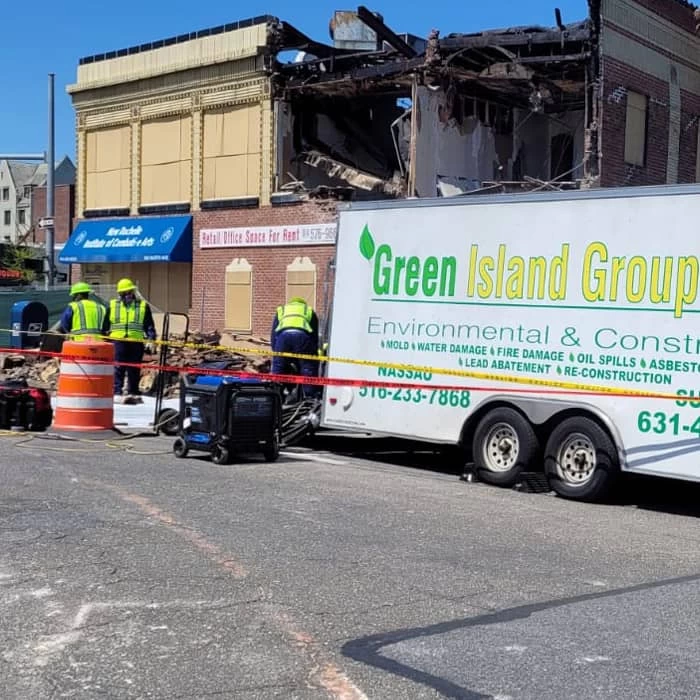
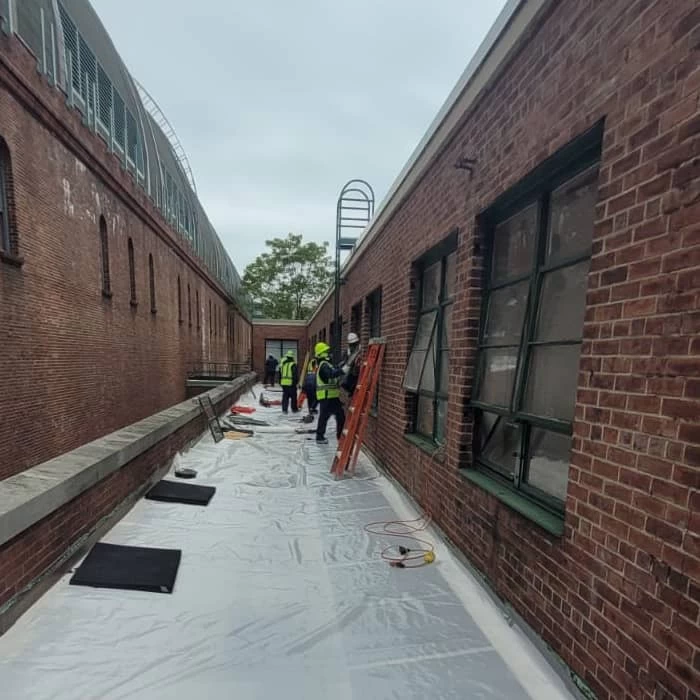
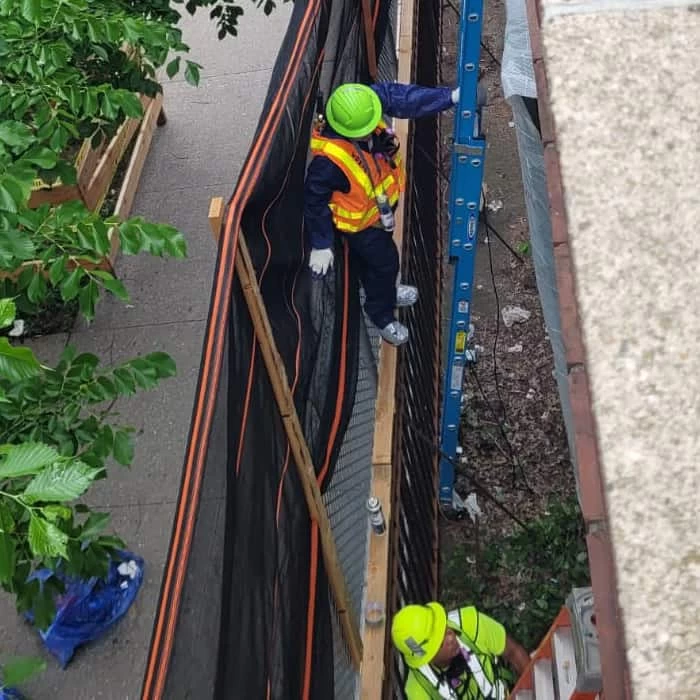
When fire hits a 1960s Cape Cod or hi-ranch in Elwood, the damage rarely stops where the flames did. We handle the full recovery from the first call to the finished room.
I needed a professional consultation explanation of procedure for safe removal of Asbestos in my apartment complex. Without having an account yet, I was very impressed with the caring, knowledgeable and generous advice offered by Jessica, and will look forward to doing business in the future. Thank you so much! I feel much more informed about a sometimes scary endeavor. Peace. Nancy Silva Mineola, NY.
Mia Munoz
Used this company to clean up some water flood in my house. They were fast and easy to work with.very professional, Would recommend to anyone!
Nini Valle
Great company, had a flood and they responded quickly and efficiently. Billed my insurance company directly. I highly recommend this company!
joe colapietro, jr
I had pipe freeze in my basement right before a snow storm and they made to within an hour to help start the clean up process. They we by our side throughout the entire process and even helped with the insurance company. They did such a great job with the cleanup, repair, remidiation, I contracted them to perform the repairs and finishes in the basement. They came with enough manpower and material to get the job done. Leo and Jessica were nothing but a pleasure to deal with!!
Cristian Arredondo c
I had some water damage in my home and Green Island was able to take care of my issue quickly and effectively. I am very pleased with the work they did. They responded quickly and were very professional.
Michael M
Outstanding service! From the office to the field crew everyone was friendly, helpful and responsive. I highly recommend Green Island Group.
A fire in your Elwood home doesn’t stay in one room. Smoke travels fast through stairwells, into upper-level bedrooms, through HVAC systems, and into walls that never saw a flame. In a Cape Cod or hi-ranch the most common floor plans in this part of Huntington that vertical spread happens quickly. By the time the fire trucks leave, the damage is already moving.
What most homeowners don’t realize is that the firefighting water is its own problem. Hoses push hundreds of gallons into your floors, walls, and ceilings. Left untreated, that moisture creates ideal conditions for mold within 24 to 48 hours. Soot starts permanently etching surfaces in as little as 72 hours. The clock is running from the moment the fire is out.
The other thing worth knowing especially in Elwood is that homes built around 1961, which describes most of the housing stock here, have a real chance of containing asbestos in the insulation, floor tiles, or pipe wrap. A fire can disturb those materials. Any restoration company that can’t legally address that isn’t equipped to fully restore your home. We can handle it all, which means you’re not left coordinating multiple contractors while your family is displaced.
We’re a locally owned Long Island restoration company not a franchise listing Elwood as one of seventeen towns in a service area map. This is the community where the work happens and the reputation lives. When you call, you reach a real team that knows the Town of Huntington’s permitting process, understands what’s inside the walls of a 1960s home off Elwood Road, and has the credentials to handle whatever comes up.
Our team includes named, consistent points of contact Leo and Jessica are specifically mentioned by customers in independent reviews which means you’re not starting over every time you have a question. Multiple homeowners have called out our insurance navigation support by name, not as a vague benefit, but as something that actually changed the outcome of their claim.
We handle everything from emergency stabilization through final reconstruction. Customers have liked the work enough to bring us back for additional projects after the restoration was done. That’s the kind of track record that speaks for itself in a close-knit community like Elwood.
The first step is getting someone to your property fast. We have documented sub-hour response times, which matters because secondary damage mold, soot etching, water saturation compounds quickly. When you call, the priority is emergency stabilization: securing the structure, boarding up openings, and stopping additional damage from coming in while the assessment begins.
From there, we map the full scope of what the fire actually did. That includes the burn area, yes, but also where smoke traveled, where firefighting water soaked in, and whether any hazardous materials were disturbed. In Elwood’s older housing stock, that last part isn’t optional it’s a required step before any reconstruction work can legally begin under New York State guidelines. Our environmental remediation certifications mean that process doesn’t create a stoppage in your project.
Once the hazards are addressed and the structure is dried and treated, the rebuilding begins. Smoke odor is eliminated using professional techniques that neutralize the source not air fresheners that fade in a week. Structural repairs go through the Town of Huntington’s permitting process, with inspections at the required stages. The job isn’t done until the home is back to pre-loss condition, and our satisfaction guarantee means that standard isn’t negotiable.
Fire damage restoration with us covers the complete scope of what a fire actually leaves behind. Emergency board-up and stabilization come first. Then water extraction and structural drying from firefighting efforts, followed by professional smoke and soot remediation throughout the affected areas not just the room where the fire started. Odor elimination uses thermal fogging and hydroxyl treatment to address the source, not mask it.
For Elwood homes, the environmental piece is often what separates a real restoration from an incomplete one. We hold the certifications required under New York State Department of Labor regulations for asbestos abatement, and our mold remediation work complies with New York State Part 56 guidelines. These aren’t add-ons they’re built into the process because the housing stock in this part of Suffolk County makes them a practical necessity, not an edge case.
Reconstruction and finish work are handled in-house, which means no handing your project to a second contractor mid-stream. Permits are pulled through the Town of Huntington, inspections are managed, and the rebuild is completed to match your home’s pre-loss condition. Throughout the entire process, we work directly with your insurance adjuster helping document the damage, communicate the scope, and make sure the claim reflects what the job actually requires. For a home in the $700,000–$950,000 range, that kind of advocacy has real financial consequences.
What should I do immediately after a house fire in Elwood, NY?
The most important thing is to not re-enter the home until the fire department has cleared it as structurally safe. Once you have that clearance, your next call should be to a restoration company not after you’ve called your insurance company, not after you’ve tried to clean anything yourself. The reason timing matters so much is that soot begins permanently bonding to surfaces within 24 to 72 hours, and mold can start growing in water-saturated areas within 24 to 48 hours of the firefighting effort.
In Elwood specifically, there’s an additional consideration. If your home was built in the 1960s which describes most of the housing stock in this community there’s a real possibility that the fire disturbed asbestos-containing materials. Attempting to clean or move anything in those areas without a certified assessment can create a hazardous situation and complicate your insurance claim. Call us first. We’ll stabilize the property, assess what’s actually there, and make sure nothing is disturbed before it’s been properly evaluated.
Does homeowners insurance cover fire damage restoration in New York?
In most cases, yes standard homeowners insurance policies in New York cover fire damage restoration, including smoke and soot cleanup, water damage from firefighting efforts, and structural repairs. What varies is how thoroughly the claim is documented and whether the adjuster’s initial assessment captures the full scope of the loss. That gap between what’s documented and what the job actually requires is where homeowners often get shortchanged.
This is particularly relevant for Elwood homeowners given the value of properties here. A home in the $700,000–$950,000 range can sustain a fire loss that runs well into six figures once you account for smoke migration to upper floors, water intrusion, potential asbestos abatement in a 1960s-era structure, and full reconstruction. We work directly with your adjuster throughout the process not just at the beginning to make sure the documented scope reflects the actual damage. Multiple customers have specifically credited this support with improving their claim outcome. It’s not a courtesy; it’s a core part of how we work.
How long does fire damage restoration typically take for a Long Island home?
The honest answer is that it depends on the scope, and scope in an older Long Island home can be larger than it first appears. A contained kitchen fire with limited smoke spread and no hazardous material involvement might take two to four weeks from emergency response through final reconstruction. A more significant event one with smoke migration through multiple floors, water saturation, and asbestos abatement required before reconstruction can begin can take two to four months.
For homes in Elwood, the 1961 median build year means the probability of asbestos involvement is real. Abatement work under New York State Department of Labor regulations has to be completed and cleared before any reconstruction proceeds, and that process has its own timeline. Add in the Town of Huntington’s permitting and inspection requirements for structural repairs and electrical work, and the project has legitimate regulatory steps that can’t be skipped or rushed. What we control is making sure none of those steps create unnecessary delays because we’ve worked within this jurisdiction before and know the process.
Will the smoke smell ever fully go away after a fire in my home?
Yes but only if it’s treated correctly. Smoke odor isn’t a surface issue. The molecules that create that persistent smell penetrate drywall, insulation, wood framing, HVAC ductwork, and soft goods throughout the home. Cleaning what you can see doesn’t address what’s absorbed into the structure. That’s why painting over soot-stained walls or using air fresheners after a fire doesn’t work the odor source is still there.
Professional smoke odor elimination uses techniques like thermal fogging and hydroxyl treatment, which work by neutralizing the odor molecules at the source rather than covering them. In a Cape Cod or hi-ranch the dominant home styles in Elwood smoke from a lower-level fire travels through stairwells and into upper-level living spaces and bedrooms. That means the treatment has to follow the same path the smoke did, not just focus on the room of origin. Our remediation process maps where the smoke actually went and treats accordingly. The goal isn’t a home that smells acceptable it’s a home that smells like it never had a fire.
Does fire damage restoration include mold removal if water was used to put out the fire?
It should and with us, it does. Firefighting water is a significant source of secondary damage after any house fire. The volume of water involved can saturate floors, wall cavities, subfloor materials, and ceilings, creating the exact conditions mold needs to establish itself. In Long Island’s humid summers, that process can accelerate faster than in drier climates.
Under New York State regulations, mold remediation in excess of 10 square feet requires compliance with Part 56 of the New York Code of Rules and Regulations. Our process includes moisture mapping after water extraction to identify where saturation exists including in areas that aren’t visually obvious followed by structural drying and mold remediation where needed. This is part of the full-service restoration scope, not a separate engagement you’d have to coordinate with a different company. The reason it matters is that mold discovered months after a fire because it wasn’t addressed in the initial restoration is a much harder and more expensive problem than mold caught and treated at the source.
How do I know if my Elwood home has asbestos that was disturbed by the fire?
You can’t know from a visual inspection alone which is exactly why it matters. Asbestos-containing materials in homes built during the 1950s and 1960s are often indistinguishable from non-hazardous materials by appearance. They can be present in floor tiles, ceiling tiles, pipe insulation, textured wall coatings, and joint compound. In Elwood, where the median home was built in 1961, the probability of encountering these materials in a fire event is not a remote possibility it’s a realistic expectation.
When a fire disturbs those materials, the fibers become airborne and the area requires certified assessment and abatement before any reconstruction work can legally proceed under New York State Department of Labor regulations. A restoration company without that certification cannot complete the job they either stop work and hand off to a separate environmental contractor, or they proceed without addressing it, which creates a liability and a health risk. We hold the required certifications and handle asbestos assessment and abatement as part of the restoration process. You don’t need to find a separate environmental company, manage two project timelines, or explain your situation twice. The team that responds to your fire handles it through to the end.