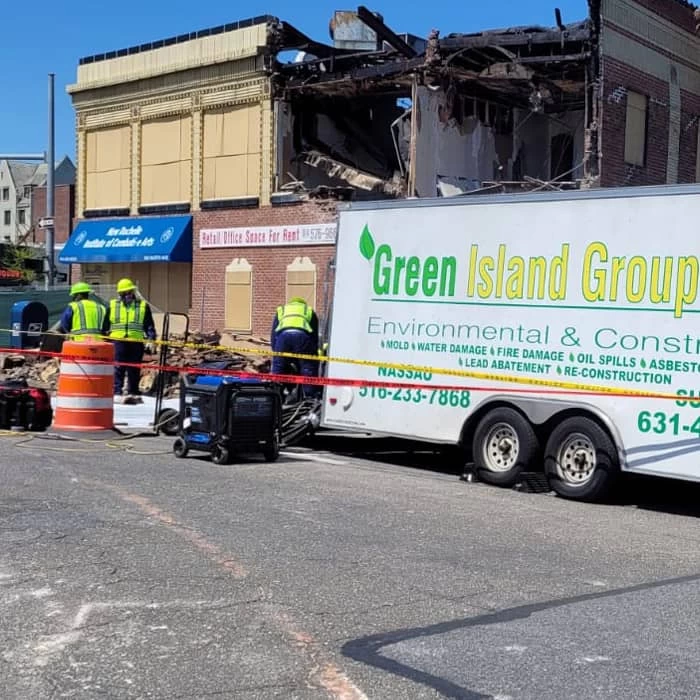
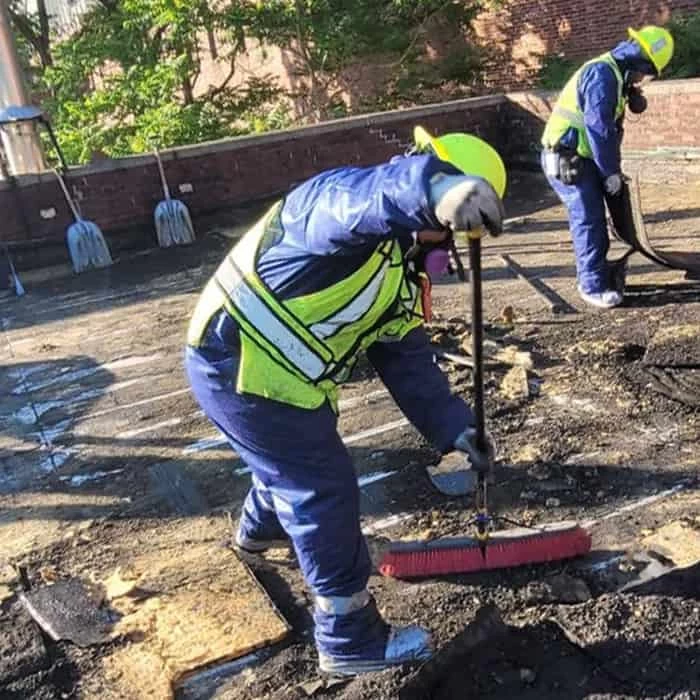
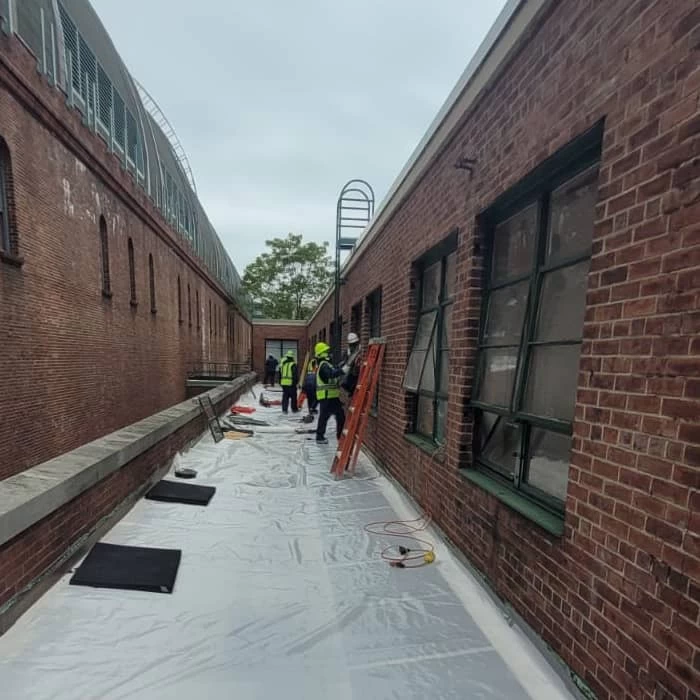
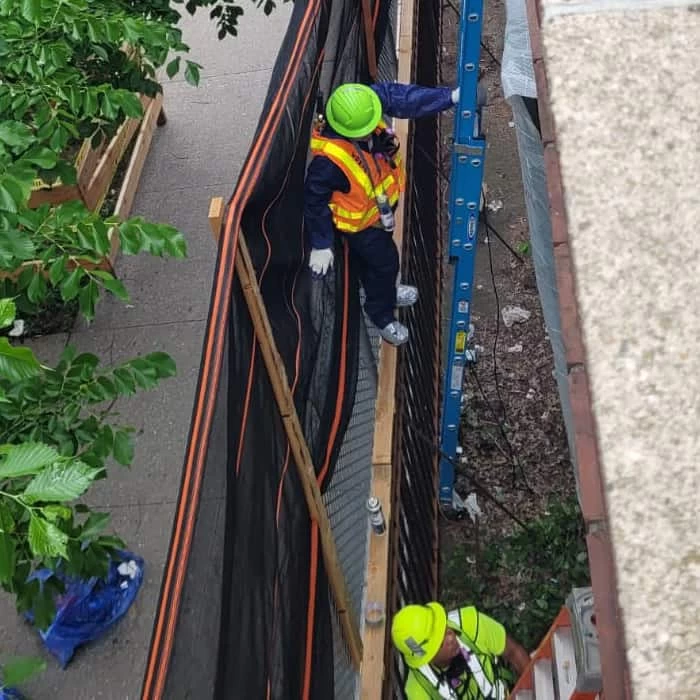
Fire damage on Fire Island moves faster than anywhere else in Suffolk County and so does the clock on what’s salvageable. We get to Fire Island and get to work.
I needed a professional consultation explanation of procedure for safe removal of Asbestos in my apartment complex. Without having an account yet, I was very impressed with the caring, knowledgeable and generous advice offered by Jessica, and will look forward to doing business in the future. Thank you so much! I feel much more informed about a sometimes scary endeavor. Peace. Nancy Silva Mineola, NY.
Mia Munoz
Used this company to clean up some water flood in my house. They were fast and easy to work with.very professional, Would recommend to anyone!
Nini Valle
Great company, had a flood and they responded quickly and efficiently. Billed my insurance company directly. I highly recommend this company!
joe colapietro, jr
I had pipe freeze in my basement right before a snow storm and they made to within an hour to help start the clean up process. They we by our side throughout the entire process and even helped with the insurance company. They did such a great job with the cleanup, repair, remidiation, I contracted them to perform the repairs and finishes in the basement. They came with enough manpower and material to get the job done. Leo and Jessica were nothing but a pleasure to deal with!!
Cristian Arredondo c
I had some water damage in my home and Green Island was able to take care of my issue quickly and effectively. I am very pleased with the work they did. They responded quickly and were very professional.
Michael M
Outstanding service! From the office to the field crew everyone was friendly, helpful and responsive. I highly recommend Green Island Group.
Soot starts etching surfaces within 24 to 72 hours of a fire. On Fire Island, that window is even tighter. The salt air and coastal humidity that make the island beautiful in July are the same conditions that accelerate corrosion, deepen smoke penetration, and turn firefighting water into a mold problem inside your walls fast. Every hour that passes between the fire going out and a crew arriving is an hour of damage that may not be reversible.
Most Fire Island homes are wood-frame construction, many built in the 1930s through the 1960s, sitting close together on narrow lots connected by wooden boardwalks. When fire spreads here and it can spread fast, as anyone who saw the black smoke rolling across the Great South Bay from the 2024 Ocean Beach fire on Bay Walk knows the damage doesn’t stay contained to the structure that burned. Smoke travels through shared walls, HVAC systems, and crawl spaces into homes that never saw a single flame.
What you get on the other side of a proper restoration isn’t just a cleaned-up house. It’s a home that doesn’t smell like smoke six months later. Walls that weren’t silently corroding behind fresh paint. A structure that was actually dried out before it was rebuilt not just dried enough. That’s the difference between a restoration that holds and one that surprises you next spring when you open the house back up.
Local to Fire Island's South Shore, Built for the Bay
We’re a locally owned restoration company based on Long Island’s South Shore, serving Nassau and Suffolk Counties including the Fire Island communities and the gateway towns that connect to them. Bay Shore, Sayville, West Islip, Patchogue these aren’t just towns on a service area map. They’re the ferry terminals our Fire Island neighbors use, the communities we’ve worked in, and the launching points for every job we’ve taken on across the Great South Bay.
We’re not a national franchise with a regional call center. When you reach us, you reach real people the same people who will show up, assess the damage, work with your insurance adjuster, and see the job through from emergency stabilization to final walkthrough. Customers consistently name our team members by name in their reviews because they actually get to know them. That’s not an accident. It’s how we work.
Fire Island has ten fire departments for a reason. The risk here is real, the stakes are high, and the homes are worth protecting. We understand that and we treat every job accordingly.
From the First Call to the Final Walkthrough No Handoffs
It starts with a call. From there, we move fast coordinating equipment transport and crew access through the Bay Shore, Sayville, or Patchogue ferry terminals depending on which Fire Island community your home is in. Whether you’re in Ocean Beach, Fair Harbor, Fire Island Pines, Cherry Grove, or anywhere else on the island, we figure out the logistics so you don’t have to. That’s the first thing most restoration companies can’t tell you we can.
Once we’re on the ground, we do a full damage assessment before anything else. That means checking rooms that weren’t directly affected, because smoke doesn’t respect walls. We inspect HVAC systems, wall cavities, crawl spaces, and insulation for smoke and soot penetration. We use moisture mapping equipment to find water that firefighting efforts pushed into structural members because in a coastal, high-humidity environment, hidden water becomes mold faster than it would anywhere on the mainland.
From there, the work moves in sequence: emergency stabilization and board-up if needed, water extraction, smoke and soot remediation, environmental testing and abatement for older homes where asbestos-containing materials may have been disturbed, then demolition of what can’t be saved, and full reconstruction. We also coordinate with your insurance adjuster throughout the entire process, using Xactimate the estimating platform insurance companies recognize to document everything properly. If your Fire Island home requires building permit applications that involve the National Park Service due to the island’s location within the Fire Island National Seashore, we understand that process and can help you navigate it. One company, start to finish.
Full Fire Restoration Damage Services, Fire Island
Every Phase Covered Because Fire Island Demands It
Managing a restoration project on a car-free barrier island with ferry-only access to most communities is a logistical challenge that most contractors aren’t set up to handle. Every crew visit, every material delivery, every inspection requires crossing the bay. That reality is exactly why our full-service model matters so much here. You shouldn’t have to coordinate three separate companies a cleanup crew, a remediation specialist, and a general contractor each needing their own ferry logistics and their own scheduling window. We handle the complete scope.
That includes emergency board-up and stabilization, smoke and soot remediation throughout the entire structure (not just the rooms that burned), water extraction and structural drying, mold prevention and remediation, and environmental abatement for older homes. Many Fire Island homes were built before the 1970s, which means asbestos-containing materials in insulation, floor tiles, and joint compounds are a real possibility when fire damages the structure. We hold the New York State certifications to handle that work safely and legally something a fire-only cleanup company cannot do.
On the reconstruction side, we handle demolition, framing, and full finish work. For Fire Island properties, we’re also familiar with the FEMA elevation requirements that apply to homes being substantially rebuilt, and the federal notification requirements that come with working inside the Fire Island National Seashore boundary. The goal is simple: you make one call, and we handle everything from the moment the fire department leaves to the moment you walk back into your home.
Can a restoration company actually reach my Fire Island home after a fire?
Yes but it requires a company that’s already thought through the logistics, not one figuring it out after you call. We operate out of Long Island’s South Shore, which puts us close to the three ferry terminals that serve Fire Island’s communities: Fire Island Ferries in Bay Shore serves Ocean Beach, Fair Harbor, Saltaire, Kismet, and several other communities. Sayville Ferry Service reaches Fire Island Pines, Cherry Grove, and Water Island. Davis Park Ferry out of Patchogue serves Davis Park and Watch Hill.
We coordinate equipment transport and crew access through whichever terminal serves your community. For emergency stabilization and initial assessment, we move as quickly as ferry schedules allow and in genuine emergencies, we explore every available option including freight boat access. The key is that we’ve done this before. We’re not a company that serves “Long Island” in theory and then hesitates when the job is actually on Fire Island. We know the bay, we know the terminals, and we know how to get there.
How does the salt air and coastal humidity on Fire Island affect fire damage?
It makes everything worse, faster. Fire Island sits between the Atlantic Ocean and the Great South Bay, which means every structure on the island is exposed to high relative humidity and salt-laden air year-round. After a fire, soot and smoke residue absorb moisture from that salt air and become increasingly corrosive and difficult to remove. Surfaces that could have been cleaned within the first 48 hours may be permanently stained by day three or four.
The water used to suppress a fire a fire hose delivers roughly 250 gallons per minute saturates wood framing, insulation, and wall cavities. On the mainland, that water has a reasonable chance of evaporating before mold takes hold. On Fire Island, the coastal humidity slows evaporation significantly, which means mold can establish itself in wet structural members within 24 to 48 hours of the fire being extinguished. Proper moisture mapping and structural drying aren’t optional here they’re the difference between a home that’s truly restored and one that develops a mold problem six months after the cleanup crew left.
What happens to my insurance claim when my Fire Island home has fire damage?
It gets complicated quickly, but it’s manageable with the right help. Fire Island properties often carry multiple insurance policies a standard homeowners policy, and frequently a flood insurance policy through the National Flood Insurance Program given that most of the island sits in a FEMA-designated flood zone. When fire damage involves water intrusion from suppression efforts, the line between what each policy covers can become a point of dispute. Documenting the damage thoroughly and correctly from the start is critical.
We work directly with insurance adjusters throughout the restoration process. We use Xactimate, the estimating software that insurance companies use and recognize, to document every aspect of the damage in a format adjusters can work with. That matters because a poorly documented claim or one that misses hidden damage like smoke in the HVAC system or water in the subfloor can result in a settlement that doesn’t cover the full scope of what needs to be done. We’ve helped Long Island homeowners navigate exactly this kind of complex claim, and we’ll do the same for you.
Does the National Park Service need to be involved in rebuilding my fire-damaged home?
In most cases, yes and it’s something most contractors won’t know until they’re already in the middle of your project. Fire Island sits within the Fire Island National Seashore, a federally managed area operated by the National Park Service. Federal regulations require that the NPS Superintendent be notified of building permit applications for properties within the Seashore boundary, and certain types of reconstruction or expansion are subject to federal zoning standards that go beyond what your local village or town would require on the mainland.
The Seashore District permits alterations and reconstruction of existing improved properties, but prohibits new construction. That distinction matters when you’re deciding what to demolish and what to rebuild in place. The Dune District has even stricter rules. This doesn’t mean your home can’t be restored it means the permitting process involves more steps and more parties than a standard Suffolk County rebuild. We understand this regulatory layer and can help you navigate the coordination between your local village or town, the NPS, and FEMA elevation requirements that may apply if your home is being substantially reconstructed.
My Fire Island home was unoccupied when the fire happened does that change anything?
It changes quite a bit, mostly because time has already worked against you. The majority of Fire Island homes sit unoccupied from roughly October through May. A fire that starts from an electrical fault, a heating system failure, or a neighboring structure spreading during the off-season may go undetected for hours, days, or longer. By the time you discover the damage or receive a call from a neighbor or the fire department soot has already permanently etched surfaces, water from suppression has saturated the structure, and mold may already be actively growing in wet wall cavities.
The restoration scope of a delayed-discovery fire is almost always larger than one caught immediately. That doesn’t mean the situation is hopeless it means the assessment needs to be thorough, and the remediation plan needs to account for secondary damage that developed in the time between the fire and the discovery. We approach off-season fire discoveries with the same urgency as an active emergency, because the damage is just as real and the window for preventing further deterioration is still open. We’ll document everything for your insurance claim, including the evidence of how long the damage has been developing.
How long does fire damage restoration on Fire Island typically take?
It depends on the scope of the damage, but you should plan for a longer timeline than a comparable mainland restoration not because the work itself takes longer, but because the logistics of a ferry-access island add time to every phase. Material deliveries, crew travel, equipment transport, and inspection visits all require crossing the bay. If your home also requires building permit approvals that involve the National Park Service, that adds another layer of coordination that mainland projects don’t face.
For a contained fire with limited structural damage a kitchen fire, for example remediation and restoration might be completed in two to four weeks. For a more significant fire involving structural damage, environmental abatement for asbestos in an older home, and full reconstruction, the timeline can extend to several months. The most important thing you can do to protect your timeline is start immediately. Every day of delay before a restoration company is on-site is a day of additional damage in a coastal, high-humidity environment. If you’re hoping to have your home ready before the summer season, calling now not next month is the decision that determines whether that’s possible.