Floral Park Homes Are Built Old We Restore Them Right
When a fire hits a home that’s been standing since the 1940s, the damage runs deeper than walls and ceilings. We handle fire damage restoration in Floral Park, NY fast response, full cleanup, and insurance support from start to finish.
I needed a professional consultation explanation of procedure for safe removal of Asbestos in my apartment complex. Without having an account yet, I was very impressed with the caring, knowledgeable and generous advice offered by Jessica, and will look forward to doing business in the future. Thank you so much! I feel much more informed about a sometimes scary endeavor. Peace. Nancy Silva Mineola, NY.
Mia Munoz
Used this company to clean up some water flood in my house. They were fast and easy to work with.very professional, Would recommend to anyone!
Nini Valle
Great company, had a flood and they responded quickly and efficiently. Billed my insurance company directly. I highly recommend this company!
joe colapietro, jr
I had pipe freeze in my basement right before a snow storm and they made to within an hour to help start the clean up process. They we by our side throughout the entire process and even helped with the insurance company. They did such a great job with the cleanup, repair, remidiation, I contracted them to perform the repairs and finishes in the basement. They came with enough manpower and material to get the job done. Leo and Jessica were nothing but a pleasure to deal with!!
Cristian Arredondo c
I had some water damage in my home and Green Island was able to take care of my issue quickly and effectively. I am very pleased with the work they did. They responded quickly and were very professional.
Michael M
Outstanding service! From the office to the field crew everyone was friendly, helpful and responsive. I highly recommend Green Island Group.
A fire in Floral Park isn’t just a surface problem. In homes built before 1940 which describes more than half the village smoke doesn’t stop at the walls. It travels through plaster, moves through uninsulated wall cavities, saturates original wood floors and trim, and works its way into HVAC systems that have been running in the same house for decades. By the time the fire department leaves, the damage is already spreading to parts of your home you haven’t even looked at yet.
That’s what makes fire restoration in older Long Island housing stock different from newer construction. The bones of a Floral Park Colonial or Tudor are beautiful and worth protecting but they also mean smoke and soot can reach places that standard cleaning never will. Real restoration here means treating the whole house, not just the rooms that show visible damage.
Then there’s the water. Firefighting leaves behind soaked flooring, saturated walls, and the conditions for mold growth within 48 to 72 hours. Addressing fire and water damage together not separately, not weeks apart is what actually gets your home back to where it was. That’s the standard we hold ourselves to on every job.
We’ve been doing restoration work across Nassau County long enough to know that Floral Park is its own category. The village’s housing stock is older than almost anywhere else in the area. The building codes run through the Village of Floral Park’s own Building Department not Nassau County, not the Town of Hempstead. Permits, inspections, and code compliance all go through the village directly, and if your contractor doesn’t know that going in, you’ll feel it in the timeline.
We’ve worked on homes along the Jericho Turnpike corridor, in the residential blocks off Verbena Avenue, and throughout the surrounding western Nassau communities. We understand the construction, we understand the permitting process, and we work directly with your insurance adjuster so you’re not stuck managing both a restoration project and a claims process at the same time.
When you call us, you’re not reaching a national call center. You’re reaching a regional team that knows this part of Long Island and treats your home like the investment it is.
The first thing that happens when you contact us is a real person picks up any hour, any day. We dispatch a team to your property quickly to assess the damage, secure the structure, and prevent anything from getting worse. Board-up and tarping happen immediately if needed. The goal in those first hours is simple: stop the bleeding.
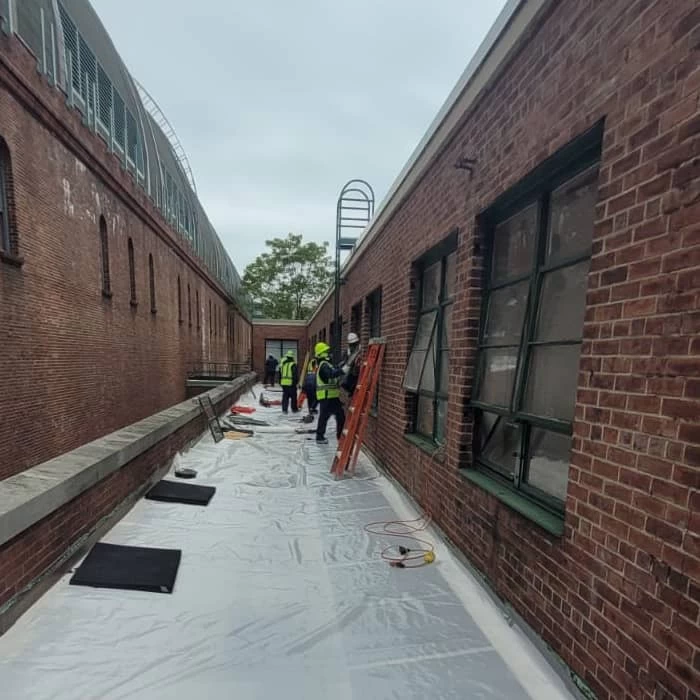
From there, we do a full assessment of fire, smoke, and water damage throughout the home. In Floral Park’s older homes, that means checking inside wall cavities, testing HVAC systems for smoke infiltration, and identifying any structural concerns before we touch anything. Because restoration work here requires permits through the Village of Floral Park Building Department, we handle all of that paperwork you don’t have to chase down the village building office while you’re already dealing with a displaced household.
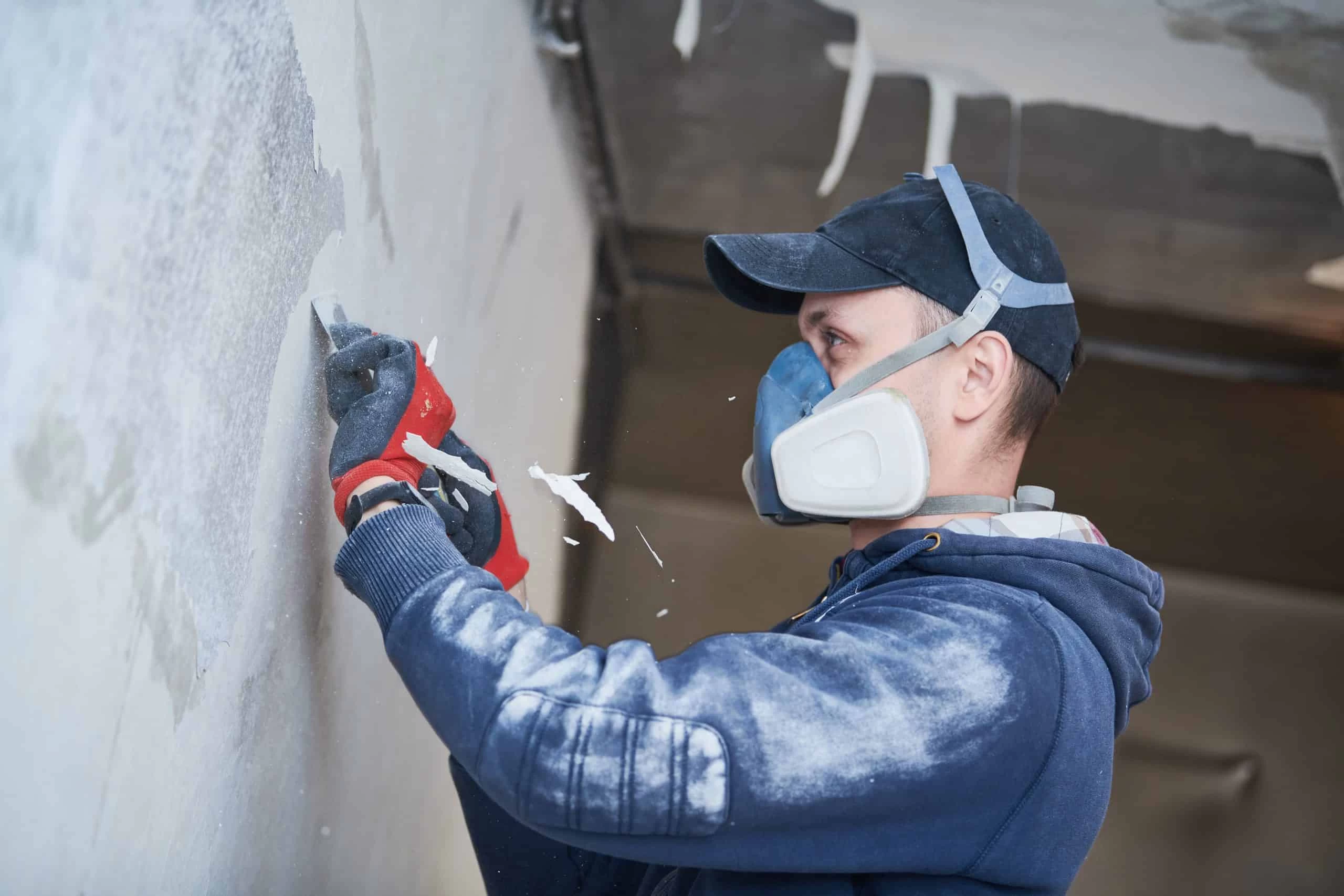
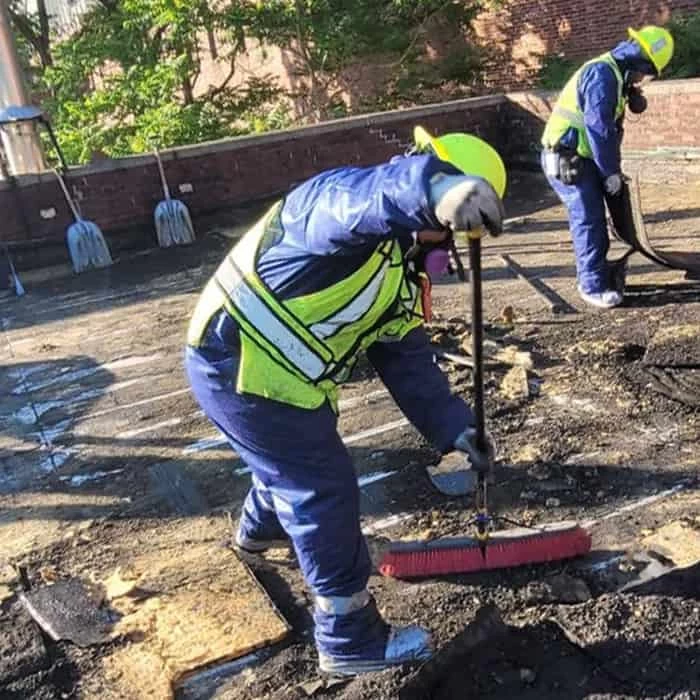
Once the scope is clear and documented, we move into remediation: smoke and soot removal, structural drying, odor neutralization, content pack-out if needed, and eventually reconstruction. Every phase is coordinated under one roof, with one point of contact keeping you informed. By the time we’re done, your home should look and feel the way it did before the fire not just functional, but fully restored.
Fire damage restoration in Floral Park covers a lot more ground than most people expect when they first call. Smoke and soot removal in a pre-1940 home requires professional-grade chemistry and equipment thermal fogging, hydroxyl generators, and targeted HVAC cleaning because the odor doesn’t just sit on surfaces. It absorbs into plaster, old wood framing, and original flooring in ways that consumer products can’t reach. We don’t mask the smell. We eliminate it.
Water damage remediation runs parallel to fire cleanup on every job we do here. The Floral Park Fire Department does its job well and that means significant water ends up in your home after a structural fire. Industrial drying equipment, moisture monitoring, and mold prevention are standard parts of the process, not add-ons. We also offer content pack-out and secure climate-controlled storage for your belongings while the work is underway, which matters especially in a home that’s been in a family for years.
On the reconstruction side, we work with the materials and finishes that match what was already there. A Victorian on Tulip Avenue or a Tudor cottage near the village center deserves to be restored to its original character not rebuilt to look like a generic renovation. We pull all required permits through the Village of Floral Park Building Department and carry all required licensing and insurance for work in Nassau County and New York State.
How quickly can you respond to a fire emergency in Floral Park, NY?
We offer 24/7 emergency response, which means someone picks up when you call not a voicemail, not a callback queue. After a fire, the first few hours matter more than most people realize. Smoke and soot begin bonding to surfaces within minutes of a fire being extinguished, and water from firefighting efforts creates mold risk within 48 to 72 hours. Delayed response isn’t just inconvenient it makes the damage worse and the restoration more expensive.
For Floral Park specifically, we’re familiar with the village’s layout and the western Nassau County road network, including access via Jericho Turnpike and the surrounding residential streets. We can reach most locations in the area quickly and arrive ready to assess, secure, and begin the documentation process the same night if needed. The goal is to be on-site before the situation compounds.
What does fire smoke damage restoration actually involve from start to finish?
Smoke damage restoration is a multi-step process that goes well beyond wiping down walls. After a fire, smoke residue soot, char particles, and chemical byproducts settles on every surface it can reach. In older homes like those throughout Floral Park, that includes inside wall cavities, behind plaster, in ductwork, and under flooring. The first step is a thorough assessment to understand exactly where smoke has traveled and what systems have been affected.
From there, the process moves into containment, surface cleaning, HVAC decontamination, and odor neutralization using professional equipment like thermal foggers and hydroxyl generators. These aren’t shortcuts they’re the only way to actually remove smoke odor rather than temporarily cover it. Depending on the extent of damage, structural drying, selective demolition, and reconstruction may follow. The full process is coordinated and documented, which also supports your insurance claim at every stage.
Does Green Island Group handle the insurance claim process for fire damage?
Yes and for most Floral Park homeowners, this ends up being one of the most valuable parts of working with us. Filing a fire damage claim involves detailed documentation of every affected area, itemized damage reports, and direct communication with your insurance adjuster. If any of that is missing or incomplete, it can delay your settlement or result in a lower payout than you’re actually entitled to.
We document everything thoroughly from the moment we arrive photos, moisture readings, scope of damage, and a full written assessment. We communicate directly with your adjuster throughout the process and make sure the claim reflects the actual cost of restoring your home correctly. Nassau County homes like those in Floral Park are high-value properties, and the cost of restoring a pre-1940 home with original materials and finishes is real. You shouldn’t have to fight your insurance company to cover it.
Do I need permits for fire damage restoration work in Floral Park?
In most cases, yes. Any restoration work that involves structural repair, electrical work, plumbing, or HVAC modification requires permits and in Floral Park, those permits come through the Village of Floral Park’s own Building Department, not Nassau County or the Town of Hempstead. Because Floral Park is an incorporated village, it has its own code enforcement structure, which is something contractors unfamiliar with the area often don’t account for.
We handle all permitting and inspection coordination as part of the restoration process. We’re familiar with the village’s requirements and work within the NYS Uniform Fire Prevention and Building Code as it’s enforced locally. This matters for more than just legal compliance unpermitted work can create problems when you try to sell or refinance your home down the road, and in a market where Floral Park homes are valued well above $800,000, that’s not a risk worth taking.
How does fire damage affect older homes in Floral Park differently than newer construction?
Significantly. More than 90% of homes in Floral Park were built before 1970, and over half before 1940. That means wood-frame construction, plaster walls, older electrical systems, and HVAC setups that have been in place for decades. These materials burn differently, absorb smoke more deeply, and require a more careful restoration approach than modern drywall and synthetic materials.
Older wiring including knob-and-tube systems still found in some pre-1950 homes is also one of the leading causes of residential electrical fires in the first place. After a fire, that wiring needs to be evaluated and often replaced as part of the restoration. The same goes for older heating systems, which are common throughout the village and tend to be inspected more closely after a fire event. Restoring a Floral Park home correctly means understanding these systems, not just patching what’s visible on the surface.
How long does fire damage restoration typically take for a Floral Park home?
The honest answer is that it depends on the scope but most residential fire restoration projects in Floral Park fall somewhere between two weeks and several months, depending on how much of the home was affected and whether structural reconstruction is involved. A contained kitchen fire with limited smoke spread is a very different job than a multi-room fire in a pre-1940 Colonial with original plaster walls and older ductwork.
What tends to extend timelines in the Floral Park area specifically is the permitting process through the Village Building Department. Because the village has its own code enforcement structure, permit approvals and inspections add time that wouldn’t apply in an unincorporated area. We factor this into every project timeline upfront so you’re not caught off guard. We also keep you in the loop at every stage because if you’re displaced from your home during the process, an unclear timeline is its own kind of stress, and you deserve better than that.