I needed a professional consultation explanation of procedure for safe removal of Asbestos in my apartment complex. Without having an account yet, I was very impressed with the caring, knowledgeable and generous advice offered by Jessica, and will look forward to doing business in the future. Thank you so much! I feel much more informed about a sometimes scary endeavor. Peace. Nancy Silva Mineola, NY.
Mia Munoz
Used this company to clean up some water flood in my house. They were fast and easy to work with.very professional, Would recommend to anyone!
Nini Valle
Great company, had a flood and they responded quickly and efficiently. Billed my insurance company directly. I highly recommend this company!
joe colapietro, jr
I had pipe freeze in my basement right before a snow storm and they made to within an hour to help start the clean up process. They we by our side throughout the entire process and even helped with the insurance company. They did such a great job with the cleanup, repair, remidiation, I contracted them to perform the repairs and finishes in the basement. They came with enough manpower and material to get the job done. Leo and Jessica were nothing but a pleasure to deal with!!
Cristian Arredondo c
I had some water damage in my home and Green Island was able to take care of my issue quickly and effectively. I am very pleased with the work they did. They responded quickly and were very professional.
Michael M
Outstanding service! From the office to the field crew everyone was friendly, helpful and responsive. I highly recommend Green Island Group.
Your Home Back — Without the Hidden Surprises Later
A fire doesn’t end when the trucks leave. In Franklin Square, where nearly 9 out of 10 homes were built before 1970, the aftermath of even a contained kitchen or basement fire can travel further than you’d expect. Smoke moves through shared ductwork, soaks into wall cavities, and settles into every porous surface it can find — long before the smell gives it away.
What that means for you practically is that the visible damage is almost never the full picture. Soot begins bonding permanently to surfaces within hours. The water used to put the fire out starts working on your subfloor and insulation almost immediately. In Nassau County’s humid climate, mold can take hold within 24 to 48 hours of that water exposure — and in the tight construction of a post-war Franklin Square home, there aren’t many places for that moisture to escape on its own.
Getting ahead of all of it at once — the fire, the smoke, the water, the air quality — is what separates a resolved situation from one that keeps compounding. That’s the difference between a home you can move back into and one that surprises you six months later.
Every License This Job Actually Requires — We Hold Them
We’re a locally owned restoration and environmental services company serving Franklin Square and the surrounding Nassau County communities. With over 5,000 completed projects across New York State, our team has worked in homes just like yours — 1950s Capes off Hempstead Turnpike, expanded colonials near H. Frank Carey High School, oil-heated ranches that have been in families for decades.
What sets us apart in a market full of franchise operators isn’t a tagline. It’s the credential stack. NYS DOL Asbestos and Mold licenses. USEPA Lead/RRP certification. IICRC certification for fire and smoke restoration. And a Nassau County General Contractor license — meaning we can legally take your home from the emergency call all the way through full reconstruction without handing you off to a second contractor.
That’s not common. Most restoration companies stop at remediation and leave you to find a GC on your own. We don’t.
From the First Call to Move-Back-In — Here's the Reality
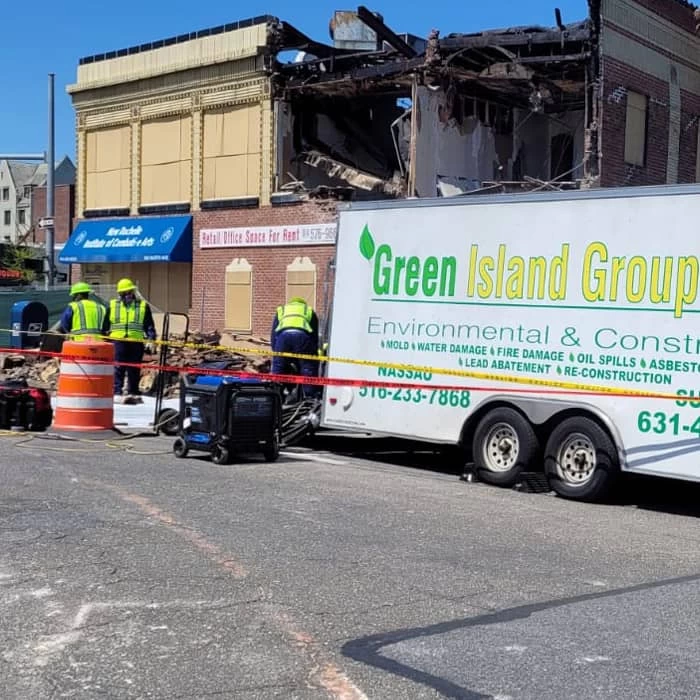
It starts with the call. We respond 24 hours a day, every day, and arrive on-site within one hour. That window matters — the faster the response, the more damage can be stopped before it compounds. When we arrive, the first priority is stabilizing the structure: boarding up openings, tarping the roof if needed, and containing the affected areas so smoke and soot don’t spread further.
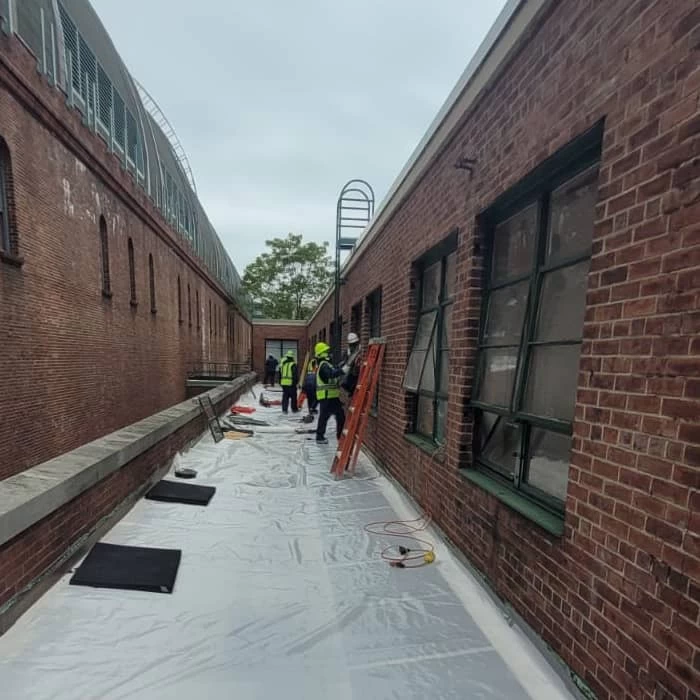
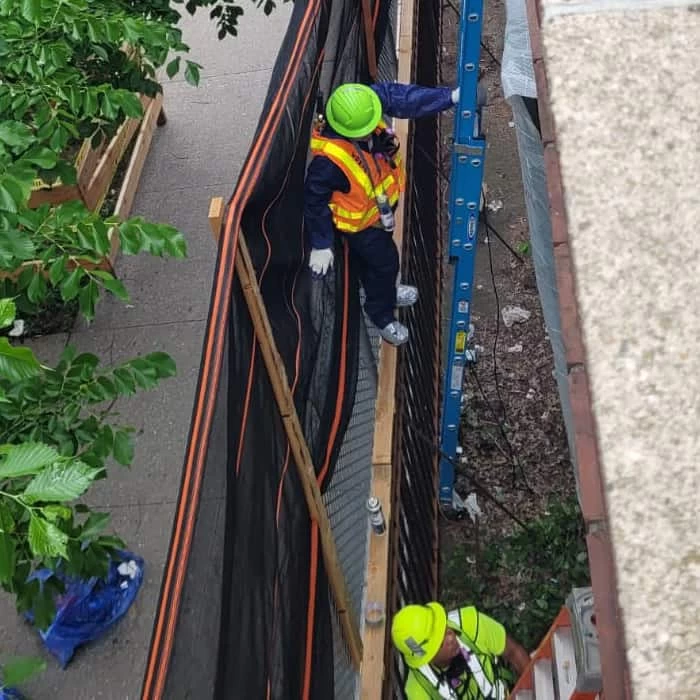
From there, the real assessment begins. In Franklin Square’s older homes, that assessment includes checking for asbestos-containing materials — pipe insulation, floor tiles, joint compound — before any demolition or reconstruction touches them. This isn’t optional. New York State law requires licensed contractors for asbestos abatement, and skipping that step creates legal and health exposure for you. We hold the NYS DOL Asbestos license and handle it directly, so there’s no work stoppage while you scramble to find a separate abatement contractor.
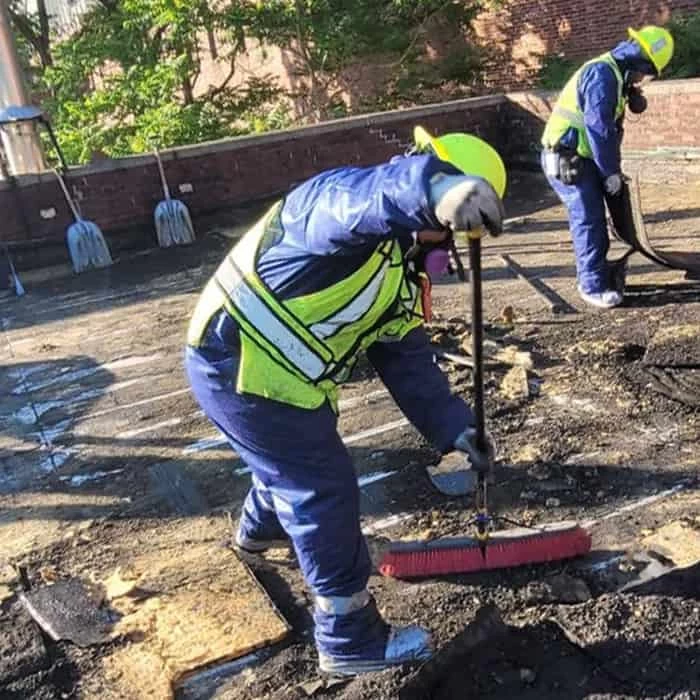
Once hazardous materials are addressed, the restoration moves through smoke and soot removal, structural drying, odor elimination using air scrubbers and thermal fogging, and HVAC cleaning to clear the ductwork that carried smoke through your home. Reconstruction follows under a Town of Hempstead building permit — pulled and managed by our licensed team, not handed off to you to figure out.
Built for What Franklin Square Homes Actually Contain
Fire damage restoration in Franklin Square isn’t a one-size process. The homes here have layers — original construction from the 1940s and 50s, additions from the 70s and 80s, renovations from every decade since. That history means asbestos in the pipe wrap, lead paint on the trim, and electrical systems that have been modified more than once. Any restoration scope that doesn’t account for those realities is going to hit a wall mid-project.
Our fire restoration service covers the full scope: emergency response and structural stabilization, asbestos and lead-safe demolition, smoke and soot removal from all surfaces including HVAC systems, structural drying and mold prevention, odor elimination, contents cleaning, and complete reconstruction permitted through the Town of Hempstead’s Building Department. One contract, one team, one timeline.
For Franklin Square homeowners with oil-heated homes — which is most of the hamlet — that also means puff-back soot cleanup. Oil burner misfires coat every room in fine, oily black soot without producing an actual fire, and that soot requires a completely different cleaning approach than dry fire soot. We know the difference, and we bring the right protocol for each. Insurance billing is handled directly, with documentation built to the standard that Nassau County insurers recognize and process without dispute.
Can I stay in my Franklin Square home after a fire?
It depends on the scope, but in most cases — especially in Franklin Square’s older homes — the answer is no, at least not immediately. Even if the fire was contained to one room, smoke travels. It moves through ductwork, seeps into wall cavities, and settles into surfaces throughout the structure. The air quality in a post-fire home can be genuinely hazardous, and that risk isn’t always visible or obvious from smell alone.
Beyond air quality, there’s the structural side to consider. Firefighting water creates moisture conditions that can compromise flooring, subfloor, and framing — and in a pre-1970 home, that water may have disturbed asbestos-containing materials that now require licensed abatement before the space is safe to occupy. Our team will assess the property and give you a straight answer on what’s safe and what isn’t. If temporary displacement is necessary, we’ll document everything your insurance carrier needs to cover additional living expenses.
Does homeowners insurance cover fire damage restoration costs in Nassau County?
In most cases, yes — homeowners insurance covers fire damage restoration, including smoke damage, water damage from firefighting suppression, and structural repairs. What it covers specifically depends on your policy, but in Nassau County’s high-property-value market, most homeowners carry policies that are designed to make the home whole again after a covered loss.
Where things get complicated is in the documentation and claims process. Insurance adjusters work for the insurance company, not for you. If the scope of damage isn’t fully documented — including hidden smoke migration, asbestos abatement costs, and contents damage — you can end up with a settlement that doesn’t cover the full restoration. We handle insurance billing directly and build the documentation to the standard that insurers in this market recognize. That means fewer disputes, faster approvals, and a claim that reflects the actual scope of what your Franklin Square home needs — not just what was easy to photograph on day one.
What is a puff-back and does it count as fire damage on your insurance?
A puff-back happens when an oil burner misfires and backfires combustion byproducts — fine, oily black soot — through the heating system and into your home. It doesn’t produce a flame or visible fire, but it can coat every room in the house with soot that’s significantly harder to clean than the dry soot from an ordinary fire. Franklin Square runs almost entirely on oil heat, which makes puff-backs a recurring local reality rather than a rare event.
As for insurance: yes, most standard homeowners policies in New York cover puff-back damage as a sudden and accidental loss. The key is getting the claim documented correctly from the start. Puff-back soot is oily, not dry — it smears rather than wipes, it penetrates HVAC ductwork, and it gets into upholstery and soft contents throughout the home. A restoration company that treats it like standard soot will leave residue behind. We know the difference in protocol, and we document the cause and scope in a way that holds up through the claims process.
How long does fire damage restoration take for a typical Franklin Square house?
There’s no single honest answer because scope drives timeline more than anything else. A smoke-only event in a single room might be resolved in a week or two. A fire that caused structural damage, triggered asbestos abatement, and required full reconstruction of multiple rooms can take several months. What you can control is how quickly the process starts — and in Franklin Square’s older homes, starting fast matters more than it might in newer construction.
The reason is layered. Post-war Capes and colonials have tighter envelopes, older materials, and more potential for hidden damage. The longer smoke and moisture sit unaddressed, the more they work their way into materials that are harder and more expensive to restore. The asbestos abatement step — legally required before demolition in pre-1980 homes — also adds time if it’s discovered mid-project rather than assessed upfront. Our process starts with a full assessment that accounts for all of it, so the timeline you get on day one is realistic, not a lowball estimate that grows as the project unfolds.
Does fire damage restoration in older homes require special permits in Franklin Square?
Yes. Because Franklin Square is an unincorporated hamlet within the Town of Hempstead, all structural repair and reconstruction work requires building permits through the Town of Hempstead’s Building Department. This isn’t a minor administrative step — it’s a legal requirement, and work done without permits can create serious complications when you sell the home or file an insurance claim. The Town of Hempstead’s Building Inspectors are reachable directly, and the permit process includes inspections at multiple stages of reconstruction.
On top of the standard building permit, pre-1980 homes in Franklin Square almost always trigger additional compliance requirements. Asbestos abatement must be performed by a NYS DOL-licensed contractor and requires state notification before demolition begins. Lead-safe work practices under USEPA RRP rules are mandatory for work in pre-1978 homes — which is the majority of Franklin Square’s housing stock. We hold every required license and manage the permit process directly, so you’re not navigating Town of Hempstead paperwork on your own while you’re already dealing with displacement and an insurance claim.
Why does smoke smell come back weeks after a fire seems cleaned up?
Because smoke doesn’t just sit on surfaces — it penetrates them. The particles are microscopic, and they embed in insulation, drywall, wood framing, HVAC ductwork, and soft contents at a depth that surface cleaning can’t reach. When a home is cleaned visually but not treated at the structural and air quality level, those embedded particles off-gas over time, especially when heat activates them. In Franklin Square’s older homes with original plaster walls, wood subfloors, and ductwork that runs through the entire house, this is a particularly common outcome.
The fix isn’t more surface cleaning — it’s the right protocol applied to the right areas. That means thermal fogging to neutralize odor molecules embedded in porous materials, air scrubbers to filter particulates from the air, and NADCA-certified HVAC cleaning to clear the ductwork that distributed smoke through the home in the first place. If the ductwork isn’t addressed, the smell will keep cycling back every time the heat runs. We treat the air and the structure, not just the walls — because in a post-war Franklin Square home, those are two very different things.