Freeport Families Don't Get a Second Chance at the First 24 Hours
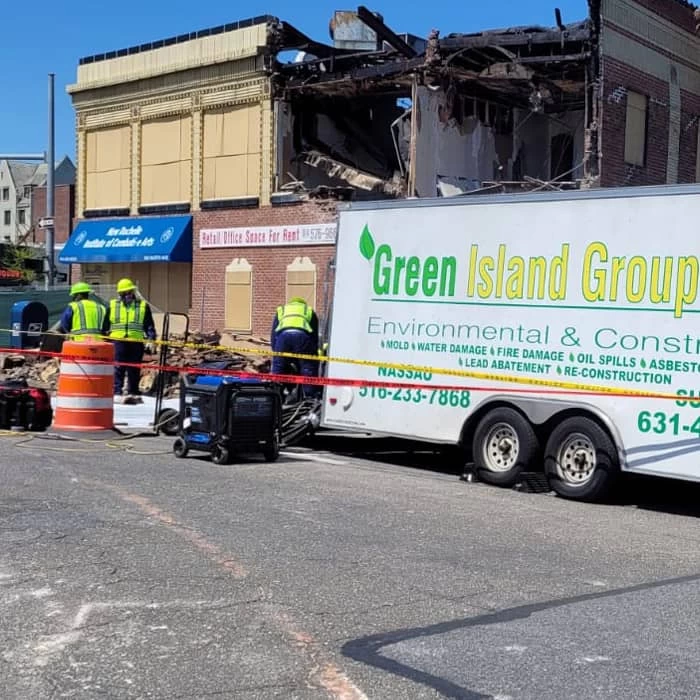
Soot sets. Smoke spreads. Mold starts in the walls before the fire trucks leave your block. We respond to fire damage restoration calls in Freeport around the clock — and get there fast enough to actually make a difference.
I needed a professional consultation explanation of procedure for safe removal of Asbestos in my apartment complex. Without having an account yet, I was very impressed with the caring, knowledgeable and generous advice offered by Jessica, and will look forward to doing business in the future. Thank you so much! I feel much more informed about a sometimes scary endeavor. Peace. Nancy Silva Mineola, NY.
Mia Munoz
Used this company to clean up some water flood in my house. They were fast and easy to work with.very professional, Would recommend to anyone!
Nini Valle
Great company, had a flood and they responded quickly and efficiently. Billed my insurance company directly. I highly recommend this company!
joe colapietro, jr
I had pipe freeze in my basement right before a snow storm and they made to within an hour to help start the clean up process. They we by our side throughout the entire process and even helped with the insurance company. They did such a great job with the cleanup, repair, remidiation, I contracted them to perform the repairs and finishes in the basement. They came with enough manpower and material to get the job done. Leo and Jessica were nothing but a pleasure to deal with!!
Cristian Arredondo c
I had some water damage in my home and Green Island was able to take care of my issue quickly and effectively. I am very pleased with the work they did. They responded quickly and were very professional.
Michael M
Outstanding service! From the office to the field crew everyone was friendly, helpful and responsive. I highly recommend Green Island Group.
There’s a version of fire damage restoration where someone shows up, wipes down the visible surfaces, and hands you a report for your insurance company. That’s not what you actually need. What you need is someone who understands that smoke doesn’t stop at the room where the fire started — it moves through your HVAC system, your wall cavities, and into every porous surface in the house. In a dense village like Freeport, where homes sit close together, that contamination can reach further than most people expect.
A lot of Freeport’s housing stock was built in the 1940s through the 1970s. That’s not just a historical footnote — it means your home may have asbestos in the floor tiles, pipe insulation, or ceiling material, and lead paint on the walls. When fire disturbs those materials, you’re not just dealing with soot and smoke. You’re dealing with a legally regulated hazmat situation that most restoration companies aren’t licensed to handle. Getting that wrong doesn’t just delay your recovery — it can create liability and health risks that outlast the fire itself.
When the job is done right, you get your home back — not a version of it that still smells like smoke six months later, not a property with hidden mold from the water the firefighters used, and not a half-finished rebuild because your restoration company couldn’t pull a permit. You get a house your family can actually live in again.
Green Island Group is a locally owned restoration company serving Nassau and Suffolk Counties, including Freeport and the surrounding South Shore. We’re IICRC-certified for fire and water damage restoration, hold a Nassau County General Contractor License, NYS DOL Asbestos and Mold licenses, and USEPA Lead/RRP certification. That combination isn’t common — and in a village like Freeport, where the Village Building Department requires separate permits for structural, plumbing, and electrical work, it matters more than most homeowners realize until they’re already in the middle of a claim.
We’ve completed over 5,000 restoration projects across New York State. We bill insurance directly, document everything to IICRC-accepted standards, and stay in your corner through the claims process — not just through the cleanup. If you’ve ever had to navigate a post-disaster recovery on Long Island, you already know that the difference between a company that does the work and a company that actually advocates for you is significant. That’s the difference we try to be.
What Actually Happens From Your First Call to Move-Back-In Day
The first call triggers an emergency response. We operate 24 hours a day, and our goal is to be on-site in Freeport within one hour of your call. That timeline isn’t just a marketing claim — it exists because the first hours after a fire determine how much of your home is salvageable. Soot begins bonding permanently to walls and ceilings within hours. Water from firefighting efforts starts creating mold conditions within 24 to 48 hours. Speed is the job.
Once on-site, we assess the full scope of damage — not just what’s visibly burned, but where smoke has traveled, where water has saturated, and whether the structure has any pre-existing hazardous materials that the fire has disturbed. In Freeport’s older homes, that assessment often includes testing for asbestos and lead before any demolition or remediation work begins. This step protects your family and keeps the project legally compliant with both New York State code and the Village of Freeport’s own building requirements.
From there, we handle emergency board-up and stabilization, full soot and smoke remediation, water extraction and drying, hazardous materials abatement if required, and complete structural reconstruction under our Nassau County General Contractor License. Every phase is documented for your insurance claim. You don’t hand off between contractors or chase down separate permits — we carry the project from the emergency call through the final inspection.
Fire Restoration in Freeport Covers More Than the Burn Zone
Fire damage restoration in Freeport isn’t a one-size-fits-all service. The South Shore coastal environment accelerates corrosion in older electrical systems, and Freeport’s canal neighborhoods carry additional flood risk that can compound fire damage when firefighting water has nowhere to drain. Add in the fact that Long Island has one of the highest concentrations of oil-heated homes in the country, and you have a specific local profile that requires a restoration company who understands what they’re walking into before they arrive.
The full scope of what we handle includes emergency stabilization and board-up, structural drying and water extraction, soot and smoke remediation throughout the affected area — including HVAC cleaning — odor elimination using thermal fogging and air scrubbing, asbestos and lead abatement for pre-1980 homes, mold remediation, and complete reconstruction. If your oil burner backfired and coated your home in fine oily soot — what’s called a puff-back — that’s covered too. It’s not a fire, but the damage is extensive, it’s typically covered by homeowners insurance, and it requires the same professional process.
Every project includes direct insurance billing and full claims documentation. You won’t be handed a folder of paperwork and left to figure out what your adjuster is asking for. We’ve done this across Nassau County long enough to know how the process works — and how to make sure you’re not shortchanged on your claim.
What should I do immediately after a house fire in Freeport, NY?
The most important thing you can do in the first hour is get your family safe and call a restoration company — not just your insurance company. Your insurer will send an adjuster, but adjusters assess damage on behalf of the insurance company, not on yours. A restoration company that’s on your side should be involved from the start so the full scope of damage is documented before anything is disturbed or cleaned up.
In Freeport specifically, don’t re-enter your home until a professional has assessed structural safety. Homes in this area that were built in the postwar era may have asbestos-containing materials that fire can disturb and make airborne. You also want to avoid running HVAC systems, which can spread soot and smoke particles further through the home. Call us at any hour — we respond 24/7 and aim to be on-site in Freeport within one hour of your call.
Does homeowners insurance cover fire damage restoration costs in Nassau County?
In most cases, yes — fire damage is one of the most commonly covered perils in a standard homeowners insurance policy. But the coverage you receive depends heavily on how well the damage is documented and how the claim is presented. Policies vary in how they handle smoke damage, water damage from firefighting, temporary housing costs, and personal property replacement, and adjusters don’t always flag every covered category on their own.
We bill insurance companies directly and document every phase of the restoration to IICRC-accepted standards — the same standards insurance carriers recognize. We’ve worked through enough Nassau County claims to know where gaps tend to appear and how to make sure the documentation supports the full scope of what you’re owed. If your home in Freeport is older and has asbestos or lead paint that needs to be addressed as part of the restoration, that work is typically covered under your policy as well — but it needs to be properly documented from the start.
How long does fire damage restoration take for a Freeport home?
Timeline depends on the size of the fire, how far smoke and water traveled through the structure, and whether hazardous materials like asbestos or lead are involved. A contained kitchen fire with limited smoke spread might take one to two weeks for full remediation and minor repairs. A more significant fire involving structural damage, widespread smoke contamination, and required abatement work in an older Freeport home can take several weeks to a few months through full reconstruction.
One factor that affects timeline specifically in Freeport is the permitting process. The Village of Freeport has its own Building Department, and structural, plumbing, and electrical work each require separate permits that must conform to both the NYS Uniform Fire Protection and Building Code and local village codes. A contractor who isn’t familiar with that process — or who doesn’t hold a Nassau County General Contractor License — can create significant delays. We handle permitting as part of the project so it doesn’t become a bottleneck in your recovery.
My Freeport home was built in the 1950s — does that affect the fire restoration process?
Yes, and it’s one of the most important things to address before any demolition or remediation work begins. Homes built in Freeport between the 1940s and 1970s commonly contain asbestos in floor tiles, pipe insulation, ceiling tiles, and joint compound, as well as lead paint on walls and trim. When fire damages these materials, they can become friable — meaning they break apart and release fibers or particles into the air. At that point, you’re dealing with a legally regulated situation, not just a cleanup.
Under New York State law, asbestos abatement requires a NYS DOL Asbestos License, and lead paint disturbance requires USEPA Lead/RRP certification. Most restoration companies — including some of the national franchise operators serving the Freeport area — are not licensed to handle both. We hold all required credentials, which means we can complete the full scope of fire restoration in your older Freeport home without bringing in a separate hazmat contractor, adding delays, or creating gaps in the documentation your insurance company needs.
What is a puff-back, and is it covered by homeowners insurance in New York?
A puff-back happens when an oil burner backfires — instead of igniting cleanly, the furnace releases a pressurized cloud of fine, oily soot that travels through your HVAC system and coats walls, ceilings, furniture, and clothing throughout the home. It’s not a fire, but the damage is extensive and the cleanup requires the same professional equipment and techniques: HEPA air scrubbers, chemical sponges, thermal fogging, and full HVAC cleaning.
Long Island has one of the highest concentrations of oil-heated homes in the country, and Freeport is no exception. Puff-backs are a relatively common service call on the South Shore, especially during the winter heating season when oil burners are running constantly. The good news is that puff-back damage is typically covered under a standard homeowners insurance policy in New York as a sudden and accidental event. We handle puff-back cleanup with the same IICRC-certified process we apply to fire damage — and we document it the same way for your insurance claim.
Can smoke from a neighbor's fire affect my home in Freeport?
It can, and it happens more often than people expect in a densely built village like Freeport. Homes in this area sit close together, and smoke doesn’t need an open window to travel — it moves through shared wall cavities, attic spaces, and HVAC systems. If a fire occurred next door or nearby, your home may have absorbed smoke particles even if there was no visible damage and no fire department contact with your property.
Smoke particles are microscopic and embed in drywall, insulation, wood framing, upholstery, and soft materials well beyond the visible burn zone. If your home smells like smoke after a neighboring fire, that’s not just an odor issue — it’s contamination that needs to be properly assessed and addressed. A surface cleaning won’t eliminate it. We use air scrubbers, ozone treatment, thermal fogging, and NADCA-certified HVAC cleaning to address smoke contamination at the source, not just mask it. If you’re a Freeport homeowner dealing with smoke impact from a nearby fire, the assessment process starts with a call — we’ll tell you honestly what we’re seeing and what it takes to fix it.