Garden City Homes Deserve More Than a Surface Cleanup
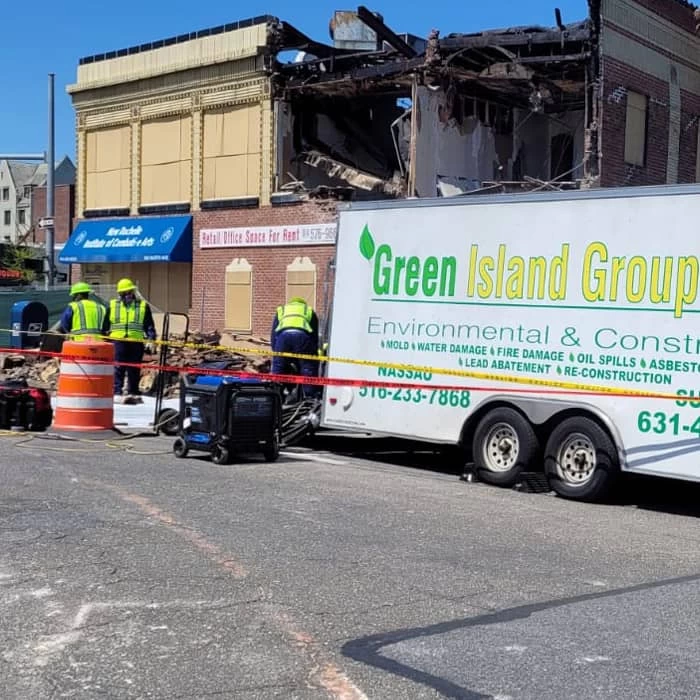
When your home is worth over a million dollars and it’s just been through a fire, the last thing you need is a crew that treats it like a standard job. We bring IICRC-certified fire damage restoration to Garden City — with the licenses, the equipment, and the experience to handle what’s really inside these walls.
I needed a professional consultation explanation of procedure for safe removal of Asbestos in my apartment complex. Without having an account yet, I was very impressed with the caring, knowledgeable and generous advice offered by Jessica, and will look forward to doing business in the future. Thank you so much! I feel much more informed about a sometimes scary endeavor. Peace. Nancy Silva Mineola, NY.
Mia Munoz
Used this company to clean up some water flood in my house. They were fast and easy to work with.very professional, Would recommend to anyone!
Nini Valle
Great company, had a flood and they responded quickly and efficiently. Billed my insurance company directly. I highly recommend this company!
joe colapietro, jr
I had pipe freeze in my basement right before a snow storm and they made to within an hour to help start the clean up process. They we by our side throughout the entire process and even helped with the insurance company. They did such a great job with the cleanup, repair, remidiation, I contracted them to perform the repairs and finishes in the basement. They came with enough manpower and material to get the job done. Leo and Jessica were nothing but a pleasure to deal with!!
Cristian Arredondo c
I had some water damage in my home and Green Island was able to take care of my issue quickly and effectively. I am very pleased with the work they did. They responded quickly and were very professional.
Michael M
Outstanding service! From the office to the field crew everyone was friendly, helpful and responsive. I highly recommend Green Island Group.
What Full Restoration Actually Looks Like in Garden City
Garden City homes aren’t new builds. A lot of them were built decades before the federal bans on asbestos and lead paint, and when fire moves through a structure like that, it doesn’t just burn what’s visible. It disturbs materials inside walls, under floors, and above ceilings that can become genuinely dangerous if the restoration crew doesn’t know what they’re dealing with. When the job is done right, those materials are identified, handled by licensed professionals, and documented — not ignored because they weren’t in the burn zone.
Smoke is the other part most homeowners don’t expect. In a larger colonial or multi-story home — the kind you’ll find throughout the Mott Section or along the older streets near the Cathedral — smoke travels through HVAC ducts, wall cavities, and structural gaps long before anyone sees it. You can clean the room where the fire started and still have soot contamination in rooms on the other side of the house. A real restoration addresses the whole building envelope, not just the obvious damage.
And then there’s the water. Firefighting suppression leaves significant moisture behind, and in an older Garden City home with plaster walls and original hardwood floors, that moisture becomes a mold problem within 24 to 48 hours if it isn’t extracted and dried properly. Getting both the fire damage and the water damage addressed simultaneously — by one crew, under one set of certifications — is the only way to make sure you’re not trading one problem for another.
We’re a locally owned restoration company based on Long Island, serving Nassau County, Suffolk County, Queens, and New York City. With over 5,000 completed restoration projects across New York State, this isn’t a company figuring things out on your property. Our team holds IICRC certification for both fire and smoke damage restoration and water damage restoration — the same credentials insurance companies reference when reviewing claims on high-value Garden City properties.
Beyond the IICRC, we carry a Nassau County General Contractor license, NYS DOL licenses for asbestos and mold, and USEPA Lead/RRP certification. That combination matters specifically in Garden City, where a significant portion of the housing stock predates 1980. Most restoration companies operating in Nassau County aren’t licensed to handle what a fire can expose in an older home here. We are — and that’s not a minor distinction when you’re dealing with a property of this value.
We bill insurance directly, handle documentation to insurance-standard specifications, and have guided hundreds of Long Island families through the claims process from first call to final walkthrough.
It starts the moment you call. We commit to on-site arrival within one hour, around the clock, every day of the year. Once the Garden City Fire Department clears the property and the fire marshal gives access, our crew moves immediately — because that window between clearance and the start of restoration is where the most preventable damage happens.
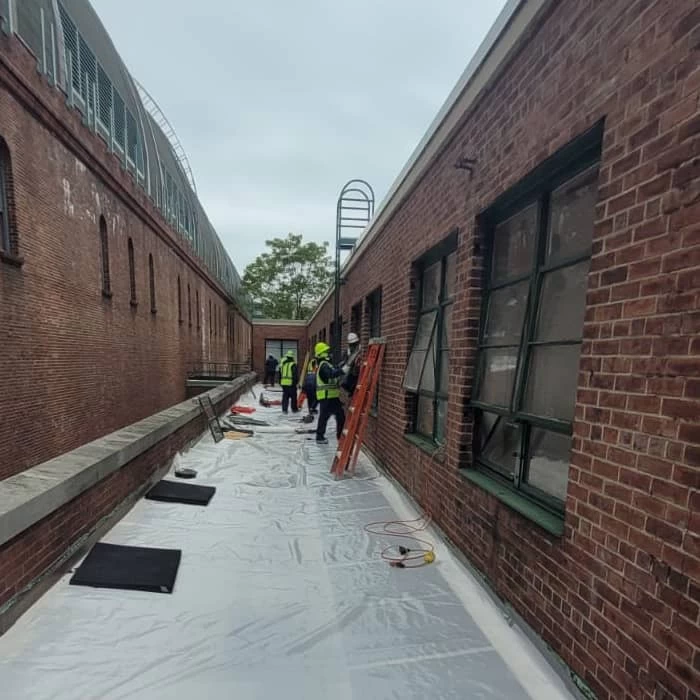
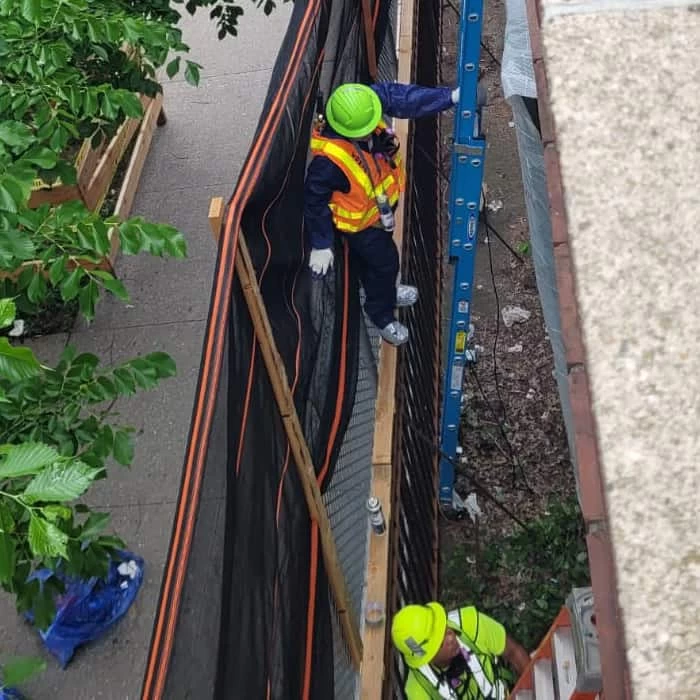
On-site, the first priority is a full damage assessment. That means the visible burn damage, yes, but also a systematic check for smoke migration through the HVAC system and wall cavities, moisture mapping from firefighting suppression, and an evaluation for hazardous materials. In Garden City’s older homes, that last step isn’t optional — it’s legally required before any demolition or cleanup work begins. If asbestos-containing materials or lead paint are present and disturbed, the work stops until licensed abatement protocols are in place. We hold the state and county-level credentials to handle that in-house, without bringing in a separate contractor and losing days in the process.
From there, the scope of work is documented to insurance-standard specifications before anything is touched. That documentation protects you during the claims process and ensures the adjuster sees the full picture — not just what was easy to photograph. Remediation, structural repair, and full reconstruction all happen under one roof, one license, and one accountable team. When the job is done, your home is restored to its pre-loss condition — or better.
Fire Smoke Damage Restoration Services, Nassau County
Built for What Garden City Homes Actually Contain
Fire damage restoration in Garden City covers a lot more ground than it does in a newer development. The homes here — whether it’s a Tudor revival off Cathedral Avenue, a pre-war colonial in the First or Second Section, or a postwar Cape Cod near Nassau Boulevard — often contain original plaster walls, period hardwood floors, custom millwork, and materials that can’t just be swapped out with whatever’s available at a supply house. Restoration here means matching what was there, not approximating it.
The full scope of what we handle includes emergency board-up and structural securing, water extraction and drying from firefighting suppression, soot and smoke remediation using air scrubbers and thermal fogging, HVAC cleaning, hazardous materials assessment and licensed abatement for asbestos and lead, odor elimination, structural repair, and complete reconstruction under a Nassau County General Contractor license. For homes with oil heating systems — common throughout older Nassau County housing stock — puff-back soot remediation is also available. Oily soot from a furnace misfire behaves differently than dry soot from a conventional fire, and cleaning it incorrectly makes the contamination worse. Our team knows the difference.
Everything is documented to insurance-standard specifications, and we bill your insurance company directly. You don’t become the go-between.
Does homeowners insurance cover fire damage restoration in Garden City, NY?
In most cases, yes — standard homeowners insurance policies cover fire damage restoration, including smoke damage, water damage from firefighting suppression, and the cost of temporary housing if your home is uninhabitable. That said, what gets covered and how much depends heavily on how the damage is documented and presented to the adjuster.
This is where a lot of Garden City homeowners run into problems. Insurance adjusters work from the documentation they receive. If the restoration company only photographs the obvious burn damage and misses the smoke migration through the HVAC system or the water damage behind the walls, those items often don’t make it into the claim — and you’re left paying for them out of pocket on a seven-figure property. We document the full scope of damage before anything is touched, bill your insurance company directly, and handle the back-and-forth with the adjuster so you’re not stuck in the middle of a process most people have never dealt with before.
How quickly does fire damage need to be addressed before it gets worse?
The short answer is: immediately. Acidic soot starts bonding permanently to surfaces within hours of a fire — the longer it sits, the harder it is to remove without damaging the underlying material. For a Garden City home with original plaster walls, hardwood floors, or period millwork, that window matters a lot more than it would in a home with drywall and laminate.
Water damage from firefighting suppression compounds the urgency. Mold growth can begin within 24 to 48 hours in the right conditions, and Long Island’s humid climate doesn’t slow that process down. A home that has both fire and water damage — which is almost every fire — needs extraction and drying running simultaneously with soot remediation, not sequentially. Our one-hour on-site response and dual IICRC certification for fire and water damage means both problems get addressed at the same time, by the same crew, without waiting for a second company to show up.
What makes fire restoration in older Garden City homes more complicated?
Age is the main factor. A significant portion of Garden City’s housing stock was built before 1980, which is the threshold year for asbestos-containing materials in residential construction — floor tiles, pipe insulation, ceiling tiles, textured plaster, and joint compound are all common sources. Many homes also predate the 1978 federal lead paint ban. When a fire disturbs those materials, or when demolition and cleanup work begins without identifying them first, you have a legally and medically serious situation on your hands.
Nassau County requires that asbestos abatement contractors hold both a New York State DOL certification and a Nassau County EHRP license — it’s a dual-layer requirement, and a lot of restoration companies operating in this area don’t meet both standards. We hold the NYS DOL Asbestos License, the NYS DOL Mold License, and USEPA Lead/RRP certification, which means the full hazardous materials scope of a fire in an older Garden City home can be handled in-house without stopping the job to bring in a separate licensed subcontractor.
What is a puff-back, and do I need fire restoration services for it?
A puff-back happens when an oil-fired furnace misfires and releases a cloud of unburned oil and soot into the home through the heating system. There’s no flame involved, so it doesn’t look like a fire — but the damage can reach every room in the house, coating surfaces, fabrics, and HVAC ducts with a fine, oily residue that’s significantly harder to remove than the dry soot from a conventional fire.
Oil heating systems are common throughout Nassau County’s older housing stock, and Garden City is no exception. The challenge with oily soot is that it smears when cleaned incorrectly, which makes the contamination worse and can permanently stain surfaces that would have been salvageable with the right approach. We handle puff-back remediation specifically — including HVAC cleaning to remove contamination from the ductwork, not just the visible surfaces. If your furnace has misfired and you’re seeing soot throughout the house, this is a professional remediation job, not a cleaning job.
Can fire damage affect parts of my home that didn't actually burn?
Yes, and this is one of the most common things homeowners don’t anticipate. Smoke doesn’t stay in the room where the fire started. It travels through HVAC ductwork, wall cavities, and any structural gap it can find — which means a fire that appears contained to one room can result in soot and odor contamination throughout an entire home. In a larger Garden City colonial or multi-story home, that contamination can reach the second floor, the basement, and rooms on the opposite end of the house from where the fire occurred.
The practical implication is that a proper fire restoration assessment has to look at the whole building, not just the burn zone. We use air quality testing, thermal imaging, and systematic HVAC inspection to identify smoke migration beyond the visible damage area. Odor elimination — through thermal fogging and ozone treatment — also has to address the entire affected space, because smoke odor that’s left in the walls or ductwork will continue to off-gas long after the visible soot is cleaned up.
How do I choose a fire damage restoration company in Garden City, NY?
The most important thing to verify is licensing — specifically, whether the company is licensed to handle what your home actually contains. In Garden City, where a large portion of the housing stock predates federal asbestos and lead paint regulations, that means confirming the contractor holds a New York State DOL Asbestos License and meets Nassau County’s EHRP licensing requirement for abatement work. Many restoration companies operating in Nassau County don’t hold both. If they can’t legally perform asbestos abatement, they’ll either skip it — which creates a serious liability — or stop the job while they bring in someone who can.
Beyond hazardous materials licensing, look for IICRC certification for fire and smoke damage restoration specifically, a Nassau County General Contractor license if reconstruction is involved, and direct insurance billing capability. The IICRC credential is what insurance companies reference when reviewing restoration documentation, and it signals that the technicians working in your home were trained to an industry-recognized standard — not just hired and handed a vacuum. A company that can take your Garden City home from emergency response through full reconstruction, under one license and one accountable team, is worth the time it takes to verify their credentials before you sign anything.