Your 1955 Home Deserves More Than a Generic Restoration Crew
Garden City Park’s mid-century homes hide real hazards behind fire damage — asbestos, lead paint, oil-soaked ductwork. We handle all of it, start to finish.
I needed a professional consultation explanation of procedure for safe removal of Asbestos in my apartment complex. Without having an account yet, I was very impressed with the caring, knowledgeable and generous advice offered by Jessica, and will look forward to doing business in the future. Thank you so much! I feel much more informed about a sometimes scary endeavor. Peace. Nancy Silva Mineola, NY.
Mia Munoz
Used this company to clean up some water flood in my house. They were fast and easy to work with.very professional, Would recommend to anyone!
Nini Valle
Great company, had a flood and they responded quickly and efficiently. Billed my insurance company directly. I highly recommend this company!
joe colapietro, jr
I had pipe freeze in my basement right before a snow storm and they made to within an hour to help start the clean up process. They we by our side throughout the entire process and even helped with the insurance company. They did such a great job with the cleanup, repair, remidiation, I contracted them to perform the repairs and finishes in the basement. They came with enough manpower and material to get the job done. Leo and Jessica were nothing but a pleasure to deal with!!
Cristian Arredondo c
I had some water damage in my home and Green Island was able to take care of my issue quickly and effectively. I am very pleased with the work they did. They responded quickly and were very professional.
Michael M
Outstanding service! From the office to the field crew everyone was friendly, helpful and responsive. I highly recommend Green Island Group.
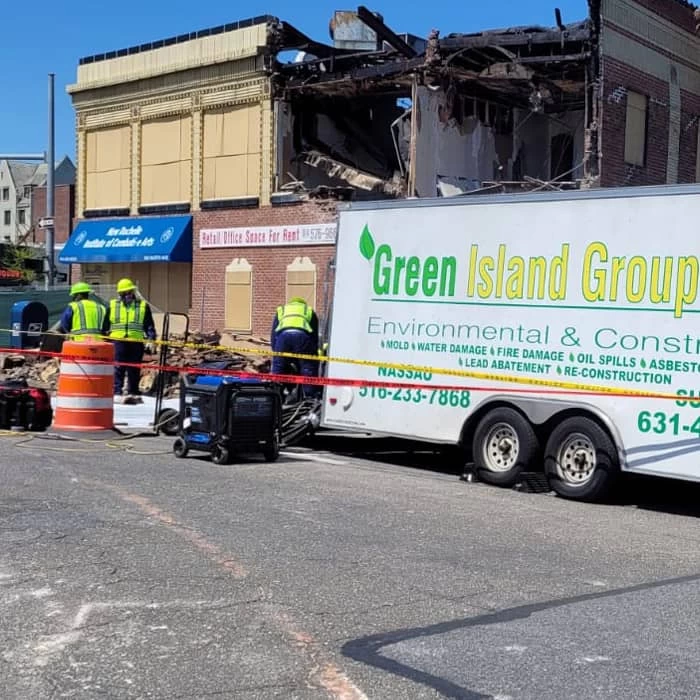
When a fire happens in a Garden City Park home, the visible damage is rarely the whole story. Smoke travels through wall cavities and ductwork well beyond the burn zone, and the water used to put the fire out starts a mold clock the moment it hits your floors. If the first crew on-site isn’t equipped to find all of it, you end up paying twice.
The majority of homes in Garden City Park were built between 1940 and 1969. That means there’s a very real chance your walls, floors, or ceiling tiles contain asbestos — and fire disturbs it. The same goes for lead paint, which is presumed present in any home built before 1978. These aren’t edge cases in Garden City Park. They’re statistically common in this neighborhood, and they require a licensed contractor to handle legally. Most restoration companies aren’t licensed to touch them.
When we finish a job, you get a property that’s been assessed, documented, remediated, and rebuilt under one licensed contractor — not handed off between three different vendors while you manage the chaos from a hotel. For a homeowner with an $800,000 asset and kids in the Herricks or New Hyde Park-Garden City Park school district, that kind of continuity isn’t a luxury. It’s the only approach that makes sense.
Licensed Fire Restoration Contractor Garden City Park
Every License This Job Requires — Under One Roof
We’re a Long Island-based restoration and environmental services company with a Nassau County General Contractor License, IICRC certification for fire and water damage restoration, NYS DOL Asbestos and Mold licenses, and USEPA Lead/RRP certification. That’s not a list of marketing badges — those are the actual credentials required to legally complete a full fire restoration in a pre-1980 home in the Town of North Hempstead, where Garden City Park is located.
We’ve completed over 5,000 restoration projects across New York State. We bill insurance companies directly, document every phase of damage with adjuster-standard reporting, and don’t hand you off to a subcontractor when the work gets complicated. The whole job stays with one team.
For Garden City Park homeowners navigating a fire loss — dealing with the insurance company, the displacement, the school schedule, the commute from Merillon Avenue — the last thing you need is a contractor who disappears after demo and leaves you to find someone else for the rebuild. We don’t work that way.
From the Night It Happens to the Day You're Back Inside
The first call can happen at any hour. We respond 24/7 and target on-site arrival within one hour of your call. That window matters because acidic soot begins bonding permanently to surfaces within hours, and standing water from suppression creates mold risk within 24 to 48 hours. Speed at the front end directly reduces the total scope of what needs to be fixed.
Once on-site, our team conducts a full damage assessment — not just the burn zone, but the entire structure. In a Garden City Park home with 1950s-era ductwork, smoke contamination can reach rooms that show no visible damage at all. This is also when hazardous material identification happens. If asbestos-containing materials or lead paint have been disturbed, that gets documented and flagged before any demolition begins. Under New York State law, that work requires a licensed abatement contractor — and we hold that license, so there’s no delay waiting for a separate crew.
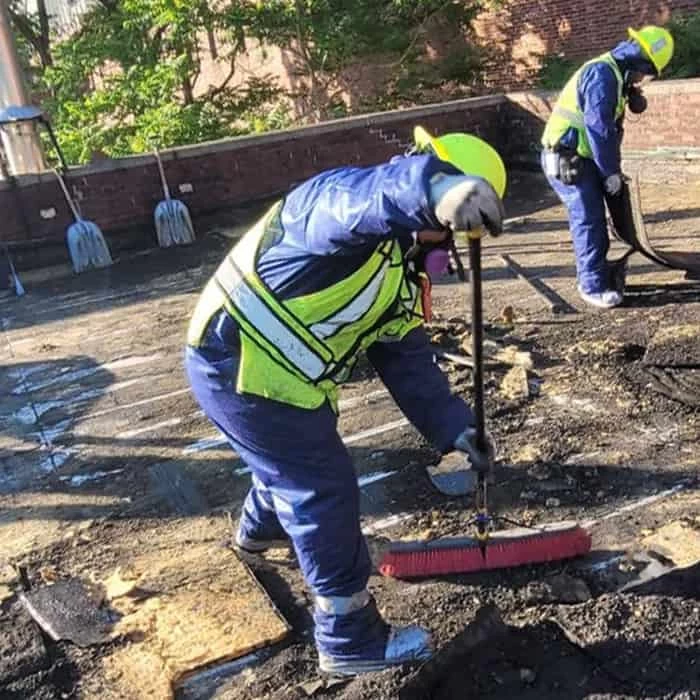
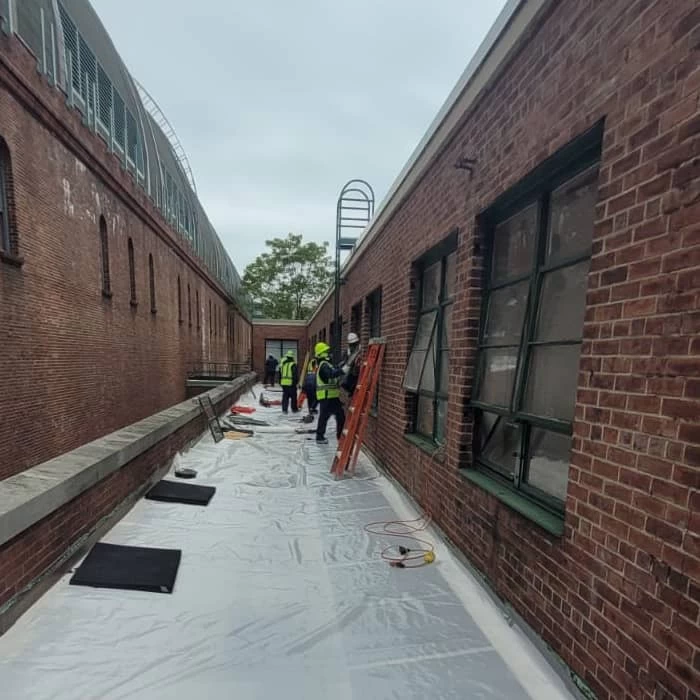
From there, the process moves through controlled demolition, structural drying, smoke and soot remediation, HVAC decontamination, and licensed reconstruction. Permits for structural repairs are pulled through the Town of North Hempstead Building Department — we handle that process directly. By the time the job is complete, every phase has been documented for your insurance claim, and the property has been restored to pre-loss condition under a single contract.
Built for Long Island's Older Homes — Not a One-Size Checklist
Fire damage restoration in Garden City Park isn’t just cleanup — it’s a multi-phase process that accounts for what’s actually inside these homes. Our service covers emergency board-up and tarping, full structural assessment, controlled demolition, smoke and soot removal, odor elimination using thermal fogging and ozone treatment, air scrubbing, and NADCA-certified HVAC cleaning. Because smoke travels through ductwork, the HVAC system is treated as a contaminated zone until proven otherwise — not an afterthought.
One scenario that comes up frequently in Nassau County’s mid-century housing stock is the oil burner puff-back. When an oil-fired furnace misfires, it pushes a cloud of fine black soot through every duct in the house. There’s no open flame, but the contamination can be just as thorough as a room fire. We handle puff-back remediation with the same scope and documentation as any other smoke damage event — because your insurance claim deserves the same level of support either way.
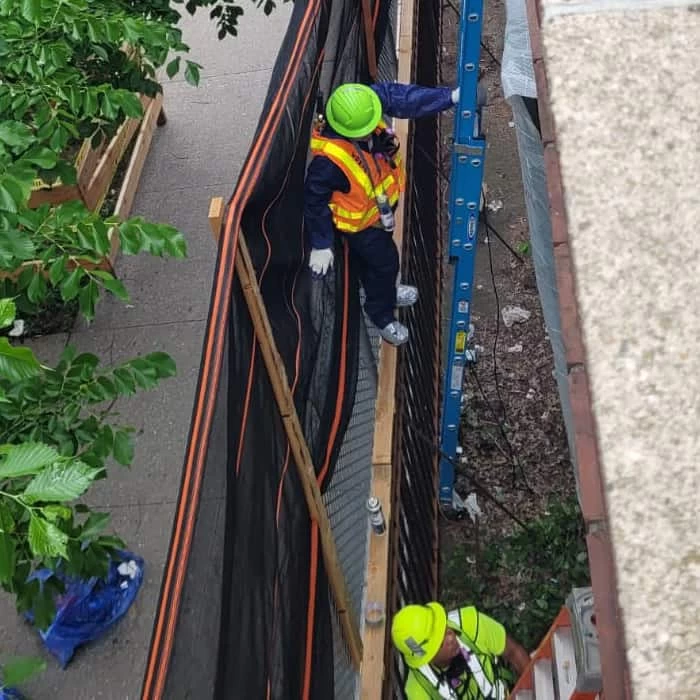
On the reconstruction side, the work includes framing, drywall, insulation, flooring, roofing, and electrical — all permitted through the Town of North Hempstead and performed under our Nassau County General Contractor License. If asbestos or lead is found during the process, abatement is handled in-house under our NYS DOL and USEPA credentials. Nothing gets outsourced. Nothing gets skipped.
Does fire damage restoration in Garden City Park require a licensed general contractor?
Yes — and this is one of the most important things to verify before hiring anyone. In Garden City Park, building permits for structural repairs after a fire are issued through the Town of North Hempstead Building Department. Pulling those permits and legally performing the reconstruction work requires a licensed general contractor. If the company you hire doesn’t hold a Nassau County General Contractor License, they cannot legally complete the rebuild portion of the job — which means you’ll either need to hire a second contractor or the work will be done without permits, which creates serious problems when you go to sell the home or make future insurance claims.
We hold a Nassau County General Contractor License and handle the entire permit process directly. You don’t need to manage that separately. From the initial emergency response through the final reconstruction, everything stays under one licensed contractor and one contract.
How does smoke damage spread through a home after a fire?
Smoke doesn’t stay in the room where the fire started. It moves through wall cavities, ceiling spaces, and HVAC ductwork — and in a home built in the 1950s or 1960s, that ductwork often runs through the entire house without modern air sealing. What looks like a contained kitchen fire can leave soot deposits in bedrooms, closets, and the HVAC system on the opposite end of the home. The particles are microscopic, and they embed in drywall, insulation, and soft surfaces in ways that aren’t always visible to the eye.
This is why a proper fire damage restoration assessment covers the whole structure — not just the burn area. We use air scrubbers, moisture meters, and thermal imaging to identify contamination throughout the property. HVAC systems are treated as a contaminated zone and cleaned using NADCA-certified methods. If smoke has reached it, it gets addressed — because leaving any of it behind means the odor and air quality problems will return.
What happens if asbestos is found in my Garden City Park home after a fire?
It’s a realistic possibility. The median home in Garden City Park was built in 1955, and homes of that era commonly contain asbestos in floor tiles, ceiling tiles, pipe insulation, joint compound, and roofing materials. Fire disturbs those materials, which can release asbestos fibers into the air. Under New York State law, any asbestos abatement work must be performed by a contractor holding a NYS DOL Asbestos License. If the restoration company you hire doesn’t have that license, they cannot legally continue work once asbestos is identified — which means a project halt while you locate a licensed abatement contractor separately.
We hold a NYS DOL Asbestos License. If asbestos-containing materials are discovered during the assessment or demo phase, abatement is handled in-house without stopping the project or requiring you to bring in another contractor. The same applies to lead paint, which is presumed present in any home built before 1978. We also hold USEPA Lead/RRP certification, so both hazards are covered under the same contract.
Will my homeowners insurance cover fire damage restoration, and how does the claim process work?
Standard homeowners insurance policies cover fire damage restoration, including smoke damage, water damage from suppression, and structural repairs — subject to your deductible and coverage limits. For a home in Garden City Park where median values are above $800,000, that’s a substantial claim, and how it gets documented makes a significant difference in what you actually receive. Insurance adjusters work from the documentation they’re given. If the scope of damage isn’t fully captured — smoke contamination in the HVAC, hazardous material disturbance, secondary water damage — those costs may not be included in your settlement.
We bill insurance companies directly and document every phase of the restoration with adjuster-standard reporting. We’ve guided hundreds of Long Island homeowners through this process. Our customers have specifically noted that we stayed involved through material selection and adjuster communication — not just the physical work. If you’re filing a claim on a home you’ve invested heavily in, that level of documentation and advocacy matters.
What is an oil burner puff-back, and does it count as fire damage in Nassau County?
A puff-back happens when an oil-fired furnace or boiler misfires and backfires into the home, releasing a cloud of fine black soot through the ductwork and into every room. There’s no open flame involved, but the contamination can coat walls, ceilings, furniture, and HVAC components throughout the entire house. Nassau County — including Garden City Park — has one of the highest concentrations of oil-heated homes in the country, largely because of the mid-century suburban housing stock that was built with oil systems as the standard. Puff-backs are a genuinely common service call in this area.
Most standard homeowners insurance policies do cover puff-back damage under the fire or sudden and accidental damage provisions, though you’ll want to confirm the specific language in your policy. The remediation process is essentially the same as smoke damage restoration — soot removal, surface cleaning, odor treatment, and full HVAC decontamination. We handle puff-back cleanup with the same scope and insurance documentation as any other smoke damage event.
How long does fire damage restoration typically take for a home in Garden City Park?
The timeline depends on the scope of damage, but most residential fire restoration projects in Nassau County fall somewhere between two weeks and several months. A contained kitchen fire with smoke damage throughout the home might be resolved in two to four weeks. A fire that caused structural damage, triggered asbestos abatement, and required full room reconstruction in a pre-1960s home could run two to four months — especially when you factor in the permit process through the Town of North Hempstead, which adds time to any structural work.
The single biggest factor in timeline is how quickly the process starts. Soot that bonds to surfaces in the first 24 to 48 hours is significantly harder to remove than soot that’s addressed immediately. Water from firefighting suppression that sits for more than 48 hours creates mold — which adds a remediation phase to the project. Our 24/7 response and one-hour on-site commitment exists specifically to compress that early window, which reduces both the total timeline and the total cost of the restoration.