Glen Cove Homes Rebuilt — One Call, Start to Finish
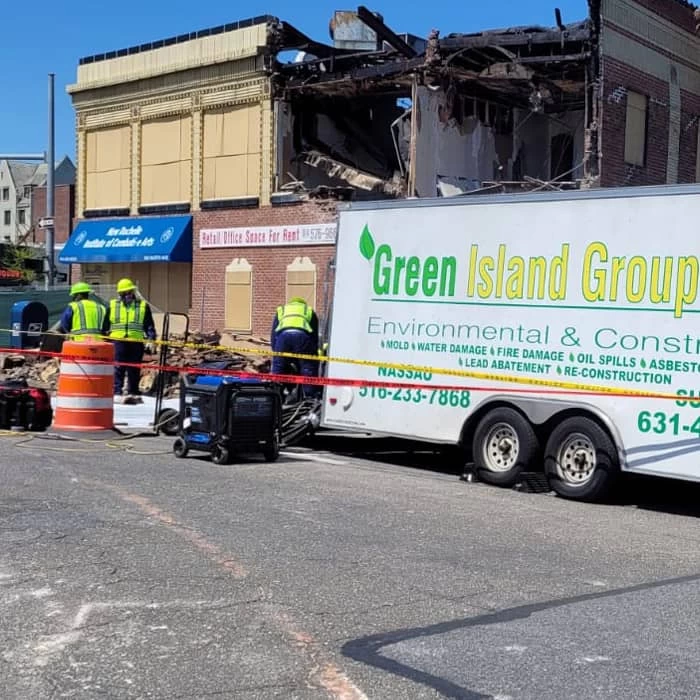
When a fire hits your Glen Cove home, the last thing you need is three different contractors and an insurance company that won’t call back. We handle fire damage restoration from the emergency response all the way through reconstruction — so you’re not left managing the chaos alone.
I needed a professional consultation explanation of procedure for safe removal of Asbestos in my apartment complex. Without having an account yet, I was very impressed with the caring, knowledgeable and generous advice offered by Jessica, and will look forward to doing business in the future. Thank you so much! I feel much more informed about a sometimes scary endeavor. Peace. Nancy Silva Mineola, NY.
Mia Munoz
Used this company to clean up some water flood in my house. They were fast and easy to work with.very professional, Would recommend to anyone!
Nini Valle
Great company, had a flood and they responded quickly and efficiently. Billed my insurance company directly. I highly recommend this company!
joe colapietro, jr
I had pipe freeze in my basement right before a snow storm and they made to within an hour to help start the clean up process. They we by our side throughout the entire process and even helped with the insurance company. They did such a great job with the cleanup, repair, remidiation, I contracted them to perform the repairs and finishes in the basement. They came with enough manpower and material to get the job done. Leo and Jessica were nothing but a pleasure to deal with!!
Cristian Arredondo c
I had some water damage in my home and Green Island was able to take care of my issue quickly and effectively. I am very pleased with the work they did. They responded quickly and were very professional.
Michael M
Outstanding service! From the office to the field crew everyone was friendly, helpful and responsive. I highly recommend Green Island Group.
A fire doesn’t just burn — it leaves behind acidic soot, smoke-saturated walls, and water damage from the suppression effort. Every hour that passes without professional intervention, those materials are bonding to surfaces, breaking down finishes, and creating conditions that cost more to fix the longer they sit. In Glen Cove, where a significant portion of homes were built before 1980, that window matters even more.
Older homes in the Valentine Avenue corridor, the Morgan Park neighborhood, and throughout Glen Cove’s interior residential grid commonly contain asbestos-containing materials — floor tiles, pipe insulation, joint compound — that fire disturbs. If the company you call isn’t licensed to handle those materials under New York State DOL regulations, they legally cannot complete the job. That’s not a minor gap. It means a second contractor, a second mobilization, and more time your home sits exposed.
Glen Cove’s position on Hempstead Harbor also means coastal humidity works against you fast. The water used to extinguish a fire, combined with the ambient moisture off the Sound, creates mold conditions within 24 to 48 hours. Getting water extracted and structural drying started immediately isn’t optional — it’s what separates a contained restoration from a compounding disaster.
We’re a Long Island-based restoration company that has completed over 5,000 projects across New York State. We hold IICRC certification for both fire and smoke restoration and water damage restoration — the credentials insurance adjusters actually recognize when reviewing claims documentation. We also carry the NYS DOL Asbestos License, NYS DOL Mold License, USEPA Lead/RRP certification, and a Nassau County General Contractor License that allows us to pull permits directly through the City of Glen Cove’s Building Department.
That last point matters here specifically. Glen Cove is one of only two incorporated cities in Nassau County. It has its own permitting authority, independent of the Town of Oyster Bay. When fire restoration requires structural repairs or reconstruction, those permits come from Glen Cove — and a contractor without the right license can’t pull them. We can, and do, handle the entire process from the first call to the final inspection.
No Handoffs, No Surprises — Here's the Full Picture
The process starts the moment you call. We target on-site response within one hour, around the clock, every day of the year. Once on site, the first priority is a thorough assessment — what’s structurally compromised, where smoke has traveled, what water damage the suppression effort left behind, and whether any hazardous materials have been disturbed. In a city where most of the housing stock predates 1980, that last item is standard protocol, not an afterthought.
From there, emergency stabilization begins — boarding, tarping, water extraction, and industrial drying equipment deployed to stop secondary damage before it compounds. Smoke and soot removal follows, including HEPA air scrubbing, thermal fogging, and NADCA-certified HVAC cleaning. In older Glen Cove homes with original ductwork or cast-iron radiator systems, smoke travels far beyond the room of origin, and surface cleaning alone won’t resolve it.
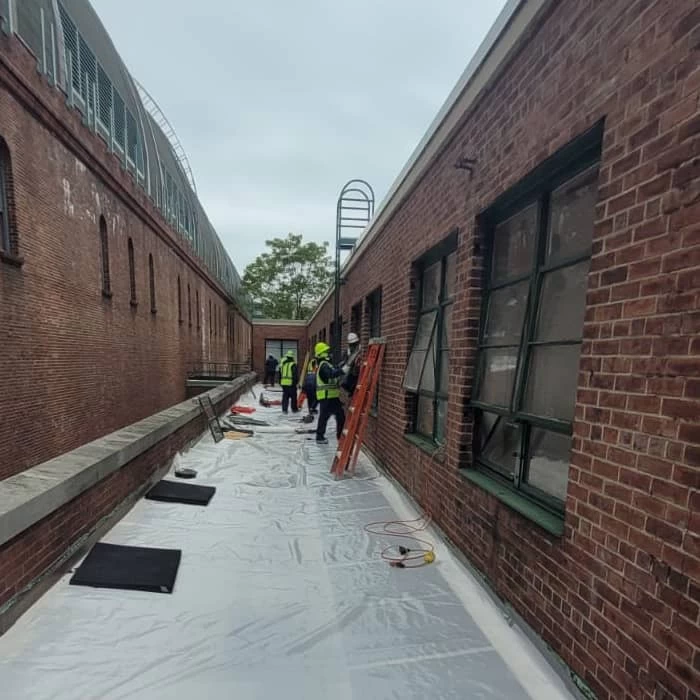
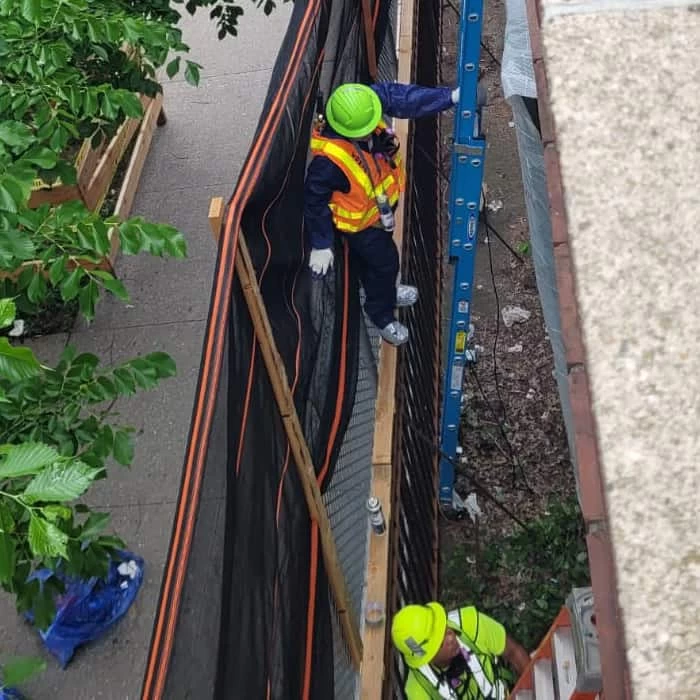
If asbestos or lead paint disturbance is confirmed — which is common in pre-1978 construction throughout Glen Cove — we handle that remediation in-house under our state and federal credentials, without bringing in a separate subcontractor. Reconstruction follows under our Nassau County General Contractor License, with permits pulled directly from the City of Glen Cove. Throughout every phase, we document the work to insurance-standard specifications and communicate directly with your adjuster so you’re not stuck in the middle.
Built for Glen Cove's Older Homes and What's Inside Them
Fire damage restoration in Glen Cove isn’t a one-size situation. The city’s housing stock ranges from pre-war colonials near the Landing neighborhood and Crescent Beach to mid-century cape cods throughout the interior grid to newer Garvies Point units along the waterfront. Each comes with its own restoration profile — different construction materials, different hazardous material risk, different permit requirements.
What we bring to every fire restoration job in Glen Cove includes emergency response and structural stabilization, complete smoke and soot removal from all affected surfaces, water extraction and structural drying from firefighting suppression, HVAC decontamination and air quality restoration, asbestos and lead paint remediation where required under NYS and federal law, mold prevention and remediation, and full structural reconstruction permitted through the City of Glen Cove. Oil burner puff-backs — common in the older oil-heated homes throughout Nassau County’s North Shore — are also handled as a distinct service category, since a puff-back can coat an entire home in oily soot without an actual fire occurring.
Everything is documented to insurance standards from day one. We bill insurance directly and handle adjuster communication throughout the process. For Glen Cove homeowners managing high-value properties — median detached home values here exceed $900,000 — having that documentation handled correctly from the start is the difference between a fully covered claim and a disputed one.
Does fire damage restoration in Glen Cove require a building permit?
In most cases, yes. Glen Cove is an independent city with its own Building Department — it does not fall under the Town of Oyster Bay’s permitting authority. Any fire restoration work that involves structural repairs, electrical work, plumbing, or reconstruction requires permits pulled directly from the City of Glen Cove’s Building Department. This is a meaningful distinction that catches some homeowners off guard, especially if they’ve hired a contractor who isn’t licensed to operate in Nassau County and assumes all permits flow through the county.
We hold a Nassau County General Contractor License that covers work within Glen Cove city limits. We handle the permit application, manage the inspection schedule, and carry the project through to final sign-off. You don’t need to navigate the Building Department yourself or coordinate between a restoration company and a separate general contractor — it’s handled as part of the same job.
How quickly does smoke damage spread through an older Glen Cove home?
Faster than most people expect. Smoke is not contained to the room where the fire occurred — it moves through wall cavities, ductwork, insulation, and any gap in the building envelope. In older Glen Cove homes with original plaster walls, cast-iron radiator systems, or aging HVAC ductwork, smoke can reach rooms on the opposite end of the house within minutes of a fire starting. By the time the Glen Cove Volunteer Fire Department clears the scene, smoke particles may already be embedded in surfaces throughout the structure.
The practical consequence is that restoration can’t be limited to the visible burn zone. Effective fire smoke damage restoration requires air quality testing, HEPA scrubbing, thermal fogging, and HVAC decontamination — not just cleaning the walls in the affected room. If the HVAC system isn’t addressed, smoke odor will continue circulating through the home every time the system runs, even after everything else has been cleaned.
What happens if asbestos is found during fire restoration in my Glen Cove home?
If your home was built before 1980 — which describes the majority of Glen Cove’s housing stock — there’s a real possibility that fire has disturbed asbestos-containing materials. Floor tiles, ceiling tiles, pipe insulation, and joint compound were all commonly manufactured with asbestos during that era. When fire damages or disturbs these materials, New York State law requires that a licensed contractor perform the abatement before any further restoration or reconstruction work can proceed.
The problem with most restoration companies is that they aren’t licensed for asbestos abatement under the NYS Department of Labor. That means they have to stop work, bring in a separate specialty contractor, and restart — adding days or weeks to your timeline and complicating the insurance claim. We hold the NYS DOL Asbestos License and handle abatement in-house. If asbestos is identified during the initial assessment, the scope is documented, the remediation is scheduled, and the restoration continues without a gap in the work or a change in the point of contact.
Will my homeowner's insurance cover fire damage restoration costs in Nassau County?
Standard homeowner’s insurance policies in New York generally cover fire damage restoration, including smoke and soot cleanup, water damage from firefighting suppression, and structural repairs. However, what gets covered — and at what amount — depends heavily on how the damage is documented and how the claim is presented to the adjuster. In Glen Cove, where detached home values regularly exceed $900,000 and older construction can reveal unexpected scope (asbestos abatement, lead paint compliance, structural issues uncovered during demolition), the difference between a well-documented claim and a poorly documented one can be tens of thousands of dollars.
We document every phase of the restoration process to insurance-standard specifications and bill the insurance company directly. Our team handles adjuster communication throughout the project, which means you’re not spending your evenings on hold or trying to explain the scope of asbestos remediation to someone who’s never seen your house. For Glen Cove homeowners who commute to Manhattan and have limited bandwidth to manage a complex claim, that support is a practical necessity, not a bonus feature.
How long does fire damage restoration typically take for a Glen Cove home?
The honest answer is that it depends on the scope, and scope in Glen Cove can expand in ways that aren’t immediately obvious. A contained kitchen fire in a newer home might be fully restored in two to three weeks. A fire that spreads to wall cavities, disturbs asbestos-containing materials, and requires structural reconstruction in a pre-war colonial near Morgan Park could take two to three months from initial response to final permit sign-off.
The factors that most commonly extend timelines in Glen Cove are asbestos or lead paint abatement requirements triggered by the fire, the extent of smoke travel through older ductwork and wall systems, the degree of water damage from firefighting suppression, and the permit review process through the City of Glen Cove’s Building Department. We provide a detailed scope assessment early in the process so you have a realistic timeline before work begins — not a vague estimate that keeps shifting. Knowing what to expect from the start makes the entire recovery more manageable.
What is a puff-back, and do Glen Cove homeowners need professional cleanup for it?
A puff-back happens when an oil-fired furnace misfires and backfires, releasing a fine mist of unburned oil and soot through the heating system and into the living space. There’s no open flame, no structural fire — but the result can be a thin, oily film of soot coating every surface in the home, including inside closets, inside cabinets, and throughout the HVAC system. It looks like a light gray dust at first glance, but it’s acidic and oil-based, which means it bonds to surfaces quickly and is nearly impossible to remove completely with household cleaning products.
Oil heat is extremely common in older North Shore Long Island homes, and Glen Cove has no shortage of them. Puff-backs are one of the more frequent smoke-related service calls in Nassau County, and they’re consistently underestimated by homeowners who assume a surface wipe-down will resolve it. Professional cleanup requires the same soot removal, air scrubbing, and HVAC decontamination used in a standard fire restoration — because the contamination is just as pervasive, even without a flame. If you’ve had your furnace serviced and still notice a persistent oily smell or gray residue, it’s worth having a professional assess the full scope before it settles deeper into your home’s materials.