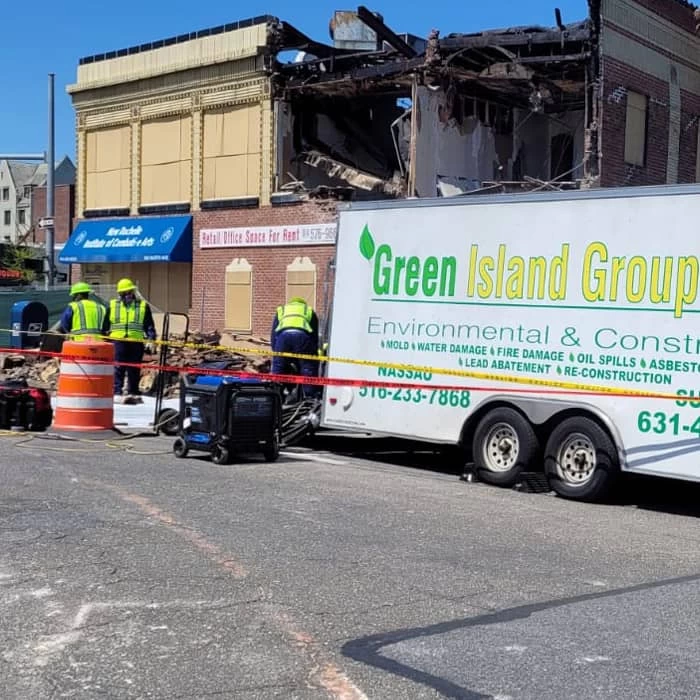
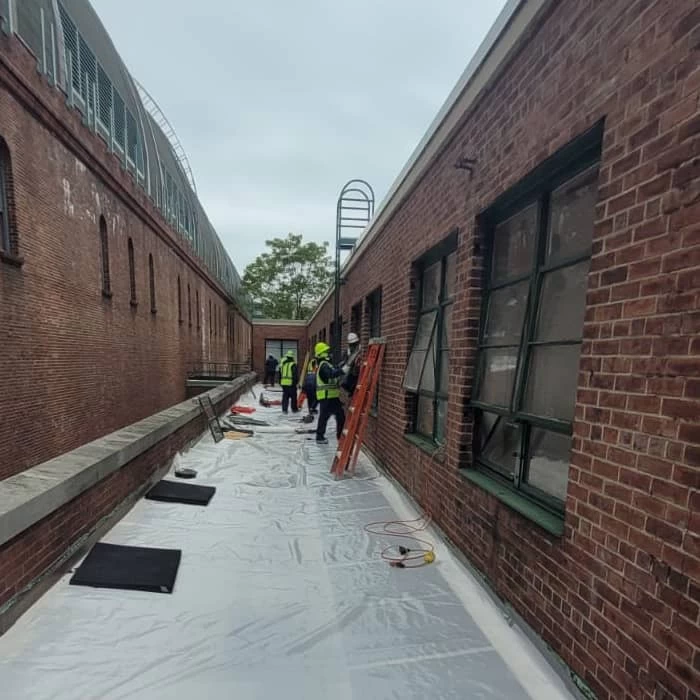
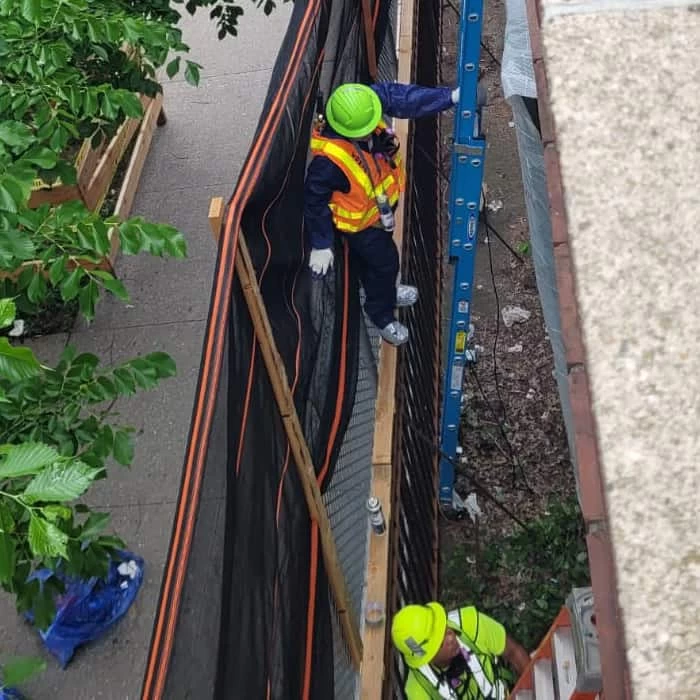
When fire hits a Glenwood Landing home worth over a million dollars, the margin for error is zero. We handle fire damage restoration from the first call to the final walkthrough — no handoffs, no gaps.
I needed a professional consultation explanation of procedure for safe removal of Asbestos in my apartment complex. Without having an account yet, I was very impressed with the caring, knowledgeable and generous advice offered by Jessica, and will look forward to doing business in the future. Thank you so much! I feel much more informed about a sometimes scary endeavor. Peace. Nancy Silva Mineola, NY.
Mia Munoz
Used this company to clean up some water flood in my house. They were fast and easy to work with.very professional, Would recommend to anyone!
Nini Valle
Great company, had a flood and they responded quickly and efficiently. Billed my insurance company directly. I highly recommend this company!
joe colapietro, jr
I had pipe freeze in my basement right before a snow storm and they made to within an hour to help start the clean up process. They we by our side throughout the entire process and even helped with the insurance company. They did such a great job with the cleanup, repair, remidiation, I contracted them to perform the repairs and finishes in the basement. They came with enough manpower and material to get the job done. Leo and Jessica were nothing but a pleasure to deal with!!
Cristian Arredondo c
I had some water damage in my home and Green Island was able to take care of my issue quickly and effectively. I am very pleased with the work they did. They responded quickly and were very professional.
Michael M
Outstanding service! From the office to the field crew everyone was friendly, helpful and responsive. I highly recommend Green Island Group.
What Changes When Fire Restoration Is Actually Done Right
The smoke smell that won’t leave. The ceiling that looks fine but isn’t. The wall cavity where soot traveled three rooms away from where the fire actually started. These are the things that come back to haunt you — at resale, during inspection, or six months later when the odor returns after you thought it was gone.
Glenwood Landing homes carry real weight — financially and structurally. A lot of the housing stock here predates 1980, which means a fire doesn’t just damage what you can see. It can disturb asbestos-containing materials in floor tiles, pipe wrap, or ceiling panels, turning a fire restoration job into a hazardous materials situation overnight. If the company you hire isn’t licensed for that, they either skip it or hand it off — and now you’re managing two contractors instead of one.
The harbor proximity matters too. Hempstead Harbor keeps ambient humidity elevated year-round, and the water used to suppress a fire feeds mold growth fast — sometimes within 24 to 48 hours. A restoration team that doesn’t address drying and moisture control immediately isn’t doing you any favors. When we do the job correctly, you get your home back — structurally sound, air quality cleared, documentation in order, and nothing hiding in the walls waiting to surface later.
We’re a Long Island-based restoration company that holds General Contractor licenses in Nassau County, Suffolk County, and New York City — plus NYS DOL licenses for asbestos and mold, and IICRC certification for fire and water damage restoration. That combination is rare. Most restoration companies stop at cleanup and leave you to find a separate GC for the rebuild. We don’t.
We’ve completed over 5,000 restoration projects across New York State, and we’ve worked throughout Nassau County’s North Shore corridor — including Glenwood Landing and surrounding communities like Glen Head, Sea Cliff, and Roslyn Harbor. We know the housing stock here, we know the permit process under both the Town of Oyster Bay and Town of North Hempstead jurisdictions, and we know what these homes need.
You get one team, one insurance claim, and one company accountable from the first hour of emergency response to the day you move back in.
From the First Call to Move-Back-In Day — Here's the Process
When you call, we pick up — any time, any day. We can be on-site at your Glenwood Landing property within one hour. The first thing we do is assess the full scope: structural damage, smoke and soot migration, water intrusion from suppression, and any signs of hazardous materials that need to be addressed before restoration work begins. In older homes throughout this area, that last step isn’t optional — it’s a legal requirement.
Once the assessment is complete, we handle emergency stabilization — boarding, tarping, water extraction, and industrial drying equipment to stop secondary damage before it compounds. Because Glenwood Landing sits right on Hempstead Harbor, moisture control is especially critical here. We don’t move to the next phase until the structure is dry and stable.
From there, we move into full remediation: smoke and soot removal, odor treatment, HVAC cleaning, and any asbestos or mold abatement required. Then reconstruction begins under our Nassau County General Contractor license — framing, drywall, flooring, painting, whatever the home needs. We document every phase to insurance-industry standards and work directly with your insurance company throughout. You don’t have to become an expert in your policy to get what you’re owed.
Fire damage restoration isn’t one service — it’s a sequence of them, and the quality of each step affects everything that follows. We cover the full sequence: emergency response and stabilization, structural drying and water extraction, smoke and soot removal, odor elimination, HVAC duct cleaning, asbestos abatement, mold remediation, demolition, and complete reconstruction.
For Glenwood Landing homeowners specifically, the asbestos piece matters more than most people realize. A significant portion of homes in this hamlet were built before 1978, and asbestos-containing materials were standard in construction through the mid-1970s. When fire disturbs those materials, New York State law requires a licensed NYS DOL asbestos contractor to handle the abatement — it’s not something a general restoration company can legally do without that credential. We hold it. We also hold the USEPA Lead/RRP certification required for renovation work in homes with lead paint, which is common in the same era of housing stock.
Because Glenwood Landing straddles two township jurisdictions — Town of Oyster Bay and Town of North Hempstead — reconstruction permits need to be pulled from the right building department depending on exactly where your property sits. We’ve navigated both, and we handle the permitting process as part of the job. You don’t have to figure out which municipality has jurisdiction over your address. We already know.
Does homeowners insurance actually cover fire damage restoration in Glenwood Landing, NY?
In most cases, yes — standard homeowners insurance policies cover fire damage restoration, including smoke damage, water damage from suppression, and structural repairs. But the scope of what gets approved often depends heavily on how the damage is documented and how the claim is presented. Insurance adjusters work for the insurance company, and their initial estimates don’t always reflect the full cost of a proper restoration — especially in high-value homes like those throughout Glenwood Landing, where replacement costs are significantly above the Nassau County average.
We document every phase of the restoration process to IICRC standards, which are recognized by insurance carriers as the industry benchmark. We bill insurance directly and work with your adjuster throughout the process — so you’re not left negotiating a claim on your own while also trying to find temporary housing and manage a major home repair. If the initial scope needs to be supplemented because hidden damage surfaces during the work, we handle that conversation too.
How quickly does mold become a problem after a fire is put out?
Faster than most people expect — mold can begin colonizing wet structural materials within 24 to 48 hours under the right conditions. In Glenwood Landing, those conditions are often already present. The hamlet sits on the east shore of Hempstead Harbor, and the ambient humidity from the water keeps moisture levels elevated year-round. When you add the water used to suppress a fire on top of that baseline humidity, you have an environment where mold growth can accelerate quickly — especially inside wall cavities, under flooring, and in insulation that absorbed water but didn’t dry out.
This is why the drying and moisture control phase of fire restoration isn’t just a formality — it’s one of the most time-sensitive parts of the entire job. Industrial drying equipment, moisture mapping, and continuous monitoring need to start as soon as the structure is safe to enter. If a restoration company skips this step or treats it as secondary, you may be dealing with a mold remediation project on top of your fire damage claim within a matter of weeks.
My oil burner backfired and covered everything in soot — is that a fire restoration job?
Yes, and it’s one of the most common calls we get on Long Island. A furnace puff-back happens when an oil burner misfires and forces a backflow of oily, petroleum-based soot through the heating system and into the living space. It can coat walls, ceilings, furniture, and every surface in a room — sometimes an entire floor — with a thin, sticky residue that looks like a light film but is extremely difficult to remove without professional equipment and the right cleaning agents.
Standard household cleaners don’t cut it with puff-back soot. The petroleum base makes it bond to surfaces differently than dry soot from a wood or paper fire, and if it gets into your HVAC ductwork — which it almost always does — it circulates through the house every time the system runs. Glenwood Landing’s older housing stock, much of which relies on oil heat, makes puff-backs a realistic winter risk every year. We handle full puff-back cleanup including NADCA-standard duct cleaning to make sure the contamination is out of the system, not just off the walls.
My Glenwood Landing home was built in the 1960s — do I need asbestos testing before restoration starts?
If your home was built before 1980 and a fire occurred, asbestos testing isn’t just a good idea — in many cases, it’s legally required before restoration work can begin. New York State law mandates that any renovation or demolition work in a pre-1980 building that may disturb asbestos-containing materials must be preceded by an inspection, and the abatement itself must be performed by a licensed NYS Department of Labor asbestos contractor. Asbestos was commonly used in floor tiles, pipe insulation, ceiling tiles, joint compound, and roofing materials throughout the 1960s and 1970s — all of which are present in a large portion of Glenwood Landing’s housing stock.
A fire can disturb these materials even in areas that weren’t directly burned, because heat, structural movement, and water pressure from suppression can crack, break, or dislodge materials that were previously intact. If a restoration company starts tearing out damaged materials without testing first, they may be creating an illegal and genuinely dangerous situation. We hold the NYS DOL Asbestos License and conduct or coordinate pre-work testing as a standard part of the restoration process in older homes.
How long does fire damage restoration typically take from start to finish?
The honest answer is that it depends on the scope, and scope is something that often expands once work begins — especially in older homes. A contained kitchen fire with limited smoke migration might be fully restored in two to three weeks. A fire with significant structural damage, smoke migration through the HVAC system, water intrusion from suppression, and asbestos abatement requirements could take two to three months or longer before reconstruction is complete and the home is ready to move back into.
For Glenwood Landing homeowners, a few factors can affect the timeline specifically. The dual-township jurisdiction — Town of Oyster Bay for most of the hamlet, Town of North Hempstead for the southwest section — means permits for reconstruction need to go through the correct building department, and each has its own processing timeline. Asbestos abatement, if required, also adds time because NYS DOL requires advance notification before work begins. We give you a realistic timeline upfront, communicate clearly when scope changes affect it, and don’t give you an optimistic estimate just to win the job.
What's the difference between smoke damage and fire damage — and does it change what the restoration involves?
They’re related, but they’re not the same job. Fire damage refers to what the flames physically destroyed — charred framing, burned flooring, compromised structural elements. Smoke damage is what the fire produced — soot, acidic residue, toxic compounds, and persistent odor that travel well beyond the burn zone through HVAC systems, wall cavities, and gaps in the structure. Statistically, smoke affects two to three times more of a home than direct flame contact, which means the smoke remediation scope is almost always larger than the fire damage scope.
For homes in Glenwood Landing, this distinction matters because smoke damage that isn’t fully addressed doesn’t just linger — it actively causes ongoing harm. Soot is acidic and begins corroding metal fixtures, wiring, and appliances within hours of exposure. Toxic byproducts from burned synthetic materials embed in porous surfaces like drywall and insulation. And the odor, if not treated at the source rather than masked, will return. Fire smoke damage restoration is a distinct process from simple cleanup — it requires specific equipment, chemistry, and in homes with HVAC systems, duct cleaning to remove contamination from the entire ventilation system. We address both the fire damage and the smoke damage as one integrated scope, not two separate line items.