When Your Great Neck Gardens Home Takes a Hit, Here's What Happens Next
Fire damage doesn’t wait, and neither should we. We respond within the hour — handling everything from smoke and soot cleanup to full reconstruction, so you’re not left managing three contractors while your home sits exposed.
I needed a professional consultation explanation of procedure for safe removal of Asbestos in my apartment complex. Without having an account yet, I was very impressed with the caring, knowledgeable and generous advice offered by Jessica, and will look forward to doing business in the future. Thank you so much! I feel much more informed about a sometimes scary endeavor. Peace. Nancy Silva Mineola, NY.
Mia Munoz
Used this company to clean up some water flood in my house. They were fast and easy to work with.very professional, Would recommend to anyone!
Nini Valle
Great company, had a flood and they responded quickly and efficiently. Billed my insurance company directly. I highly recommend this company!
joe colapietro, jr
I had pipe freeze in my basement right before a snow storm and they made to within an hour to help start the clean up process. They we by our side throughout the entire process and even helped with the insurance company. They did such a great job with the cleanup, repair, remidiation, I contracted them to perform the repairs and finishes in the basement. They came with enough manpower and material to get the job done. Leo and Jessica were nothing but a pleasure to deal with!!
Cristian Arredondo c
I had some water damage in my home and Green Island was able to take care of my issue quickly and effectively. I am very pleased with the work they did. They responded quickly and were very professional.
Michael M
Outstanding service! From the office to the field crew everyone was friendly, helpful and responsive. I highly recommend Green Island Group.
What Full Recovery Actually Looks Like for Your Great Neck Gardens Home
A fire leaves more than visible damage. Smoke travels through wall cavities, ductwork, and insulation — well past the room where the fire started. In the older homes common throughout Great Neck Gardens, where pre-1980 construction means more porous materials and less airtight framing, that migration goes further than most homeowners expect. By the time you’re standing in your kitchen thinking the damage looks manageable, soot has already embedded itself in places you can’t see.
Then there’s the water. The Great Neck Vigilant Fire Company does their job well — but the water they use to put out your fire soaks into flooring, subfloor, insulation, and drywall. In a community this close to Little Neck Bay, where ambient humidity runs higher than inland Nassau County, mold can begin forming in those saturated materials within 24 to 48 hours. That’s not hypothetical. It’s a timeline.
What full recovery looks like is this: a home that’s been assessed completely — not just wiped down — where every layer of damage has been addressed, every hazardous material handled legally, and the structure is rebuilt to the standard your home and your insurance policy both call for. That’s what we build this process to deliver.
Fire Restoration Company Serving Great Neck Gardens
5,000+ Jobs Completed. No Shortcuts on Yours.
We’re a locally owned restoration and environmental services company serving Nassau County, Suffolk County, Queens, and New York City. We’re not a franchise. There’s no corporate template determining how your job gets handled — just a team with real credentials and over 5,000 completed restoration projects across New York State.
We hold IICRC certification for fire and water damage restoration, a Nassau County General Contractor License, NYS DOL Asbestos and Mold licenses, and USEPA Lead/RRP certification. For homeowners in Great Neck Gardens — where a significant portion of the housing stock predates 1980 — those last three credentials aren’t a bonus. They’re a legal requirement for anyone disturbing the materials a fire typically uncovers.
We operate 24 hours a day, every day of the year, with a stated on-site arrival time of within one hour. When your home off the Great Neck Peninsula is exposed and the clock is already running, that response time matters in a way that’s hard to overstate.
Fire Damage Cleanup Process, Great Neck Gardens NY
From Emergency Call to Final Walkthrough — No Gaps, No Handoffs
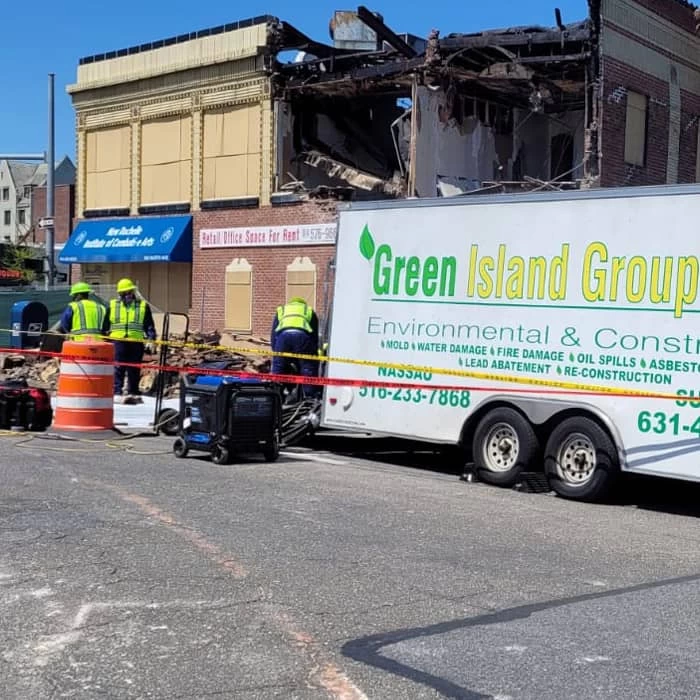
The first call triggers an emergency response. Our crew arrives within the hour to assess the damage, secure the property — boarding up openings, tarping the roof if needed — and stop any active deterioration. This isn’t a consultation. It’s damage control, and it starts immediately.
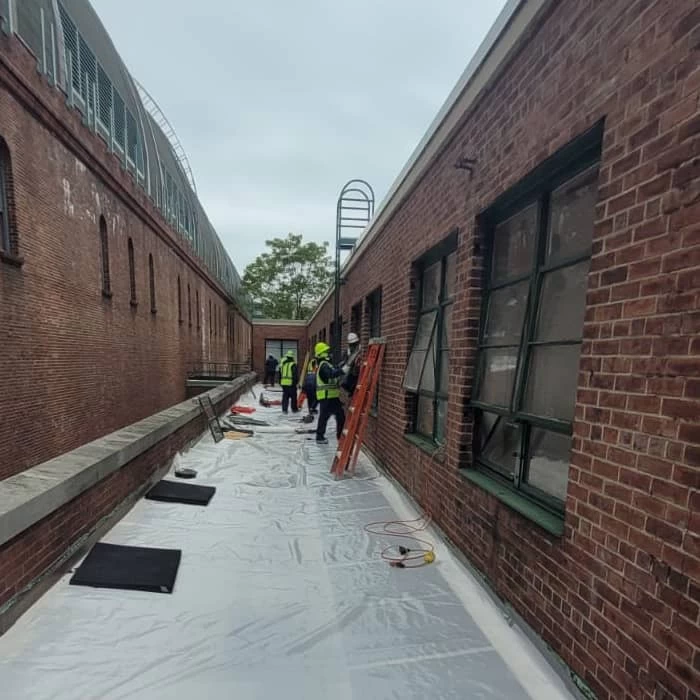
From there, the full assessment begins. We use moisture meters and air quality testing to map the actual extent of smoke, soot, and water damage — including areas that aren’t visible. In Great Neck Gardens homes built before 1980, this assessment also screens for asbestos-containing materials and lead paint that a fire may have disturbed. If those materials are present, they have to be addressed before any restoration work can legally proceed — and because we hold the NYS DOL Asbestos License and USEPA Lead/RRP certification, that work stays in-house. No waiting on a second contractor. No project delays while you coordinate between companies.
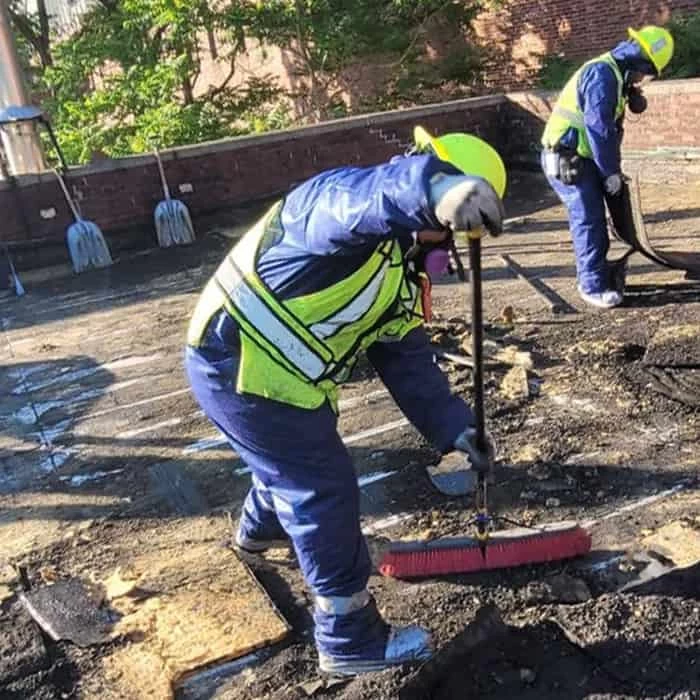
Once the site is safe and fully documented, remediation begins: soot and smoke removal, odor elimination, water extraction, and structural drying. After that comes reconstruction — handled under our Nassau County General Contractor License, with permits pulled through the Town of North Hempstead, which governs Great Neck Gardens as an unincorporated hamlet. The job doesn’t end at cleanup. It ends when your home is back.
Fire and Smoke Restoration Services, Nassau County NY
Everything the Job Requires — Under One Roof, One License, One Team
Fire damage restoration in Great Neck Gardens isn’t a single service — it’s a sequence of them. We cover the full arc: emergency board-up and property securing, soot and smoke remediation, odor elimination, water extraction from firefighting suppression, structural drying, mold remediation, HVAC cleaning, asbestos abatement, lead remediation, and complete structural reconstruction. Every phase, one company.
For homeowners in this part of Nassau County, oil-fired heating systems are common — and oil burner puff-backs are a real and recurring problem. A puff-back isn’t a fire, but the fine, oily soot it releases coats walls, ceilings, contents, and ductwork throughout the home. It’s harder to remove than standard fire soot and requires a different approach. Our team has handled enough of them on the North Shore to know exactly what that process looks like.
If your home was built before 1978, lead paint is almost certainly present. If it was built before 1980, asbestos-containing materials — pipe insulation, floor tiles, joint compound — likely are too. A fire disturbs both. New York State law requires licensed contractors to handle those materials before any restoration work touches them. We hold every license required to do that work legally, which means your job doesn’t stall out waiting for a certified subcontractor who may be days out.
Does homeowner's insurance cover fire damage restoration in Great Neck Gardens, NY?
Most standard homeowner’s insurance policies cover fire damage restoration, including smoke and soot cleanup, water damage from firefighting suppression, and structural repairs — but the actual payout depends heavily on how the claim is documented. Insurance companies evaluate scope based on what’s been identified and recorded, not what you describe verbally. If the assessment misses smoke migration in the HVAC system or water saturation behind a wall, that damage may not make it into the claim.
We document every phase of the restoration process to insurance-standard specifications and bill insurance companies directly. That means you’re not fronting costs and waiting for reimbursement, and you’re not navigating the adjuster conversation alone. In Great Neck Gardens, where homes regularly carry replacement-cost policies on properties valued well above the Nassau County average, getting the documentation right from the start has a direct impact on what you recover.
How quickly does mold develop after a house fire in Great Neck Gardens?
Mold can begin forming in water-saturated building materials within 24 to 48 hours of exposure under normal conditions. In Great Neck Gardens, which sits near Little Neck Bay on the North Shore, ambient humidity tends to run higher than in inland Nassau County communities — which can compress that window even further. The water used to extinguish a residential fire soaks into flooring, subfloor, insulation, and drywall fast, and once mold takes hold in those materials, remediation becomes significantly more involved.
The most effective way to prevent a mold problem after a fire is to begin water extraction and structural drying immediately — not after the smoke cleanup is done, but simultaneously. Our combined fire and water damage restoration capability means both happen at the same time, from the same crew. And because we hold the NYS DOL Mold License, if mold is already present when the assessment begins, we can remediate it without bringing in a separate contractor.
What happens if my Great Neck Gardens home has asbestos and caught fire?
If your home was built before 1980 — which describes a significant portion of the housing stock in Great Neck Gardens — there’s a real possibility it contains asbestos-containing materials. Pipe insulation on oil-fired heating systems, 9-inch vinyl floor tiles in kitchens and basements, ceiling tiles, and joint compound are all common sources. A fire disturbs these materials, and once disturbed, they create a legally defined hazmat situation that most restoration contractors are not licensed to address.
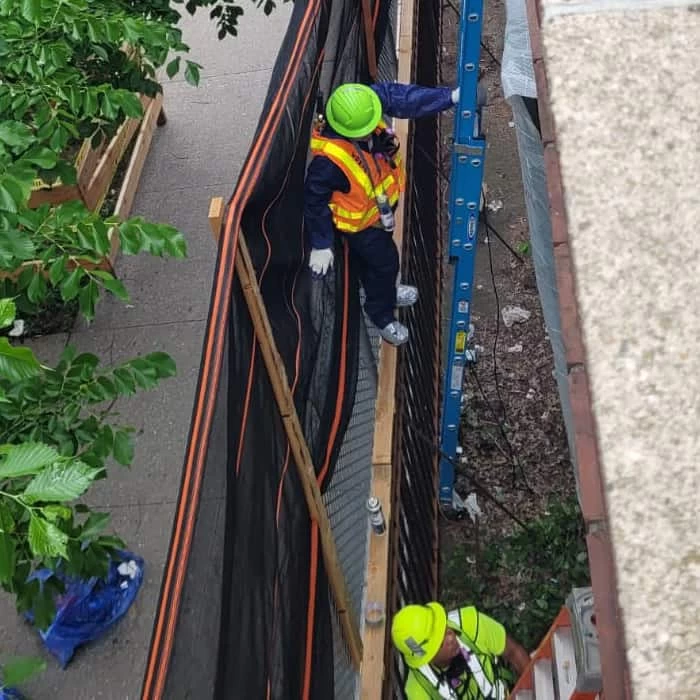
Under New York State Industrial Code Rule 56, asbestos abatement must be performed by a NYS DOL-licensed contractor, with notifications filed with the state before work begins. No restoration work can legally proceed on affected areas until that abatement is complete. We hold the NYS DOL Asbestos License and handle abatement in-house — which means your job doesn’t pause while you wait for a separate licensed firm to become available. The assessment, abatement, and restoration all move forward under one team.
How long does fire damage restoration typically take from start to finish?
The honest answer is that it depends on the scope of damage — and in Great Neck Gardens specifically, scope can expand quickly once the full assessment is done. A kitchen fire with limited smoke spread and no structural damage might be resolved in one to two weeks. A more significant loss involving multiple rooms, water saturation from suppression, and the presence of asbestos or lead paint in a pre-1980 home can take several months from emergency response through final reconstruction.
The variables that extend timelines most often are hazardous materials abatement, permit processing through the Town of North Hempstead, and the extent of structural reconstruction required. We manage all of those stages directly — including pulling permits through North Hempstead, which governs Great Neck Gardens as an unincorporated hamlet. Having one company handle the full sequence, rather than handing off between a remediation firm and a separate general contractor, removes one of the biggest sources of delay in the process.
Can smoke smell be fully removed from an older home in Great Neck Gardens?
Yes — but only if the source is actually found and treated, not just masked. Smoke odor that returns weeks after a fire almost always means the soot or smoke residue causing it was never fully removed. In older homes, which make up a large share of the housing stock in Great Neck Gardens, that residue tends to penetrate further into porous materials — wood framing, plaster walls, older insulation — than it does in more recently constructed homes with tighter, less absorbent building materials.
Effective odor elimination requires identifying every surface and cavity where smoke has traveled — including HVAC ductwork, wall interiors, and structural framing — and treating or replacing those materials as needed. We use air quality testing as part of the initial assessment to map smoke migration beyond what’s visible, which means the remediation plan is based on where the odor actually is, not just where the fire was. The goal isn’t to cover the smell. It’s to remove what’s causing it.
What should I do in the first hour after a house fire in Great Neck Gardens, NY?
The most important thing you can do in the first hour is call a restoration company before you call anyone else except the fire department and your insurance company. Once the Great Neck Vigilant Fire Company clears the scene and confirms it’s safe to re-enter, the clock starts on soot bonding, water saturation, and potential mold conditions — all of which get harder and more expensive to address the longer they sit.
Do not attempt to clean soot yourself. Dry soot smears when wiped with household cleaners, and the oily soot from an oil burner puff-back — common in this part of Nassau County — requires specialized equipment and technique to remove without spreading it further. Don’t run your HVAC system either, since that circulates contaminated air and soot particles throughout the home. Document everything with photos before anything is moved or cleaned, and keep records of any damaged contents. We can walk you through the insurance documentation process from the first call — that conversation costs you nothing, and starting it early makes a real difference in how the claim resolves.