When a Gold Coast Home Burns, the Stakes Are Different
Fire damage restoration in Great Neck isn’t just cleanup — it’s protecting a home that’s worth well over a million dollars, built before modern codes, and full of materials that become hazardous the moment fire touches them. We respond in under an hour, handle your insurance directly, and take it all the way to finished.
I needed a professional consultation explanation of procedure for safe removal of Asbestos in my apartment complex. Without having an account yet, I was very impressed with the caring, knowledgeable and generous advice offered by Jessica, and will look forward to doing business in the future. Thank you so much! I feel much more informed about a sometimes scary endeavor. Peace. Nancy Silva Mineola, NY.
Mia Munoz
Used this company to clean up some water flood in my house. They were fast and easy to work with.very professional, Would recommend to anyone!
Nini Valle
Great company, had a flood and they responded quickly and efficiently. Billed my insurance company directly. I highly recommend this company!
joe colapietro, jr
I had pipe freeze in my basement right before a snow storm and they made to within an hour to help start the clean up process. They we by our side throughout the entire process and even helped with the insurance company. They did such a great job with the cleanup, repair, remidiation, I contracted them to perform the repairs and finishes in the basement. They came with enough manpower and material to get the job done. Leo and Jessica were nothing but a pleasure to deal with!!
Cristian Arredondo c
I had some water damage in my home and Green Island was able to take care of my issue quickly and effectively. I am very pleased with the work they did. They responded quickly and were very professional.
Michael M
Outstanding service! From the office to the field crew everyone was friendly, helpful and responsive. I highly recommend Green Island Group.
What Gets Fixed — and What Never Gets Missed in a Pre-War Great Neck Home
Most homeowners assume fire damage is what they can see. The char, the collapsed ceiling, the scorched wall. But in a Great Neck home built in the 1940s or 1950s — which describes the majority of houses on this peninsula — the damage runs deeper. Fire disturbs asbestos in floor tiles and pipe insulation. It disturbs lead paint in walls and trim. It sends acidic soot into every room that shares an air system with the fire’s origin, bonding permanently to surfaces within hours if nobody acts. That’s not a worst-case scenario. That’s a Tuesday in an older North Shore home.
The coastal proximity to Long Island Sound and Manhasset Bay adds another layer. The ambient humidity here is already elevated, and the water used to put out a fire introduces even more moisture into a structure that’s now open and compromised. Mold can begin growing within 24 hours under those conditions. A restoration company that focuses only on fire and smoke — without simultaneously extracting water and applying mold prevention — is leaving you exposed to a second problem that can cost as much as the first.
When the work is done right, you get your home back. Not a patched version of it. Not a structure that still smells like smoke every time the heat kicks on. A properly restored home — with documentation your insurance company accepts, hazardous materials handled legally, and every system including your HVAC cleaned so the contamination doesn’t recirculate.
Every License This Work Actually Requires — and Then Some
We’re a locally owned restoration company based on Long Island, serving Great Neck and Nassau County communities including every village on the Great Neck peninsula — Kings Point, Great Neck Estates, Great Neck Plaza, Russell Gardens, Saddle Rock, and the rest. We’ve completed over 5,000 restoration projects across New York State and hold the credentials that this specific market demands: IICRC certification for fire and smoke damage restoration, a Nassau County General Contractor license, NYS DOL licensure for asbestos and mold, USEPA Lead/RRP certification, and NADCA certification for HVAC cleaning.
That combination matters here because Great Neck’s housing stock is older than most people realize. When more than 46% of homes were built before 1950, almost every fire restoration project involves hazardous materials that only a licensed contractor can legally touch. We don’t subcontract that work out or hand you off to a second company — we handle the full scope, from the first emergency call through final reconstruction, under one roof and one Nassau County GC license.
From the Vigilant Engine's Last Call to Your Front Door Reopened
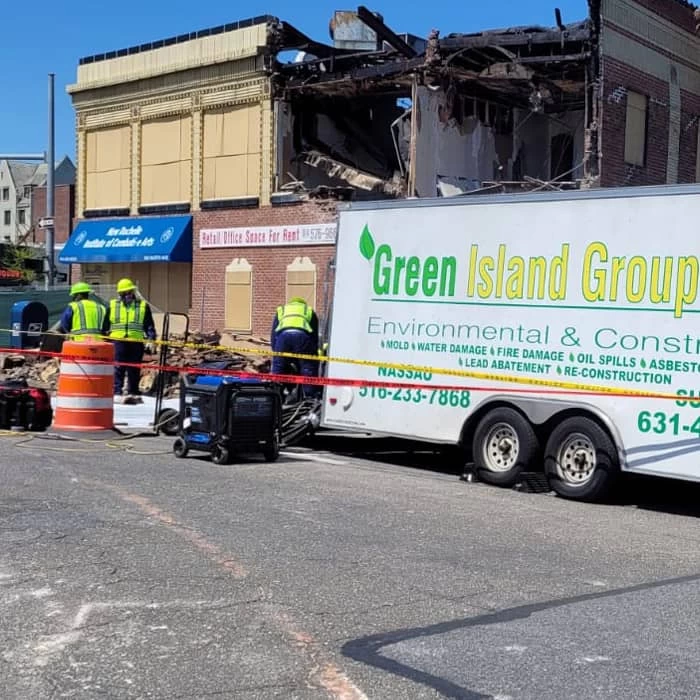
When the Great Neck Vigilant Engine and Hook & Ladder Co. or the Alert Fire Company clears the scene, the restoration clock starts immediately. We arrive on-site within one hour — any time of day, any day of the year — to secure the property. That means board-up, emergency tarping, and making sure the structure is protected from weather and unauthorized entry before anything else happens. In the same mobilization, water extraction begins, because every hour of standing water in a coastal-humidity environment like Great Neck accelerates the mold timeline.
From there, the damage assessment drives everything. Soot and smoke migrate far beyond the fire’s origin — through HVAC ductwork, into closets, behind walls — and the full scope needs to be documented before any cleaning or demolition begins. That documentation isn’t just for the work plan; it’s the foundation of your insurance claim. We photograph, catalog, and report in the format that Nassau County insurance adjusters recognize and accept, which means fewer delays and fewer disputes on your end.
Once hazardous materials are tested and, where present, abated under NYS DOL licensing requirements, the restoration and reconstruction phase begins. Because Great Neck’s nine incorporated villages each maintain their own building department, permits are pulled from the correct village authority — whether that’s Great Neck Plaza’s building department, Great Neck Estates, Kings Point, or another village — before any structural work starts. You don’t have to figure out which of nine municipal offices to call. That’s handled.
Everything a North Shore Fire Restoration Actually Covers
Fire damage restoration in Great Neck covers more ground than most people expect before they go through it. The visible damage — burned structural materials, charred surfaces, collapsed sections — is the starting point, not the whole picture. Soot and smoke contamination spreads through an entire home’s air system, and in Great Neck’s older homes, that system often hasn’t been cleaned in years. Our NADCA-certified HVAC cleaning is included in the restoration process specifically because of this: if the ductwork isn’t fully cleaned, every time the heat or air conditioning runs, it redistributes smoke particles through rooms that were otherwise restored.
For homes built before 1978 — which is the majority of Great Neck’s residential housing stock — asbestos testing and lead paint assessment are part of the intake process. If those materials are present and disturbed, abatement happens before any demolition or reconstruction begins. This is a legal requirement in New York State, not an optional add-on, and it’s something many restoration contractors in Nassau County are not licensed to perform. We hold both the NYS DOL Asbestos Contractor License and the NYS DOL Mold Remediation Contractor License, which means the work stays in-house from start to finish.
Oil burner puff-backs are also a common service call on the North Shore. When an aging oil heating system misfires and blasts soot throughout a home’s interior — coating walls, ceilings, furniture, and ductwork with fine, oily residue — that’s a fire smoke damage restoration job that requires the same IICRC-trained response as a structural fire. If you’re dealing with a puff-back in a Great Neck home, the process and the credentials required are the same.
Does homeowners insurance cover fire damage restoration in Great Neck, NY?
Yes, in most cases. Standard homeowners insurance policies cover fire damage restoration, including cleanup, structural repairs, and contents replacement. The more important question is whether your restoration company documents the damage thoroughly enough for your adjuster to approve the full scope of the claim. In Great Neck, where homes routinely appraise above $900,000 and fire damage claims can be substantial, the documentation quality matters as much as the work itself.
We bill insurance companies directly and build the claim documentation to the standard that Nassau County adjusters recognize — IICRC-compliant reporting, itemized damage assessments, and photographic records at every phase. We’ve worked through hundreds of Long Island insurance claims and know where disputes typically arise and how to prevent them. You’re not navigating the claims process alone while also dealing with displacement and everything else that comes with a fire loss.
How quickly does fire damage need to be addressed before it gets worse?
Faster than most people realize. Acidic soot begins permanently bonding to walls, ceilings, and surfaces within hours of a fire. Oily soot — which is common in kitchen fires and oil burner puff-backs, both frequent in Great Neck’s older homes — is even more aggressive and harder to remove the longer it sits. What’s treatable on day one can become a permanent stain or a replacement job by day three.
The water side of the equation moves just as fast. Firefighting suppression introduces significant moisture into a structure, and in Great Neck’s coastal environment — where proximity to Long Island Sound already keeps ambient humidity elevated — mold can begin colonizing wet materials within 24 hours. The reason we commit to on-site arrival within one hour, around the clock, is because every hour between the fire and the response has a real cost attached to it.
What happens if my Great Neck home has asbestos or lead paint and there's a fire?
This is one of the most important questions to ask, and most homeowners don’t think to ask it until they’re already in the middle of a restoration. If your home was built before 1980 — which describes the majority of homes on the Great Neck peninsula, where the median construction year is 1952 — there is a realistic chance that fire disturbed asbestos-containing materials and lead paint. Floor tiles, pipe insulation, ceiling tiles, and joint compound from that era commonly contained asbestos. Lead paint was standard on walls, trim, and windows.
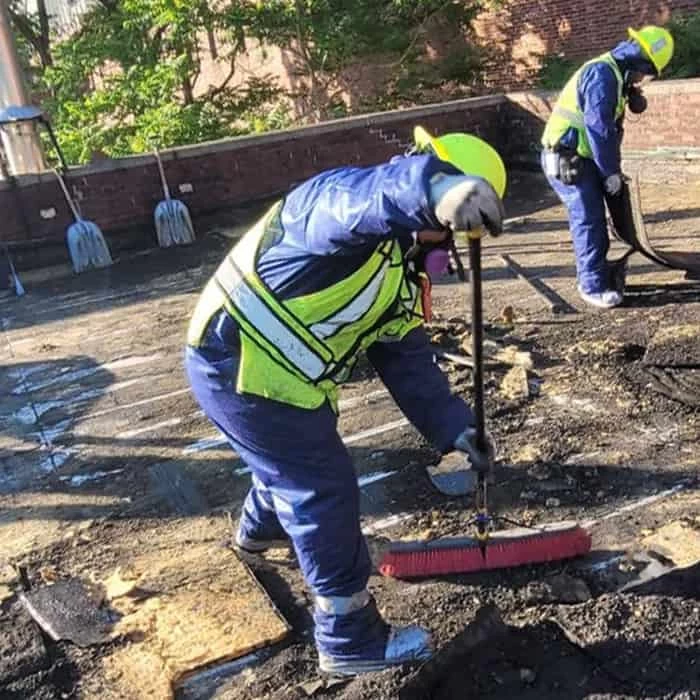
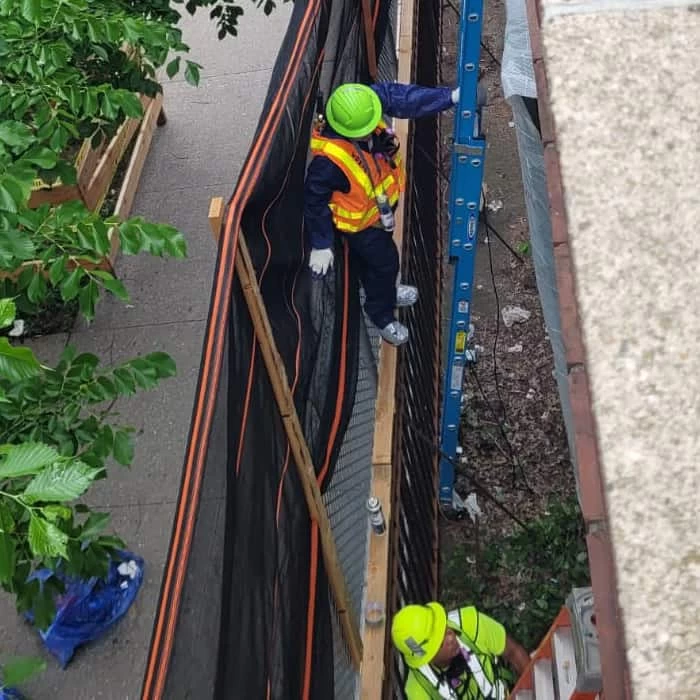
When those materials are disturbed by fire, New York State law requires that a licensed contractor handle the abatement before any demolition or reconstruction begins. This isn’t optional, and it’s not something a standard restoration company is authorized to do. We hold NYS DOL licensure for both asbestos abatement and mold remediation, along with USEPA Lead/RRP certification. Testing is done first, and if hazardous materials are confirmed, abatement is completed under proper containment protocols before the rebuild phase begins. You don’t need to coordinate a separate hazmat contractor — it’s handled within the same project.
How long does fire damage restoration typically take for a home in Nassau County?
The honest answer is that it depends on the scope, and the scope in Great Neck is often larger than it first appears. A contained kitchen fire with no structural damage might take two to three weeks from emergency response through final cleaning. A fire that caused structural damage, traveled through the HVAC system, and disturbed asbestos or lead paint in a pre-war home can take two to four months or longer, depending on the extent of the rebuild and the permitting timeline.
In Great Neck specifically, the permitting environment adds a variable that homeowners should understand. Because the peninsula is divided into nine incorporated villages — each with its own building department — reconstruction permits need to come from the correct village authority for your specific address. That process moves at its own pace, and it’s separate from the restoration work itself. We manage the permit coordination as part of the project, so you’re not chasing down the right municipal office while also managing displacement. The timeline is communicated clearly from the assessment phase forward, so you’re never left guessing where things stand.
My oil burner had a puff-back — is that treated the same as fire damage restoration?
Functionally, yes. A puff-back occurs when an oil burner misfires and forces a backblast of fine, oily soot through the heating system and into the living spaces of the home. The result is widespread smoke and soot contamination — on walls, ceilings, furniture, clothing, and throughout the HVAC ductwork — without an actual open flame. It doesn’t look like a fire, but the remediation process is the same.
Puff-backs are particularly common on Long Island’s North Shore, where older oil heating systems are widespread and Great Neck’s pre-war and mid-century homes frequently have aging equipment. The soot from a puff-back is oily and acidic, and it requires IICRC-trained technicians and specialized cleaning chemistry to remove properly. More importantly, the HVAC system has to be fully cleaned — under NADCA certification standards — or the soot recirculates every time the heat runs, recontaminating rooms that were already cleaned. We hold both IICRC and NADCA certification, which is the specific combination required to resolve a puff-back completely rather than just cosmetically.
How do I know which restoration company to trust after a fire in Great Neck?
Start with verifiable credentials, not marketing language. In New York State, the licenses that matter for fire restoration work are: NYS DOL Asbestos Contractor License, NYS DOL Mold Remediation Contractor License, USEPA Lead/RRP certification, and a Nassau County General Contractor license for any reconstruction work. IICRC certification for fire and smoke restoration is the industry standard that insurance companies recognize for documentation purposes. Ask any contractor you’re considering to show you these credentials specifically — not a general contractor’s license alone, and not a franchise affiliation badge.
In Great Neck, the stakes are higher than in most markets. The average home value on the peninsula approaches $1.35 million, the housing stock is predominantly pre-war and mid-century, and the multi-village permit environment means reconstruction requires a contractor who knows which building department governs your specific address. A company that holds all the required licenses, has completed thousands of restoration projects across Nassau County, handles insurance billing directly, and doesn’t subcontract the hazardous materials work to a third party is a fundamentally different proposition than a franchise operation that shows up with a national brand name and a local phone number. We’re locally owned, hold every credential listed above, and have worked in this market long enough to know exactly what these homes require.