When a $1M+ Home Burns in Great River, Every Hour Counts
Fire damage doesn’t wait and in Great River’s waterfront climate, neither can we. We respond fast, handle everything from emergency stabilization through final reconstruction, and don’t leave until the job is done right.
I needed a professional consultation explanation of procedure for safe removal of Asbestos in my apartment complex. Without having an account yet, I was very impressed with the caring, knowledgeable and generous advice offered by Jessica, and will look forward to doing business in the future. Thank you so much! I feel much more informed about a sometimes scary endeavor. Peace. Nancy Silva Mineola, NY.
Mia Munoz
Used this company to clean up some water flood in my house. They were fast and easy to work with.very professional, Would recommend to anyone!
Nini Valle
Great company, had a flood and they responded quickly and efficiently. Billed my insurance company directly. I highly recommend this company!
joe colapietro, jr
I had pipe freeze in my basement right before a snow storm and they made to within an hour to help start the clean up process. They we by our side throughout the entire process and even helped with the insurance company. They did such a great job with the cleanup, repair, remidiation, I contracted them to perform the repairs and finishes in the basement. They came with enough manpower and material to get the job done. Leo and Jessica were nothing but a pleasure to deal with!!
Cristian Arredondo c
I had some water damage in my home and Green Island was able to take care of my issue quickly and effectively. I am very pleased with the work they did. They responded quickly and were very professional.
Michael M
Outstanding service! From the office to the field crew everyone was friendly, helpful and responsive. I highly recommend Green Island Group.
What Changes When the Right Team Shows Up First in Great River
The fire is out. But what comes next is where most Great River homeowners get overwhelmed and where the real damage quietly keeps happening. Soot begins permanently etching your surfaces within 24 to 72 hours. In Great River, where the air coming off the Connetquot River and the Great South Bay carries elevated humidity year-round, that window is even tighter. Moisture from fire suppression soaks into your floors and walls, and in a coastal environment like this one, mold doesn’t take long to follow.
What changes when the right team gets there fast is simple: the damage stops spreading. The smoke smell doesn’t settle permanently into your woodwork. The water doesn’t sit long enough to grow something worse. Your home the one you’ve spent years building in one of Long Island’s most sought-after hamlets starts moving toward recovery instead of further deterioration.
Great River’s housing stock adds another layer most homeowners don’t think about until it’s too late. Homes built in the 1950s which describes much of this area often contain asbestos in insulation, floor tiles, and ceiling materials. A fire that disturbs those materials triggers state-mandated abatement requirements before any reconstruction can begin. When your restoration company can handle that in-house, you’re not waiting on a second contractor to show up before the real work starts. You’re moving forward from day one.
One Team, One Call, No Handoffs Serving Great River Since Day One
We’re a locally owned restoration company serving Great River and the surrounding Suffolk County communities not a franchise, not a call center dispatching anonymous crews. When you call us, you’re reaching people who know this area, understand the Town of Islip’s permit process, and have handled restoration projects in neighborhoods just like yours.
That matters more than it sounds. In a hamlet of fewer than 2,000 residents, where people talk at the post office on Connetquot Avenue, through the East Islip school district network, on the fairways at Timber Point your experience with a contractor doesn’t stay private. Our reputation is built on exactly that kind of accountability. Customers name specific team members in their reviews. They come back for additional projects after the restoration is done. That’s not a coincidence.
From emergency stabilization to final finishes, everything is handled under one roof. No relay race of subcontractors. No gaps in communication. One point of contact from the first call to the last walkthrough.
From Emergency Call to Finished Home Here's Our Sequence
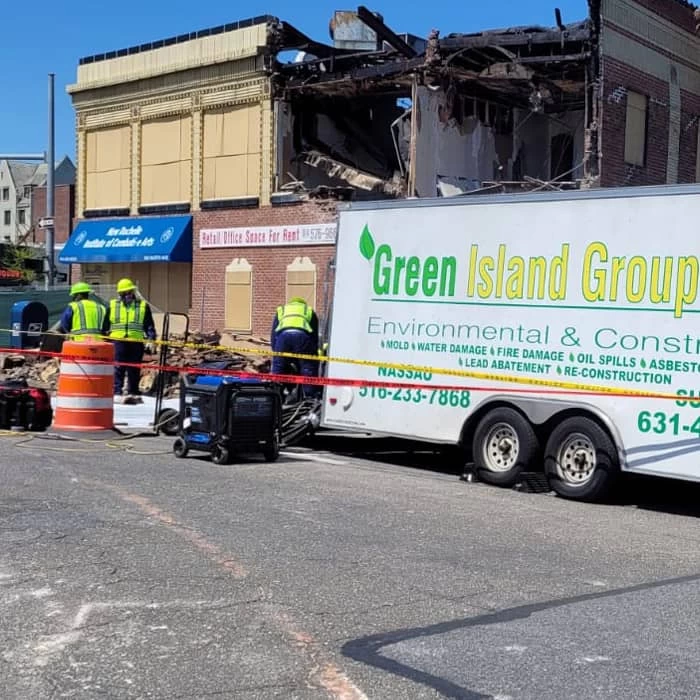
The first call triggers an emergency response. We move fast documented response times under an hour because the first hours after a fire are the most critical for limiting secondary damage. On arrival, our priority is stabilization: boarding windows, securing the structure, covering roof damage, and preventing outside elements from compounding what the fire already started. In Great River’s damp, bay-adjacent climate, getting the structure sealed quickly isn’t optional it’s what separates a contained loss from a much larger one.
Once the site is secure, the assessment begins. Every room gets evaluated not just the ones that burned. Smoke travels through HVAC systems and wall cavities, and soot doesn’t respect room boundaries. If your home’s construction materials require asbestos testing which is common in Great River’s 1950s-era homes we initiate that process immediately, because New York State law requires clearance before reconstruction work can begin. The Town of Islip Building Department also requires permits for structural repairs, electrical, plumbing, and HVAC work, and we handle that documentation as part of the process, not as an afterthought.
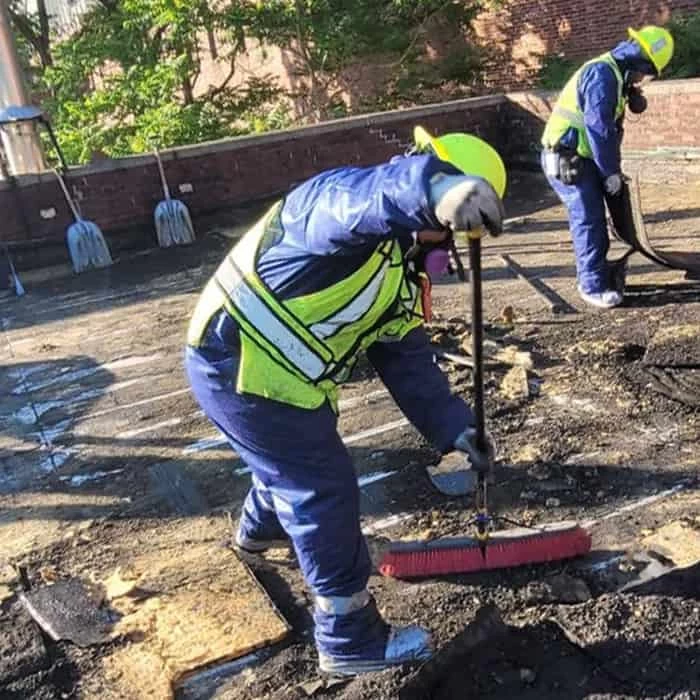
From there, it’s remediation: smoke and soot removal, water extraction, structural drying, odor treatment, and mold prevention. Then reconstruction drywall, flooring, painting, trim, and whatever finishing work brings your home back to where it was. Throughout all of it, we work alongside your insurance adjuster to make sure the claim reflects the actual scope of the damage.
Built for the Complexity Great River Homes Actually Have
Fire damage restoration in Great River isn’t a one-size-fits-all job. The homes here are older, the environment is coastal, and the stakes with property values regularly exceeding $1 million are high. The scope of work reflects that reality.
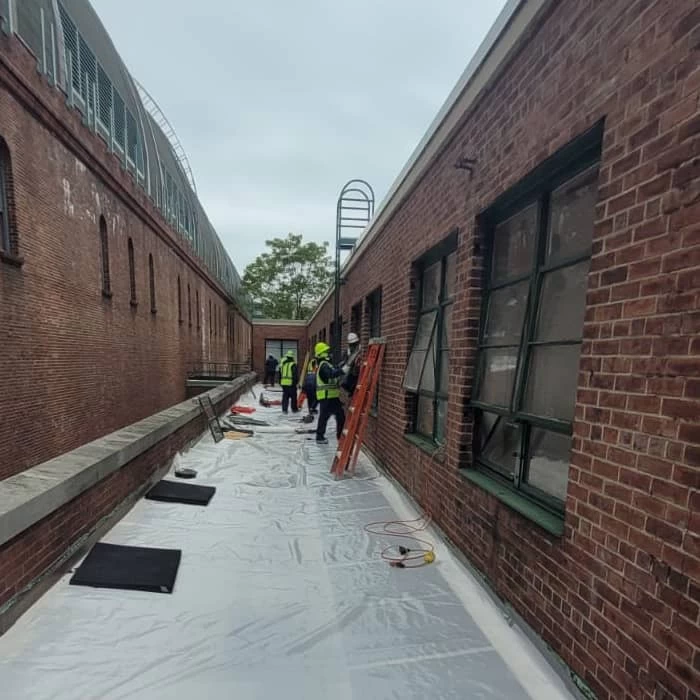
We cover every phase: emergency board-up and structural stabilization, full smoke and soot remediation (including HVAC system cleaning when smoke has traveled through ductwork), water extraction and structural drying from fire suppression, asbestos abatement for pre-1978 construction materials disturbed during the fire, mold remediation when moisture has had time to settle, and complete reconstruction through final finishes. If your home has a wood-burning fireplace a common feature in Great River properties and you’ve experienced a puff-back event that’s coated your walls and ceilings in fine soot, we handle that too. Puff-back remediation is a distinct process that requires professional equipment, not household cleaning products, and it’s frequently covered under homeowners insurance.
Insurance navigation is built into every project. Most Great River homeowners haven’t been through a major claim before, and the process of documenting damage, communicating with an adjuster, and ensuring the settlement reflects the full scope of work including environmental remediation components that adjusters sometimes resist is something we actively manage alongside you. You shouldn’t have to figure that out alone while also dealing with a displaced household.
Does fire damage restoration in Great River require permits from the Town of Islip?
Yes and this is something homeowners often don’t think about until a contractor brings it up (or doesn’t, which is the bigger problem). Any structural repairs, electrical work, plumbing modifications, or HVAC changes following a fire require permits from the Town of Islip Building Department. That applies whether the damage is extensive or relatively contained.
The reason this matters beyond just following the rules: unpermitted restoration work can create serious complications when you go to sell the home or file a future insurance claim. In a market where Great River properties regularly trade above $1 million, that’s a risk worth taking seriously. We handle permit documentation as part of the restoration process it’s not something you need to manage separately or chase down on your own.
My Great River home was built in the 1950s does that affect the restoration process?
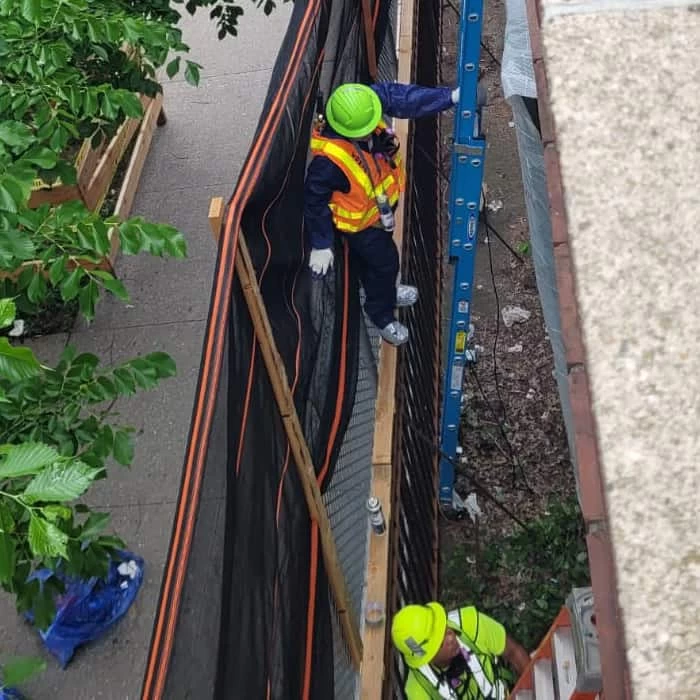
It does, and significantly. Homes built in that era which describes a large portion of Great River’s housing stock were commonly constructed with asbestos-containing materials in insulation, floor tiles, ceiling tiles, pipe wrap, and roofing components. When a fire damages or disturbs those materials, New York State law requires certified asbestos abatement before reconstruction work can legally begin.
This is where choosing the right restoration company makes a real difference. A company without in-house environmental remediation capabilities will need to bring in a separate certified abatement contractor, which adds time, coordination complexity, and potential delays to an already stressful situation. We handle asbestos abatement as part of the restoration scope so the project keeps moving without a gap between the cleanup phase and the rebuild.
How does the coastal environment in Great River affect fire damage and mold risk?
More than most people expect. Great River sits at the intersection of the Connetquot River, Nicoll Bay, and the Great South Bay which means ambient humidity here runs consistently higher than in inland Suffolk County communities. That matters after a fire because fire suppression delivers a significant volume of water into your home’s structure, and in a high-humidity coastal environment, the conditions for mold growth are present almost immediately.
Mold can begin colonizing wet materials within 24 to 48 hours under normal conditions. In Great River’s waterfront climate, that timeline can compress further. Structural drying after a fire isn’t just about making the space feel dry it requires moisture mapping, professional drying equipment, and post-drying verification to confirm that hidden moisture in wall cavities and subfloors has been fully addressed. Our process includes all of that, because a restoration that leaves hidden moisture behind isn’t a restoration it’s a mold problem with a delay.
Will my homeowners insurance cover the full cost of fire damage restoration?
In most cases, yes but the scope of what gets covered depends heavily on how the claim is documented and presented. Standard homeowners insurance policies cover fire damage restoration, smoke and soot remediation, water damage from fire suppression, and often mold remediation when it results directly from the fire event. Environmental remediation components like asbestos abatement, which is frequently required in Great River’s older homes can sometimes be a point of friction with adjusters who may push back on including it in the claim.
This is exactly why having a restoration company that understands the insurance process is valuable. We work directly with your adjuster throughout the project, help document the full scope of damage (including secondary damage that isn’t immediately visible), and advocate for a settlement that reflects what the restoration actually requires. Most homeowners in Great River haven’t navigated a claim of this size before and you shouldn’t have to figure it out while also managing a displaced household.
What is puff-back damage, and is it common in Great River homes?
Puff-back happens when a blocked or malfunctioning chimney forces combustion gases, soot, and debris back into the living space instead of venting properly. The result is a fine, oily black soot that coats walls, ceilings, furniture, and critically gets pulled into the HVAC system and distributed through every room in the house. It’s one of the most underestimated damage events in residential restoration because the soot is fine enough to penetrate fabrics, settle into woodwork, and leave a persistent odor that household cleaning products can’t touch.
Wood-burning fireplaces are a well-known and valued feature in many Great River homes, and that makes puff-back a real and recurring risk in this community especially in older homes where chimney liners may not have been inspected or maintained recently. The good news is that puff-back remediation is frequently covered under homeowners insurance as a sudden and accidental event. The cleanup requires professional equipment and certified technicians, and we handle it as a distinct remediation scope, not a general cleaning job.
How long does fire damage restoration typically take for a home in Great River?
The honest answer is that it depends on the scope and in Great River specifically, there are a few factors that can affect the timeline beyond just the size of the fire. If the home was built before 1978 and asbestos testing reveals the presence of regulated materials, abatement has to be completed and cleared by the state before reconstruction can begin. That’s not a delay anyone can skip it’s a legal requirement, and it adds time that needs to be factored into the overall schedule from the start.
For a fire with moderate damage smoke and soot throughout multiple rooms, water damage from suppression, and some structural repairs a realistic timeline is typically several weeks to a couple of months from initial remediation through final reconstruction. More extensive fires involving significant structural damage can run longer. What we focus on is keeping the project moving without gaps: permits filed promptly, abatement completed efficiently, and reconstruction starting as soon as the remediation phase clears. The goal is getting you back into your home as quickly as the process legitimately allows not dragging it out, but also not cutting corners to rush it.