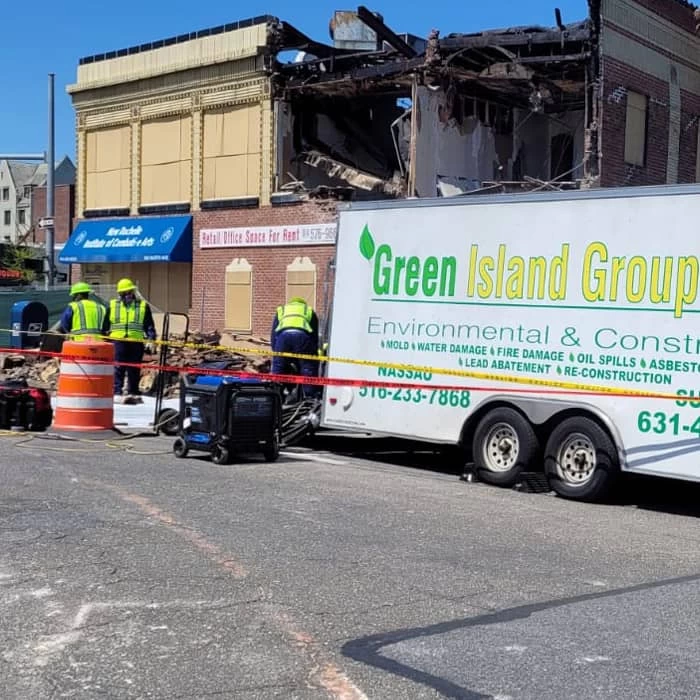
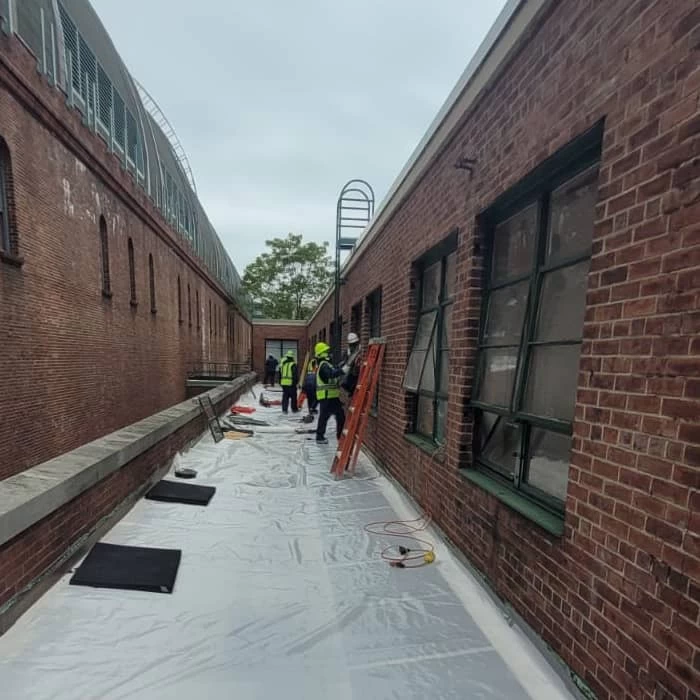
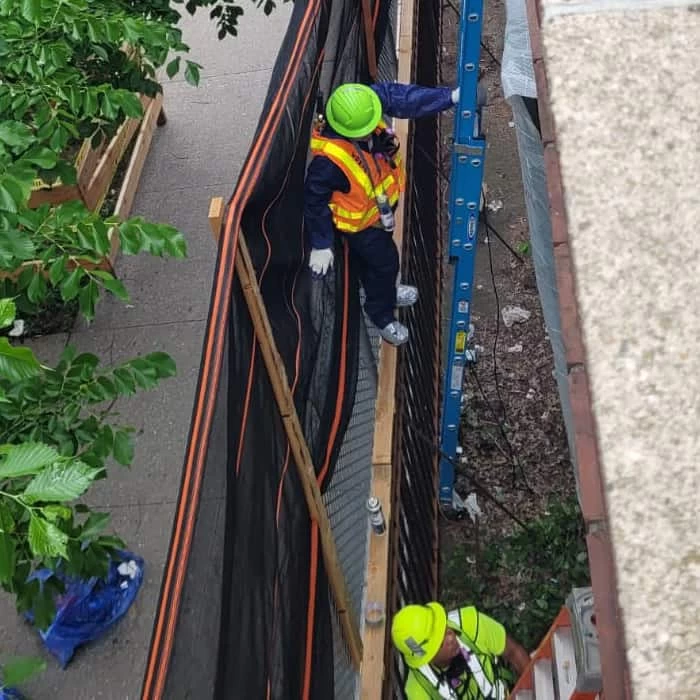
I needed a professional consultation explanation of procedure for safe removal of Asbestos in my apartment complex. Without having an account yet, I was very impressed with the caring, knowledgeable and generous advice offered by Jessica, and will look forward to doing business in the future. Thank you so much! I feel much more informed about a sometimes scary endeavor. Peace. Nancy Silva Mineola, NY.
Mia Munoz
Used this company to clean up some water flood in my house. They were fast and easy to work with.very professional, Would recommend to anyone!
Nini Valle
Great company, had a flood and they responded quickly and efficiently. Billed my insurance company directly. I highly recommend this company!
joe colapietro, jr
I had pipe freeze in my basement right before a snow storm and they made to within an hour to help start the clean up process. They we by our side throughout the entire process and even helped with the insurance company. They did such a great job with the cleanup, repair, remidiation, I contracted them to perform the repairs and finishes in the basement. They came with enough manpower and material to get the job done. Leo and Jessica were nothing but a pleasure to deal with!!
Cristian Arredondo c
I had some water damage in my home and Green Island was able to take care of my issue quickly and effectively. I am very pleased with the work they did. They responded quickly and were very professional.
Michael M
Outstanding service! From the office to the field crew everyone was friendly, helpful and responsive. I highly recommend Green Island Group.
Most Greenlawn homeowners who’ve been through a fire say the same thing: they didn’t realize how far the damage had spread until someone actually looked. Smoke doesn’t stay in the room where the fire started. It travels through ductwork, soaks into plaster walls, embeds in hardwood floors, and settles into insulation that may have been in place since the Eisenhower administration. By the time you can smell it in the back bedroom, it’s already there.
That’s the real problem with fire damage restoration in Greenlawn, where the majority of homes were built in the 1940s and 1950s. These aren’t open-concept new builds with modern materials. They’re Cape Cods and ranches with original construction that absorbs smoke differently, hides damage in wall cavities, and in most cases contains asbestos in floor tiles, pipe insulation, or joint compound that becomes airborne the moment fire disturbs it. A cleanup crew that doesn’t account for that isn’t finishing the job. They’re leaving your family in a home that looks restored but isn’t.
What you actually get when this is done right is a home that’s been cleared room by room, duct by duct, surface by surface with air quality verified, hazardous materials properly handled, and every phase documented in a way your insurance company can work with. That’s what complete looks like.
We’re a Long Island-based, independently owned restoration company not a franchise, not a call center dispatch. When you call, you reach people who’ve worked in homes across Nassau and Suffolk County, who know what a postwar North Shore ranch in Greenlawn looks like from the inside, and who understand exactly what the Town of Huntington’s permitting process requires before reconstruction can begin.
What separates us in a market full of competitors is the scope of what we actually handle. From the first emergency call through final finishes, every phase stays under one roof smoke and soot remediation, water extraction from firefighting efforts, licensed asbestos abatement, mold remediation, demolition, structural repair, and full reconstruction. For a Greenlawn homeowner managing insurance paperwork, temporary housing, and a family that wants to get back to normal, not having to coordinate four different contractors is not a small thing.
Customers don’t just mention the work. They mention the people by name. That kind of accountability is rare in this industry, and it’s exactly what a home worth $700,000 or more deserves.
What Actually Happens From First Call to Final Walkthrough
The first step is getting there fast. Soot starts permanently etching and staining surfaces within 24 to 72 hours of a fire so the sooner the process begins, the better the outcome and the lower the total cost. When we arrive, the priority is assessment: what burned, what was exposed to smoke, what’s structurally compromised, and critically in Greenlawn’s older housing stock whether any hazardous materials were disturbed. That assessment drives everything that follows.
Once the scope is clear, emergency stabilization comes first. That means boarding, tarping, water extraction if firefighting left standing water, and containment to prevent smoke and soot from spreading further through the HVAC system. In a 1950s or 1960s home, the ductwork itself often needs to be addressed early, because smoke circulating through old ducts will recontaminate rooms that have already been cleaned. If asbestos testing confirms the presence of asbestos-containing materials which is common in homes of this age licensed abatement is handled before any demolition or reconstruction begins, in full compliance with New York State Department of Labor requirements.
From there, the process moves into full remediation and rebuild: surfaces treated, odor eliminated at the molecular level (not masked), damaged materials removed, and reconstruction completed to permit-ready standards under the Town of Huntington’s building code. You get a documented scope of work that aligns with your insurance carrier’s Xactimate format, so the claim process has fewer gaps and fewer surprises.
What's Included When Your Home Actually Needs All of It
Fire damage restoration in Greenlawn isn’t a single service it’s a sequence of interconnected steps that have to happen in the right order, by the right people, with the right credentials. Our integrated approach means you’re not piecing together a restoration from separate contractors. Emergency response, smoke and soot cleanup, odor elimination, water damage mitigation, environmental hazard abatement, structural demolition, and full reconstruction are all handled in-house.
The environmental piece matters more in Greenlawn than in newer communities. Homes built before 1980 which is most of the hamlet may contain asbestos in floor tiles, ceiling materials, pipe wrap, or drywall compound. They may also contain lead-based paint. Fire disturbs both. New York State requires licensed contractors for asbestos abatement, and we hold those credentials. This isn’t an add-on service it’s a built-in part of the process for homes of this age, and skipping it isn’t legal or safe.
Insurance documentation is also part of what we provide. We work directly with adjusters, provide Xactimate-aligned estimates, and help Greenlawn homeowners understand what their policy should be covering which, for a home valued at $683,000 to over $800,000 in ZIP code 11740, can be the difference between a fair settlement and a shortfall that comes out of your pocket. The commitment is simple: the job isn’t finished until you say it is.
What should I do immediately after a house fire in Greenlawn, NY?
The most important thing is not to re-enter the home until the fire department has cleared it as structurally safe. Once they have, your next call should be to your insurance company to report the loss and then to a licensed restoration contractor who can begin emergency stabilization before secondary damage compounds the problem. Soot and smoke residue begin permanently bonding to surfaces within 24 to 72 hours, so timing matters more than most people realize.
In Greenlawn specifically, there’s an additional layer to be aware of. If your home was built before 1980 and the majority of homes in this hamlet were there’s a real possibility that the fire disturbed asbestos-containing materials. You should not attempt any cleanup, demolition, or even extensive movement through the damaged areas until a professional has assessed whether asbestos testing is needed. Disturbing those materials without proper containment creates a health hazard that goes well beyond the fire damage itself. A qualified restoration company will handle that assessment as part of the initial response.
Does homeowners insurance cover fire damage restoration costs in New York?
In most cases, yes fire damage is one of the core covered perils under standard homeowners insurance policies in New York. That typically includes the cost of cleanup, remediation, structural repair, and reconstruction, as well as additional living expenses if your family is displaced during the restoration. However, what your policy actually pays out depends heavily on how the claim is documented and how the scope of work is presented to the adjuster.
This is where a lot of Greenlawn homeowners run into problems. Insurance adjusters work for the insurance company, not for you. If the initial scope of work underestimates the damage which is easy to do when smoke has spread through an older home’s ductwork and wall cavities you may receive a settlement that doesn’t fully cover what the restoration actually requires. We work with adjusters directly, use Xactimate-aligned estimates that carriers recognize, and help homeowners understand what should be included in the scope. For a home in ZIP code 11740 valued at $683,000 to over $800,000, making sure the claim is handled completely is worth the extra attention.
How long does fire damage restoration typically take for a Greenlawn home?
It depends on the extent of the damage, but for a typical postwar home in Greenlawn a Cape Cod or ranch with 1,200 to 2,000 square feet a moderate fire affecting one or two rooms can take anywhere from two to six weeks for full restoration. A more significant fire involving structural damage, multiple rooms, or hazardous material abatement can extend that timeline to several months.
The factors that most commonly extend timelines in Greenlawn’s housing stock are asbestos abatement and permitting. If asbestos-containing materials are confirmed and need to be removed, that process has to be completed before reconstruction begins and it has to be done by a New York State-licensed contractor following NYSDOL protocols. Permitting through the Town of Huntington’s Building and Housing Division also takes time, and any structural repair or reconstruction requires a permit and inspection before the work can be signed off. A contractor who skips these steps may finish faster, but they’re creating liability and code compliance problems that can surface when you try to sell the home or file a future insurance claim.
Can smoke damage spread to rooms that weren't directly affected by the fire?
Yes and in older Greenlawn homes, it spreads further and faster than most people expect. Smoke is not contained by walls. It travels through HVAC ductwork, moves through gaps in original plaster and lathe construction, and settles into insulation, carpeting, and soft materials throughout the entire structure. In a 1950s or 1960s Greenlawn home with original ductwork and plaster walls, a fire in the kitchen can leave detectable smoke residue in every room of the house within hours.
This is one of the most common points of disagreement between homeowners and insurance adjusters after a fire. The adjuster may want to limit the remediation scope to the rooms with visible burn damage. But if smoke has traveled through the duct system, the entire HVAC needs to be addressed otherwise, the system will recirculate smoke odor and particulates every time it runs, and rooms that appeared clean will test positive for contamination. A thorough assessment that maps where smoke actually traveled not just where the fire burned is essential to a complete restoration. That’s not an upsell; it’s how the job is supposed to be done.
Is it safe to stay in my Greenlawn home after a fire, even if the damage seems minor?
Generally, no at least not until a professional assessment has been completed. Even a small fire produces soot and smoke residue that contains carcinogens, volatile organic compounds, and fine particulates that are harmful to breathe. In Greenlawn’s older homes, a fire that disturbs building materials containing asbestos adds another layer of risk that isn’t visible and isn’t something you can assess yourself.
Beyond the air quality concern, there are structural considerations. A fire that appears minor on the surface may have compromised structural elements, electrical wiring, or load-bearing components in ways that aren’t immediately obvious. The Greenlawn Fire Department will typically advise on immediate safety before leaving the scene, but their clearance is about whether the structure is safe to enter briefly, not whether it’s safe to live in. A licensed restoration contractor should conduct a full assessment before you or your family returns to sleeping and living in the home, particularly if you have children or anyone with respiratory sensitivities.
Why does fire restoration in Greenlawn often cost more than in newer Long Island communities?
The primary reason is the age of the housing stock. Greenlawn’s homes were built predominantly in the 1940s and 1950s, with a median construction year of 1963. Restoring a home of that age after a fire involves layers of complexity that simply don’t exist in newer construction original plaster walls that absorb smoke differently than drywall, older electrical systems that may need to be brought up to current code as part of the rebuild, oil-fired heating equipment that requires specialized handling, and in most cases, the presence of asbestos-containing materials that require licensed abatement before any demolition or reconstruction can begin.
That abatement process alone required under New York State Department of Labor regulations adds cost and time that isn’t a factor in a home built after 1980. Add in the Town of Huntington’s permitting requirements for structural work, and the total scope of a complete, code-compliant, insurance-documented restoration in Greenlawn is legitimately more involved than the same square footage in a newer community. The cost reflects the work that actually needs to happen, not padding. And for a home worth $683,000 to over $800,000 in ZIP code 11740, cutting corners on that process creates problems that cost far more to fix later.