Greenport's Historic Homes Deserve More Than a Generic Crew
When fire hits a pre-war home on the North Fork, the damage runs deeper than it looks and who you call in the first few hours matters more than most people realize. In Greenport, where more than 60% of homes were built before 1939, that decision shapes whether your restoration preserves what makes your home irreplaceable or leaves you with a generic rebuild.
I needed a professional consultation explanation of procedure for safe removal of Asbestos in my apartment complex. Without having an account yet, I was very impressed with the caring, knowledgeable and generous advice offered by Jessica, and will look forward to doing business in the future. Thank you so much! I feel much more informed about a sometimes scary endeavor. Peace. Nancy Silva Mineola, NY.
Mia Munoz
Used this company to clean up some water flood in my house. They were fast and easy to work with.very professional, Would recommend to anyone!
Nini Valle
Great company, had a flood and they responded quickly and efficiently. Billed my insurance company directly. I highly recommend this company!
joe colapietro, jr
I had pipe freeze in my basement right before a snow storm and they made to within an hour to help start the clean up process. They we by our side throughout the entire process and even helped with the insurance company. They did such a great job with the cleanup, repair, remidiation, I contracted them to perform the repairs and finishes in the basement. They came with enough manpower and material to get the job done. Leo and Jessica were nothing but a pleasure to deal with!!
Cristian Arredondo c
I had some water damage in my home and Green Island was able to take care of my issue quickly and effectively. I am very pleased with the work they did. They responded quickly and were very professional.
Michael M
Outstanding service! From the office to the field crew everyone was friendly, helpful and responsive. I highly recommend Green Island Group.
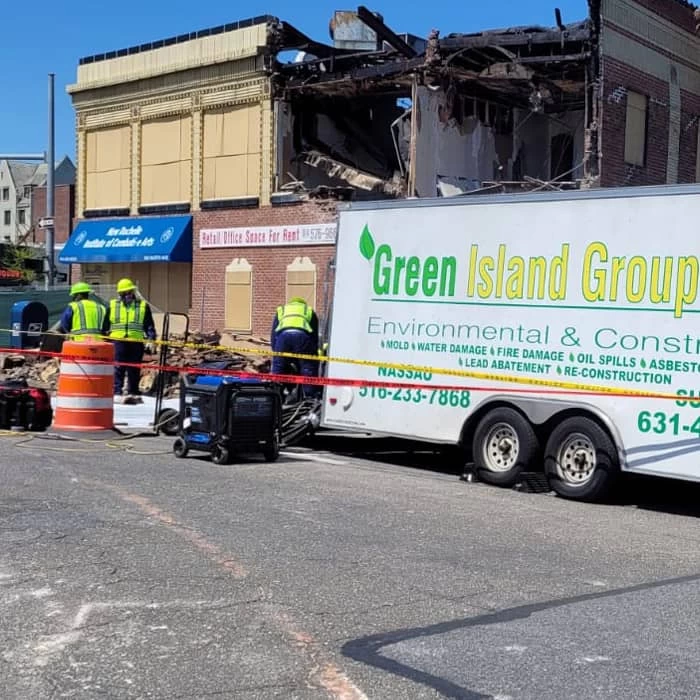
Most people don’t realize how far fire damage travels. The room that burned is obvious. What isn’t obvious is the smoke that moved through your HVAC system into rooms that never saw a flame, the soot quietly etching into your original hardwood floors, and the firefighting water already working its way into walls that have been standing since before World War II. In Greenport, where more than 60% of homes were built before 1939, that’s not a hypothetical it’s the reality of almost every fire call in this village.
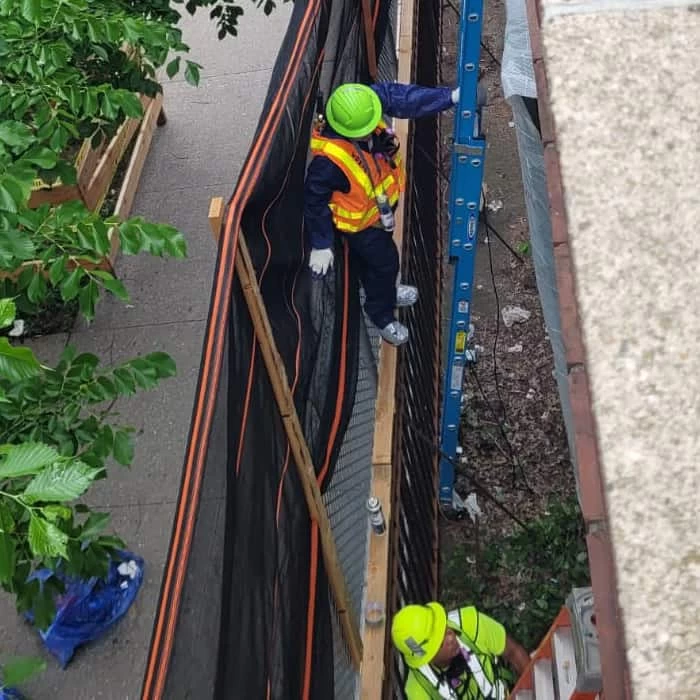
There’s also the environmental side that most restoration companies don’t talk about upfront. Pre-war construction in Greenport almost universally contains asbestos-containing materials in insulation, floor tiles, pipe wrapping, and more. Before any real reconstruction can begin, that has to be handled correctly and legally. A company without New York State asbestos abatement certification can’t complete the full scope of work in most Greenport homes. It’s just the code.
When restoration is done right, you get your home back not a version of it. The smell is gone, not masked. The structure is sound. The historic details that made your home worth what it’s worth are preserved wherever possible. And if you’re managing this from the city while your Greenport property sits vacant, you have a single point of contact who’s keeping you informed every step of the way.
Local Accountability, Not a Franchise Answering Service
We’re a locally owned and operated restoration company serving Nassau and Suffolk Counties including the full length of the North Fork. When you call, you reach real people. Customers consistently name Leo and Jessica by name in their reviews, not “the team” or “the technician.” That kind of continuity matters, especially when you’re dealing with a property this significant.
Greenport sits at the end of Route 25 literally the last stop on the North Fork before Orient Point. Not every company will commit to that drive. We serve this area because we understand what’s here: historic homes near Stirling Basin, seasonal properties that sit vacant for months, and a volunteer fire department that hit a record 1,144 emergency responses in 2024. This isn’t a market that benefits from a generic approach.
From the first emergency call through final reconstruction, we handle everything. No handoffs, no gaps, no homeowner left managing three different contractors while displaced from their home.
From the Night It Happens to the Day You Walk Back In
The first call triggers emergency response. That means board-up, securing the property, and getting eyes on the full scope of damage not just what’s visible. In Greenport’s older homes, that initial assessment is especially important because smoke and water travel in ways that newer construction simply doesn’t allow. Plaster walls, original wood framing, and decades of layered materials absorb damage differently, and a thorough walkthrough in the first hours determines how much of that can be saved.
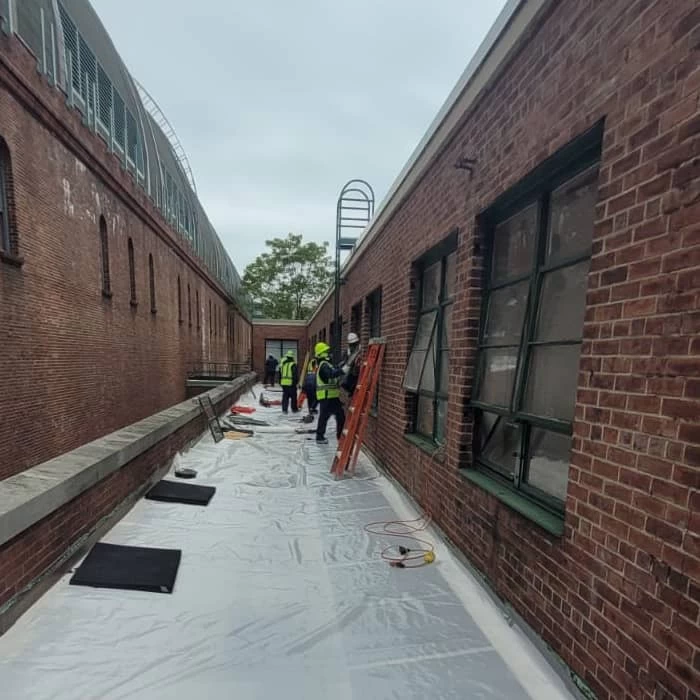
From there, the work moves in a logical sequence: water extraction and structural drying come first to cut off the path to mold a real risk in Greenport’s coastal climate where ambient humidity is already elevated year-round. Smoke and soot remediation follows, including odor treatment that eliminates the smell at the source rather than covering it. If asbestos or lead paint has been disturbed which is likely in any pre-1939 Greenport home environmental remediation is handled under New York State NYSDOL protocols before reconstruction begins.
Reconstruction is the final phase, and it’s where the work either honors the home or doesn’t. For Greenport properties, that means paying attention to historic materials, period-appropriate finishes, and the details that define what makes these homes worth restoring in the first place. Throughout the entire process, your insurance claim is being documented and managed in parallel so by the time the work is done, the paperwork isn’t left for you to figure out alone.
Fire Smoke Damage Restoration Services Greenport, NY
Every Phase Covered Including What Other Companies Skip
Fire damage restoration in Greenport isn’t a single service it’s a sequence of connected work that has to be done in the right order by a company credentialed to handle all of it. We cover emergency response and property securing, full water extraction and structural drying, soot and smoke cleanup, odor elimination, asbestos abatement, lead paint handling under EPA RRP protocols, mold remediation, and complete reconstruction through final finishes. That full-scope capability isn’t standard. Most restoration companies stop somewhere in the middle and hand you off to someone else.
For Greenport homeowners specifically, the environmental remediation piece is non-negotiable. Suffolk County building permits require contractor proof of insurance and proper licensing, and New York State requires NYSDOL certification for any asbestos abatement work. With a median construction year of 1938 in this village, the odds that your home contains asbestos-containing materials are extremely high. A company that isn’t certified to handle that legally cannot complete your restoration and you shouldn’t find that out mid-project.
The insurance side of this is also fully covered. We document damage using insurance-standard estimating, coordinate directly with your adjuster, and advocate for the full scope of what your property needs. For second-home owners managing a Greenport restoration remotely from New York City, that means you have someone on the ground who knows your home, knows your claim, and keeps you in the loop without requiring you to manage every conversation yourself.
Is it safe to stay in my Greenport home after a fire?
In most cases, no at least not immediately. Even if the fire was contained to one room, smoke and soot travel through HVAC systems, into wall cavities, and across surfaces throughout the home. In Greenport’s pre-war housing stock, that spread can be significant because older construction has more gaps, more porous materials, and less sealed ductwork than modern homes.
There’s also the air quality issue. Soot particles are extremely fine and can cause respiratory problems, and in homes built before 1939 which describes the majority of Greenport’s housing stock a fire almost certainly disturbed asbestos-containing materials or lead paint. Until a proper environmental assessment is done and remediation is complete, re-occupying the home carries real health risk. We can tell you after the initial assessment what’s safe and what the timeline looks like for return.
How quickly does fire damage need to be addressed before it gets worse?
The 24 to 72-hour window after a fire is critical. Soot begins permanently etching and staining porous surfaces wood, plaster, grout, stone within that timeframe. Once that etching sets in, restoration becomes significantly more expensive and some surfaces can’t be fully recovered. Smoke odor also penetrates deeper the longer it sits, and in Greenport’s older homes with original plaster walls and old-growth wood framing, that penetration can be severe.
The water from firefighting efforts is its own clock. Mold can begin developing within 24 to 48 hours in wet structural materials and Greenport’s coastal climate, with its consistently elevated humidity, accelerates that timeline compared to inland communities. If your Greenport property is a seasonal home that sits unoccupied, and a fire goes undetected for even a day or two, you’re looking at compounded damage that grows significantly with every passing hour. Fast professional response isn’t just about convenience it directly affects how much of your home can be saved.
Does fire damage restoration in Greenport require special permits or certifications?
Yes, and more than most homeowners expect. Because Greenport is an incorporated village, restoration work may need to comply with both Village of Greenport code requirements and the Town of Southold Building Department, which administers the New York State Uniform Code for construction, repair, and reconstruction. Building permits are required for restoration work that constitutes structural repair or alteration, and the contractor must provide proof of insurance and hold a valid Suffolk County Home Improvement Contractor license.
Beyond standard permits, asbestos abatement in New York State requires NYSDOL certification and given that more than 60% of Greenport homes were built before 1939, asbestos is a near-certain presence in most fire-damaged properties here. Lead paint disturbance in pre-1978 homes also requires compliance with the EPA’s Renovation, Repair, and Painting Rule. Any legitimate restoration company working in Greenport should hold all of these credentials before they start. If they can’t confirm their asbestos certification upfront, that’s a problem because they can’t legally complete the work.
Will my homeowners insurance cover fire damage restoration in Greenport, NY?
Standard homeowners insurance policies typically cover fire damage, including the cost of cleanup, remediation, and reconstruction. However, the scope of what gets approved and how much depends heavily on how the claim is documented and presented. Insurance adjusters work from their own estimates, and those estimates don’t always reflect the full cost of restoring a historic, high-value Greenport property to its actual pre-loss condition.
For second-home or vacation property owners in Greenport, the policy terms can be different from a primary residence policy, and some policies have specific requirements around vacancy duration that can affect coverage. We document damage using insurance-standard estimating frameworks and work directly with adjusters to make sure the full scope of restoration is accounted for including environmental remediation costs that adjusters sometimes try to minimize. You’re not expected to know the ins and outs of the claims process. That’s part of what we handle for you.
How do you fully get rid of smoke smell in an older Greenport home?
Smoke odor in a pre-war home is one of the harder problems in fire restoration and it’s one that gets handled poorly more often than it should be. The issue is that smoke particles are microscopic and penetrate deeply into porous materials: original plaster walls, old-growth wood framing, subfloor boards, and historic trim all absorb smoke at a level that surface cleaning alone won’t reach. Masking the odor with deodorizers or fresh paint on top of contaminated surfaces is a temporary fix that fails, often the first time the heat kicks on or humidity rises.
Proper odor elimination involves treating the source removing contaminated materials where necessary, applying professional-grade thermal fogging or hydroxyl treatment to neutralize odor compounds at the molecular level, and sealing surfaces that have absorbed smoke before any reconstruction begins. In Greenport’s older homes, this process takes longer than it would in a newer build, and it has to be sequenced correctly with the environmental remediation work. When it’s done right, the smell doesn’t come back. That’s the standard, and it’s the only acceptable outcome for a home of this age and value.
How long does fire damage restoration typically take for a Greenport property?
The honest answer is that it depends on the scope and in Greenport, the scope is almost always more complex than it first appears. A contained kitchen fire in a post-2000 home might take two to four weeks from emergency response to final reconstruction. The same fire in a pre-1939 Greenport home with asbestos-containing materials, original plaster walls, and old-growth wood framing can take considerably longer, because environmental remediation has to be completed and inspected before reconstruction can begin.
For larger fires the kind that require mutual aid from multiple fire departments, like incidents that have happened in this village full restoration can run several months. The permit process through the Town of Southold Building Department and, where applicable, Village of Greenport code review adds time to the reconstruction phase that homeowners should plan for. What matters most is that the timeline is managed transparently and that you’re not left wondering what’s happening. For second-home owners who can’t be on-site regularly, that communication piece is just as important as the work itself.