When the Fire's Out, the Clock Starts in Harbor Hills
Every hour after a fire, damage compounds — smoke bonds deeper, water sits longer, and mold gets closer. We reach Harbor Hills in 60 minutes or less, 24/7, and handle everything from emergency response to full reconstruction.
I needed a professional consultation explanation of procedure for safe removal of Asbestos in my apartment complex. Without having an account yet, I was very impressed with the caring, knowledgeable and generous advice offered by Jessica, and will look forward to doing business in the future. Thank you so much! I feel much more informed about a sometimes scary endeavor. Peace. Nancy Silva Mineola, NY.
Mia Munoz
Used this company to clean up some water flood in my house. They were fast and easy to work with.very professional, Would recommend to anyone!
Nini Valle
Great company, had a flood and they responded quickly and efficiently. Billed my insurance company directly. I highly recommend this company!
joe colapietro, jr
I had pipe freeze in my basement right before a snow storm and they made to within an hour to help start the clean up process. They we by our side throughout the entire process and even helped with the insurance company. They did such a great job with the cleanup, repair, remidiation, I contracted them to perform the repairs and finishes in the basement. They came with enough manpower and material to get the job done. Leo and Jessica were nothing but a pleasure to deal with!!
Cristian Arredondo c
I had some water damage in my home and Green Island was able to take care of my issue quickly and effectively. I am very pleased with the work they did. They responded quickly and were very professional.
Michael M
Outstanding service! From the office to the field crew everyone was friendly, helpful and responsive. I highly recommend Green Island Group.
A fire doesn’t just burn what it touches. Smoke moves through HVAC systems, seeps into walls, and settles into every surface well beyond where the flames ever reached. The water used to put the fire out soaks into flooring, framing, and insulation — and in Harbor Hills, where Little Neck Bay keeps ambient moisture naturally elevated year-round, mold can take hold faster than most homeowners expect. If the fire damage is addressed without treating the water damage simultaneously, you’re looking at a second remediation project on top of the first.
Homes on the Great Neck Peninsula also carry a specific risk that most restoration companies don’t talk about openly. If your home was built before 1980, there’s a real chance fire damage has disturbed asbestos-containing materials — floor tiles, pipe insulation, joint compound — or lead paint. Those aren’t just health concerns. They’re legally regulated materials that require licensed contractors to handle. Most restoration companies in Nassau County are not licensed to touch them and will refer you out mid-project, adding delays and coordination headaches at the worst possible time.
What you actually want after a fire is simple: your home back, your insurance handled, and no surprises three weeks in. That’s what a complete, licensed restoration process delivers — and it’s what we’re built to provide from the first call through the final walkthrough.
We’re a locally owned restoration company serving Harbor Hills and all of Nassau County, including the surrounding Great Neck Peninsula communities. We hold a Nassau County General Contractor license, IICRC Fire and Smoke Restoration Technician certification, and NYS Department of Labor licenses for both asbestos and mold — credentials that are legally required to do this work correctly in New York and that most competitors in this market simply don’t have.
What that means for Harbor Hills homeowners is that one team handles the entire project. Emergency response, structural drying, smoke and soot remediation, hazardous materials, and full reconstruction — it’s all done in-house. No subcontractors brought in for the hard parts, no gaps in accountability, no three different companies trying to coordinate on your home while you’re displaced.
With over 5,000 completed restoration projects across New York State, we’ve worked in homes just like yours — older construction, high property values, and owners who expect the job done right the first time. In a close-knit community like Harbor Hills, that track record matters.
From Emergency Call to Final Walkthrough — Here's the Process
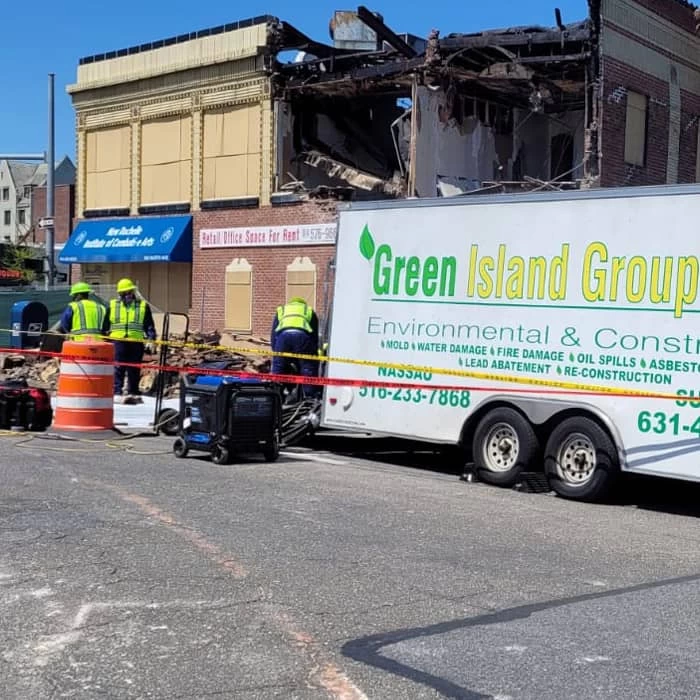
The first call triggers an immediate response. We arrive on-site in Harbor Hills within 60 minutes, around the clock. The first priority is stabilizing the property — boarding up openings, tarping the roof if needed, and stopping any active water intrusion from firefighting suppression before it has more time to spread. In a coastal environment like the Great Neck Peninsula, where salt air and elevated humidity are already present, getting moisture out of the structure fast is not optional.
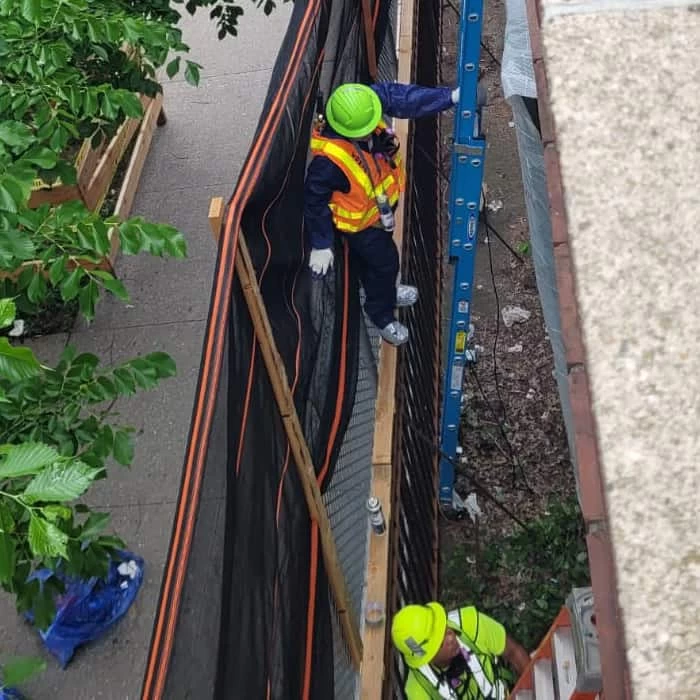
From there, we conduct a thorough damage assessment — visible fire and char damage, smoke and soot penetration throughout the home including HVAC systems, and any indication of asbestos or lead disturbance in older materials. If hazardous materials are present, they’re handled in-house under our NYS DOL Asbestos license and USEPA Lead/RRP certification before any other work continues. This is a step that protects both your family and your insurance claim.
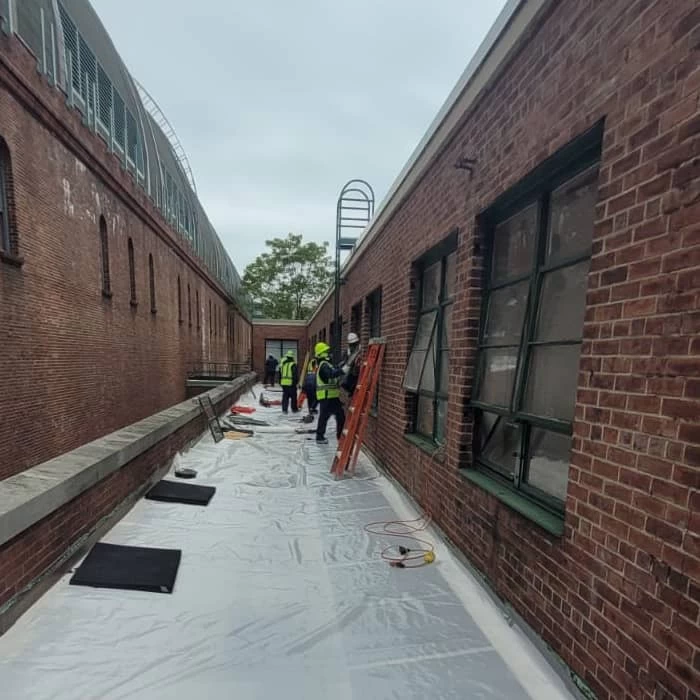
Once the structure is stabilized and safe, remediation begins — odor removal, soot cleaning, structural drying, and mold prevention. The final phase is reconstruction. Because we hold a Nassau County GC license, we can pull the required permits with the Town of North Hempstead directly and begin rebuilding without bringing in a separate contractor. Under Section 28-39 of the Town Code, you have 90 days from the fire to file for a building permit — and missing that window can result in a lien on your property. Having one team manage the full scope keeps that timeline on track.
What's Included When the Scope Goes Beyond the Burn Zone
Fire damage restoration in Harbor Hills covers a lot more than most homeowners anticipate when they make that first call. Smoke and soot don’t stop at the room where the fire started — they travel through ductwork, settle into insulation, and embed in walls, ceilings, and personal belongings throughout the home. Our fire and smoke damage restoration service addresses the full scope: emergency board-up and tarping, complete smoke and soot removal, NADCA-certified HVAC cleaning, structural drying and water extraction, odor neutralization, and full reconstruction under a Nassau County GC license.
For Harbor Hills homeowners dealing with oil heat — which is common across the Great Neck Peninsula — puff-back damage is also part of the service. When an oil burner misfires, it pushes a cloud of oily soot through the entire home without producing an open flame. It’s not a fire in the traditional sense, but the remediation is just as involved, and it’s covered under the same fire and smoke restoration process.
Every project includes direct insurance billing and documentation support. We work with your adjuster, document each phase of the damage and restoration with insurance-standard records, and have a track record of helping Nassau County homeowners recover the full value of their claims. If you’re in Harbor Hills and you’ve just had a fire, you shouldn’t have to figure out the insurance side of this alone.
How quickly does Green Island Group respond to fire damage calls in Harbor Hills?
We operate 24 hours a day, seven days a week, every day of the year — and our stated response time to Harbor Hills and the surrounding Great Neck Peninsula is within 60 minutes of your call. That’s not a business-hours commitment. It applies at 3 a.m. on a Tuesday in January just as much as it does on a Saturday afternoon.
The reason speed matters so much here isn’t just about the fire itself. The water used by firefighters to suppress a blaze soaks into flooring, framing, and drywall immediately. In Harbor Hills, where proximity to Little Neck Bay keeps ambient moisture levels elevated, mold growth can begin within 24 to 48 hours of that water exposure. Every hour the structure sits wet and untreated, the damage compounds. Getting a team on-site fast — with water extraction equipment, structural drying, and a full damage assessment — is what separates a manageable restoration from a much larger and more expensive project.
Does fire damage restoration in Harbor Hills require a permit from the town?
Yes, and the timeline is stricter than most homeowners realize. Under Section 28-39 of the Town of North Hempstead Code — which governs Harbor Hills as an unincorporated hamlet — you are legally required to notify the Building Official after a fire and elect a course of action: repair, demolish, or demolish and rebuild. If you choose to repair, you must apply for a building permit within 90 days of the fire and begin construction within 30 days of permit issuance.
If those deadlines are missed, the Town Board can step in and order action at your expense — and that cost becomes a lien on your property. It’s a real consequence that catches Harbor Hills homeowners off guard, especially when they’re still dealing with the emotional and logistical fallout of a fire. We understand the North Hempstead permitting process and can manage the permit application as part of the restoration project, keeping your timeline on track from day one.
What does fire damage restoration typically cost for a home in Harbor Hills, NY?
The honest answer is that it varies significantly depending on the scope. Nationally, fire damage restoration averages around $27,000, but the range runs from roughly $800 for minor, contained smoke damage all the way to $150,000 or more for a home with major structural loss. In Harbor Hills, where homes regularly carry values well above $800,000, the financial stakes of getting the scope right — and documenting it properly for insurance — are higher than in most other Nassau County communities.
What drives cost up is usually what’s hidden: smoke that traveled beyond the visible burn zone, water damage from suppression that wasn’t dried out quickly, mold that developed before remediation began, or the discovery of asbestos or lead in older construction materials. Homes on the Great Neck Peninsula with pre-1980 construction are particularly likely to involve at least one of those factors. The best way to understand what you’re actually dealing with is a thorough on-site assessment — not a phone estimate — which is where we start every project.
My Harbor Hills home was built in the 1950s — does that affect the restoration process?
It does, and it’s worth understanding before work begins. Homes built on the Great Neck Peninsula during the post-WWII development era — the 1940s through the 1970s — commonly contain asbestos in floor tiles, pipe insulation, ceiling materials, and joint compound. Homes built before 1978 may also have lead-based paint. When fire damage disturbs these materials, they become a regulated hazardous materials situation, not just a restoration one.
Only contractors holding a NYS Department of Labor Asbestos License and USEPA Lead/RRP certification are legally permitted to handle these materials. We hold both. That matters because if you hire a restoration company that isn’t licensed for hazardous materials, they’ll either skip that step — leaving your family exposed — or stop the project and refer you to a separate abatement contractor, adding weeks of delay and a second company to coordinate while you’re still displaced from your home. We handle it in-house, under the same project, with the same team.
Will my homeowner's insurance cover fire damage restoration in Harbor Hills?
In most cases, yes — standard homeowner’s insurance policies cover fire damage restoration, including smoke and soot damage, water damage from firefighting suppression, and the cost of reconstruction. But the amount you recover depends heavily on how the damage is documented and how the claim is presented to your adjuster.
This is where a lot of homeowners leave money on the table. Smoke damage frequently extends well beyond the visible burn zone — into HVAC systems, wall cavities, and adjacent rooms — and if it isn’t identified and documented as part of the initial claim, you may not be reimbursed for the full scope of the work needed. We bill insurance companies directly, document every phase of the damage with insurance-standard records, and work directly with adjusters on behalf of Harbor Hills homeowners. For high-value properties in a community where the average home represents a significant portion of a family’s net worth, that level of claims support isn’t a bonus — it’s an essential part of the process.
What is an oil burner puff-back, and is it covered under fire damage restoration?
A puff-back happens when an oil-fired boiler or furnace misfires and expels a cloud of fine, oily soot through the home’s ductwork and vents. There’s no open flame involved, but the result is soot contamination across walls, ceilings, furniture, and HVAC components throughout the entire home — not just the room where the furnace is located. It’s a surprisingly common event across Nassau County, including the Great Neck Peninsula, where oil heat remains the standard in many older homes.
The cleanup is more involved than it looks. Oily combustion soot doesn’t respond to standard household cleaning — attempting to wipe it down without the right products and technique typically spreads the contamination further. Professional remediation involves dry chemical sponging, HEPA vacuuming, surface cleaning with appropriate solvents, and full HVAC duct cleaning to clear the distribution system. Most homeowner’s insurance policies cover puff-back damage, and we handle the documentation and direct billing the same way we do for traditional fire damage claims. If you’re in Harbor Hills and your oil burner has misfired, it qualifies for the same restoration process — and the same 60-minute emergency response.