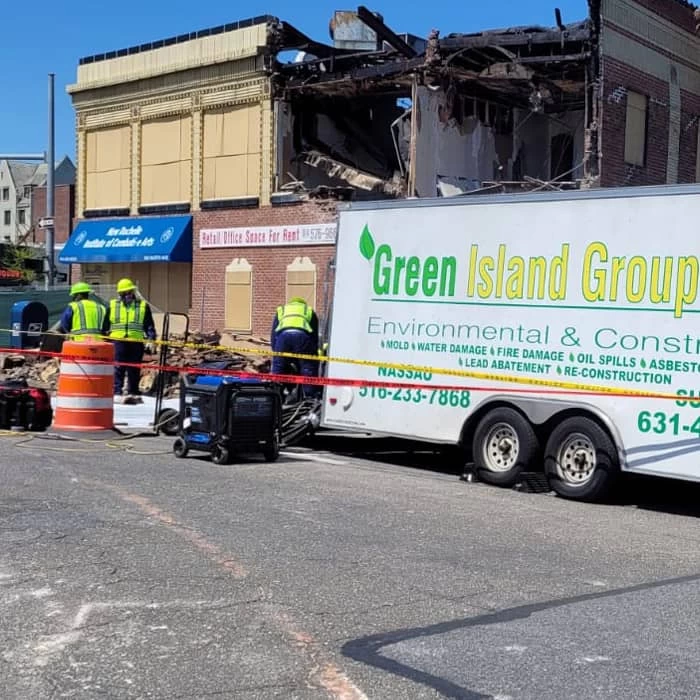
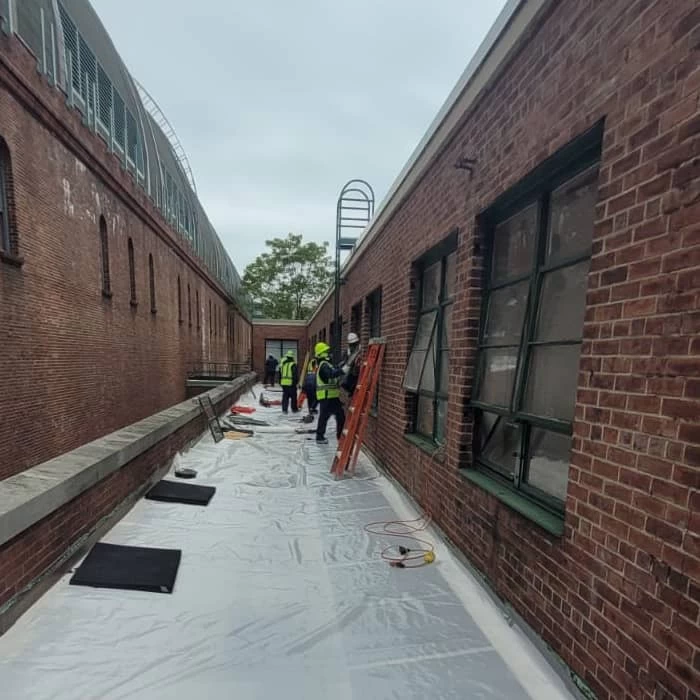
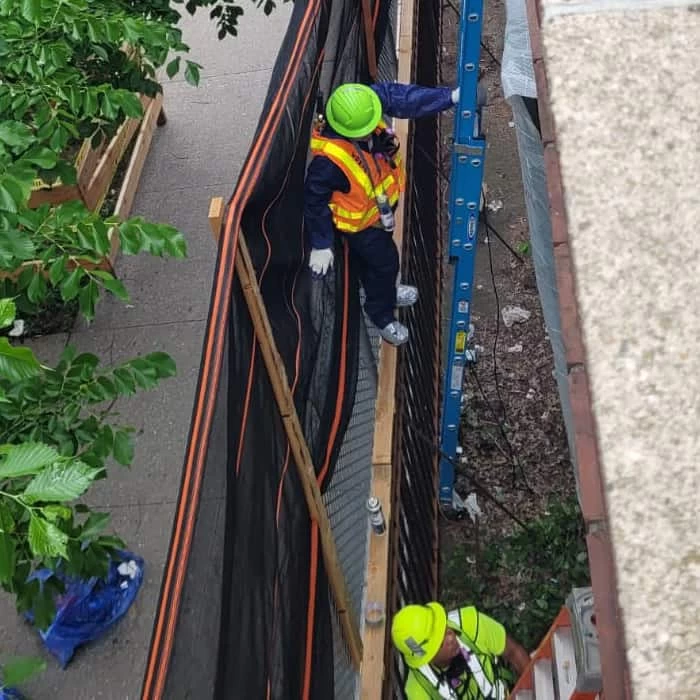
I needed a professional consultation explanation of procedure for safe removal of Asbestos in my apartment complex. Without having an account yet, I was very impressed with the caring, knowledgeable and generous advice offered by Jessica, and will look forward to doing business in the future. Thank you so much! I feel much more informed about a sometimes scary endeavor. Peace. Nancy Silva Mineola, NY.
Mia Munoz
Used this company to clean up some water flood in my house. They were fast and easy to work with.very professional, Would recommend to anyone!
Nini Valle
Great company, had a flood and they responded quickly and efficiently. Billed my insurance company directly. I highly recommend this company!
joe colapietro, jr
I had pipe freeze in my basement right before a snow storm and they made to within an hour to help start the clean up process. They we by our side throughout the entire process and even helped with the insurance company. They did such a great job with the cleanup, repair, remidiation, I contracted them to perform the repairs and finishes in the basement. They came with enough manpower and material to get the job done. Leo and Jessica were nothing but a pleasure to deal with!!
Cristian Arredondo c
I had some water damage in my home and Green Island was able to take care of my issue quickly and effectively. I am very pleased with the work they did. They responded quickly and were very professional.
Michael M
Outstanding service! From the office to the field crew everyone was friendly, helpful and responsive. I highly recommend Green Island Group.
A fire doesn’t just burn what it touches. In a large North Shore home with a multi-zone HVAC system, smoke moves fast through ductwork, into wall cavities, behind the original millwork and wide-plank floors that make these properties what they are. By the time the fire trucks leave, the damage has already spread well beyond the room where it started. What you’re dealing with isn’t just a cleanup job. It’s a full recovery.
Head of the Harbor homes average over 3,600 square feet on two-plus-acre lots, and many were built decades ago some well before the 1980s. That matters because fire damage in older construction often means disturbed asbestos-containing materials in insulation, floor tiles, or ceilings. A restoration company that isn’t licensed for environmental remediation can’t legally complete the job in those homes. We can, and do.
Water from firefighting causes serious damage of its own. Fire hoses push roughly 250 gallons per minute, and with the humidity levels that come with being near Stony Brook Harbor, mold can take hold in as little as 24 hours. Speed isn’t a selling point here it’s what determines how much of your home you actually get back.
Fire Restoration Company Serving Head of the Harbor
Local Ownership, Named People, Real Accountability
We’re a locally owned restoration company based on Long Island not a franchise, not a national chain dispatching crews from wherever happens to be closest. When you call, you reach people who know Suffolk County, know the North Shore, and know what it takes to restore a high-value home the right way.
Customers specifically name Leo and Jessica in their reviews not because the team was pleasant, but because we stayed accountable from the first call through the final walkthrough. In a village of roughly 1,500 residents like Head of the Harbor, where word travels fast and your home is likely your most significant asset, that kind of personal ownership over a project is exactly what the situation calls for.
We serve Head of the Harbor directly and are familiar with the village’s own building department separate from Smithtown’s and the permitting process that restoration work here requires. That’s not a small thing when you’re trying to get your home back on a timeline that actually holds.
Fire Damage Restoration Process, Head of the Harbor
From the First Call to the Final Walkthrough Here's What to Expect
The first step is stabilization. We handle emergency board-up, secure the structure, and stop any ongoing water intrusion from firefighting efforts before it turns into a mold problem. In a waterfront or water-adjacent property along Harbor Road or Hitherbrook Road, that window moves faster than it does inland so response time genuinely matters here.
From there, we document the scope of damage thoroughly. Not just the burn area, but every room smoke traveled through, every duct it passed, every surface it settled on. This documentation isn’t just for the restoration plan it’s what supports your insurance claim and keeps the adjuster from undercounting the scope of work. We have a track record of helping homeowners navigate that process and get settlements that actually reflect the full damage.
Then comes the remediation itself soot removal, smoke odor elimination using thermal fogging or hydroxyl treatment, water extraction, and where necessary, asbestos abatement handled by our licensed environmental remediation professionals. Reconstruction follows, handled by the same company, through the same point of contact. We pull permits through Head of the Harbor’s own village building department, not Smithtown’s because that’s the correct process here, and cutting that corner creates problems later. The job isn’t done until the air quality confirms it and you’re satisfied with the result.
Fire Smoke Damage Restoration Services, Head of the Harbor NY
Full-Scope Restoration Built for High-Value North Shore Homes
Fire damage restoration in Head of the Harbor covers a lot of ground and it should. Our service runs from the initial emergency response through every phase of recovery: structural stabilization and board-up, complete smoke and soot remediation, water extraction and drying, mold prevention and remediation, asbestos abatement where older construction requires it, odor elimination, and full reconstruction back to pre-loss condition. Everything under one roof, one contract, one team.
The asbestos piece is worth calling out specifically. Many of the homes in this village predate the mid-1980s and some go back much further, including properties with documented histories dating to the mid-1800s. When fire damages those structures, the debris isn’t just fire debris. New York State requires a licensed asbestos abatement contractor to handle it legally. We hold that certification. A company that doesn’t cannot complete a lawful, full restoration in many Head of the Harbor homes full stop.
Odor elimination gets the same level of attention. Smoke molecules don’t sit on surfaces they penetrate them. Wiping down walls doesn’t solve it. We use professional-grade thermal fogging and hydroxyl generation to treat the odor at the source, in the materials, not just in the air. In a home with original hardwood, plaster walls, and natural materials throughout, that distinction matters. The goal is a home that doesn’t just look restored it is restored.
Does fire damage restoration in Head of the Harbor require a village permit?
Yes and this is one of the most important things to get right from the start. Head of the Harbor has its own village building department, separate from the Town of Smithtown. The Smithtown Building Department does not accept permit applications for work done within the village. Any structural reconstruction following fire damage needs to go through the village’s own department, reachable at 631-584-5602.
This matters practically because a contractor who doesn’t know this or who tries to pull permits through Smithtown will run into delays that extend your timeline and potentially create compliance issues down the road. Certificates of Occupancy in the village require stage inspections, and in some cases, certifications from architects or structural engineers depending on the scope of work. Working with a restoration company that already understands this process means you don’t lose weeks figuring it out after the fact.
How quickly does smoke damage spread through a large home after a fire?
Faster than most people expect. Smoke doesn’t wait for the fire to finish it moves through HVAC systems, travels through wall cavities, and settles into porous materials in rooms that may never have seen a flame. In a home with multiple HVAC zones, which is common in the larger estates throughout Head of the Harbor, a contained kitchen or utility room fire can distribute smoke particles throughout the entire structure within minutes.
The damage compounds quickly after the fire is out, too. Soot begins permanently etching and staining surfaces within 24 to 72 hours. Smoke odor embeds itself deeper into wood, plaster, and insulation the longer it sits. This is why the first 24 hours after a fire are genuinely critical not as a pressure tactic, but as the operational reality that determines how much of your home’s original materials can be saved versus replaced.
My home was built before 1980 does that change what fire restoration involves?
It does, and it’s something you should ask any restoration company directly before hiring them. Homes built before the mid-1980s and Head of the Harbor has a meaningful number of them, including properties that date back considerably further may contain asbestos-containing materials in insulation, floor and ceiling tiles, pipe lagging, or roofing. When a fire damages those materials, the debris becomes a regulated hazardous material under New York State law.
Only a contractor licensed for asbestos abatement by the New York State Department of Labor can legally handle that work. A general restoration contractor who doesn’t hold that certification cannot complete a lawful, full restoration in an older home they’d have to stop and bring in a separate abatement company, which adds time, coordination complexity, and cost. We hold the environmental remediation certifications to handle this in-house, which keeps the project moving and keeps the scope under one accountable team.
Will my homeowner's insurance cover the full cost of fire damage restoration?
Most standard homeowner’s policies cover fire damage, but “covered” and “fully covered” aren’t always the same thing. The gap usually comes down to documentation and scope. Insurance adjusters work for the insurance company, and their initial assessment of the damage scope especially for smoke that traveled beyond the primary burn area can significantly undercount what a complete restoration actually requires.
At the value levels common in Head of the Harbor, where median home sale prices are around $1.2 million and many policies are through high-value carriers, the difference between a thorough damage assessment and a surface-level one can run into the tens of thousands of dollars. We have a documented track record, reflected in multiple independent customer reviews, of helping homeowners document damage completely and work through the insurance process in a way that accurately captures the full scope of the loss. You shouldn’t have to become an insurance expert in the middle of a crisis that’s part of what we do for you.
How does living near Stony Brook Harbor affect fire damage recovery on my property?
The proximity to Stony Brook Harbor means elevated ambient humidity year-round and that directly affects how quickly water damage from firefighting efforts can turn into a mold problem. Fire hoses deliver roughly 250 gallons of water per minute, and in a waterfront or water-view property along Harbor Road or Hitherbrook Road, saturated materials in a high-humidity environment can begin supporting mold growth in as little as 24 to 48 hours.
This makes the water extraction and drying phase of fire restoration just as urgent as the smoke and soot remediation. It’s not a secondary concern it’s a parallel one that needs to start immediately. Thorough moisture mapping, industrial drying equipment, and monitoring over several days are what actually prevent a mold problem from developing on top of the fire damage you’re already dealing with. A restoration company that treats water damage as an afterthought in a harbor-adjacent property is going to leave you with a second problem to solve.
What causes most house fires in a wooded, rural village like Head of the Harbor?
The causes that show up most often in Head of the Harbor reflect the specific character of the village. Heating equipment fires from fireplaces, wood stoves, and oil furnaces are a significant factor in older North Shore homes during the winter months when these systems run hard. Chimney fires from creosote buildup are a real and recurring issue in homes that rely on wood-burning heat.
Generator-related fires are another factor worth understanding locally. Head of the Harbor residents deal with power outages regularly a longtime resident documented losing power seven or more times per year due to the village’s tree canopy and downed lines. That drives generator use, and generator misuse (improper placement, refueling while hot, overloading) is a documented cause of house fires. Cooking fires remain the leading cause nationally regardless of location, and in larger homes with professional-grade kitchen equipment common in this community the risk doesn’t go away. Knowing what caused your fire also matters for the restoration process, because it affects what systems we need to inspect, what materials were involved, and how thoroughly the source area needs to be addressed before reconstruction begins.