When Nassau County's Busiest Village Needs It Done Right
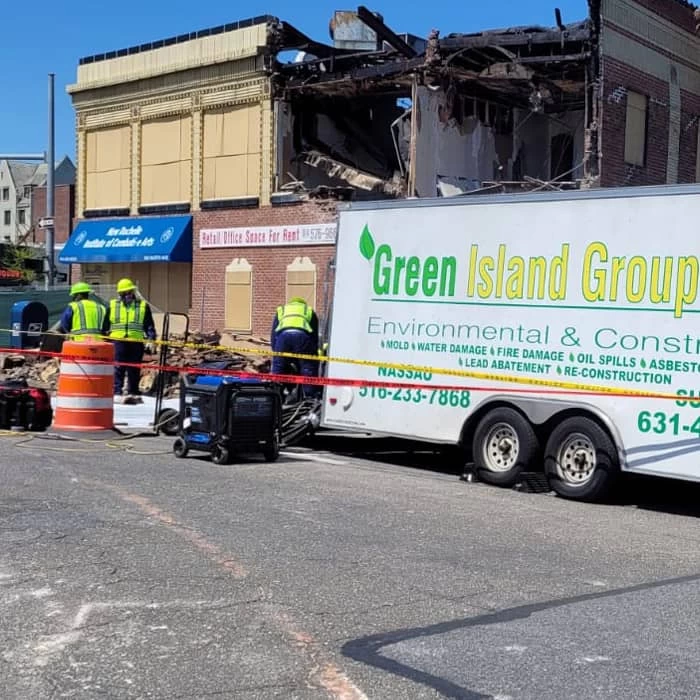
Fire damage doesn’t wait — and in a village this dense, this old, and this complex, neither can your restoration company. We respond within the hour, handle your insurance claim, and take your property all the way from emergency call to move-back-in day.
I needed a professional consultation explanation of procedure for safe removal of Asbestos in my apartment complex. Without having an account yet, I was very impressed with the caring, knowledgeable and generous advice offered by Jessica, and will look forward to doing business in the future. Thank you so much! I feel much more informed about a sometimes scary endeavor. Peace. Nancy Silva Mineola, NY.
Mia Munoz
Used this company to clean up some water flood in my house. They were fast and easy to work with.very professional, Would recommend to anyone!
Nini Valle
Great company, had a flood and they responded quickly and efficiently. Billed my insurance company directly. I highly recommend this company!
joe colapietro, jr
I had pipe freeze in my basement right before a snow storm and they made to within an hour to help start the clean up process. They we by our side throughout the entire process and even helped with the insurance company. They did such a great job with the cleanup, repair, remidiation, I contracted them to perform the repairs and finishes in the basement. They came with enough manpower and material to get the job done. Leo and Jessica were nothing but a pleasure to deal with!!
Cristian Arredondo c
I had some water damage in my home and Green Island was able to take care of my issue quickly and effectively. I am very pleased with the work they did. They responded quickly and were very professional.
Michael M
Outstanding service! From the office to the field crew everyone was friendly, helpful and responsive. I highly recommend Green Island Group.
Most people don’t realize how fast the damage compounds after a fire. The flames get put out, the trucks leave, and then the real clock starts. Acidic soot begins bonding permanently to walls and surfaces within hours. The water used to fight the fire starts creating mold conditions within 24 to 48 hours. Every hour you wait, the scope of the job grows — and so does the cost.
In Hempstead Village, that urgency is even more real. A significant portion of the housing stock here was built before 1978, which means fire damage in these homes doesn’t just mean smoke and char — it often means disturbed lead paint and asbestos in floor tiles, pipe insulation, or ceiling materials. Those aren’t cosmetic problems. They’re legally regulated hazards that most restoration companies aren’t licensed to touch. When we show up, we can handle all of it under one roof — no hand-offs, no gaps, no waiting on a second contractor while you’re displaced.
For renters and landlords managing multi-unit buildings along Peninsula Boulevard or near the Fulton Avenue corridor, the insurance piece is just as critical. We bill your insurance company directly and document every step to the standard adjusters actually accept — so you’re not left fighting a claim alone while trying to figure out where to sleep.
Licensed for What Hempstead's Older Homes Actually Need
We’re a locally owned Long Island restoration company — not a franchise, not a call center. We hold a Nassau County General Contractor license, IICRC certification for fire and smoke damage restoration, NYS DOL Asbestos and Mold licenses, and a USEPA Lead/RRP certification. That combination matters in Hempstead more than almost anywhere else in Nassau County.
Hempstead Village has some of the most complex fire restoration scenarios on Long Island. Subdivided rental buildings, pre-1978 construction, active code enforcement through the Village’s own building department — these aren’t edge cases here, they’re common. We’ve completed over 5,000 restoration projects across New York State, including the kinds of multi-hazard, multi-party situations that are routine in this village.
We serve all of Hempstead and the surrounding communities — Garden City, West Hempstead, Uniondale, Roosevelt, and Elmont — and we know how to pull permits through the Village of Hempstead’s building department, satisfy local inspectors, and document work to both insurance and municipal code standards.
When you call, someone answers — any time of day or night. We commit to being on-site within one hour of your call. The first thing we do is assess the full scope of damage: fire and char, smoke and soot penetration, water from suppression, and any structural concerns. In Hempstead’s older housing stock, that assessment also includes checking for disturbed asbestos or lead paint — because those materials are present in a large share of the pre-1978 homes throughout the village, and ignoring them isn’t an option legally or safely.
Once the assessment is complete, we handle the insurance documentation before any work begins. That means photos, written scope, and the kind of itemized reporting that insurance adjusters need to process your claim without delays or disputes. If you’re a renter dealing with a landlord’s insurance, or a landlord managing a multi-unit claim, we’ve navigated those situations before and can help you understand where you stand.
From there, the work moves in a clear sequence: emergency stabilization and board-up if needed, water extraction and structural drying, smoke and soot removal, hazardous material abatement if required, and then full reconstruction under our Nassau County GC license. The Village of Hempstead requires permits for structural reconstruction — we pull those permits and manage the inspection process so you don’t have to figure out the Village building department on top of everything else.
Fire restoration in Hempstead isn’t a single service — it’s a sequence of connected problems that all need to be addressed or they compound each other. Smoke odor that isn’t fully neutralized comes back. Water that isn’t fully extracted causes mold within days. Asbestos that gets disturbed and isn’t properly abated creates a liability that follows the property. Our full-service model means every one of those problems is handled by the same licensed team, start to finish.
The core scope includes emergency response and property stabilization, complete smoke and soot removal from surfaces and HVAC systems, water extraction and structural drying, odor neutralization, asbestos and lead abatement where required under NYS DOL and USEPA regulations, mold remediation if moisture has set in, and full structural reconstruction under our Nassau County General Contractor license. For commercial properties along Fulton Avenue or Main Street — where Hempstead’s Downtown Revitalization Initiative has brought new investment — we handle commercial fire restoration with the same full-scope approach.
Every job is documented to insurance-standard specifications. We work directly with your insurance company, which means you’re not managing the claim paperwork on top of the displacement and the stress. The goal is straightforward: get you back into a safe, restored property as quickly as the job can be done right.
What should I do immediately after a fire in my Hempstead home?
The most important thing you can do in the first hour is call a licensed restoration company — not start cleaning up yourself. Soot residue is acidic and begins permanently staining and etching surfaces within hours. Disturbing it without the right equipment and technique can actually push it deeper into porous materials like drywall, wood, and upholstery, making the damage worse and the restoration more expensive.
In Hempstead specifically, there’s an added layer to be aware of: if your home was built before 1978, there’s a real possibility that fire or suppression water disturbed lead paint or asbestos-containing materials. Handling those materials without proper licensing isn’t just risky — it’s illegal. Don’t sweep, don’t wipe, and don’t run your HVAC system. Call us, get out of the affected areas, and let a licensed team assess what you’re actually dealing with before anything gets touched.
How does fire damage insurance work, and will my claim actually cover everything?
Standard homeowners’ insurance policies in New York cover fire damage, including smoke and soot cleanup, water damage from fire suppression, and structural repairs. What they don’t always do is pay out the full scope without proper documentation — and that’s where a lot of homeowners get burned a second time. Insurance adjusters work for the insurance company, not for you. If the damage isn’t documented correctly and completely from the start, you may receive a settlement that doesn’t cover the full cost of restoration.
We document every job to insurance-standard specifications — photos, written scope, itemized line items — before work begins. We bill insurance directly and have experience navigating Nassau County claims, including the more complex scenarios common in Hempstead: multi-unit buildings, renters’ insurance versus landlord property insurance, and claims involving hazardous material abatement. If you’re a renter, your renters’ insurance covers your personal property and displacement costs — your landlord’s policy covers the structure. Knowing that distinction upfront can save you weeks of confusion.
Does fire restoration in Hempstead require permits from the Village building department?
Yes — and this is something a lot of homeowners don’t find out until a contractor skips the step and they end up with unpermitted work on their record. The Village of Hempstead maintains its own building department under Chapter 50 of the Village Code, separate from Nassau County’s oversight. Any structural reconstruction following fire damage requires permits from the Village building department and must comply with the New York State Uniform Fire Prevention and Building Code.
Hiring a contractor who isn’t licensed to pull those permits — or who skips them to move faster — creates a serious problem when you go to sell the property or file a future insurance claim. We hold a Nassau County General Contractor license, which qualifies us to pull permits within the Village of Hempstead, manage the inspection process, and ensure all reconstruction work is documented and code-compliant. It’s one of the reasons choosing a licensed GC matters in this village more than just about anywhere else in Nassau County.
My Hempstead home was built in the 1960s — does that affect the restoration process?
It does, and it’s worth understanding before any work begins. Homes built before 1978 commonly contain lead-based paint, and homes built before approximately 1980 frequently contain asbestos in floor tiles, ceiling tiles, pipe insulation, joint compound, and other building materials. When fire or water damages these materials, it can disturb them and create a regulated hazardous condition that requires licensed abatement — not just standard restoration work.
Under federal and New York State law, working on lead paint in a pre-1978 home requires USEPA Lead/RRP certification. Asbestos abatement requires a NYS DOL Asbestos license. Most restoration companies in the Hempstead area hold one or neither of these certifications, which means they either can’t legally do the full job or they’ll subcontract the abatement work to a third party — adding time, cost, and coordination complexity while you’re displaced. We hold both certifications and handle abatement in-house as part of the same restoration scope.
How long does fire damage restoration typically take from start to finish?
The honest answer is that it depends on the scope — and in Hempstead, the scope is often more complex than in newer suburban communities. A kitchen fire with limited structural damage and no hazardous materials involved might take one to two weeks from emergency response through final cleaning. A fire that affected multiple rooms, required asbestos or lead abatement, involved significant water damage, or impacted a multi-unit building can take four to eight weeks or longer through full reconstruction.
The fastest way to extend the timeline is to delay the initial call. Every day that soot sits on surfaces, water sits in structural cavities, or mold begins developing adds remediation time to the back end of the project. The fastest restorations we complete are the ones where we were called within hours of the fire being extinguished. If you’re waiting to see if the damage is “bad enough” to call — it is. The assessment is free, and getting eyes on it immediately is always the right move.
Can we handle fire restoration in a rental property or multi-unit building in Hempstead?
Yes, and this is actually one of the more common scenarios we handle in Hempstead Village. The village has a large renter population, a documented pattern of subdivided housing units, and a significant number of multi-family buildings — particularly in the denser residential areas near the Fulton Avenue corridor and along the side streets off Main Street. Fire incidents in these buildings involve layered complexity: multiple affected units, separate insurance policies for the landlord and tenants, potential Nassau County Fire Marshal involvement, and Village building department oversight.
We have experience navigating all of it. We can work with a landlord’s property insurance on the structure while helping individual tenants understand what their renters’ insurance covers. We document damage unit by unit when needed, coordinate with the Village building department on permits for reconstruction, and ensure the restored building meets current fire and housing code requirements — not just the conditions it was in before the fire. If the building had code issues prior to the fire, restoration is an opportunity to bring it into compliance, not just put it back the way it was.