Herricks Homes Are Older — The Restoration Has to Be Smarter
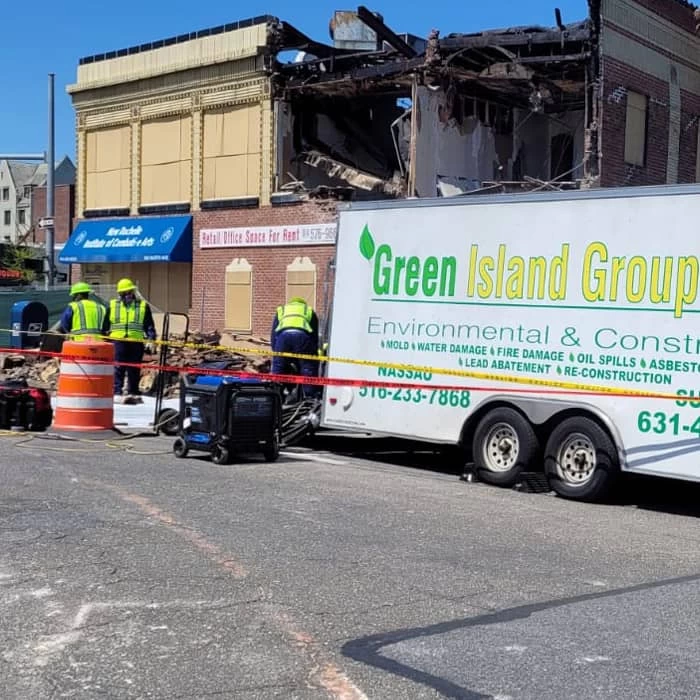
When your home was built in the 1950s and a fire hits, the damage runs deeper than what you can see. We respond within one hour, handle everything from smoke removal to full reconstruction, and bill your insurance directly.
I needed a professional consultation explanation of procedure for safe removal of Asbestos in my apartment complex. Without having an account yet, I was very impressed with the caring, knowledgeable and generous advice offered by Jessica, and will look forward to doing business in the future. Thank you so much! I feel much more informed about a sometimes scary endeavor. Peace. Nancy Silva Mineola, NY.
Mia Munoz
Used this company to clean up some water flood in my house. They were fast and easy to work with.very professional, Would recommend to anyone!
Nini Valle
Great company, had a flood and they responded quickly and efficiently. Billed my insurance company directly. I highly recommend this company!
joe colapietro, jr
I had pipe freeze in my basement right before a snow storm and they made to within an hour to help start the clean up process. They we by our side throughout the entire process and even helped with the insurance company. They did such a great job with the cleanup, repair, remidiation, I contracted them to perform the repairs and finishes in the basement. They came with enough manpower and material to get the job done. Leo and Jessica were nothing but a pleasure to deal with!!
Cristian Arredondo c
I had some water damage in my home and Green Island was able to take care of my issue quickly and effectively. I am very pleased with the work they did. They responded quickly and were very professional.
Michael M
Outstanding service! From the office to the field crew everyone was friendly, helpful and responsive. I highly recommend Green Island Group.
Most Herricks homeowners who call after a fire are dealing with a lot more than burned walls. Smoke has moved through the HVAC system, soot has settled into every room, and somewhere in the back of their mind, they’re wondering whether the insurance company is going to fight them on the claim. These are real concerns — and they’re exactly what gets resolved when the restoration is handled correctly from the start.
The homes in Herricks were largely built between the 1940s and 1960s. That means there’s a real probability of asbestos in the floor tiles, ceiling materials, or pipe insulation — and a fire disturbs all of it. A restoration company that isn’t licensed to handle hazardous materials legally cannot complete the full scope of work in a home like yours. We hold a NYS DOL Asbestos License and USEPA Lead/RRP Certification, which means nothing gets left half-done because the crew hit a wall they couldn’t legally cross.
The other thing that changes when restoration is handled right: you’re not managing two or three separate contractors while you’re already stressed and displaced. We carry a Nassau County General Contractor License, which means we can take the job from emergency stabilization all the way through reconstruction — one team, one point of contact, and a clear path back to your home.
5,000 Projects In. Still Answering the Phone at 2 A.M.
We’re a locally owned restoration company serving Nassau County with active General Contractor licenses in Nassau County, Suffolk County, and New York City. We’re IICRC-certified in fire and smoke damage restoration, NYS DOL licensed for asbestos and mold, USEPA Lead/RRP certified, and NADCA-certified for HVAC cleaning. That’s not a list of marketing badges — those are the credentials that determine whether a company can legally and safely complete every phase of restoration in a pre-1980 home in Herricks and the surrounding North Hempstead area.
We’ve completed over 5,000 restoration projects across New York State. Customers have named specific staff members in reviews, described being accompanied to material selection appointments, and called out direct insurance billing as something that genuinely made a difference. That’s the kind of detail that shows up when a company is actually doing the work — not just showing up for the estimate.
When the New Hyde Park Fire Department responds to a fire on your street in Herricks, we can be on-site within the hour. We know the housing stock here, we know what Town of North Hempstead permits require, and we’ve done this work in communities like yours before.
From the Night of the Fire to the Day You Move Back In
The first thing that happens when you call is an emergency response — board-up, tarping, and structural stabilization to secure the property and stop additional damage from weather or unauthorized entry. In Herricks, where homes sit close together on compact residential streets, containing the damage quickly also protects neighboring properties. This step happens fast, and it sets the tone for everything that follows.
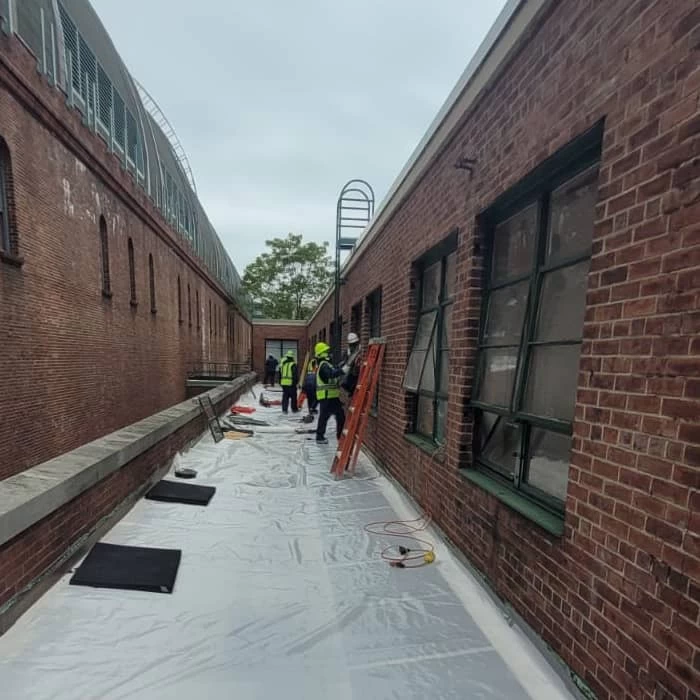
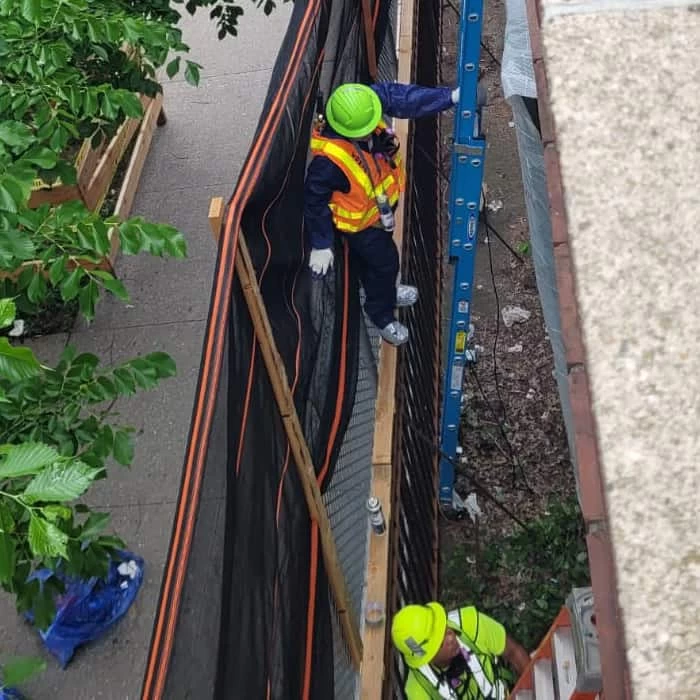
From there, we conduct a thorough assessment — and in a home built in the 1950s or 1960s, that assessment includes testing for asbestos-containing materials and lead paint before any demolition begins. This isn’t optional. New York State law requires it, and skipping it creates both a legal and a health liability. Once the scope is confirmed, smoke and soot removal begins using air scrubbers, HEPA vacuuming, ozone treatment, and thermal fogging. NADCA-certified HVAC cleaning is part of this — because smoke travels through ductwork, and if the ducts aren’t cleaned, the odor comes back.
Once remediation is complete, our GC license allows us to move directly into reconstruction — framing, drywall, flooring, finishes — without handing the job off to a separate contractor. Throughout the entire process, we document everything to insurance standards and handle the billing directly with your carrier. You stay informed. You don’t get handed off.
Fire damage restoration in Herricks isn’t a one-size service. The housing stock here — nearly 85% detached single-family homes, most of them built before 1960 — creates a specific set of conditions that not every restoration company is equipped to handle. Asbestos abatement, lead paint compliance, oil burner puff-back remediation, and aging electrical systems are all real factors in this neighborhood, and they all require licensed, certified work.
Our scope covers every phase: emergency board-up and stabilization, smoke and soot removal, odor elimination through ozone and thermal fogging, NADCA-certified HVAC duct cleaning, asbestos and mold remediation, and complete structural reconstruction. If your home experienced a puff-back from an oil burner — which coats every surface in fine black soot and travels through every vent — that’s handled with the same IICRC-certified process used for structural fire damage. This is a common issue in Nassau County’s older housing stock, and it’s not something you want to clean up with consumer products.
Because we hold an active Nassau County General Contractor License, we can also pull the permits required by the Town of North Hempstead for post-fire reconstruction work and see the job through to final inspection. You don’t have to find a second contractor to finish what the restoration crew started. The whole job stays under one roof — and one set of eyes.
Can I stay in my Herricks home after a fire or smoke event?
In most cases, no — at least not immediately. After a fire, the air inside your home contains soot particles, carbon monoxide residue, and potentially disturbed asbestos fibers or lead paint dust, depending on the age of the structure. In Herricks, where the majority of homes were built in the 1940s through 1960s, the probability of hazardous materials being present is high. Breathing that air before remediation is complete is a genuine health risk, not a precaution.
Whether it’s safe to return depends on the extent of the damage, what materials were affected, and what the air quality testing shows. We can assess this during the initial evaluation and give you a straightforward answer based on what we actually find — not a blanket policy. If you need to be displaced, we’ll document that clearly for your insurance carrier, which may cover additional living expenses during the restoration period.
How long does fire damage restoration typically take in Nassau County?
It depends on the scope, but most residential fire restoration projects in Nassau County fall somewhere between two weeks and three months. A contained kitchen fire with limited structural damage might be resolved in two to three weeks. A more significant loss — where fire and water damage have affected multiple rooms, hazardous materials need to be abated, and structural reconstruction is required — can run longer, especially when Town of North Hempstead permits are involved.
The biggest variable that extends timelines isn’t the work itself — it’s contractor handoffs. When a homeowner has to manage a separate remediation company and then find a general contractor to handle reconstruction, the gap between those two scopes adds weeks. Because we hold both the restoration certifications and a Nassau County GC license, we can move from remediation directly into rebuild without stopping the clock. That continuity matters when you’re displaced and trying to get back into your home.
What is a puff-back, and do I need professional restoration for it?
A puff-back happens when an oil burner backfires — usually due to delayed ignition, a clogged nozzle, or a cracked heat exchanger — and forces a blast of unburned fuel and soot back through the system and into your home. It’s not a dramatic fire, but the result can be just as disruptive. Fine, oily black soot coats walls, ceilings, furniture, clothing, and every vent in the house. It smells, it stains, and it doesn’t come off with household cleaners.
This is a real and common issue in Herricks and across Nassau County’s older housing stock, where many homes still run on oil heat. Professional remediation for a puff-back involves HEPA vacuuming, surface decontamination, air scrubbing, and NADCA-certified HVAC duct cleaning — because if the ducts aren’t cleaned, the soot recirculates every time the system runs. Attempting to clean a puff-back yourself typically spreads the contamination further and embeds it deeper into porous surfaces. It’s worth calling a professional before you start wiping things down.
Does homeowners insurance cover fire and smoke damage restoration in New York?
Standard homeowners insurance policies in New York do cover fire and smoke damage, including the cost of restoration, temporary housing if you’re displaced, and in many cases, personal property losses. But what the policy covers and what the adjuster initially offers are often two different numbers — and the gap can be significant on a property worth $700,000 or more.
The documentation you submit with your claim matters enormously. IICRC-certified restoration companies generate the kind of scope-of-work records and damage documentation that insurance adjusters are trained to evaluate. When that documentation is thorough and professionally formatted, claims move faster and with fewer disputes. We bill insurance companies directly and have guided hundreds of Long Island homeowners through the claims process — including attending material selection appointments alongside clients to make sure the approved scope actually reflects what the home needs. If you’re not sure what your policy covers, we can walk through that with you before the work begins.
How do I know if my older Herricks home has asbestos after a fire?
You don’t know just by looking — and that’s the point. Asbestos-containing materials don’t announce themselves. In a home built before 1980, which describes virtually every home in Herricks, potential sources include vinyl floor tiles, ceiling tiles, pipe and duct insulation, joint compound, roofing materials, and certain types of textured paint. Fire and the demolition work that follows disturbs all of these materials, which is when the risk becomes real.
Under New York State law, asbestos testing and abatement must be performed by a contractor holding a NYS DOL Asbestos License. This isn’t a guideline — it’s a legal requirement, and it applies to residential properties. A restoration company that doesn’t hold this license cannot legally complete the full scope of work in your home. We hold the NYS DOL Asbestos License, and our process includes testing before any demolition begins. If asbestos is present, abatement is handled as part of the overall restoration — not as a separate job you have to coordinate yourself.
Why does smoke smell linger even after the visible damage is cleaned up?
Because smoke doesn’t stay where the fire was. Smoke particles are microscopic — they travel through HVAC ductwork, penetrate drywall, embed in insulation, and settle into upholstery, clothing, and wood framing. What you see on the walls after a fire is a fraction of the actual contamination. The rest is inside the structure and the air system.
Surface cleaning alone doesn’t solve this. Professional odor elimination requires a combination of approaches: air scrubbers to filter the air, ozone treatment or thermal fogging to neutralize odor molecules at the molecular level, and NADCA-certified HVAC cleaning to clear the ductwork that’s been circulating contaminated air throughout the home. In a mid-century Herricks home with original ductwork, that last step is especially important — older duct systems have more surface area for soot to accumulate, and they’re often less sealed than modern construction. If the ducts aren’t addressed, the smell comes back every time the heat or air conditioning runs. That’s not a restoration — that’s a temporary fix.