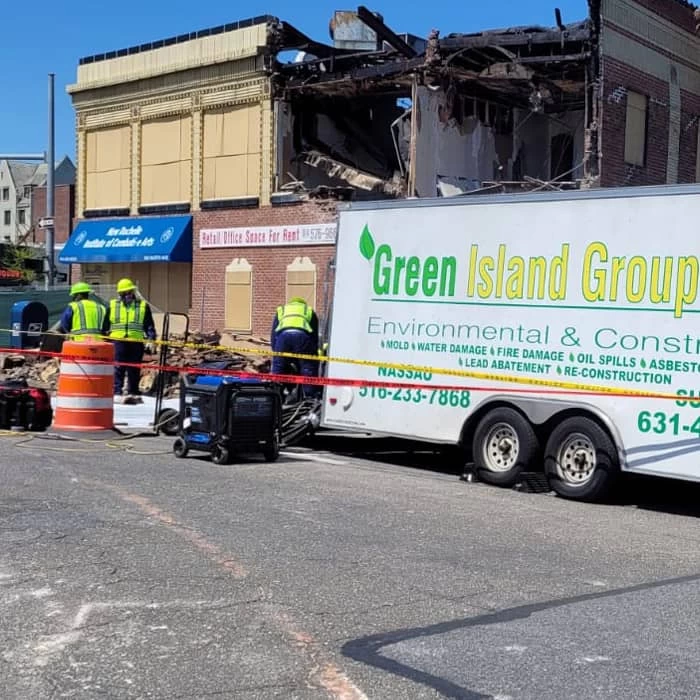
When a Century-Old Estate Burns, Every Hour Costs More
Soot bonds to surfaces within hours. Water from firefighting soaks into walls you can’t see. In Hewlett Bay Park, where most homes were built before 1960, the damage goes deeper than it looks — and we’re on-site within one hour, 24/7.
I needed a professional consultation explanation of procedure for safe removal of Asbestos in my apartment complex. Without having an account yet, I was very impressed with the caring, knowledgeable and generous advice offered by Jessica, and will look forward to doing business in the future. Thank you so much! I feel much more informed about a sometimes scary endeavor. Peace. Nancy Silva Mineola, NY.
Mia Munoz
Used this company to clean up some water flood in my house. They were fast and easy to work with.very professional, Would recommend to anyone!
Nini Valle
Great company, had a flood and they responded quickly and efficiently. Billed my insurance company directly. I highly recommend this company!
joe colapietro, jr
I had pipe freeze in my basement right before a snow storm and they made to within an hour to help start the clean up process. They we by our side throughout the entire process and even helped with the insurance company. They did such a great job with the cleanup, repair, remidiation, I contracted them to perform the repairs and finishes in the basement. They came with enough manpower and material to get the job done. Leo and Jessica were nothing but a pleasure to deal with!!
Cristian Arredondo c
I had some water damage in my home and Green Island was able to take care of my issue quickly and effectively. I am very pleased with the work they did. They responded quickly and were very professional.
Michael M
Outstanding service! From the office to the field crew everyone was friendly, helpful and responsive. I highly recommend Green Island Group.
A fire doesn’t end when the flames go out. What’s left behind — soot embedded in plaster walls, smoke odor locked into original woodwork, water soaked into century-old framing — is where the real damage lives. And in a home like yours, that damage has real weight.
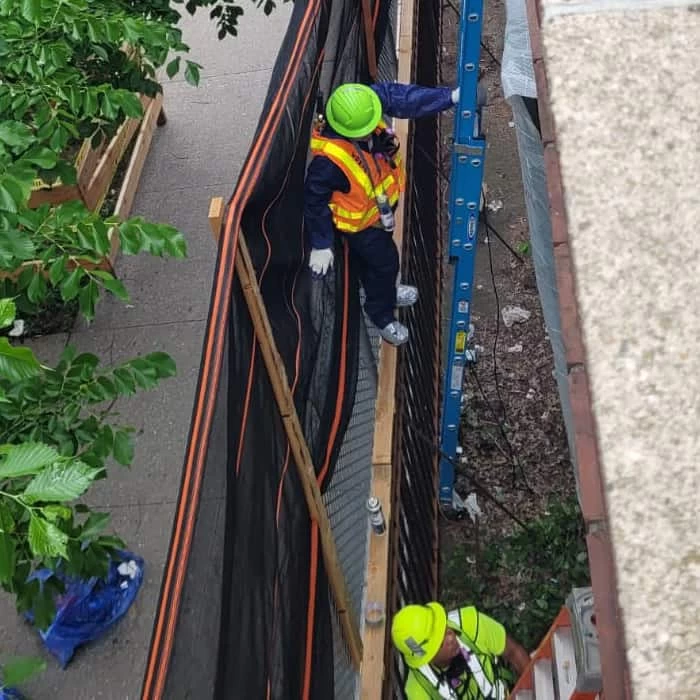
Hewlett Bay Park’s housing stock is almost entirely pre-1960. That means the materials in your walls, floors, and ceilings aren’t what you’d find in a newer build. Asbestos insulation around pipes and boilers. Lead paint on original trim. Plaster walls that absorb smoke differently than drywall. These aren’t complications a general handyman can navigate — they require licensed professionals who know exactly what we’re dealing with before we touch anything.
Then there’s the water. Firefighting suppression soaks into subfloors, wall cavities, and structural framing. In a large estate-scale home, that volume of water creates mold risk within 24 to 48 hours — in places you’ll never see until it’s already a problem. When you work with us, fire restoration and water mitigation happen simultaneously, under one roof, with one team managing the entire scope from day one.
We’re a locally owned restoration and environmental services company serving all of Nassau County, including Hewlett Bay Park and the broader Five Towns area. With over 5,000 completed restoration projects across New York State, we’ve worked extensively in the older, estate-scale housing stock that defines this part of the South Shore — and we know what it takes to restore it properly.
What sets us apart isn’t just the credentials, though those matter: IICRC-certified for fire and water damage restoration, NYS DOL licensed for asbestos and mold, USEPA Lead/RRP certified, and holding a Nassau County General Contractor license that authorizes full reconstruction — not just cleanup. Most restoration companies stop at remediation and hand you a list of contractors to call. We take the project from emergency response through final rebuild, with one point of contact and direct insurance billing throughout.
In a village of 147 homes where neighbors talk, that kind of accountability isn’t just a selling point — it’s the only way to do business.
The first call triggers an emergency response. We operate 24 hours a day, every day of the year, and our goal is to be on-site at your Hewlett Bay Park property within one hour. That first visit isn’t just a walkthrough — it’s a full damage assessment that documents everything: visible fire and smoke damage, water intrusion from suppression efforts, and any hazardous materials that need to be identified before work begins. In a pre-1960 home, that last part is critical. Disturbing asbestos-containing materials without proper protocols isn’t just dangerous — it’s illegal under New York State law, and it can complicate your insurance claim significantly.
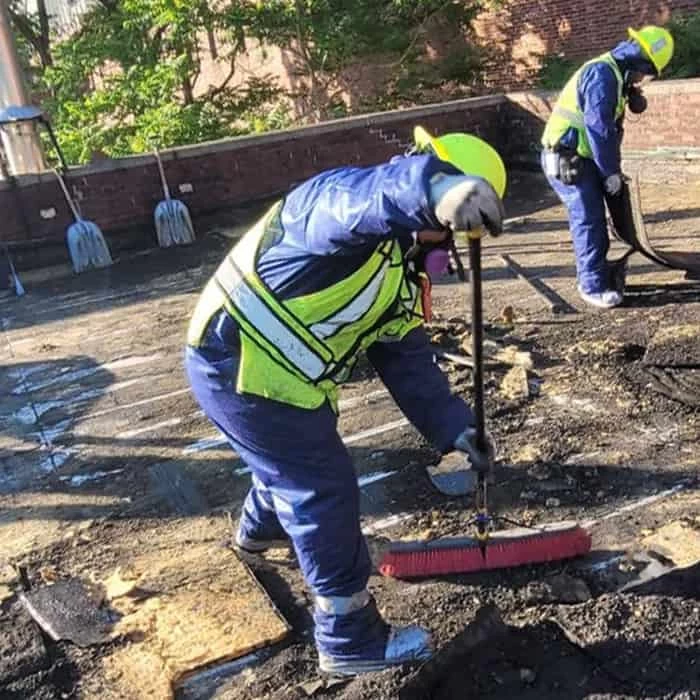
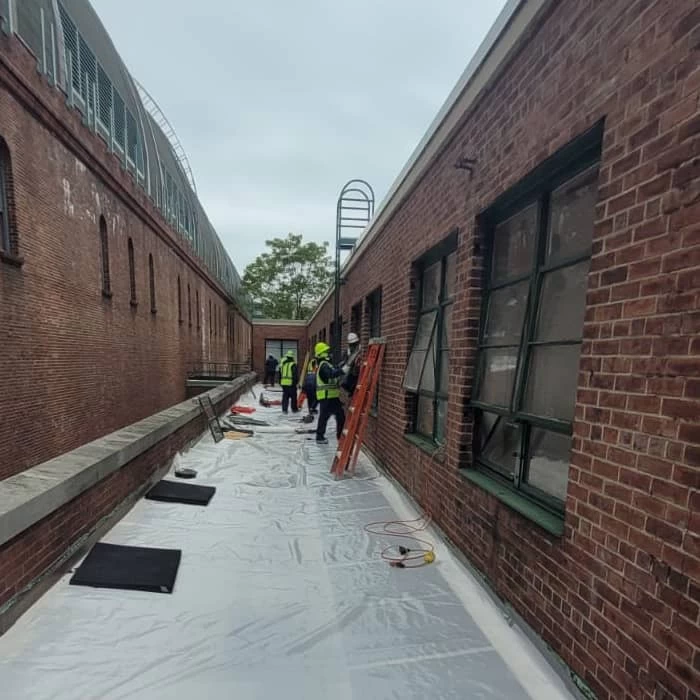
Once the assessment is complete, we move into emergency stabilization: securing the property, extracting standing water, and beginning structural drying to stop secondary damage before it starts. Soot removal, smoke odor treatment, and HVAC cleaning follow — because soot that gets into ductwork keeps circulating long after the visible surfaces are clean.
From there, the scope shifts to reconstruction. Because we hold a Nassau County General Contractor license, we pull the required permits through the Town of Hempstead and manage the rebuild directly. Custom finishes, original architectural details, high-end systems — everything gets documented for your insurance claim and restored to pre-loss condition. You don’t manage multiple contractors. You have one team, one timeline, and one number to call.
Everything Your Hewlett Bay Park Home Actually Needs
Fire damage restoration in a village like Hewlett Bay Park isn’t a standard job. The homes here are large, old, and built with materials that require specific licensing to handle safely. Our scope covers every phase of what that actually means in practice.
On the hazardous materials side: NYS DOL asbestos licensing and USEPA Lead/RRP certification mean we can legally address the materials that are almost certainly present in your home’s original construction — and do it without creating additional liability for you. On the structural side: our Nassau County General Contractor license means permits get pulled correctly through the Town of Hempstead, and the rebuild meets code without you having to coordinate a separate contractor while you’re displaced. On the insurance side: we bill insurance directly, document every phase of work to IICRC standards, and have helped Nassau County homeowners navigate complex claims — including properties with custom millwork, high-end systems, and architectural details that require accurate valuation to ensure the claim reflects the full scope of the loss.
Oil heat is common in Hewlett Bay Park’s older homes, and furnace puff-backs — where an oil burner backfires and coats your entire interior in fine soot — are a specific, frequent call in the Five Towns. That’s covered too, including NADCA-certified HVAC cleaning to clear ductwork that standard restoration companies often miss entirely.
Is my Hewlett Bay Park home safe to enter after a fire?
That depends on the extent of the fire and what materials were affected — and it’s not a call you should make on your own. Structural fires can compromise framing, flooring, and load-bearing elements in ways that aren’t visible from the doorway. Beyond structural safety, the air inside a fire-damaged home contains soot particles, carbon monoxide residue, and — in pre-1960 homes like most of those in Hewlett Bay Park — potentially disturbed asbestos fibers or lead dust. These are real health hazards, not precautionary language.
The right move is to wait for a professional assessment before re-entering for anything beyond a brief retrieval of essential items. Our emergency team can assess the property quickly and give you a clear picture of what’s safe, what isn’t, and what needs to happen before the home is habitable again. Nassau County Police Department’s 4th Precinct, which serves Hewlett Bay Park, will typically secure the scene after a fire — but structural and air quality clearance is a separate determination that requires a licensed restoration professional, not law enforcement.
How does the insurance claim process work for fire damage restoration?
Most homeowners have never filed a fire damage claim before, and the process is more involved than a typical home insurance claim. After a fire, your insurer will send an adjuster to assess the damage — but adjusters are evaluating the loss from the insurance company’s perspective, not yours. Their initial estimate may not account for hidden damage inside wall cavities, HVAC contamination, hazardous material abatement costs, or the full replacement value of custom finishes and high-end systems common in Hewlett Bay Park homes.
We bill insurance directly and document every phase of work to IICRC standards, which insurance companies specifically recognize. That documentation matters when an adjuster’s initial scope doesn’t reflect the full loss. We’ve guided Nassau County homeowners through complex claims — including attending material selection appointments to ensure replacement costs are accurately priced — so the final payout reflects what it actually costs to restore the property to its pre-loss condition, not a discounted approximation of it.
What is a puff-back and does homeowners insurance cover it in New York?
A puff-back happens when an oil burner backfires — instead of igniting cleanly, the furnace releases a pressurized cloud of unburned fuel and soot that travels through the ductwork and coats every surface in the home. There are no flames, but the contamination can be as extensive as a moderate fire: walls, ceilings, furniture, clothing, and every duct in the system. It’s one of the most common restoration calls in the Five Towns area, where oil heat is standard in the older housing stock.
In New York, puff-back damage is generally covered under the fire and smoke damage provision of a standard homeowners insurance policy — but coverage specifics vary, and documentation matters. The soot from a puff-back is oily and acidic, and it embeds quickly into porous surfaces. Professional remediation, including NADCA-certified HVAC cleaning to clear contaminated ductwork, is required to fully address it. A surface wipe-down won’t do it — if the ducts aren’t cleaned, the system redistributes soot every time it runs.
Does fire restoration work require permits in Nassau County?
Yes — any structural restoration or reconstruction work in Nassau County requires building permits, pulled through the appropriate municipal authority. For properties in Hewlett Bay Park, that means the Town of Hempstead. This is a step that unlicensed or out-of-area contractors frequently skip, which creates problems down the line: unpermitted work can complicate future home sales, void insurance coverage for subsequent issues, and result in stop-work orders or fines.
We hold a Nassau County General Contractor license, which authorizes us to pull permits and perform permitted structural work within the county. This isn’t a minor administrative detail — it’s a legal requirement, and it’s one of the reasons working with a properly licensed contractor matters as much as it does. The permit process also creates a documented record of the restoration work, which can be valuable if questions arise during a future sale or insurance review of the property.
How long does fire damage restoration take for a large home?
There’s no single honest answer to this, because the timeline depends on the extent of the fire, the size of the property, the scope of secondary damage, and whether hazardous materials like asbestos require abatement before other work can begin. For a large, pre-1960 home in Hewlett Bay Park, a serious fire could realistically mean a restoration timeline of several weeks to several months for full reconstruction — though emergency stabilization and initial cleanup typically happen within the first few days.
What affects the timeline most in homes like those in this village is the combination of size, age, and complexity. A 4,000-square-foot estate with original plaster walls, oil heat, and potential asbestos-containing materials requires more careful, methodical work than a newer, smaller home. The asbestos abatement phase alone — if required — must be completed and cleared before reconstruction can begin, per New York State law. We manage the entire timeline under one roof, which eliminates the scheduling gaps and delays that come from coordinating multiple contractors during an already disruptive situation.
Can smoke damage affect parts of the home the fire never reached?
Absolutely — and this is one of the most commonly underestimated aspects of fire damage. Smoke travels through a home’s HVAC system, wall cavities, and any gap in the building envelope. In a large, older home like those in Hewlett Bay Park, where original construction often includes open wall cavities, plaster over wood lath, and extensive ductwork, smoke can penetrate rooms that had no direct fire exposure at all. The odor and soot contamination in those areas is just as real as in the rooms where the fire occurred.
This matters for two reasons. First, it affects the scope of restoration — rooms that look unaffected may still have soot in the walls and smoke odor embedded in materials that won’t resolve on their own. Second, it affects your insurance claim. If the documented scope of damage only reflects the rooms with visible fire damage, the claim will undervalue the actual loss. Our assessment process covers the full property — not just the fire origin area — and documents secondary smoke and soot damage throughout the home so your claim reflects what the fire actually cost you.