When a Hewlett Harbor Estate Burns, the Response Has to Match
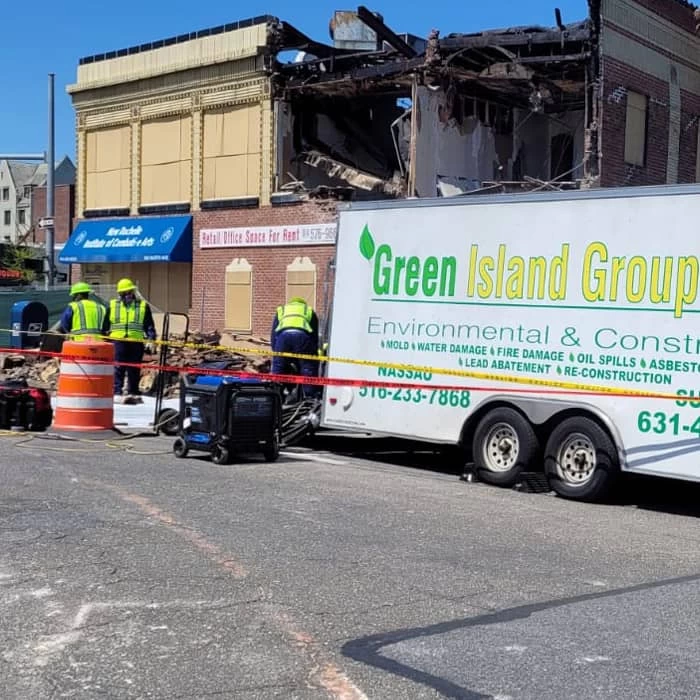
We’re on-site within one hour, any time of day — handling fire damage restoration in Hewlett Harbor from emergency response through full reconstruction, under one roof and one license.
I needed a professional consultation explanation of procedure for safe removal of Asbestos in my apartment complex. Without having an account yet, I was very impressed with the caring, knowledgeable and generous advice offered by Jessica, and will look forward to doing business in the future. Thank you so much! I feel much more informed about a sometimes scary endeavor. Peace. Nancy Silva Mineola, NY.
Mia Munoz
Used this company to clean up some water flood in my house. They were fast and easy to work with.very professional, Would recommend to anyone!
Nini Valle
Great company, had a flood and they responded quickly and efficiently. Billed my insurance company directly. I highly recommend this company!
joe colapietro, jr
I had pipe freeze in my basement right before a snow storm and they made to within an hour to help start the clean up process. They we by our side throughout the entire process and even helped with the insurance company. They did such a great job with the cleanup, repair, remidiation, I contracted them to perform the repairs and finishes in the basement. They came with enough manpower and material to get the job done. Leo and Jessica were nothing but a pleasure to deal with!!
Cristian Arredondo c
I had some water damage in my home and Green Island was able to take care of my issue quickly and effectively. I am very pleased with the work they did. They responded quickly and were very professional.
Michael M
Outstanding service! From the office to the field crew everyone was friendly, helpful and responsive. I highly recommend Green Island Group.
Your Home Restored to What It Was — Not Close to It
A fire doesn’t just burn what it touches. Smoke travels through HVAC systems, burrows into wall cavities, and embeds itself in the kind of custom millwork and high-end finishes that define homes throughout Hewlett Harbor. By the time the fire department leaves, the damage has already spread well beyond the room where it started — and most of it isn’t visible yet.
What you actually need after a fire in a home like this isn’t a cleanup crew. It’s a licensed team that understands the full picture: the smoke that’s already inside your ductwork, the suppression water that’s soaking into your subfloor, and the mold that will start forming within 48 hours if extraction doesn’t begin immediately. Hewlett Harbor’s waterfront geography — and its documented history of drainage challenges going back decades — means post-fire water damage here carries a faster, more aggressive mold risk than most inland communities on Long Island.
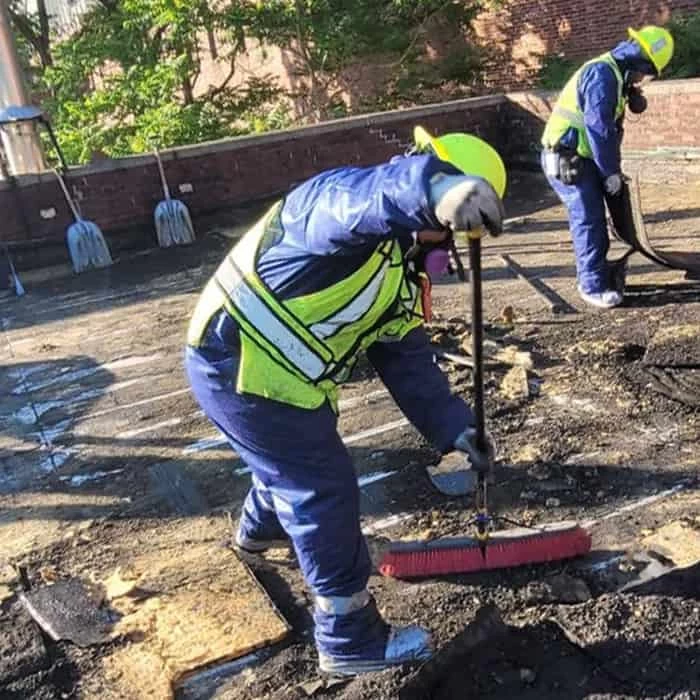
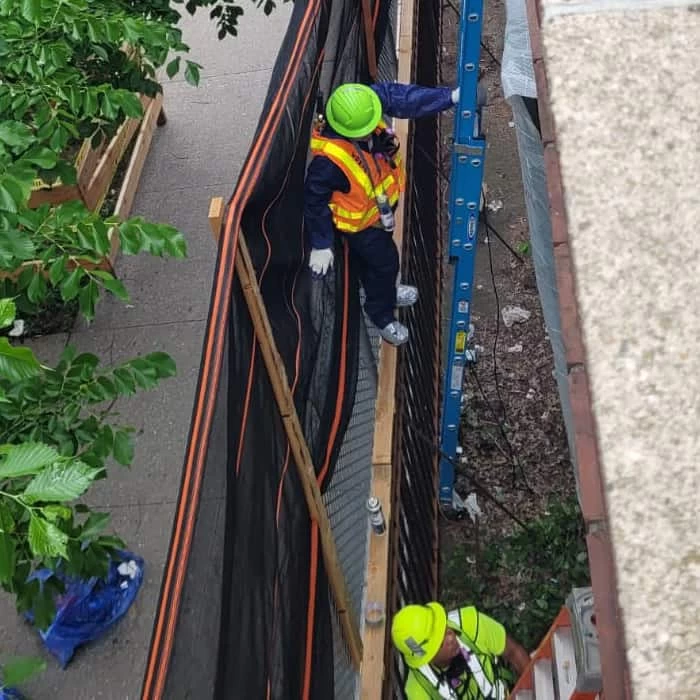
Many of the estate-era homes in Hewlett Harbor were built between the 1920s and 1960s. That means there’s a real chance a fire has disturbed asbestos-containing materials or lead paint — materials that require licensed abatement before any restoration work can legally move forward. Getting that wrong doesn’t just delay your project. It creates liability. We hold the NYS DOL Asbestos License and USEPA Lead/RRP Certification, so nothing gets skipped and nothing gets handed off to someone who isn’t qualified to handle it.
Licensed Fire Restoration Service, Hewlett Harbor NY
One License. One Team. No Handoffs.
We’re a locally owned and operated restoration company serving all of Long Island, including Nassau County’s Five Towns corridor — Hewlett Harbor, Woodmere, Lawrence, Cedarhurst, and the surrounding communities. We hold a Nassau County General Contractor License alongside IICRC certification for fire and water damage restoration, which means we can legally take your home from emergency response all the way through structural reconstruction without subcontracting the rebuild to someone else.
That matters more than most homeowners realize. A lot of restoration companies stop at remediation and hand you a referral for the reconstruction work. In a village like Hewlett Harbor, where rebuilding a room to its original standard might involve sourcing custom materials, matching original finishes, and coordinating licensed tradespeople across multiple scopes of work, that handoff is where things go sideways. With us, there’s one contract, one point of contact, and one company accountable for the outcome from start to finish.
Our credentials are publicly verifiable — NYS DOL licensing, IICRC certification, USEPA Lead/RRP, and NYS and NYC M/WBE status. Over 5,000 completed restoration projects across New York State. This isn’t a franchise following a national playbook. It’s a local company with real licenses and a real track record in this market.
The moment you call, the clock is working in your favor. We commit to on-site arrival within one hour, any time of day or night. The first thing our team does on arrival isn’t paperwork — it’s a full assessment of the property. That means mapping the smoke spread beyond the visible burn zone, checking the HVAC system for soot contamination, identifying any structural safety concerns, and flagging hazardous material risks that need to be addressed before restoration work begins. In Hewlett Harbor’s older housing stock, that last step is critical and can’t be skipped.
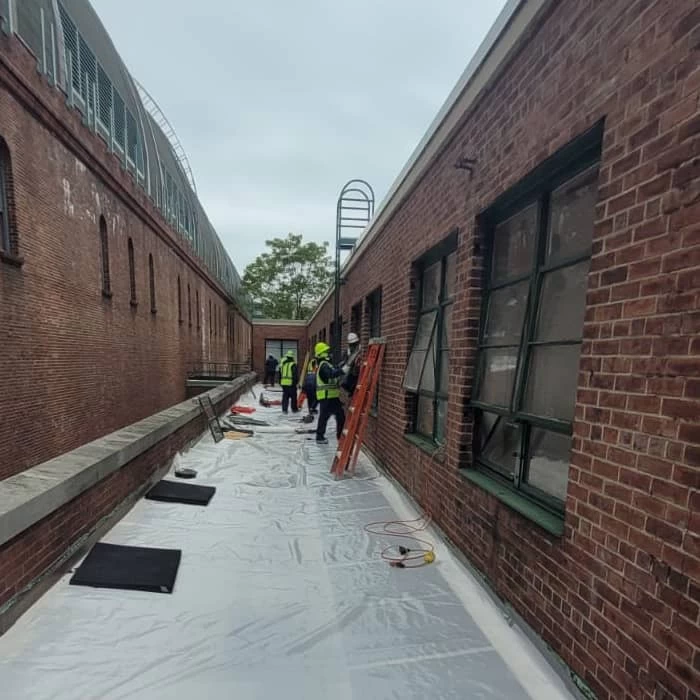
From there, the process moves through water extraction and structural drying — because firefighting suppression water creates its own damage that needs to be addressed within 24 to 48 hours. Dehumidification equipment is staged throughout the structure, and air quality monitoring begins immediately. If asbestos or lead abatement is required, that work is performed under our own NYS DOL license before any reconstruction begins — no waiting for a separate abatement contractor, no coordination delays. Nassau County permit requirements for structural work are handled as part of the process, not as an afterthought.
Once the structure is safe, dry, and cleared, reconstruction begins under our Nassau County General Contractor License. That means the same team that responded on night one is the team that finishes the job — restoring your home to the standard it was at before, not a simplified version of it.
What's Actually Included When the Stakes Are This High
Fire damage restoration for a Hewlett Harbor home isn’t a single service — it’s a sequence of specialized work that has to happen in the right order, by people licensed to do each part of it. We cover the full scope: emergency board-up and property securing, smoke and soot removal from surfaces and contents, HVAC inspection and NADCA-certified duct cleaning, water extraction and structural drying, air quality testing with commercial-grade air scrubbers, and ozone or thermal fogging treatment to eliminate smoke odor at the source — not just mask it.
For homes with oil heating systems, which are common throughout the Five Towns area, puff-back events are a specific service category. When an oil burner misfires, it can coat an entire home’s interior — walls, ceilings, ductwork, furniture — with a fine, oily black soot. It’s not a structural fire, but the remediation required is just as involved, and we handle it with the same process and the same licensed team.
Contents restoration, hazardous material abatement, structural repair, and full reconstruction are all handled in-house. Insurance documentation is thorough and built to the standard that Nassau County adjusters and carriers recognize — because a well-documented claim on a high-value Hewlett Harbor property isn’t just paperwork. It’s the difference between a full recovery and a shortfall on a seven-figure loss. We bill insurance directly and work through the claims process alongside you.
Does a house fire in Hewlett Harbor always involve asbestos or lead concerns?
Not always — but in Hewlett Harbor, the probability is higher than most people expect. A significant portion of the village’s housing stock was built during the estate-building era of the 1920s through the 1960s, and construction practices from that period routinely used asbestos-containing materials: floor tiles, pipe insulation, ceiling tiles, joint compound, and roofing materials. Homes built before 1978 almost universally contain lead-based paint somewhere in the structure.
When a fire burns through these materials, it doesn’t just damage them — it disturbs them, creating a hazardous material situation that requires licensed abatement before any restoration or reconstruction work can legally proceed in New York State. A contractor who skips this step isn’t just cutting corners. They’re creating legal exposure for themselves and for you as the homeowner. We hold both the NYS DOL Asbestos License and the USEPA Lead/RRP Certification, so this part of the process is handled correctly from the start — no delays waiting for a separate abatement company to be sourced and scheduled.
How quickly does mold become a problem after a fire in my Hewlett Harbor home?
Mold can begin establishing itself within 24 to 48 hours of water exposure — and after a fire, there’s almost always water. Firefighting suppression leaves significant moisture in floors, walls, and structural cavities, and that moisture doesn’t evaporate on its own. It soaks in, and without professional extraction and drying equipment, it creates the exact conditions mold needs to grow.
In Hewlett Harbor specifically, this risk is elevated. The village’s waterfront location and its documented history of drainage and groundwater challenges — issues that go back to the 1940s and that prompted a major storm recovery project after Hurricane Sandy — mean that soil saturation near homes here is often higher than in inland communities. That context matters when suppression water enters a structure, because the surrounding environment isn’t helping it dry out. We begin water extraction and structural drying immediately on arrival, with commercial dehumidification equipment staged throughout the property, specifically to close that 24 to 48 hour window before mold has a chance to take hold.
Will my homeowner's insurance cover the full cost of fire restoration in Nassau County?
Standard homeowner’s insurance policies do cover fire damage restoration, including smoke and soot remediation, water damage from firefighting suppression, and structural reconstruction. What they cover in practice, however, depends heavily on how the claim is documented and how the restoration scope is presented to the adjuster.
For a high-value home in Hewlett Harbor — where the median property value exceeds $1 million and custom finishes, imported materials, and high-end contents are common — the gap between what an adjuster initially offers and what a full restoration actually costs can be significant. Insurance companies work from their own pricing schedules, which don’t always reflect the real cost of restoring a home to its original specification. We document every step of the restoration process to insurance-standard specifications, bill carriers directly, and have worked through enough Nassau County claims to know where adjusters commonly undervalue scope. That documentation and advocacy often results in a meaningfully higher recovery than homeowners would get managing the claim on their own.
What is a puff-back, and do I need professional cleanup in my Five Towns home?
A puff-back happens when an oil furnace misfires or backfires, forcing a burst of combustion gases and unburned oil back through the system. The result is a fine, oily black soot that gets pushed through every duct and vent in the house — coating walls, ceilings, furniture, clothing, and personal belongings throughout the entire home, not just near the furnace. It happens fast, and the contamination is almost always more widespread than it looks at first.
Oil heating is common throughout the Five Towns area, and older homes in Hewlett Harbor are no exception. Puff-back events tend to spike in winter when heating systems are running hard, and they’re one of the more frequent moderate-scale service calls in this region. Professional cleanup isn’t optional here — the oily soot residue doesn’t wipe off surfaces the way dry soot does, and without NADCA-certified duct cleaning, the contaminated air system will keep redistributing particles throughout the home every time the heat runs. We handle puff-back remediation specifically, including full duct cleaning, surface decontamination, and odor elimination.
How long does fire damage restoration typically take for a larger home in Hewlett Harbor?
Timeline depends on the scope of damage, but for the kind of larger homes that are typical in Hewlett Harbor — properties running 3,000 to 8,000 square feet or more on half-acre-plus lots — a full restoration generally ranges from a few weeks for contained smoke and water damage to several months when structural reconstruction is involved.
The factors that most affect timeline in this area are hazardous material abatement and permitting. If asbestos or lead abatement is required — which is a realistic scenario for a significant share of Hewlett Harbor’s older housing stock — that work has to be completed and cleared before reconstruction begins. Nassau County building permits for structural work add time to the schedule as well. We manage both of these processes in-house, which removes the coordination delays that come with juggling multiple contractors. The clearest thing you can do to protect your timeline is to call immediately after the fire — not after you’ve spoken to your insurance company, not after you’ve done some research. Every hour that passes before extraction and drying begins adds to the scope of the job.
Is smoke odor really that hard to eliminate, or does it go away on its own over time?
Smoke odor does not go away on its own. What often happens is that the smell fades slightly in the first few weeks as surface residue dries out, and homeowners assume the worst is behind them. Then the heat comes on, humidity rises, or the HVAC system circulates air through contaminated ductwork, and the odor returns — sometimes stronger than before.
The reason is that smoke particles are microscopic. They penetrate porous materials — drywall, insulation, wood framing, upholstery, clothing — and bond at a level that surface cleaning can’t reach. In a larger Hewlett Harbor home with extensive square footage, custom soft furnishings, and a duct system that may run through multiple floors and wings of the house, the contamination surface area is significant. Eliminating it properly requires a combination of HEPA air scrubbing to remove airborne particles, NADCA-certified duct cleaning to clear the HVAC system, and either ozone treatment or thermal fogging to neutralize odor compounds at the molecular level throughout the structure. We use all three methods as part of a complete smoke remediation process — because masking the smell with deodorizers isn’t a solution, and in a home of this caliber, it’s not acceptable.